JB-Singapore rail service expected to start by Jan 1, 2027
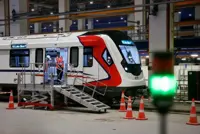
THE Johor Baru–Singapore Rapid Transit System Link (RTS Link) project hit a major milestone with the unveiling of its first train set, bringing the long-anticipated cross-border rail service one step closer to reality.
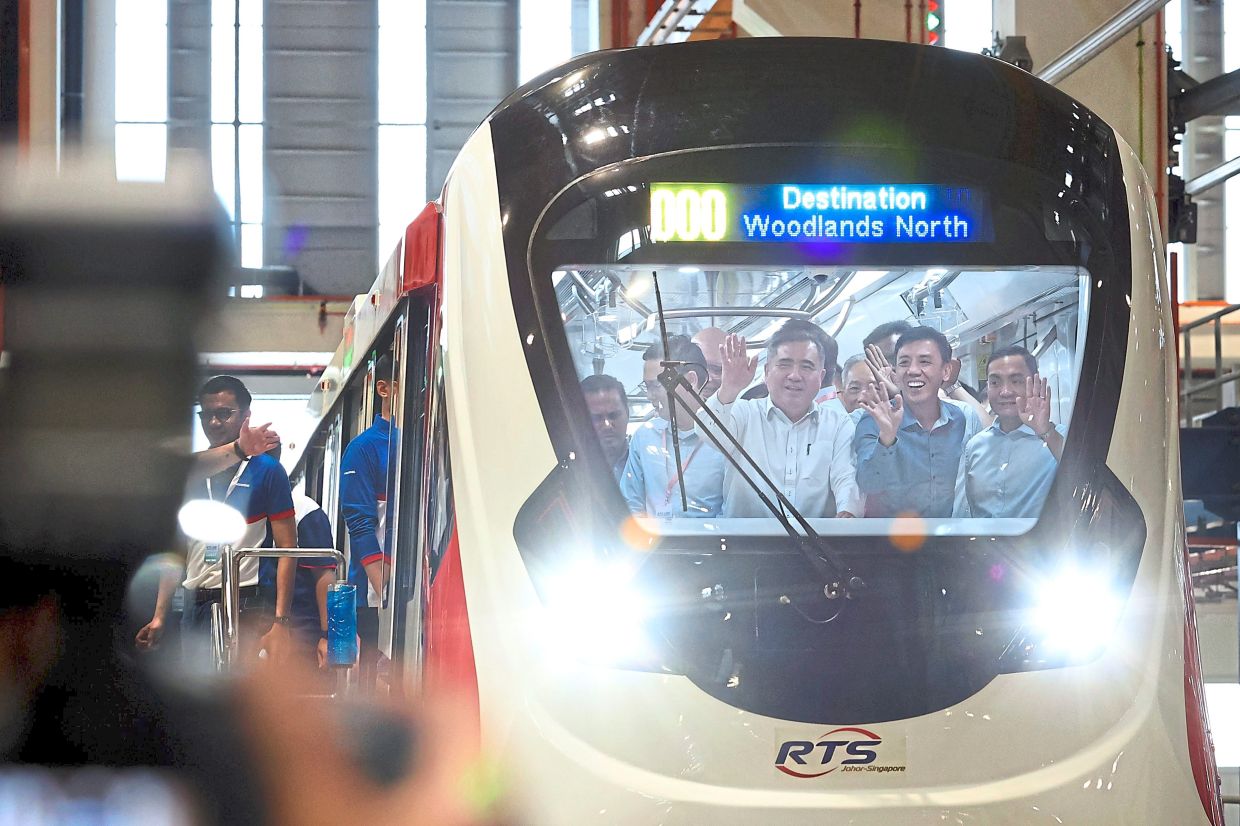
Transport Minister Anthony Loke and Singapore’s acting Transport Minister Jeffrey Siow jointly launched the unveiling ceremony at the Singapore Rail Test Centre (SRTC), where the RTS Link Train 01 was introduced to the public for the first time.
ALSO READ: Commuters hope new rail service enhances transborder mobility
At the heart of the RTS Link’s engineering feat are eight four-car trains manufactured by China Railway Rolling Stock Corporation (CRRC) Zhuzhou Locomotive Co Ltd.
The four-car train set has a white livery with red and blue accents – inspired by the colours of the Malaysia, Johor and Singapore flags.
Each train set, measuring 76.4m in total, can take up to 1,087 passengers each, enabling the RTS service to move up to 10,000 passengers per hour per direction.
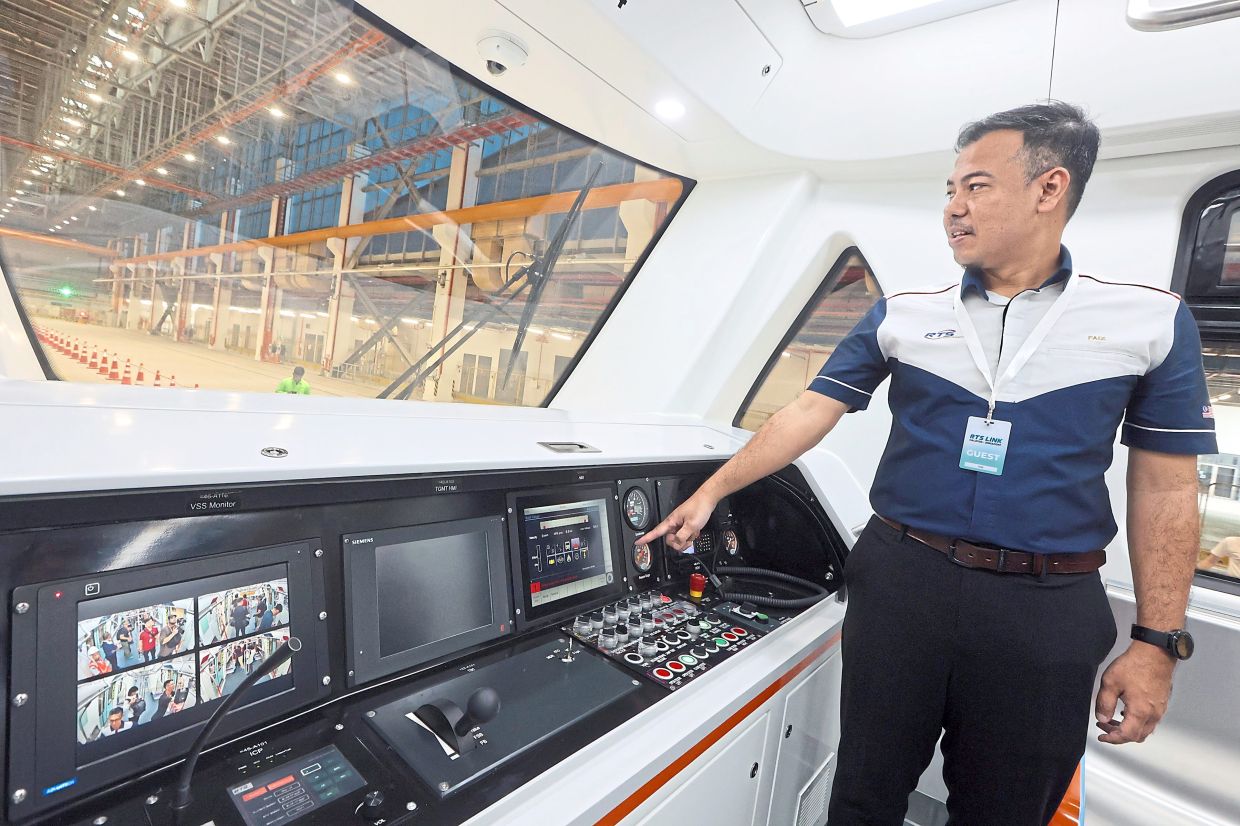
The interior of the new RTS Link train is equipped with dynamic route map display, hopper windows that can be opened to supply fresh air to passengers in case of emergencies, a wheelchair area and a hearing induction loop to communicate service broadcast and emergency announcements to hearing aid users.
Train 01 arrived in Singapore in April and is currently undergoing off-site systems integration testing at SRTC.
Over the coming months, RTS Operations Pte Ltd (RTSO) – a joint venture between Prasarana RTS Operations Sdn Bhd and SMRT RTS Pte Ltd – will conduct checks to ensure the train’s seamless interaction with critical rail systems, including signalling, platform screen doors and onboard communications.
RTSO chairman Datuk Khairil Anwar Ahmad said the approach allowed it to identify and resolve potential integration issues early before proceeding with on-site testing.
He added that the off-site phase was expected to conclude by the fourth quarter of this year, after which Train 01 would be transferred to RTS Link tracks for dynamic testing, along with the remaining train sets.
“Trains 02, 03, 04 and 05 are currently being assembled at CRRC’s manufacturing facility in Batu Gajah, Perak, while production of Trains 06, 07 and 08 will follow suit.
“Once completed, all trains will be transferred to Wadi Hana Depot in Johor Baru for further testing and final preparations before being commissioned for passenger service,” he said.
Steady progress
Construction and installation works are making consistent headway on both sides of the Causeway.
RTSO reported that its rail system works were progressing steadily and had reached around 56% completion.
To facilitate these works, both Malaysia and Singapore’s infrastructure companies have gradually handed over their civil structures since late 2024.
These works include laying the tracks for RTS Link, which span approximately 5.3km from the Wadi Hana Depot to Bukit Chagar station and onwards to Woodlands North station in Singapore, as well as installing the signalling, communications, integrated supervisory control and traction power supply systems, among others.
The developer and owner of the civil infrastructure for the Malaysian section of the RTS Link is MRT Corp, which is a subsidiary of Malaysia Rapid Transit System Bhd (MRTS).
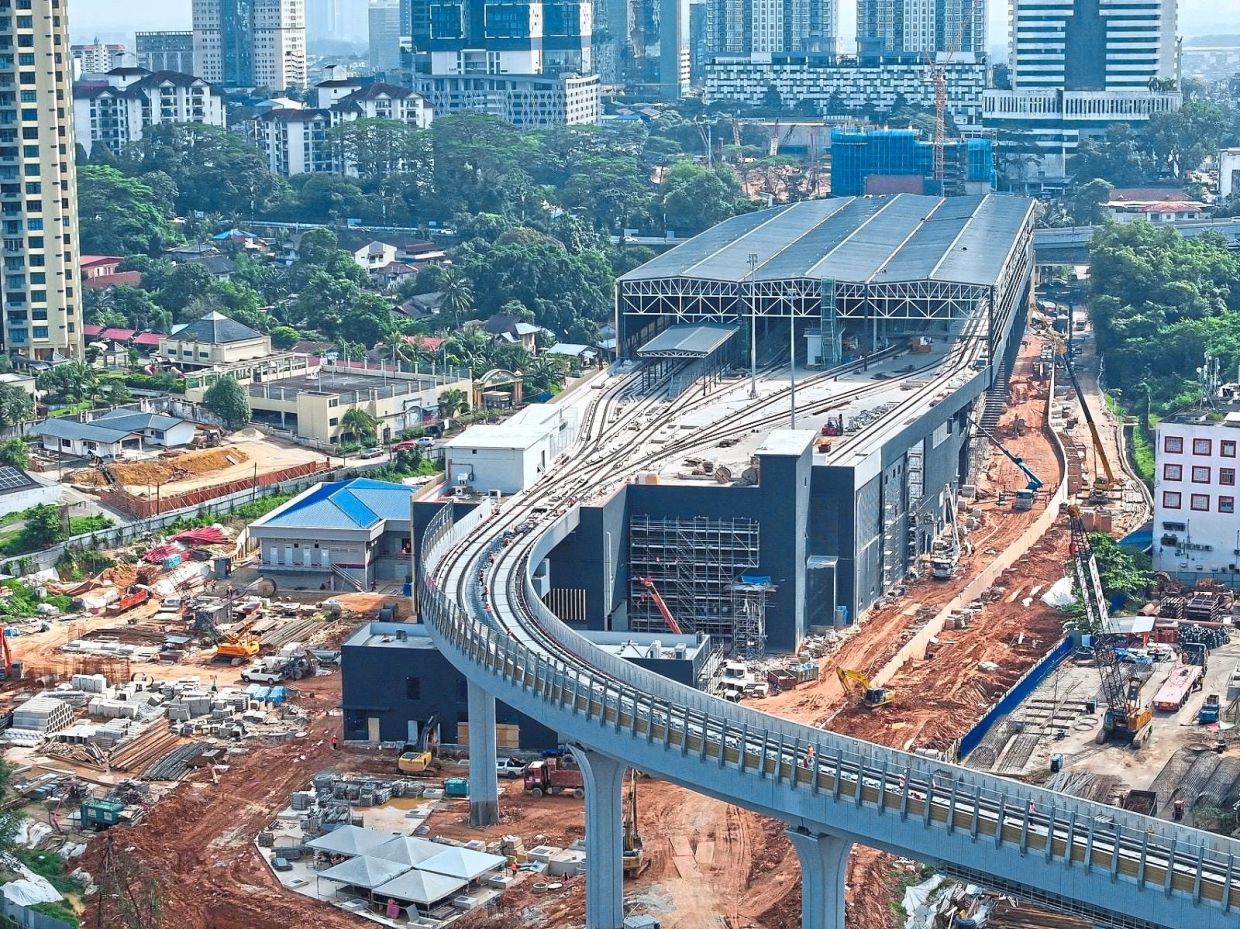
According to MRT Corporation, the track installation and structural works for key components such as the Marine Viaduct, Bukit Chagar Station and Wadi Hana Depot were completed as of May 31.
It said in a statement that the interior works at the depot were 80% done and targeted for full completion by October.
At Bukit Chagar Station, the installation of its signature roof facade is underway.
“Work on the Customs, Immigration and Quarantine Complex is progressing well, with superstructure works now at 90% completion.
“The interior works have reached 45% while the facade installation is slated to begin in September.
“As per the terms of the bilateral agreement, the next key milestones will be the dynamic testing of the RTS Link train system, scheduled for May next year,” MRT Corp said.
It added that the critical phase would see the train operating along the full alignment from Wadi Hana Depot through to stations, paving the way for operational validation and readiness.
Bilateral vision in motion
The symbolic unveiling of the train was more than just a showcase of hardware – it represented the culmination of years of diplomatic and technical coordination between Malaysia and Singapore.
Standing alongside his Singaporean counterpart at the unveiling, Loke reflected on the project’s challenging beginnings.
“I still remember vividly in 2018, when there was a change of government in Malaysia, this project was in limbo.
“But through many rounds of negotiations, we agreed on a new arrangement to ensure the project could go on,” he said.
Loke called the RTS Link a game-changer for daily commuters and a key enabler of the Johor-Singapore Special Economic Zone (JS-SEZ).
“It is about reducing congestion, saving time and connecting people more seamlessly than ever before.
“While the rest of the world is building walls, we are building bridges; bringing Malaysia and Singapore closer together,” he said, adding that the rail service would be operational by Jan 1, 2027.
“With another 18 months to go, we are now entering a very interesting phase of this project,” he added.
Echoing his sentiments, Siow said the RTS Link was meant to increase mobility, not replace existing options.
“There are no immediate plans to reduce bus frequencies.
“The idea is to create more choices and convenience,” he said.
As for fare pricing and payment methods, both ministers said details would be finalised closer to the launch date.
Loke added that RTSO was currently conducting market studies to determine suitable fares that would encourage a shift from private vehicles to rail travel.
“And most importantly, the schedule will need to cater to early morning workers because we understand that there are many who cross the Causeway before 5am to make it in time for work in Singapore,” he added.
Sparking public imagination
There had been overwhelming interest generated by the public for the RTS Link, said Khairil Anwar.
“It has created a buzz not just in the media, but also among passionate rail enthusiasts.
“In fact, we have seen incredibly realistic 3D simulations of our train by trainspotters; they even superimposed the train onto our RTS Link infrastructure,” he said.
He also noted that the train was the embodiment of a shared vision, determination and bilateral collaboration between Malaysia and Singapore.

“It’s a symbol of what is possible when two nations come together with purpose,” said Khairil Anwar.
He thanked the transport ministries of both countries, the Johor government, infrastructure companies and the technical teams, who turned the long-standing idea into a near-complete reality.
“The link opens the door to countless opportunities for collaboration and growth.
“Increasingly, the RTS Link is also seen as a catalyst for the JS-SEZ, driving economic innovation, investment and prosperity for both nations,” he said.