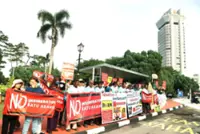
FOLLOWING the announcement of a proposed merger of two waste-to-energy (WTE) plants in Selangor, action group Jaringan Rawang Tolak Insinerator (JRTI) believes authorities intend to proceed with the Batu Arang project while merging plants at two other locations.
“There are currently three state-initiated incinerator projects – in Jeram (Kuala Selangor), Tanjung Dua Belas (Kuala Langat) and Batu Arang (Rawang) – plus another by the Federal Government in Taman Pelangi (Rawang).
“The Jeram project is being built while the others are at the proposal stage,” said JRTI spokesperson Abdul Hanan Abd Mokti.
He added that their interpretation of reports on the merger was that the government intended to proceed with the Batu Arang incinerator plant while merging the Jeram and Taman Pelangi projects.
Selangor Mentri Besar Datuk Seri Amirudin Shari had said the state government was ready to discuss the merger of the two WTE projects to strengthen sustainable solid waste management in the state.
He had said the plants were located in Rawang and Jeram, although there had been conflicting reports on the exact location of the Rawang plant.
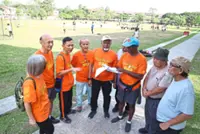
Abdul Hanan submitted 12,150 objection forms in response to the environmental impact assessment (EIA) report on the proposed WTE in Batu Arang.
The forms were submitted to the Department of Environment (DOE) at Menara Petra, Precinct 4, Putrajaya.
The proposed RM4.5bil project in Batu Arang, also known as Sultan Idris Shah Green Energy Park (SISGEP), has received widespread objections from residents in the surrounding areas of Batu Arang, Bandar Tasik Puteri, Kota Puteri and Bandar Seri Coalfields.
Abdul Hanan said JRTI, two other non-governmental organisations, Persatuan Kesedaran and Pendidikan 3R Kuala Lumpur and Persatuan Kelestarian Warisan dan Alam Batu Arang engaged experts to respond on aspects such as geology, public health and environment.
“We also received public feedback through physical and online forms.”
The group, he said, was concerned about the proposed Batu Arang project for several reasons, including potential health risks, traffic hazards, environmental impact and impact on property value.
“Batu Arang sits on a former coal mine connected by a network of tunnels, while the incinerator plant will sit on a former open-cast coal mine.
“Their locations could affect the geological stability of the area.”