AFTER a month of fasting, Muslims across Malaysia prepare to celebrate Hari Raya Aidilfitri.
While many journey to their respective hometowns in various states, some families in Kuala Lumpur keep the spirit of “balik kampung” alive right in the city.

Village life in the city
Fuad Mohamed Fahmy has long-standing ties with Kampung Baru.
His ancestor was appointed the imam of Masjid Jamek Kampung Baru in 1907.
“My great-grandfather Suleiman Shah Budin was a religious officer in Medan, Indonesia, before coming to Malaya.
“Some 20 years after his arrival, he was given land at Jalan Hamzah, where our house was built,” said Fuad, 52.
His family’s double-storey seven-room house’s ground floor is made of bricks with a wooden structure above it.
He noted that the houses in Kampung Baru were traditionally rumah limas or wooden houses raised on stilts.
Fuad, an “experienced” guide, regularly hosts local and international visitors at the village.
He said during Ramadan, the villagers, especially young men, would look forward to visiting Masjid Jamek Kampung Baru.
Since the 1960s, the famous Kampung Baru bubur lambuk has been cooked communally at the mosque.
“The elders and my uncles cooked the bubur too. The youths were roped in for assistance.
“We had many poor people in the past and they were served bubur lambuk paired with teh-o (plain tea with sugar).
“Some of the men who learned how to cook the famous bubur now sell it by the road near the mosque.
“They earn some extra income and it enables others to enjoy the bubur too.”
Fuad said the cooking would usually start about 11am and many volunteered for the job because it was considered a good deed that earned them merit.
He has fond memories of Raya celebrations in the past, including hanging greeting cards to decorate the house.
Another popular tradition in Kampung Baru is the “Malam Tujuh Likur”, which takes place during the last seven days of Ramadan.
“We would stay up until 3am and light the kerosene-filled pelita (oil lamps), placed all around the compound.
“It is a tradition that we still follow.”
Fuad said previously, most of the Raya cookies were homemade by the women-folk, with cornflake cookies a speciality in his household.
But now, most of the goodies were bought.
During Hari Raya, youths and children would make house-to-house visits and recite the holy verses.
“In the past, children would receive 50sen as duit raya or just a salam (hand shake). It was memorable for us.”
Fuad said they revived this tradition in Kampung Baru as visiting homes in groups fostered closeness among neighbours.
On Hari Raya day, children typically begin the day asking their parents’ forgiveness.
“While the women stay back to cook, the boys including dad would head to the mosque.”
Despite changes, Fuad noted a strong camaraderie among the residents.
“My youngest brother and his family live in our family home.
“On Hari Raya, we gather to pay respects to our 79-year-old dad, enjoy a potluck and visit in-laws.”
Fuad said they still attend prayers at Masjid Jamek Kampung Baru in the morning of Hari Raya.
“Relatives gather at our rumah pusaka (ancestral home).
“Few know my great-grandfather was the first imam because, in the past, people kept a low profile.
“Now, I contribute to the community by promoting the village to tourists.”
City enclave
The first phase of Taman Tun Dr Ismail (TTDI), which consisted of Jalan Haji Openg, was occupied in the late 1970s.
The family of TTDI Residents Association chairman Jabar Ahmad Junid moved there in 1977 and was among the first residents in the now sprawling township.
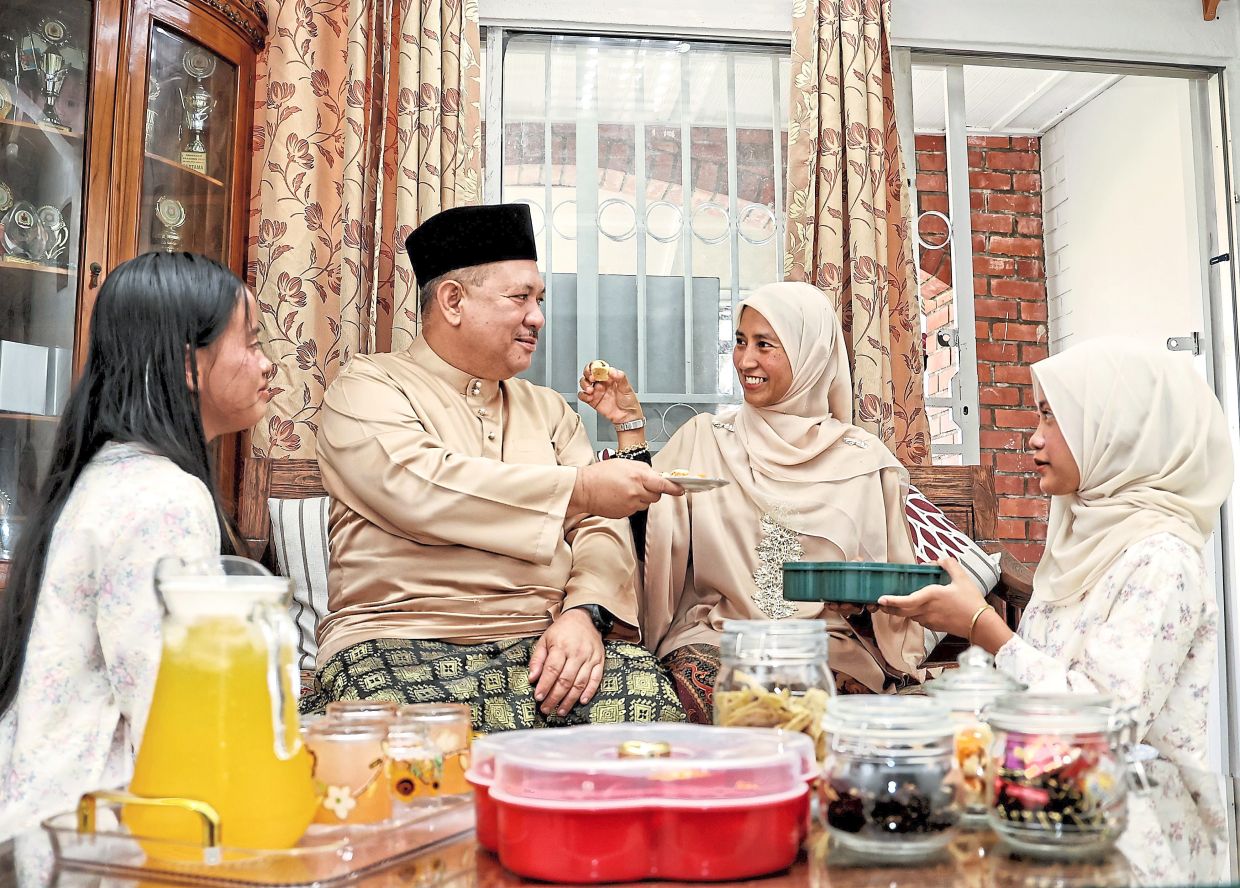
Jabar, 57, has been living in the neighbourhood since he was in Year Five.
He said Hari Raya in TTDI was so much fun that he never felt like he had missed out on the kampung experience.
“In the past, TTDI consisted of 90% Malay residents but now it is down to 43%.
“In the kampung, many lived near their relatives’ homes.
“However, in TTDI, neighbours are like close friends or just as close as relatives.”
Growing up in TTDI, he recalled visiting about 50 houses on Hari Raya Aidilfitri.
“When we were children, boys would recite prayers in a group at our neighbour’s houses and be treated to snacks, drinks and given duit raya.
“We looked forward to receiving duit raya, which would be between 50sen and RM1, from each house we visited.
“By the time we visited the 50th house, we would be stuffed with food,” he said, adding that most residents there were government servants back then.
In the past, Ramadan was also special because all mothers would send their children to deliver food to the neighbours, said Jabar, who has three children and one grandchild.
“If the neighbours were Malay, they would reciprocate with home-cooked food. Other races would give us fruits.”
Hari Raya eve was a time for children and teenagers to play with fireworks.
“Fireworks were cheap then. We also made meriam buloh with sulphur stuffed in bamboo,” he said, adding that most of the fireworks now were bought.
He recalled that on the first and second day of Hari Raya, he would gather with about seven friends to conduct house visits.
“Back then, as children, we were mainly interested in collecting duit raya.
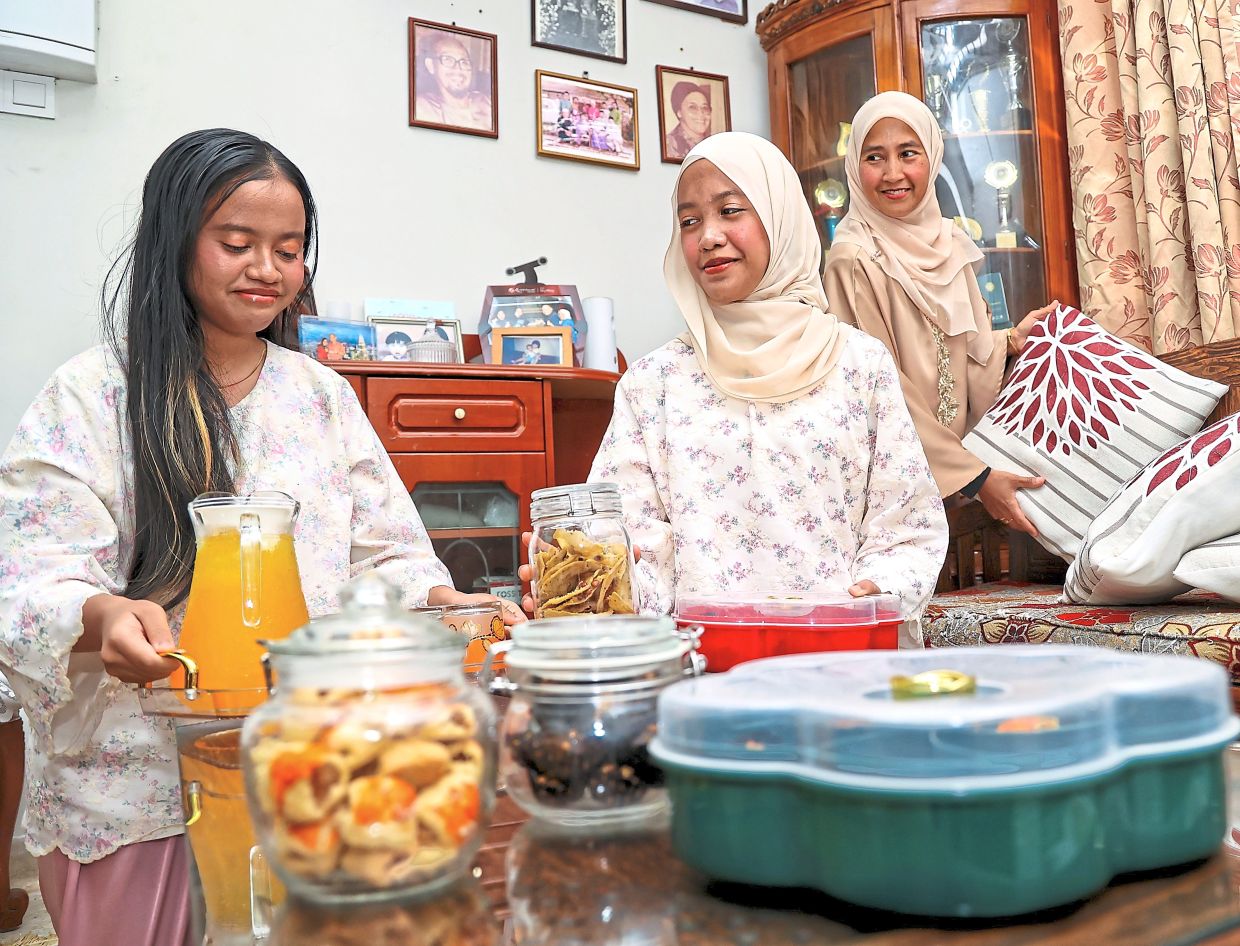
“Interestingly, we now have children from other parts of Kuala Lumpur, such as Ampang and Gombak, who come to TTDI to collect duit raya.
“We welcome them into our houses, serve them food, then give them duit raya.”
Jabar grew up with eight brothers and a sister and reminisced about how he and his siblings baked goodies ahead of the festivities.
“My mother was a good cook. The boys were taught to make cookies.
“We would make tarts and sugee biscuits. We also made lemang over an open fire by the side of the house,” he said, adding that the boys did all the cooking and baking with their mother supervising.
“We would turn the neighbourhood into a kampung,” he recalled.
Jabar said he still cooked and this year, planned to prepare rendang for 40 visitors.
“This year, my relatives will gather at TTDI and we will go to Masjid Al-Taqwa to pray.
“We will have nasi impit, rendang and kuah kacang.”
As for duit raya, Jabar said he had set aside RM2,000 this year.
“When I was young, the going rate for duit raya was RM1.
“Now RM10 is the minimum.”
Asked if he missed the whole balik kampung experience, Jabar said in the past, he had booked staycations at homestays for his children to experience what life was like in the village.
“But now, I do not miss driving hours, enduring the traffic jams to enjoy Hari Raya in a kampung.
“TTDI is my kampung.”