ILLEGAL encroachments on the side and back lanes of public roads are posing a significant hazard to emergency response efforts, particularly for the Fire and Rescue Department.
Rampant obstruction by parked cars, illegal structures and roadside businesses continue to hinder their operations.
In critical situations these blockages not only delay response time but also jeopardise lives and property.
Firefighters have raised concerns over growing disregard for access regulations, calling for stricter enforcement to ensure emergency routes remain unobstructed.
Kuala Lumpur Fire and Rescue Department director Senior Assistant Fire Commissioner Hassan ‘As’ari Omar is highly concerned about this issue.

“Encroachment that hampers our fire and rescue team from getting to the site is one of the biggest setbacks for us.
“Especially since there are clear guidelines and rules that specify a minimum width of 6m for public access to allow the movement of fire engines and emergency vehicles,” he said.
Access is vital

According to UUK140 under the UBBL, he said, access must be a minimum width of 6m throughout its entire length to accommodate fire engines and other emergency vehicles.
The access, he said, must be constructed to support the weight of a stationary 30-tonne fire appliance, adding that it should be level, with an overhead clearance of at least 4.5m to allow for unobstructed passage.
“The department is always concerned about access issues because when it comes to rescue efforts or firefighting, every second counts.
“We don’t want to deal with obstacles along the way. But what’s concerning is that enforcement against encroachments is not under our jurisdiction.
“So, while we have regulations requiring proper access, we have no direct authority to enforce them.”
Hassan said access included side and back lanes and all public areas. It is an offence to block these areas with illegal extensions, tables, chairs, trees, planters or any other obstructions.
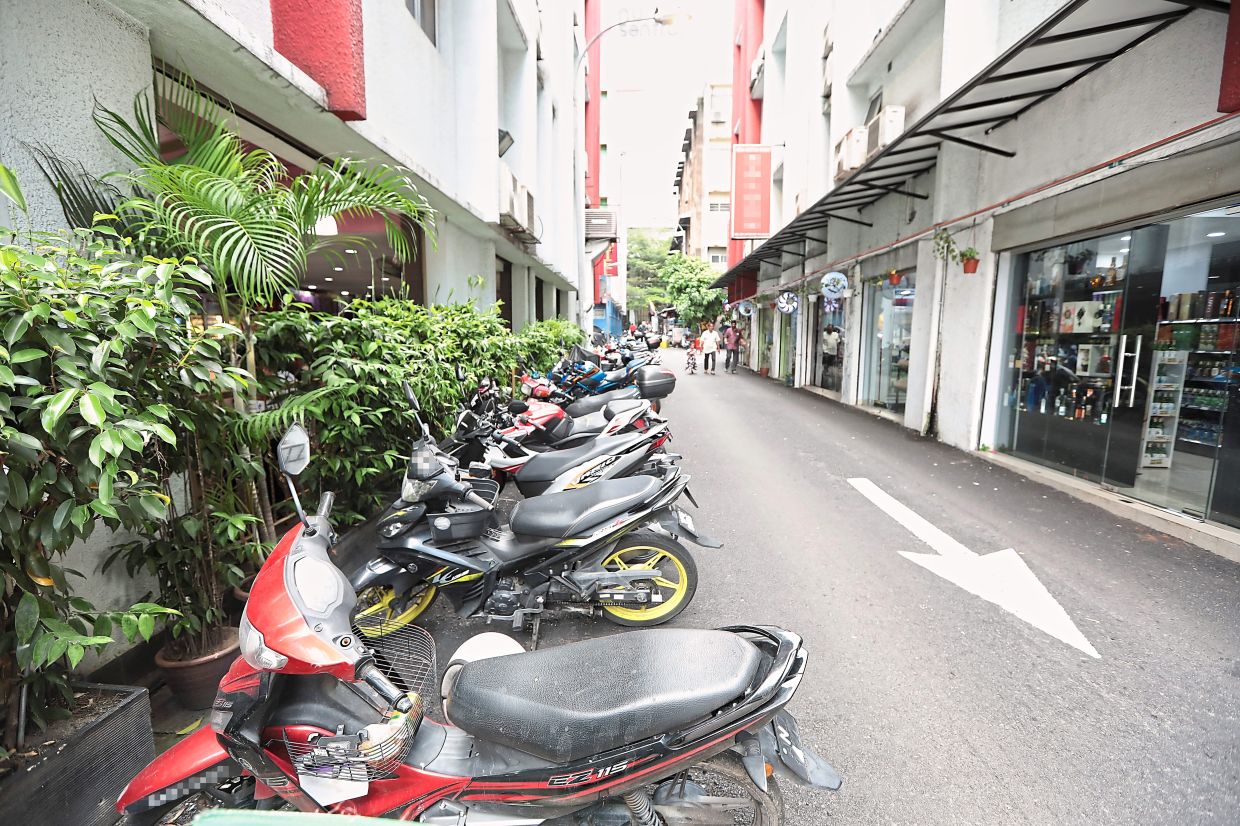
“We’ve encountered cases where, upon arriving at the scene, our fire trucks are blocked by double-parked cars along narrow lanes.
“We had to wait for the vehicles to be moved before we could put out the fire,” said Hassan.
He said this was prevalent in government housing schemes and apartment complexes in the city, where parking shortages led to widespread illegal parking.
Hoping to increase public awareness, Hassan said the department has regular meetings with local authorities and government agencies to highlight their challenges, especially on matters of access obstruction.
“We’re not just saving lives –we’re also trying to save people’s properties. We understand the devastation of losing everything,” he added.
Hassan said fire awareness was one of the department’s key programmes in educating the public.
“We are trying to reach all levels of the community, starting with students in kindergarten, school and colleges as well as neighbourhoods.
“We teach people how to stay alert and respond during a fire – wherever and whenever it happens,” he said.
Fire hydrant crucial weapon
“Part of our awareness programme includes identifying fire hydrants in a neighbourhood, ensuring they are not obstructed and are in proper working condition.
“I often tell people that the fire hydrant is our most crucial weapon in fighting fires. It must be well-maintained and taken care of,” he added.
Hassan said one of their key programmes was “Teman Pili Bomba” (Friend of Hydrants), whereby the public are encouraged to adopt hydrants near their homes.
When there is a fire, the fire department relies on two water sources – the primary one being the fire hydrant, with water from rivers, lakes and even drains as secondary sources.
“If there are no hydrants at the incident site, we will look for alternative sources.”
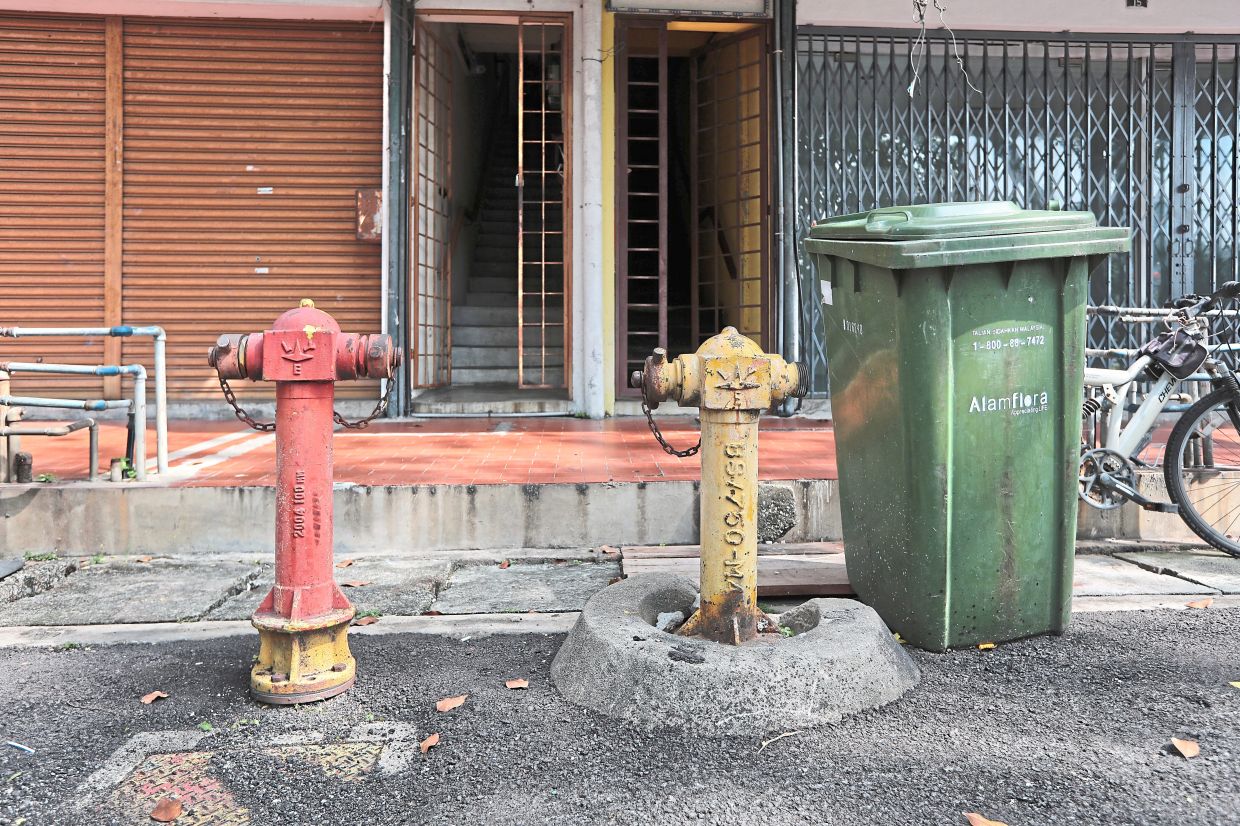
Hassan said there were two types of fire hydrants – the pillar style, and the ground hydrant identifiable by the letter “H” embedded on the ground indicating an underground fire hydrant.
Under Section 23 of Fire Services Act 1988, Hassan said, anyone who obstructs access to a fire hydrant or alters its alignment has committed an offence.

Likewise under Section 26, it is illegal to cover or conceal a fire hydrant in a way that makes it difficult to be located, to tamper with it or use it for any other purpose other than firefighting.
“Fire hydrants are a critical part of emergency response infrastructure, and any interference could cost lives.
“So if you block it, cover it or damage it, you’re in trouble.
“It’s an offence and a compoundable one at that. If you don’t pay the fine, we will take you to court – and we have done so many times,” said Hassan.
The compound ranges from RM100 to RM5,000, depending on severity.
“Many fire hydrant obstruction cases involve people abandoning their cars near hydrants, effectively blocking access.
“Just imagine firefighters looking for a hydrant in an emergency.
“We know it’s there, but we can’t see it because someone covered it up or parked in front of it. This happens all the time.”
Based on 2024 data, Hassan said, Kuala Lumpur has 18,424 fire hydrants comprising 12,280 public hydrants and 6,144 private hydrants.
Public hydrants are painted red, while private hydrants are in yellow (see graphic). Both are accessible by the Fire and Rescue Department.
Hassan said the department had conducted 20,505 inspections on all hydrants to ensure they were in working condition, with some hydrants inspected more than once.
In 2023, Housing and Local Government Ministry (KPKT) allocated RM156,250 for hydrant maintenance, he added.
Hassan also said that the department relied on public feedback to monitor the condition of fire hydrants.
“This is why we encourage the public to ‘adopt’ hydrants in their area and ensure there is a clearance of 3m radius from any obstruction.
“If you don’t want to do that, then just find where your nearest hydrant is located and make sure it’s not obstructed, and if you are not sure, just give us a call.”
Hassan said it was crucial for residents to play a part in keeping an eye on hydrants, as there were cases, especially in rural areas, of people stealing water from the facility.
“It is an offence to steal water from the hydrant. So please help us help you,’’ he said.

Hassan said the Kuala Lumpur Fire and Rescue Department had taken legal action against individuals who failed to pay compounds related to fire safety violations.
“In 2022, we prosecuted 10 cases in court, followed by eight cases in 2023.
“For 2024, a total of 62 compounds were issued with 50 under Section 26 for obstruction or tampering with fire hydrants and 12 under Section 55 for other fire safety violations,” he said, adding that some had not paid up.
“So far, 12 out of 50 cases under Section 26 have paid amounting to RM1,150.
“Eight out of 12 cases under Section 55 (tampering of fire alarms) have been settled, totalling RM800,” he said, adding that 42 cases were outstanding and were currently in the process of being brought to court.