Our six-week ancient Silk Road adventure from Tehran, Iran to Almaty, Kazakhstan last year was a rugged journey of time and discovery.
This was a road that over centuries, merchants, travellers, poets, pilgrims, despots and more have all traversed. It is now our turn to experience a small portion of this rich history.
We began in the vibrant heart of Iran (travel to Iran is currently not recommended for safety reasons) and snaked overland through Turkmenistan, Uzbekistan, Tajikistan and Kyrgyzstan, then culminating in the Kazakh jewel of Almaty.
The Grand Bazaar in Tehran is a sensory overload – a labyrinth of spices, carpets, and the endless chatter of commerce. Unfortunately, the Unesco World Heritage Site of Golestan Palace was closed to the public.
We visited the old American Embassy instead, one of the major flash points in the 1979 Iran revolution when it was discovered to be a den for spies.
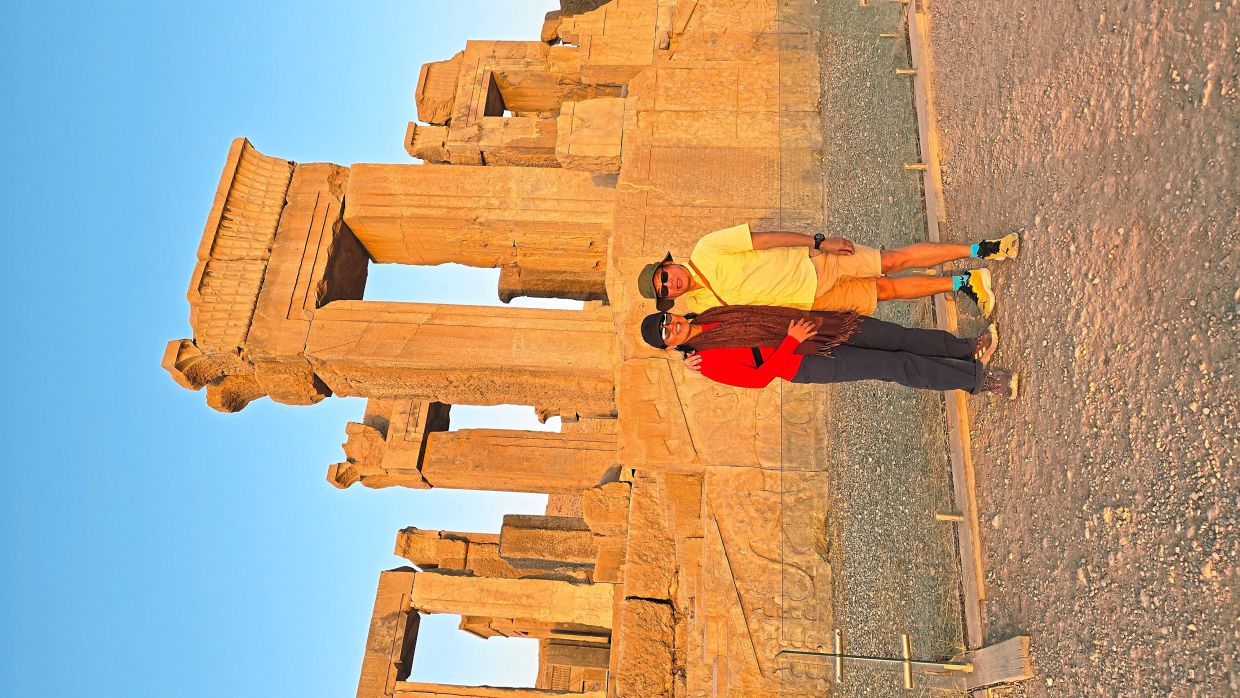
The warmth of the Iranian people who were always eager to share a cup of tea, have a conversation and take pictures, left a wonderful impression on us.
Leaving the capital, we journeyed south to Isfahan, known to locals as “half the world”. It’s easy to see why, though.
Imam Square, one of the largest city squares in the world that was constructed in the 16th century, is a masterpiece of Islamic architecture. Here, you will find the Imam Mosque, Sheikh Lotfollah Mosque and Ali Qapu Palace. When we visited in the evening, the whole square was alive and jammed packed with people.
Wandering through the old bridges like Si-o-se-pol and Khajoo felt like giant steps going back in time, when the river flowed and the banks bloomed green.
After that, it was on to Yazd, a city built almost entirely of mud-brick, a testament to ingenious desert architecture. This city has the most preserved wind towers that crown its buildings. Decorative and functional, it channelled air from all directions into basements, cooling homes in the scorching summer heat that could potentially rise to over 50°C.
Yazd is also the centre of Zoroastria-nism, and a visit to the Towers of Silence and the Fire Temple provided a fascinating insight into the practice of this ancient religion. It is said that the dead were once placed in the circular Tower of Silence for vultures to feast on their flesh. The Shah of Iran, Shah Mohammad Reza Pahlavi, eventually banned this practice in the 1970s.
Shiraz is the city of poets and gardens, and cypress-lined avenues. The serene and postcard-beautiful Eram Garden offered a tranquil escape.
We really did enjoy the many large manicured gardens in Iran.
We also checked out the tombs of Hafez and Sa’di, Iran’s most revered poets, and Nasir al-Mulk Mosque, known as the “Pink Mosque”.
In the pilgrimage city of Masshad, we saw the massive shrine of Imam Reza. From here our guide drove us to the Turkmenistan border and we arrived at Mary, where we visited the Silk Road city of Merv, once the capital of the Seljuk Empire.
It was Ashgabat that we really wanted to see. The Turkmen capital is an architectural marvel of white marble and gilded gold. The whole city seemed devoid of people, and there certainly weren’t many tourists.
It is the most dictatorial state among the five “-stan” countries we visited in Central Asia. Malaysians must engage a local tour agency and be given a letter of invitation before we are allowed in.
Another rule they have is that only white, silver, and gold-coloured vehicles are permitted within the city limits.
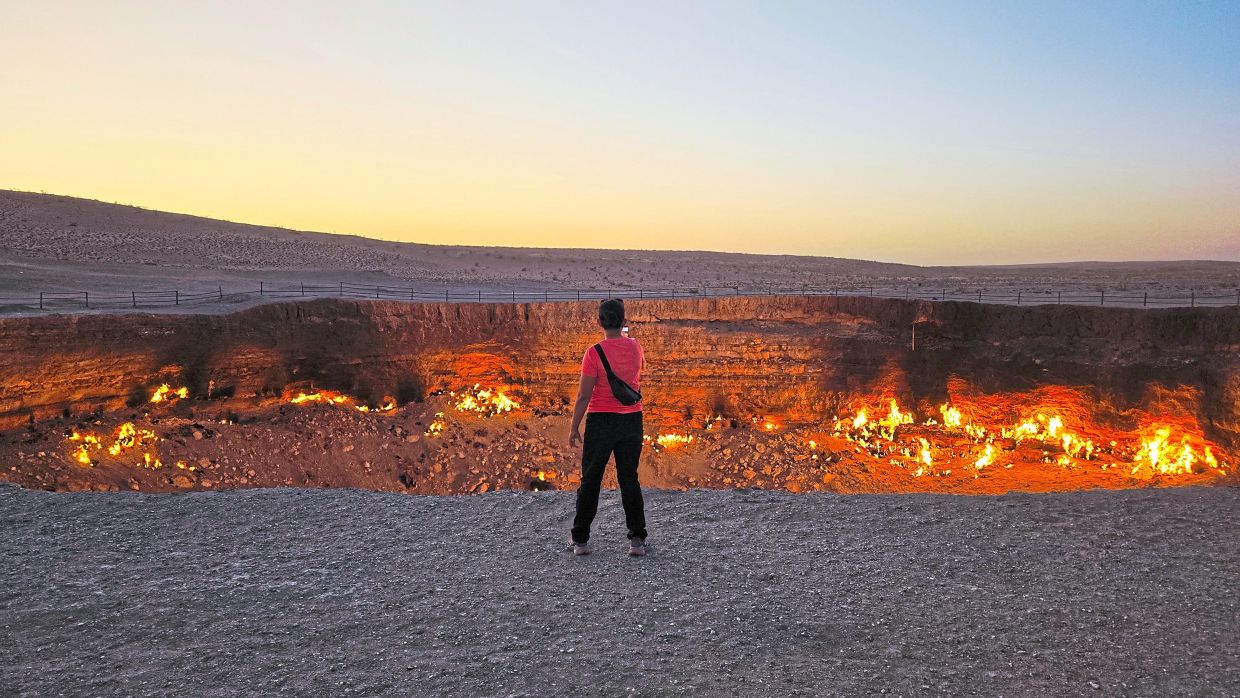
The other true draw here is the Darvaza gas crater, known as the “Gates of Hell”. This natural gas crater in the middle of the Karakum Desert has been continuously burning for 50 years and is an otherworldly spectacle.
Crossing the border into Uzbekistan, we arrived in the heart of the Central Asian Silk Road. Our first stop was Khiva, a perfectly preserved medieval city. Strolling through its ancient walls and alleys as the lights come on in the evening took our breath away.
Every madrasah, minaret, and mosque was perfectly restored here. The picturesque Kalta Minor Minaret, purposely left unfinished, stood gleaming with its turquoise tiles over the city, a testament to dreams unfulfilled. We love this Uzbek city the most.
Next stop was Bukhara, another Unesco World Heritage Site. Its ancient trading domes, where merchants once haggled for silks and spices, still buzz with activity.
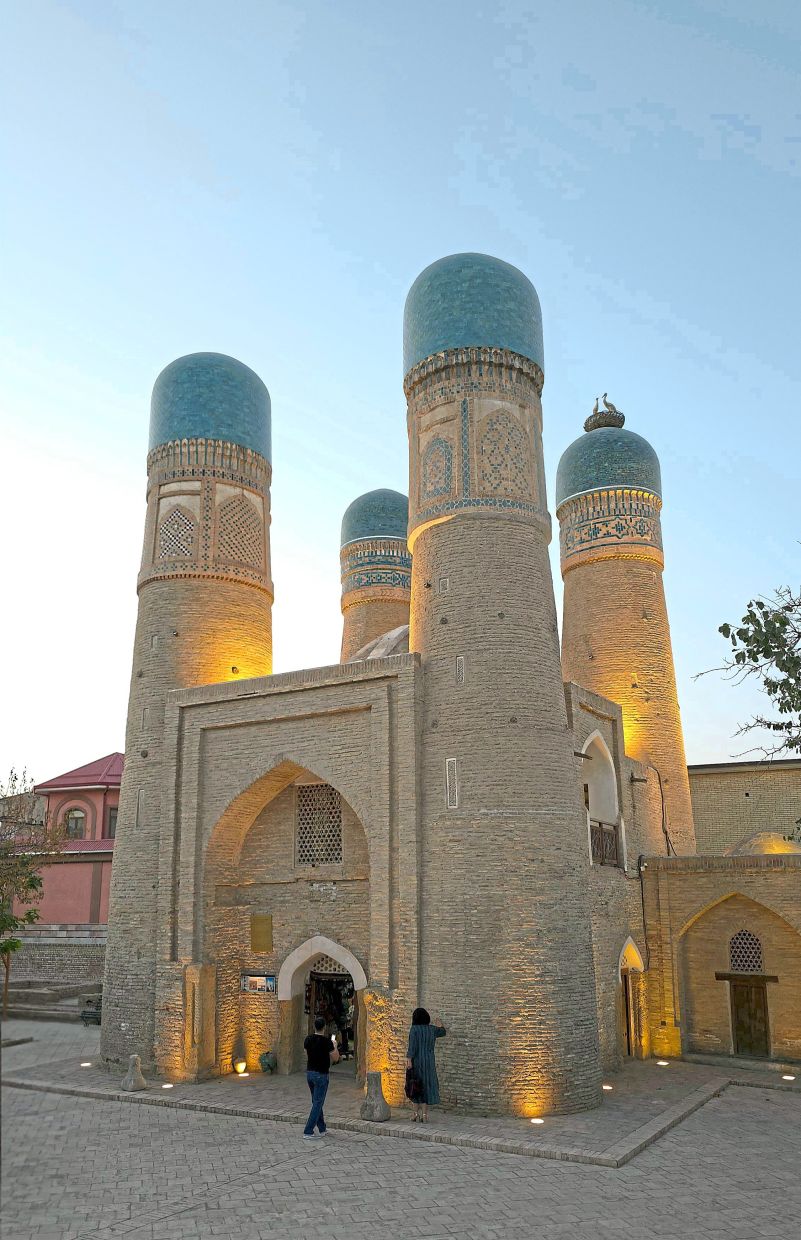
The Poi Kalyan Complex, with its towering minaret that once guided caravans across the desert, dominated the skyline. The Lyabi Hauz square forms the centre of Bukhara, and in the quieter back lanes, the adorable Chor Minor Madrasah with its four distinct minarets stood peacefully.
In Samarkand, the legendary capital of Tamerlane, we went to Registan Square. Apart from this place, we found Samarkand a little lacking in uniqueness as compared to the other cities.
We decided to bypass Tashkent and headed to Dushanbe instead to reach the Pamir Highway.
But that is a story for another time.
This journey along the Silk Road was more than an adventure; it was an immersion into the rich tapestry of human history, art, and resilience. From the ancient Persian empire to the nomadic traditions of Central Asia, each country offered a unique perspective on a timeless route that continues to captivate and inspire.
The views expressed are entirely the writer’s own.