The oldest Hindu temple in Penang, Sri Mahamariamman Temple, is abuzz with activity each time the annual Thaipusam celebration comes around.
Located within George Town’s Little India heritage enclave in Lebuh Queen, this venerated place of worship was established after prominent community leader Betty Lingam Chetty secured a land grant from the British in 1801.
Starting off as a rudimentary shrine that served Penang’s growing South Indian immigrant population, many of its early devotees consisted of traders and labourers who sought divine blessings through prayer to the principal deity Sri Maha Mariamman, the revered Hindu goddess for mercy, healing and protection.
Over the years, substantial funds donated by those who benefitted from spiritual guidance in overcoming trials and tribulations in their lives were used to enhance facilities and improve devotee comfort. Progress over the next three decades saw the shrine transform into a relatively spacious temple that continued to grow in the years that followed.
This also comes as Penang flourished and grew rapidly into a major regional trading hub for much sought after commodities like nutmeg, clove and pepper.
Although filled with bustling shops and restaurants today, thoroughfares in the vicinity of the temple – like Lebuh King, Lebuh Church, Lebuh Pasar and Jalan Masjid Kapitan Keling – once served as humble abodes for waterfront workers who formed the crucial workforce powering the bustling port nearby.
Their accommodation choice was not by chance as close proximity to the temple made it easier for them to participate in regular social and cultural events organised there.
It took another century for Sri Mahamariamman Temple to acquire its present form and structure. A consecration ceremony was held on June 12, 1933 after extensive renovations were carried out following the successful acquisition of two neighbouring buildings.
Four subsequent restoration exercises – in 1958, 1980, 1998 and 2016 – maintained the fundamental aspects of the overall structure. The makeovers also improved on the ageing electrical and drainage systems while allowing for the installation of new sculptures by skilled artisans from south India.
Regal symbols
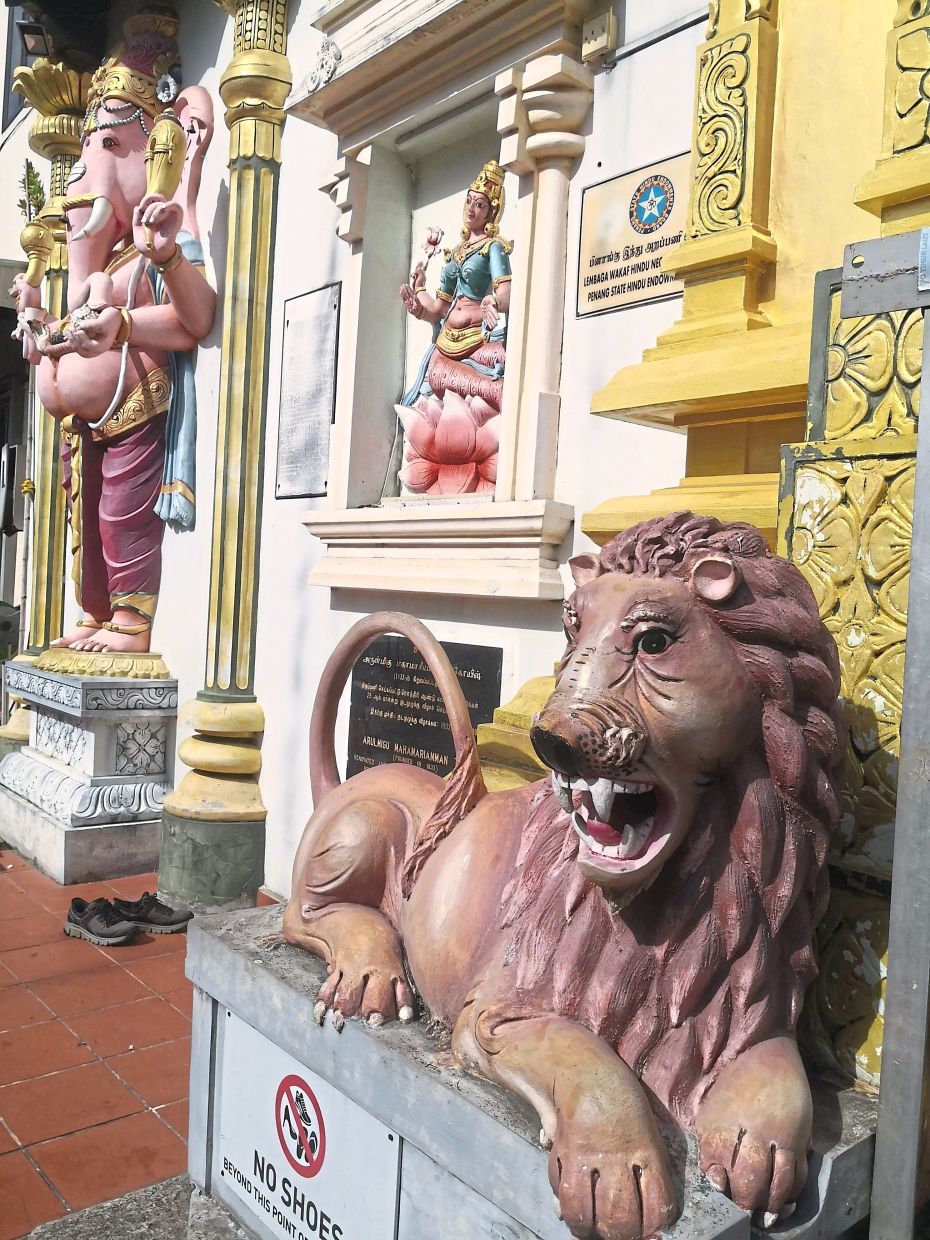
Added during the 1998 makeover, the lion sculptures flanking the main temple entrance do not merely serve as decorative inclusions. In essence, these regal figurines serve as powerful spiritual symbols representing strength, courage, authority and divine power.
The formidable presence of these guardian sentinels are believed to help ward of negative elements while protecting the temple’s sanctity.
At the same time, these majestic creatures are closely associated with the Goddess Durga who is usually depicted sitting astride a lion to symbolise immense power, courage and mastery over inner demons like anger, ego and lust.
Emulating these noble virtues is often seen as a way to help devotees achieve spiritual strength and overcome adversity encountered in their lives.
Apart from the lion sculptures, Goddess Durga is also celebrated during the Navarathiri festival which takes place annually between October and November. Vegetarian meals are served during the nine-day festivity which culminates in cultural music and dance performances as well as a grand chariot procession through the streets of Little India.
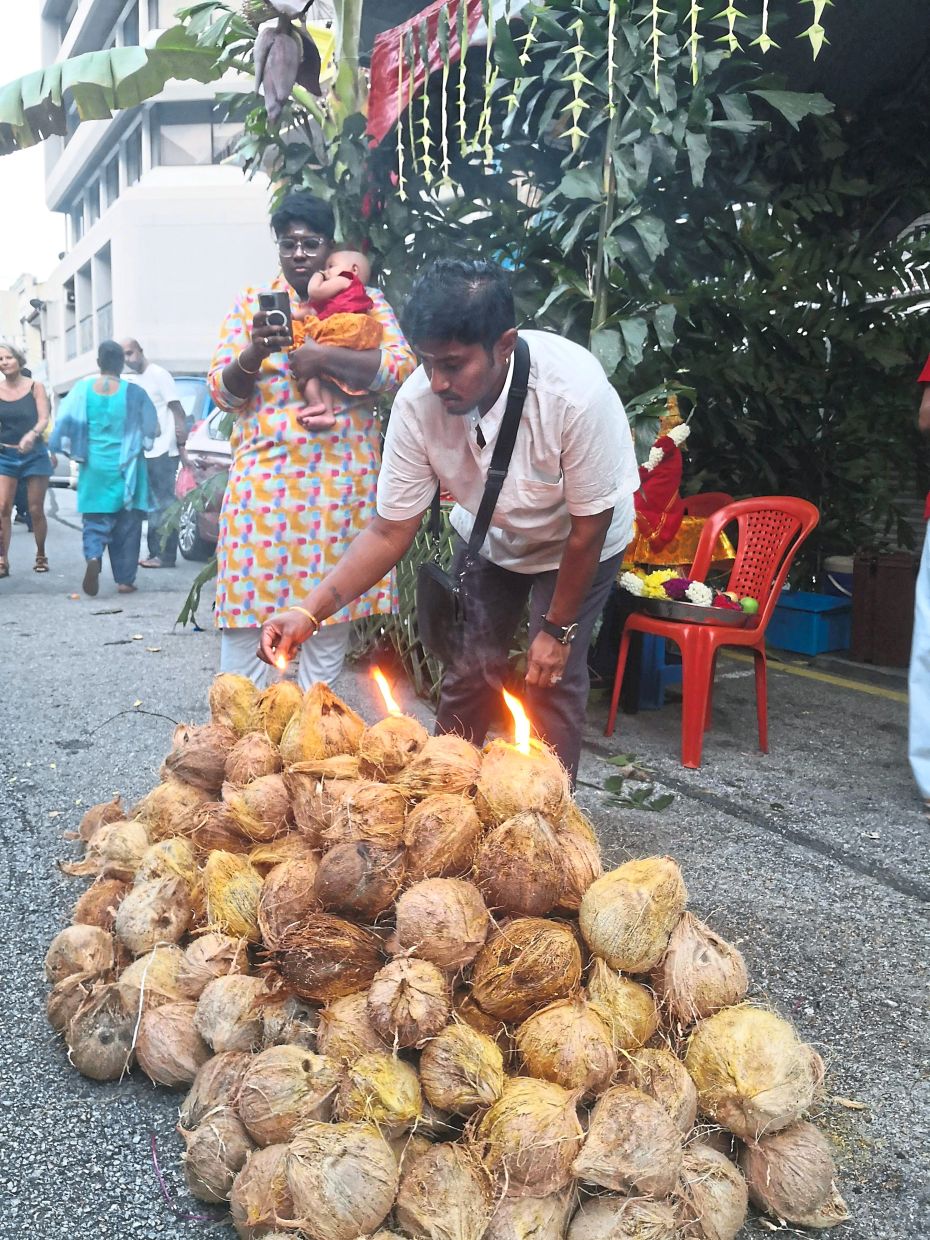
While other celebrations like Chithra Pournami and Deepavali enjoy equal prominence at Sri Mahamariamman Temple, it is Thaipusam that receives the most attention and draws the largest crowds.
Victory over evil
Introduced to Penang through the South Indian diaspora that arrived primarily during the late 18th century, this three-day festivity commemorates the occasion of Lord Murugan receiving the sacred vel or spear from his mother, Goddess Parvati, to eliminate the evil force of Soorapadman and restore prosperity and well-being to mankind.
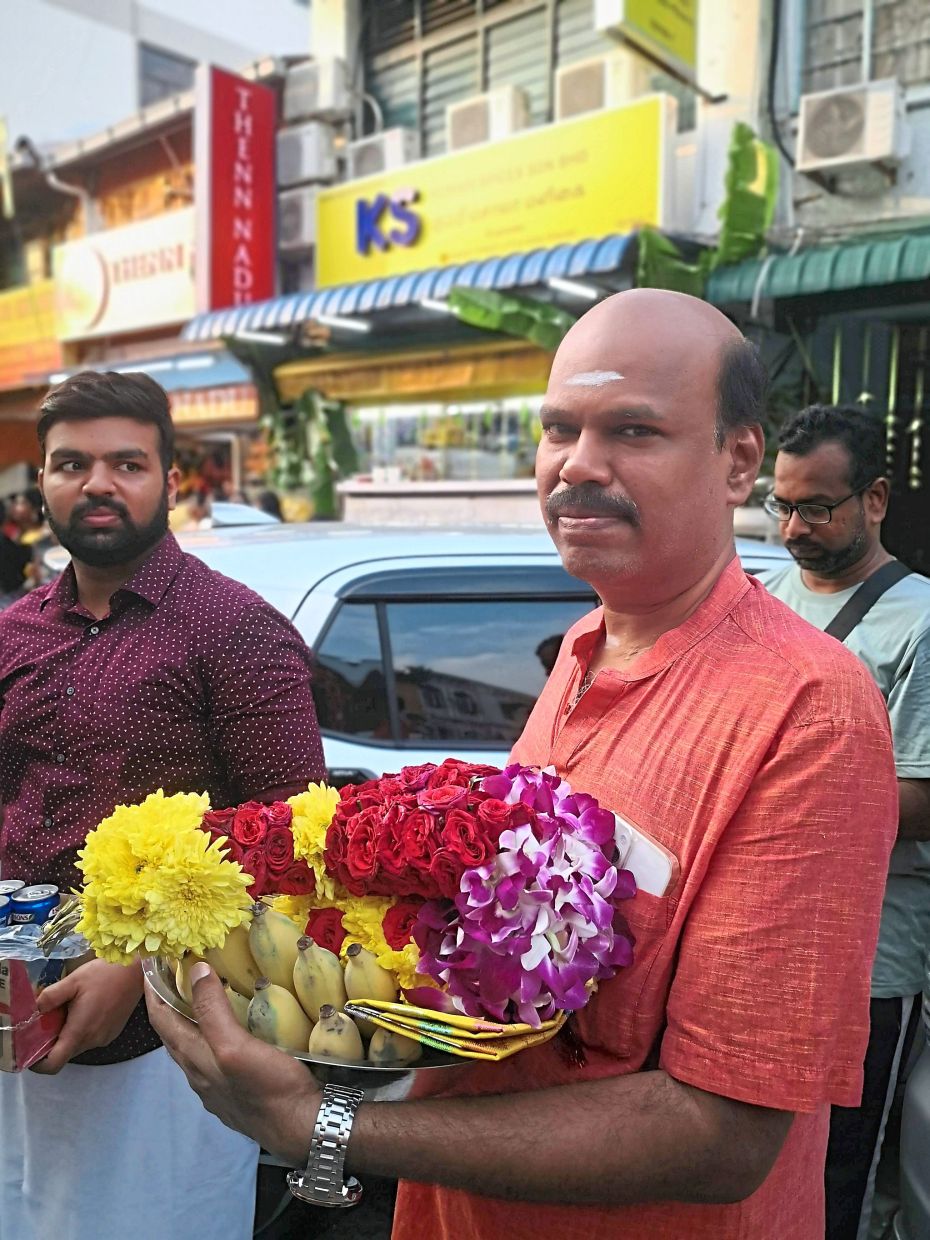
This auspicious period witnesses the faithful seeking blessings, fulfilling vows and offering thanks to Lord Murugan while bearing milk pots on their heads or kavadis with body and facial piercing.
Beginning in the wee hours of the morning, two simultaneous chariot processions – the silver chariot from Lebuh Penang’s Kovil Veedu Temple carrying the statue of Lord Murugan and the golden chariot from Lebuh Queen’s Sri Mahamariamman Temple transporting the deity’s sacred vel – take nearly an entire day to slowly weave through crowd-filled streets in George Town. Eventually they will reach their destinations in Jalan Kebun Bunga, close to the Penang Botanic Gardens.
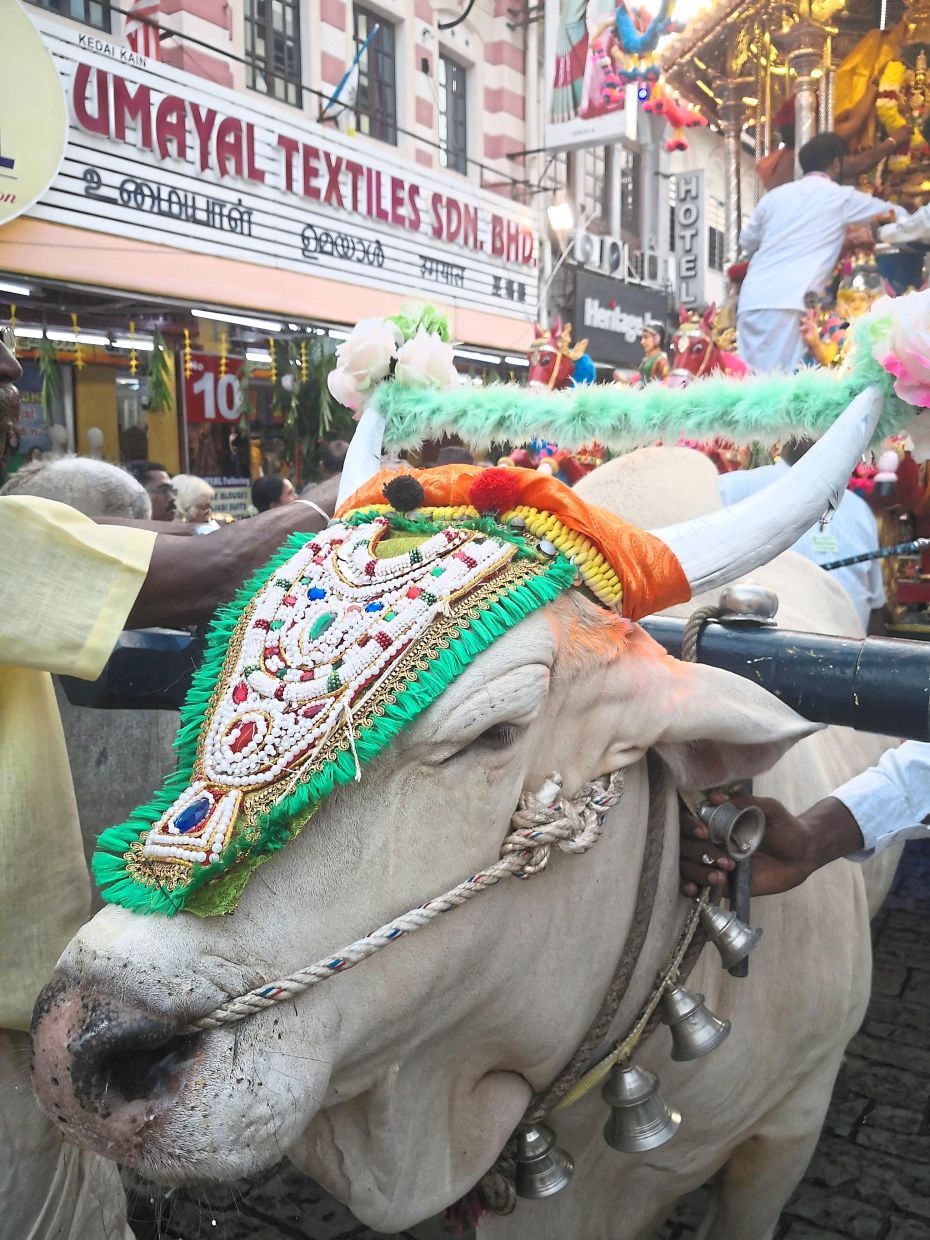
The older of the two, the silver chariot was constructed in Tamil Nadu, India and shipped to Penang in January 1894 while the fairly recent golden chariot was first used in 2017. Both, however, share the similarity of being drawn by alternating teams of oxen along the 9km route.
A fresh pair of bulls is deployed at each kilometre mark to avoid over-exertion.
Using bulls in both chariot processions is a time-honoured Hindu tradition that draws inspiration from Nandi, the sacred bull that is said to the protector of Lord Shiva’s family members including Lord Murugan who is his son.
Often depicted as a seated white bull facing the main shrine in temples, Nandi is widely considered as Lord Shiva’s chief attendant. It is revered by worshippers as a dependable divine guardian that represents strength, devotion, righteousness, loyalty, spiritual discipline and meditative patience.
The final leg of the procession involves a 513-step climb up to the Arulmigu Sri Balathandayuthapani Waterfall Hilltop Temple. In comparison, Sri Subramaniar Swamy Temple in Batu Caves, Selangor has 272 steps.
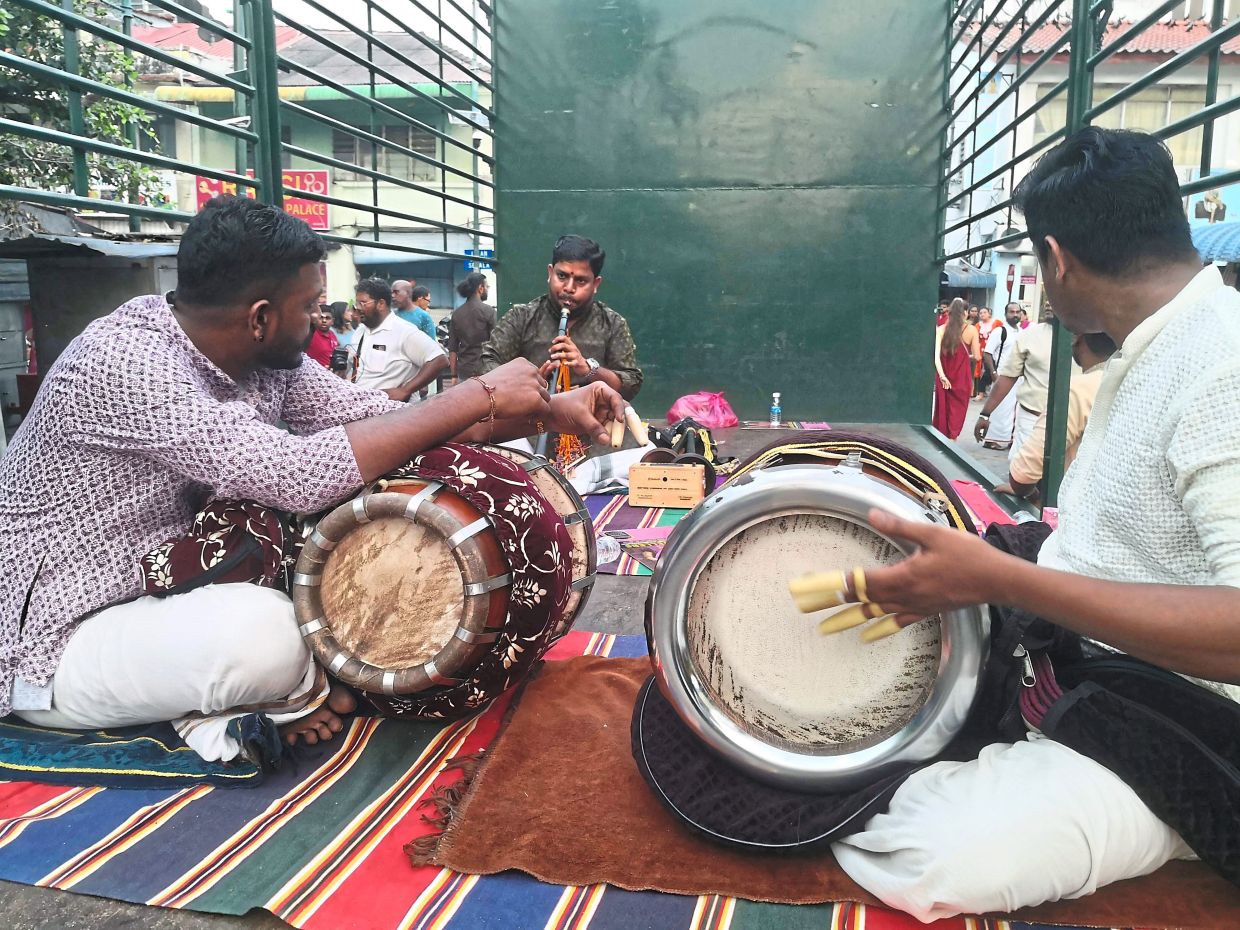
Vibrant, colourful and lively, the procession route is lined with a variety of stalls offering complimentary drinks and traditional Indian vegetarian food to the crowds of worshippers, while musical bands complete with drums and clarinets add to the festive mood.
The celebration comes to a ceremonious end three days later after the chariots depart Jalan Kebun Bunga at dusk and arrive back at their respective temples after dawn the next morning.
Thaipusam is also celebrated on a grand scale at the Batu Caves temple complex, the Arul Subramaniar Temple in Ipoh, Perak, and the Sri Subramaniya Swami Devasthanam Temple in Sungai Petani, Kedah.
Travel notes
How to get there: Sri Mahamariamman Temple is located at Lebuh Queen in George Town, Penang.
Although there are numerous buses that service the area, it is recommended that visitors take advantage of the free CAT shuttle bus service that runs on a regular loop around major tourist spots within George Town.
Alight at Station 3 and cross Jalan Masjid Kapitan Keling to reach Lebuh Queen. For more information, visit the My Penang website.
Opening hours: Daily from 6.30am to noon, and 4.30pm to 9pm.