
China's ice and snow tourism is entering “a new stage of sustained prosperity”, with a record-high 14,075 related enterprises operating in the sector at the end of 2025, according to a report released recently by the China Tourism Academy (CTA).
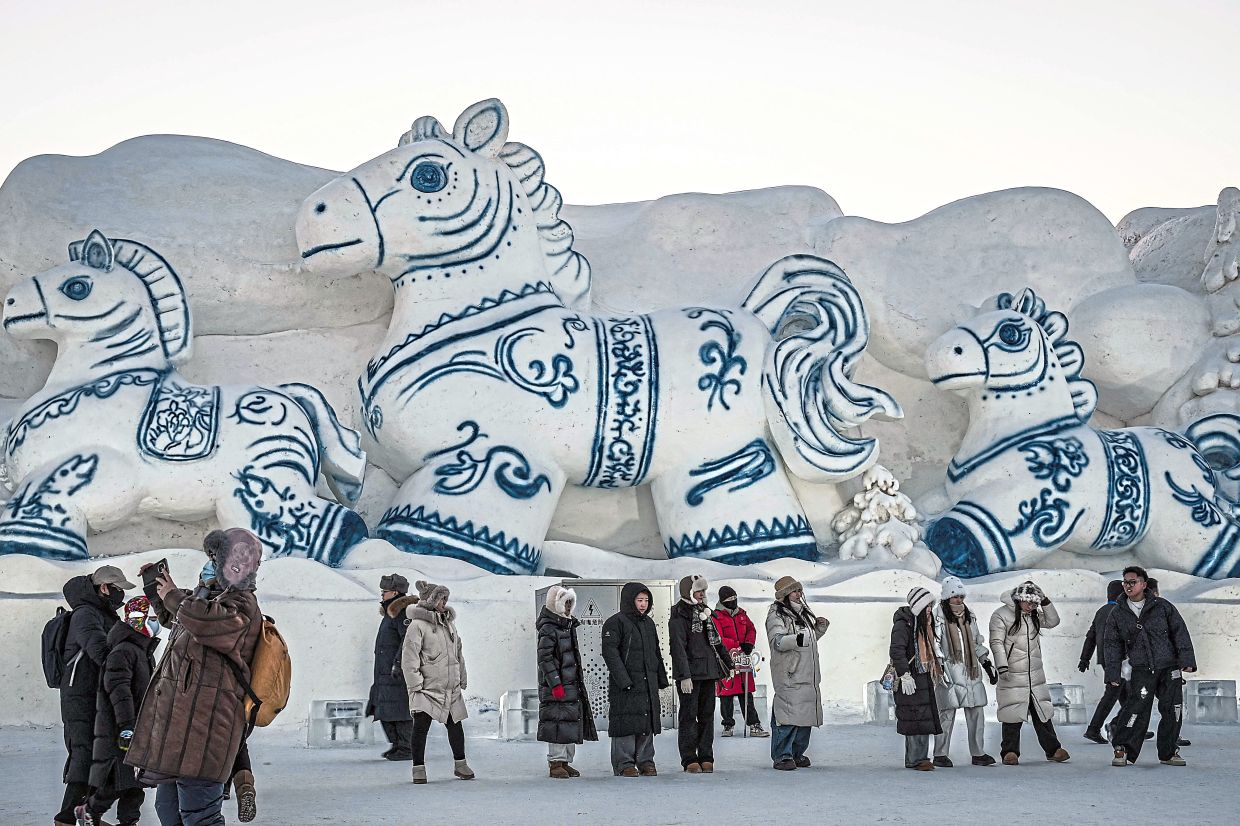
The report, released at the Ice and Snow Tourism Development Forum 2026 in Harbin City, attributed the scale to a surge in innovative tourism products, including ice sculpting, ice and snow photography, and themed travel experiences across China.
Iconic destinations like the Harbin Ice-Snow World and the Changbai Mountain ski resort have played a key role in driving the growth.
CTA researcher Han Yuanjun highlighted that such innovations have sustained the strong demand for ice and snow tourism. A recent CTA survey found that 74.8% of respondents planned to take part in related leisure activities during the 2025-2026 winter season, and 50.5% intended to travel long distances to engage in winter tourism.
He noted that consumer spending is shifting from typical “hard expenses” like transportation and accommodation to more “soft expenses” such as entertainment, cultural experiences and technology, reflecting a shift in both the quality and structure of winter tourism in China.
The report also notes the growing demand for indoor ice and snow entertainment, with south China investing CNY30bil (RM17.38bil) in the sector in 2025, accounting for 30% of the total.
Related indoor complexes have become a key investment area, fuelling year-round tourism demand.
Liu Huaxiang, another researcher at the CTA and an associate professor at Hangzhou Normal University, emphasised that China has developed a comprehensive industrial chain driven by ice and snow tourism, covering areas such as culture, sports and equipment manufacturing.
Domestic products such as skis, snowboards and snow wax cars are expanding their global presence through cross-border e-commerce, opening new avenues for international collaboration and industrial growth, she said.
China is positioning the ice and snow economy as a key driver of development and consumption.
The country stressed efforts to “expand the supply of high-quality goods and services” at the recent Central Economic Work Conference, and experts are anticipating a more vibrant tourism market this winter.
Earlier this week in Harbin, the 42nd Ice and Snow Festival opened at Harbin Ice-Snow World – the world’s largest ice and snow theme park and the city’s landmark tourist attraction.
During the recent three-day New Year holiday, Harbin welcomed over 4.1 million travellers, who spent a total of CNY5.56bil (RM3.22bil).
As the winter tourism peak approaches, seasonal destinations across China are unveiling glittering new projects to attract visitors, including hot spring campsites, riverside carnivals, and an ice and snow sports Super League featuring professional tournaments and entertainment-oriented events like mass snowball fights. – Xinhua