
Dragging our bags out of the train in Krakow, my friend and I wondered if renting a car would have been easier. All our doubts disappeared, however, once we realised that Poland’s public transportation was efficient and easy to navigate, making it convenient to explore the city.
We spent three days in Krakow, which was enough as we had many more places to visit in Poland and the Czech Republic during our recent holiday.
At first, the public bus system was a little overwhelming, mostly because we couldn’t understand the language, but it was surprisingly simple once we got the hang of it.
Each bus stop had its own schedule pinned up, with a list of routes and times. To navigate, we used Google Maps – it told us which bus to board and where it was headed.
We opted for a one-day bus pass. It saved us the hassle of buying a separate ticket every time we hopped on a bus. Some bus stops have ticket machines, but if you can’t find any, you can also buy tickets on the bus. Just don’t forget to validate them once you’re on board.
Most buses announce the next stop, though every now and then one (or two) it would be skipped. This means that it is best to just count how many stops you need to go through before reaching your destination.
We liked the convenience of the punctual buses, but what we loved even more was how pedestrian-friendly the streets were in Krakow. The wide lanes made walking around easy and safe.
Stepping back in time
A 20-minute walk from our accommodation brought us to the heart of Krakow’s Old Town, where we began our exploration.
We set out early to avoid the throng of tourists.
Our walk was a treat for the senses. We admired the autumn foliage, smelled the faint aroma of coffee drifting from cafes, and occasionally heard the screech of trams crossing through the streets.
Prior to entering the historic district, we stopped at a park nearby to enjoy the sandwiches we had grabbed from a local convenience store called Zabka. We also tried the “Zabka hot dog”, a grilled sausage tucked into a baguette-like bun.
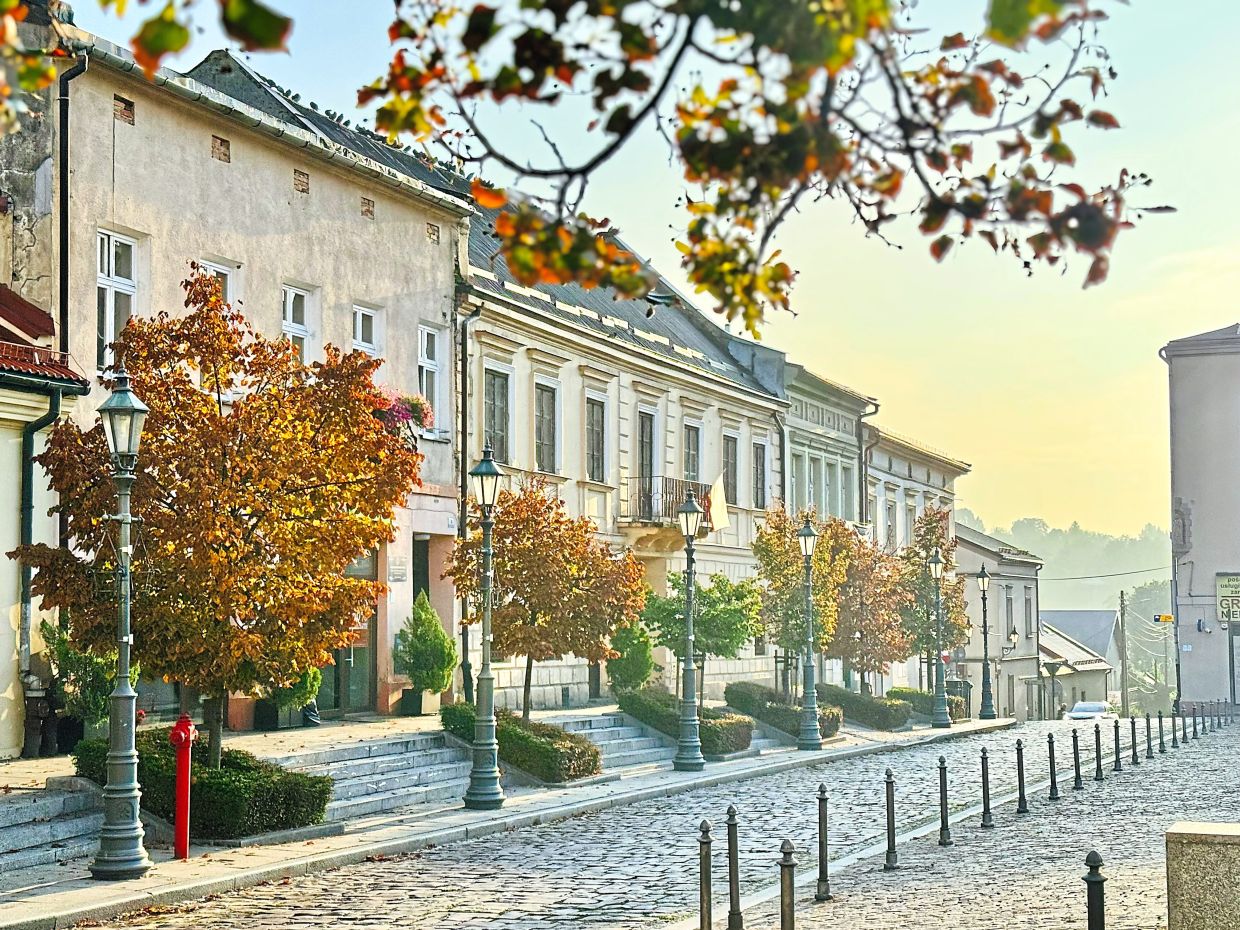
We watched locals stroll by with their dachshunds, and cyclists whizz past us. People were already out and about, either heading to work or going about their daily routines.
We then made our way toward the 15th-century Barbican, a fortress that once guarded the Old Town centuries ago. Passing through St Florian’s Gate, the medieval Gothic gate tower, we found ourselves on cobblestone streets lined with charming old buildings.
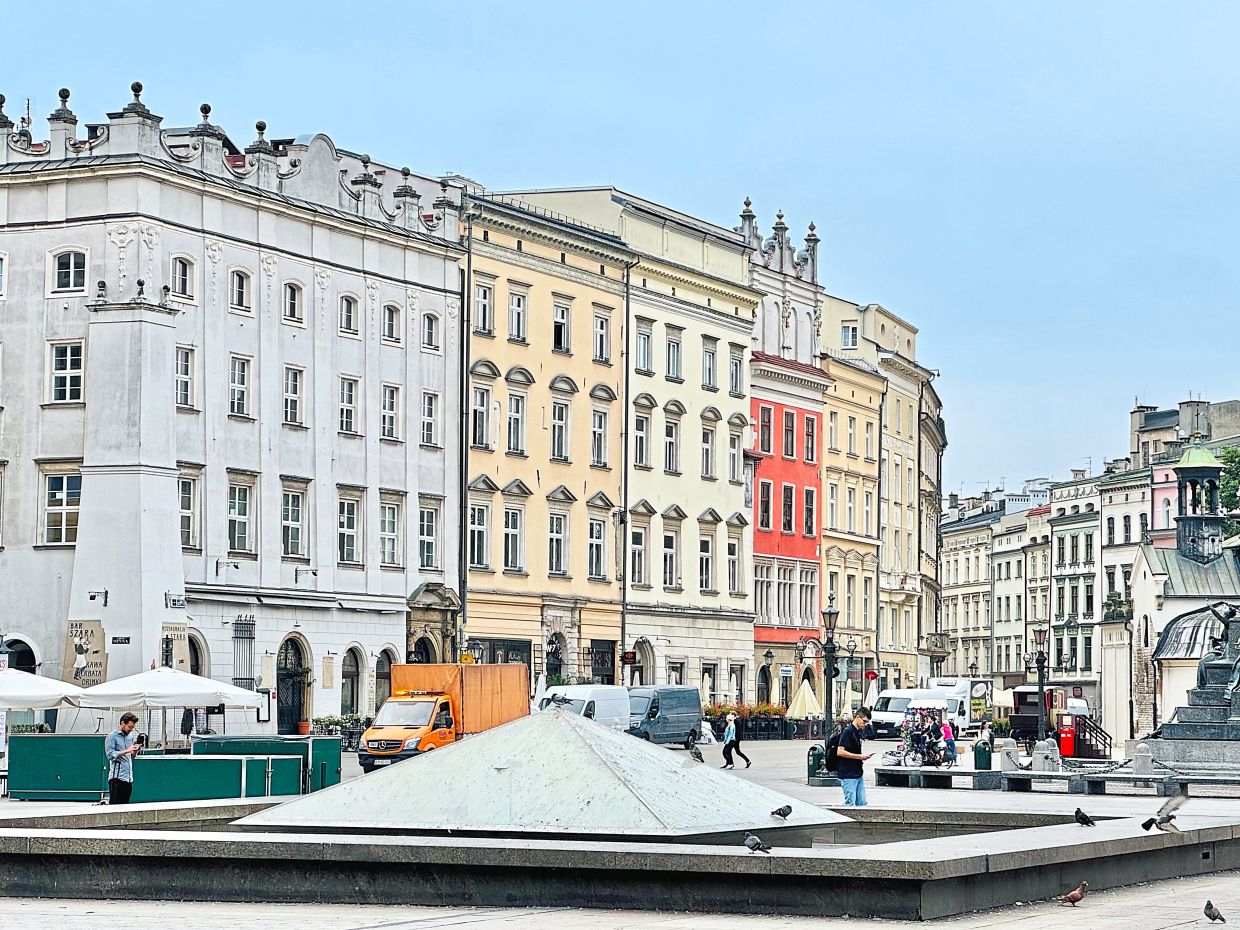
Many now house cosy cafes and souvenir shops, yet they still hold traces of the city’s history in their architecture: arched windows, ornate facades and carved doorways.
(Tip: Wear comfortable shoes. The cobblestones may add character, but they are not made for all types of shoes, especially heels. We noticed a few people struggling as their footwear got caught between the stones.)
We moved on to Krakow’s Main Market Square, where the stunning 14th-century St Mary’s Basilica came into view.
Its twin towers – the Bugle Call Tower and Bell Tower – stood side by side, but not quite the way we expected. One tower was 82m, while the other was shorter at only 69m.
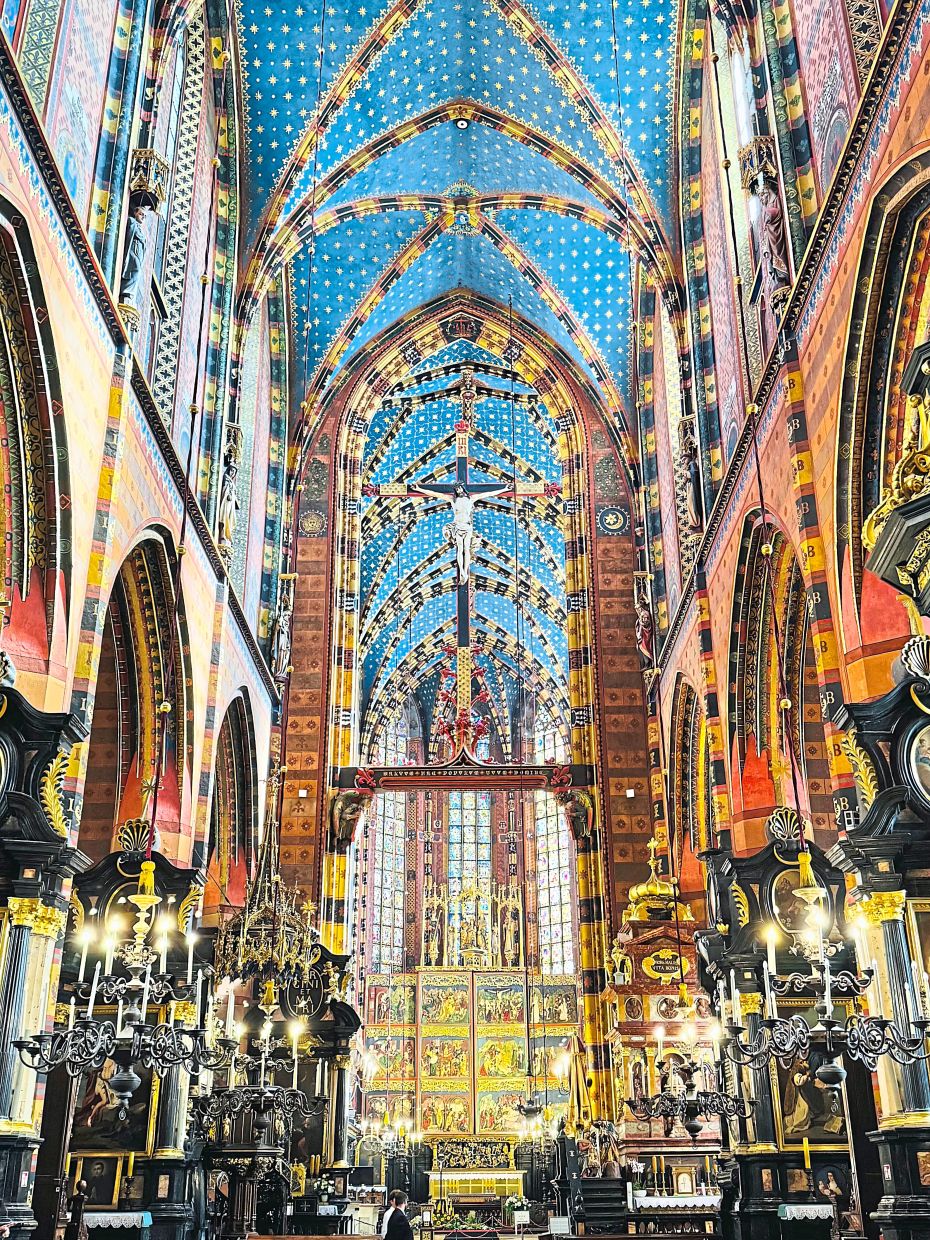
Inside, the basilica was embellished with intricate details. The vaulted ceiling, painted in blue and gold to resemble a “starry sky”, and the centuries-old wooden altar, carved with delicate floral motifs, made the sacred space a visual delight.
You can enter the area near the main entrance for free, but to admire the interior up close, you’ll need a ticket.
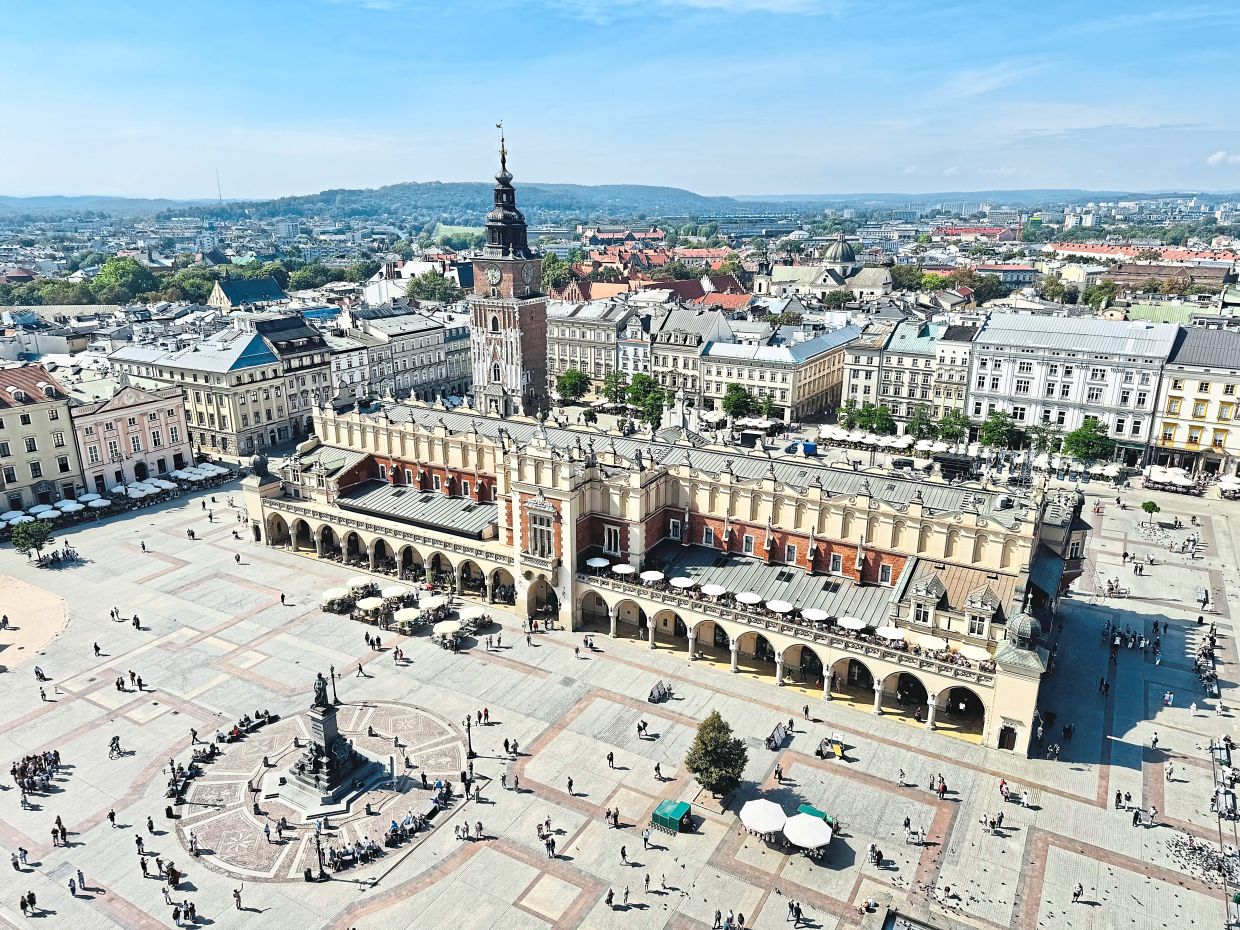
If you’re in for a bit of exercise, you can also climb the stairs that spiral up to the Bugle Tower’s viewing platform for a small fee. From the top, the view of the square is picturesque, with the colourful buildings and lively crowds going about their business below.
Just as we were about to make our way down, the bugle player appeared in his uniform and began the traditional hourly call that echoed across the square. This tradition, called the “Hejnal Mariacki”, has been around for 700 years.
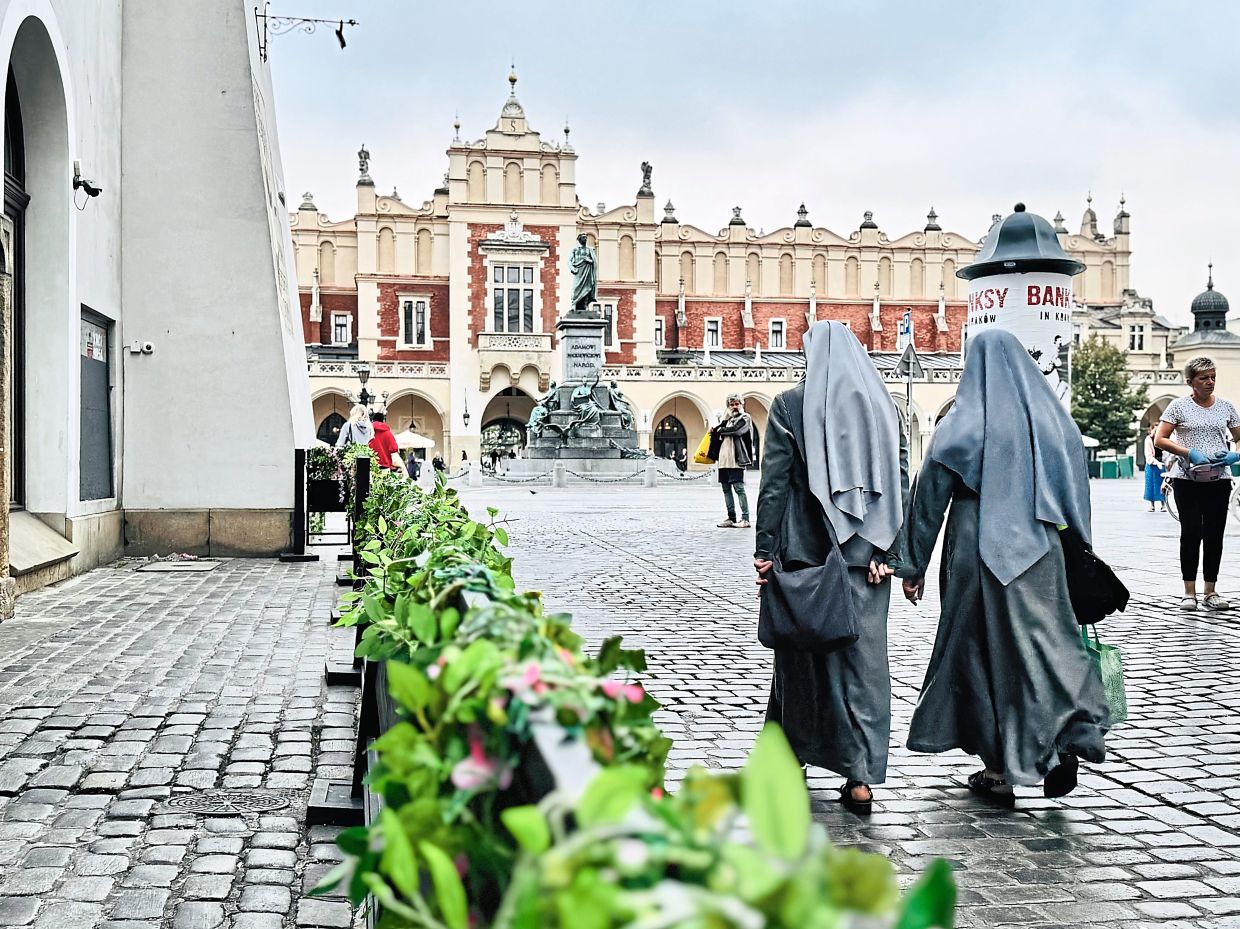
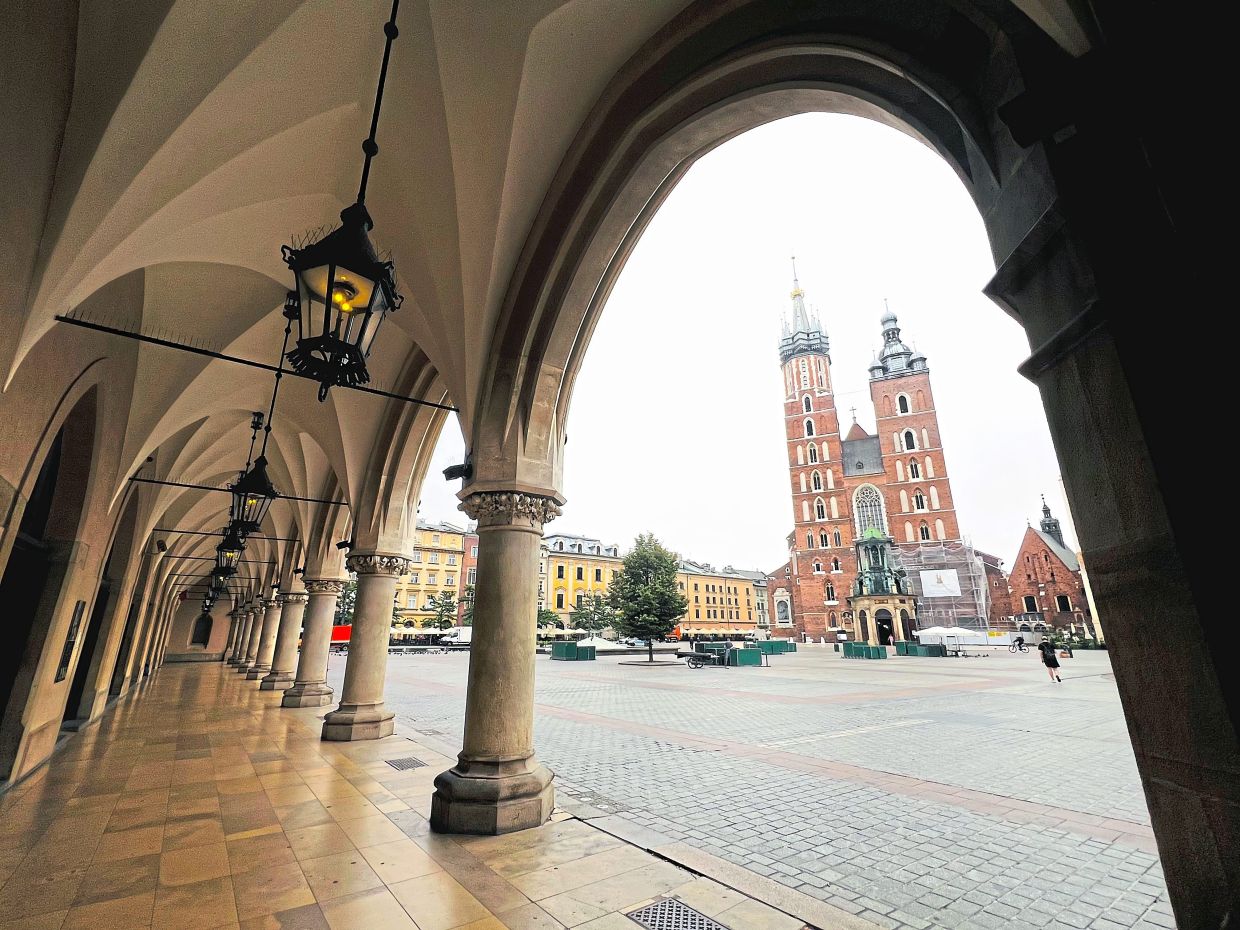
After exploring the basilica, we visited the building opposite it – the Cloth Hall. It was once a thriving trading hub and is now home to souvenir shops.
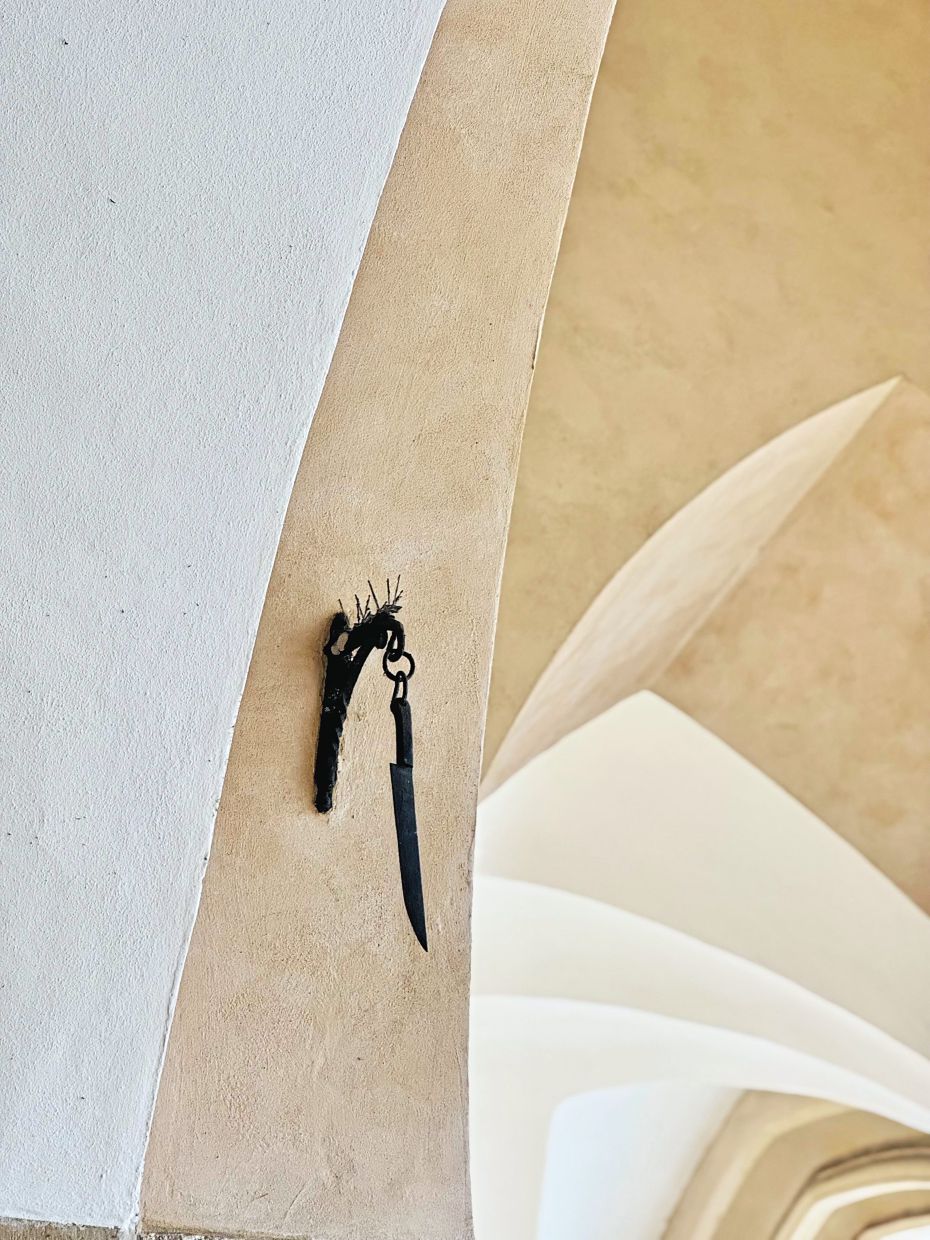
An old, weathered knife displayed at one of the entrances piqued our interest. We later learned the story behind the knife – and surprisingly, its link to the basilica’s uneven towers.
As legend has it, the towers were built by two brothers. The older brother’s tower was growing much taller faster, causing the younger brother to stab him to death out of jealousy. Consumed by guilt, he later confessed to this before jumping off his own (now taller) tower.
Old Town is also where you’ll see the humble blue street carts selling obwarzanki, traditional Polish pretzels shaped like braided rings. But if you are on a budget, we recommend buying them outside the main tourist area.
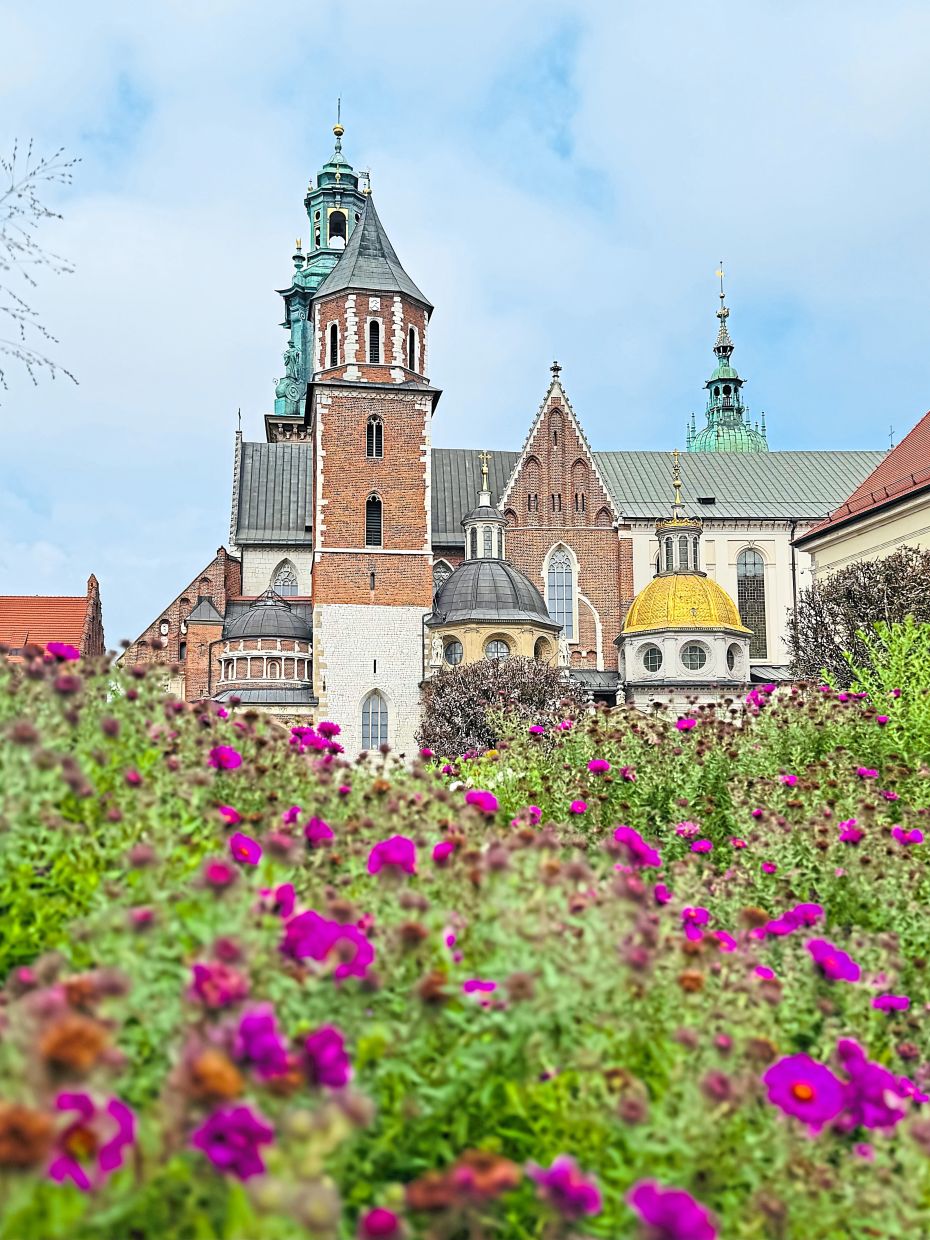
Another thing we loved about exploring the area is that Wawel Castle is just a stone’s throw away.
The two main routes leading to the castle are Kanonicza Street and Grodzka Street.
We took the latter, along which stands the beautiful baroque St Peter and Paul’s Church, its entrance lined with statues of the Twelve Apostles.
Next to it is St Andrew’s Church, one of the city’s oldest stone churches. And best of all, both are free to visit.
When we finally reached the end of the street, we were greeted by what looked like an endless flight of steps leading up Wawel Hill.
The climb was a literal uphill battle for us, especially after hours of walking around town. But our tiredness vanished when we found out some of the castle’s exhibitions were free.
For centuries, the Wawel complex functioned as the residence of Polish kings. Today, it remains one of Poland’s most important art museums, hosting exhibitions throughout its grand halls and courtyards.
Rather than taking the typical exit after our tour, we ventured through the Dragon’s Den. The passage led us down into a cavern, said to be the home of Krakow’s legendary Wawel Dragon, and brought us to the banks of the Vistula River.
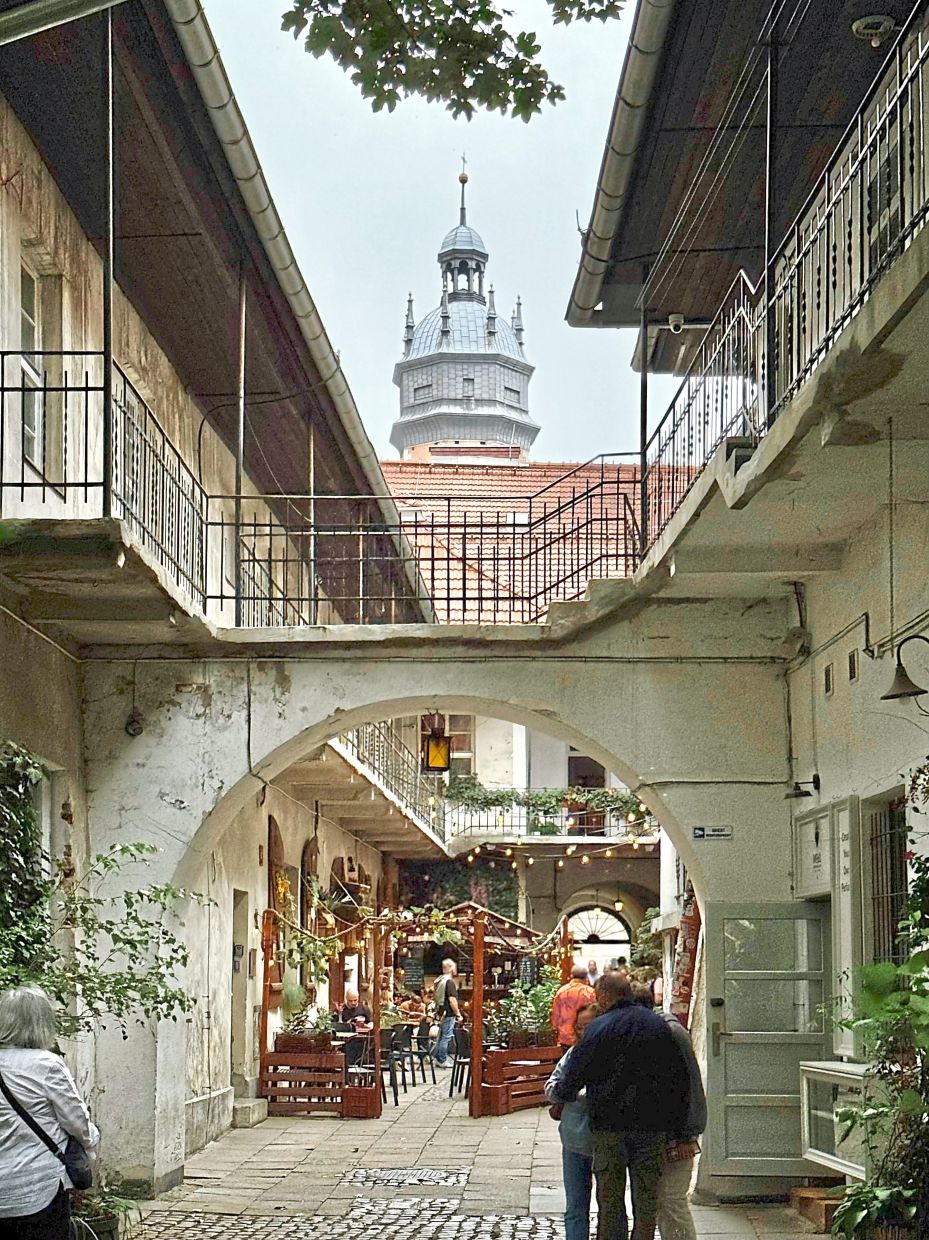
We learned more about Krakow on a free guided tour of the city’s historic Jewish Quarter, Kazimierz.
The nearly three-hour tour took us through the rich history of the neighbourhood and its people.
Our guide, Karolina, was knowledgeable about the local history and had a way of bringing stories to life, painting vivid pictures in our minds.
We stopped by Poland’s oldest synagogue and saw the filming location of Schindler’s List, among other equally interesting spots.
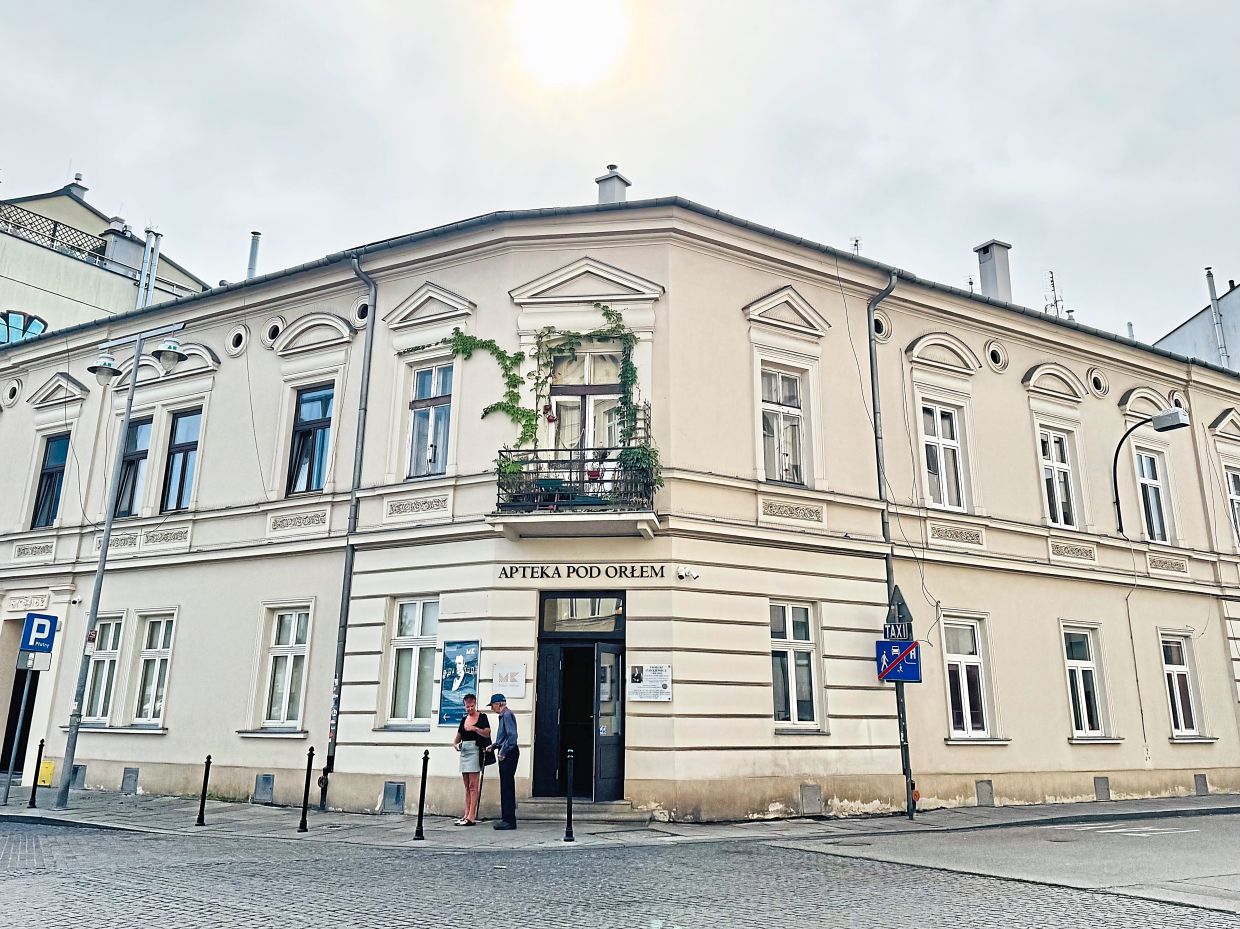
Just outside the Ghetto Pharmacy, which we visited on its free admission day, stood several gigantic metal chairs. This was the Empty Chairs memorial at Ghetto Heroes Square, put together in memory of the victims of the Holocaust.
Later, we wandered over to Plac Nowy, an old market square. The smell of food drew us to a stall selling zapiekanka, a Polish-style pizza with a perfectly crispy crust that we can still taste ... in our memory.
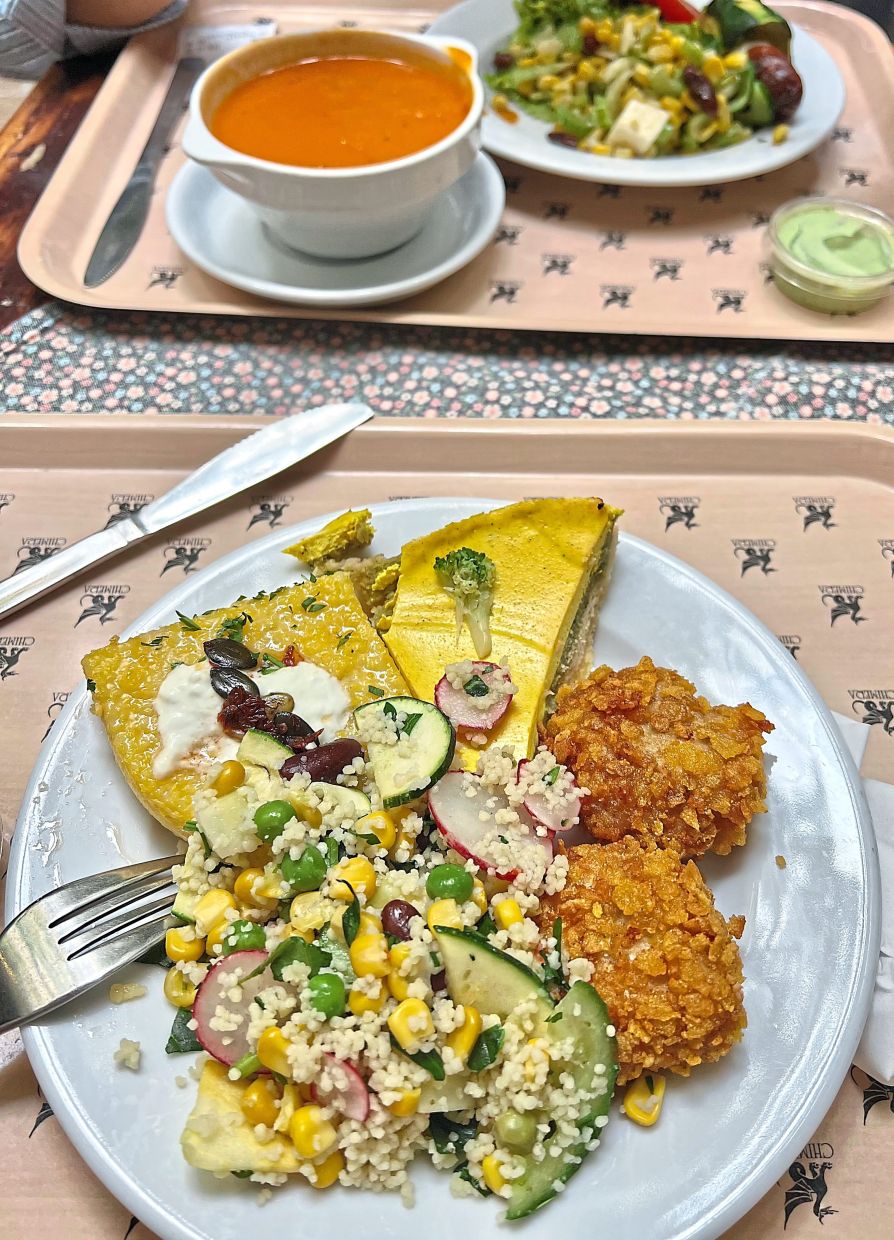
For an authentic taste of local flavours without breaking the bank, check out the traditional milk bars (bar mleczny). These government-subsidised eateries began during wartime to provide inexpensive meals for locals.
When in Poland, you have to try pierogi (local stuffed dumplings), barszcz (beetroot soup) and bigos (traditional hunter’s stew).
Beneath the surface
A cool breeze brushed against our faces as our group of 20 slowly made our way through the faintly lit passage.
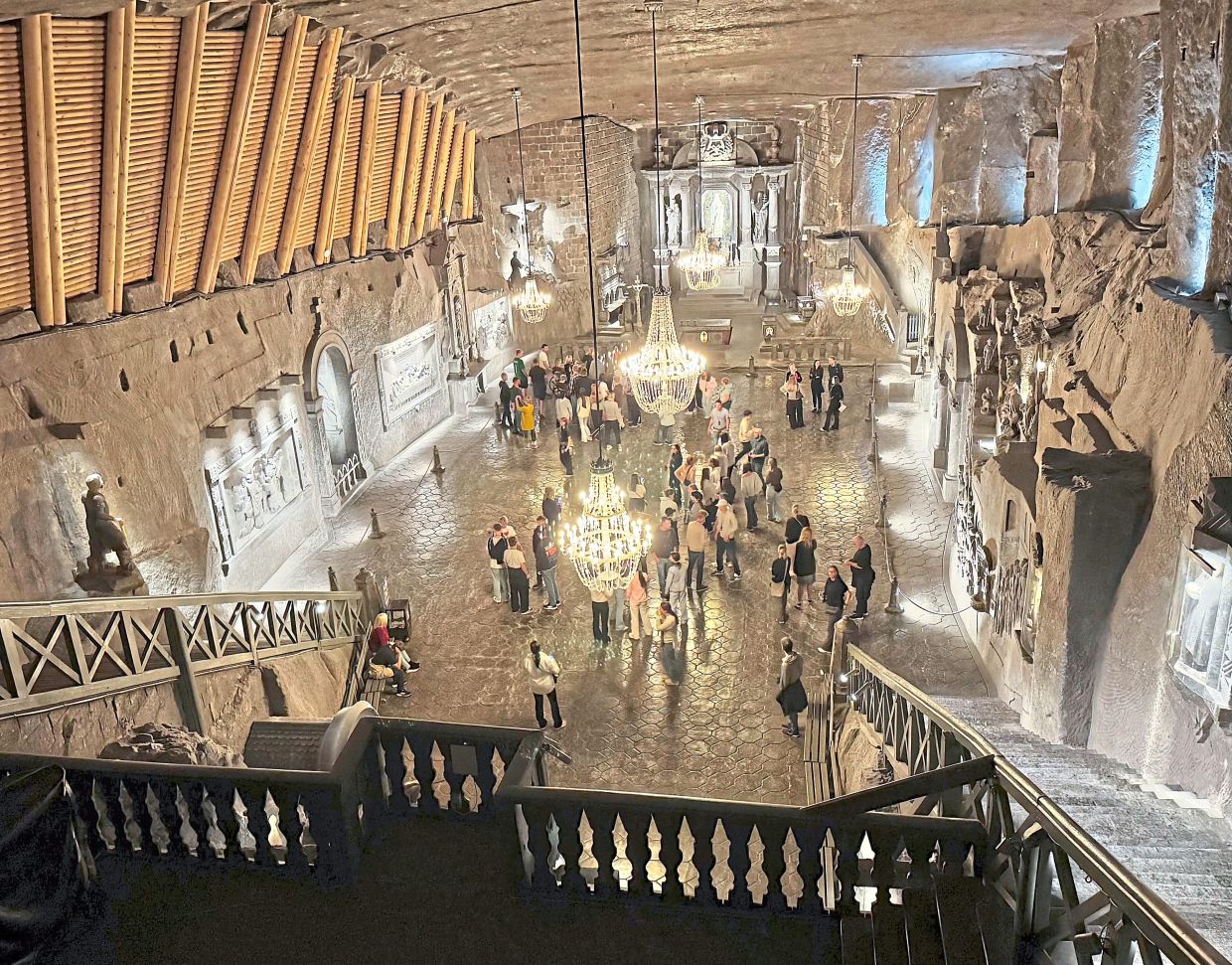
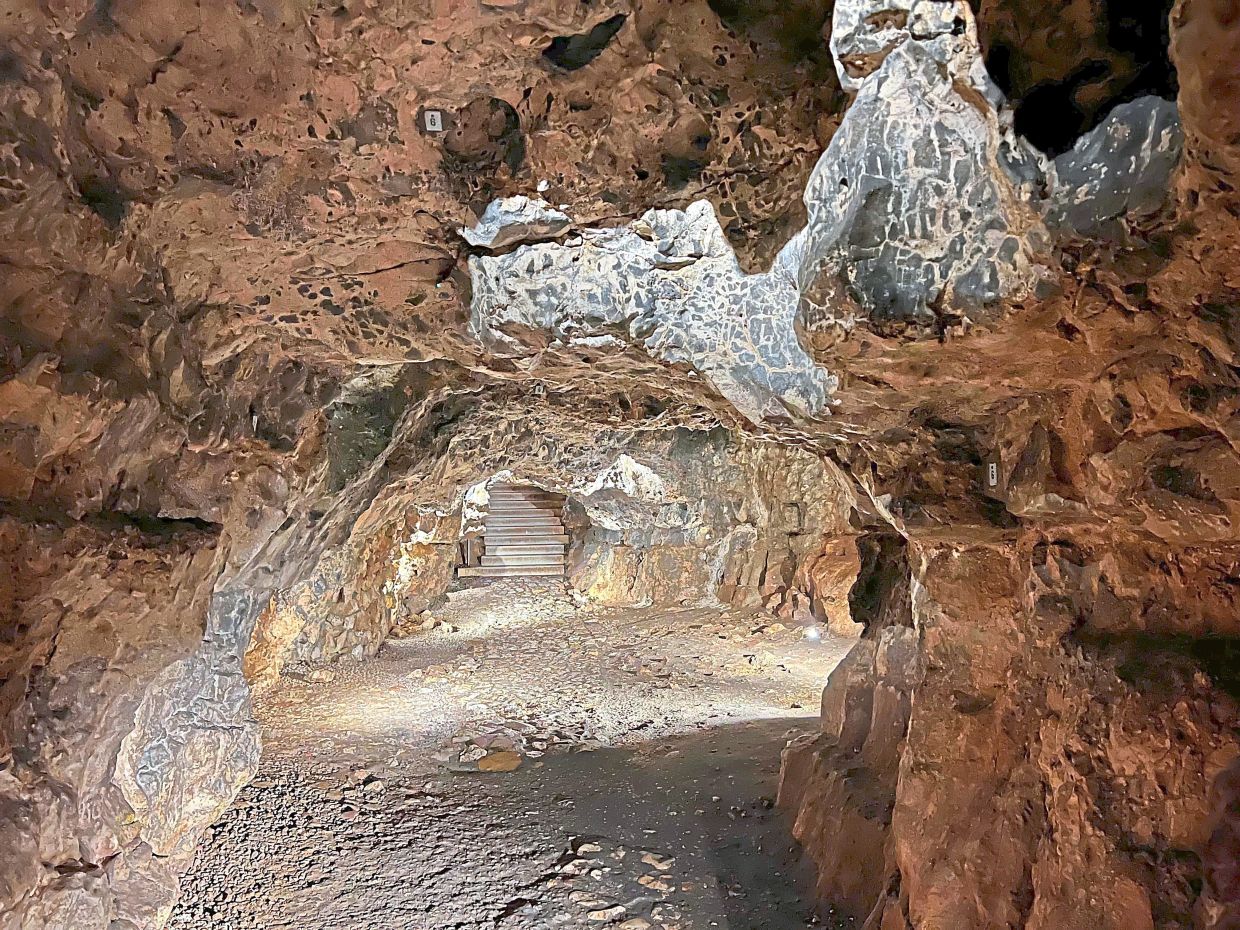
We descended a wooden staircase, going down more than 100m below the surface into a cave carved centuries ago in the Wieliczka Salt Mine.
Just a 35-minute bus ride from Krakow’s Old Town, the mine is one of Poland’s most well-known historical landmarks.
A Unesco World Heritage Site, it was once a major source of wealth (salt had been extracted here for over 700 years), from the 13th century until mining stopped in 1996.
The mine is a vast labyrinth – nearly 300km of underground corridors reaching a depth of 327m – and our guide reminded us that visitors only get to see merely 2% of it.
We walked through long tunnels separated by heavy wooden doors.
The walls, reinforced with timber, were painted white to brighten the dim corridors, which we thought was a clever touch.
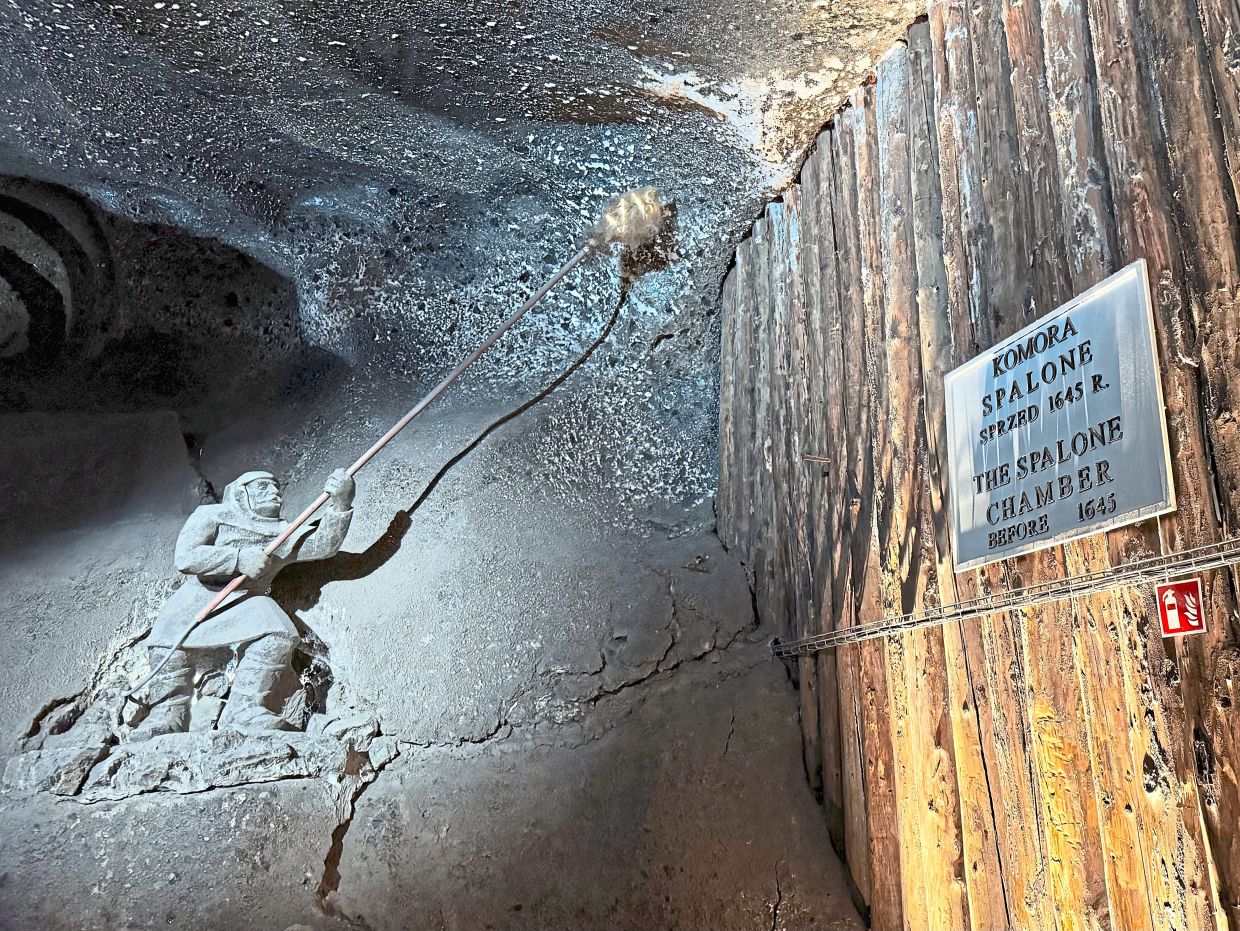
Every now and then, we’d step into a chamber decorated with salt sculptures. Our guide explained these masterpieces were made by the miners themselves.
There were even altar pieces and chandeliers made out of solid rock salt. The moment we laid eyes on one of the chandeliers, everyone let out a collective “wow”.
But what amazed us most was seeing the St Kinga’s Chapel in all its glory. Nothing online compares to being there in person. The entire chapel is carved from salt.
There are several chapels here. Our guide told us miners created these chapels because they spent long, gruelling hours underground. Praying below the surface meant they didn’t have to climb all the way back up to attend religious services.
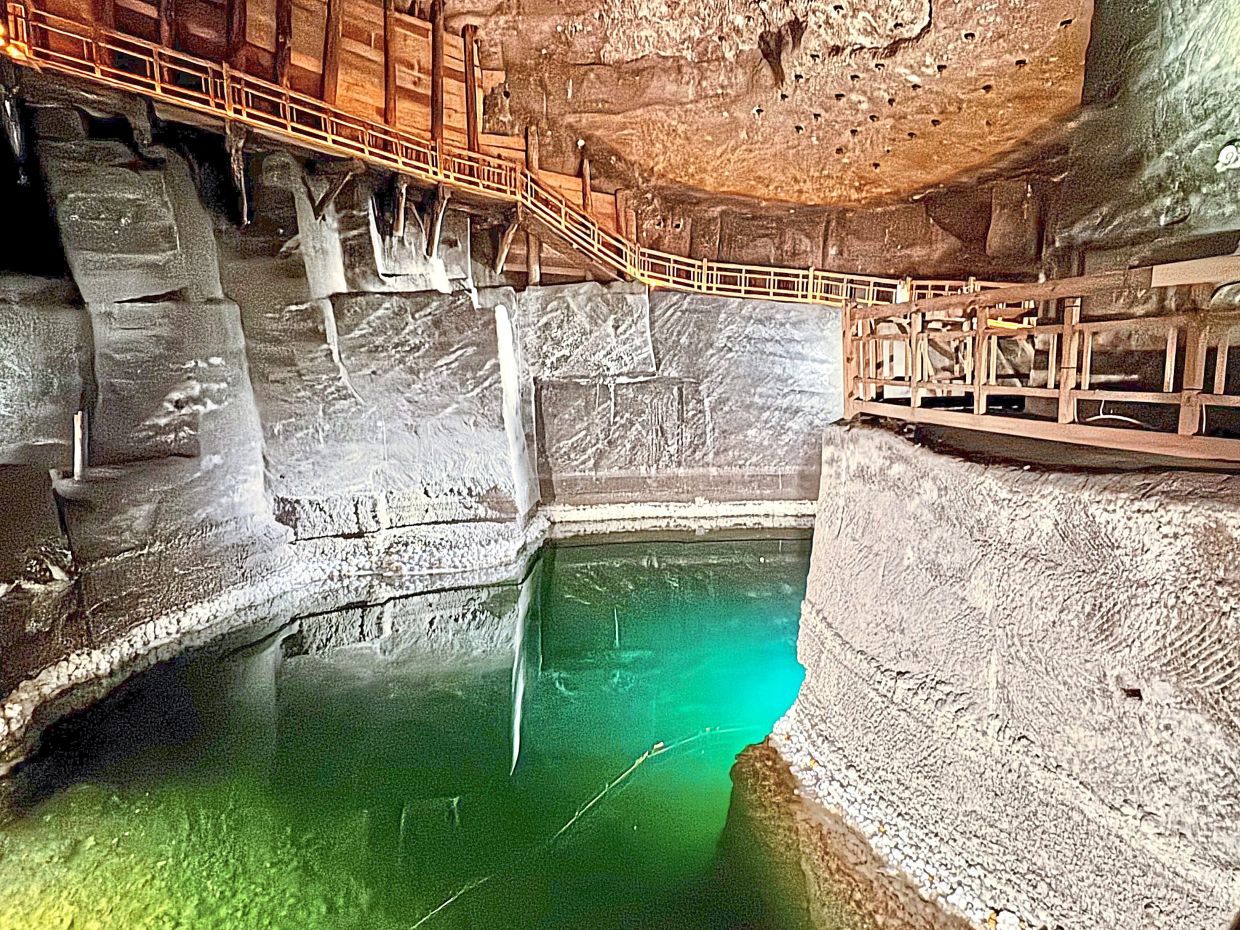
Later on, our path led us past a turquoise underground lake. The glowing pool looked almost unreal.
The mine is more than just a tourist attraction, its microclimate – clean and salty – is therapeutic. So breathe it in as much as you can.
Since the 19th century, Wieliczka Salt Mine has been known as a health resort. Many came for inhalation therapy and brine baths. Today, you can stay overnight at the resort to experience its healing benefits first-hand.
Highland charm
We eventually had to rent a car because we wanted to head out of the city. As our car wound its way closer to the countryside, the scenery changed. The landscape on both sides was framed by rolling hills and cows grazing on wide pastures that stretched as far as the eye could see.
That was when we knew we had arrived in Zakopane, a resort town tucked in the heart of Tatra Mountains.
Often called the “winter capital” of Poland, this ski town is about two hours from Krakow. The entire area usually comes to life in winter, with holidaymakers eager to ski there, but every season has its own charm, too.
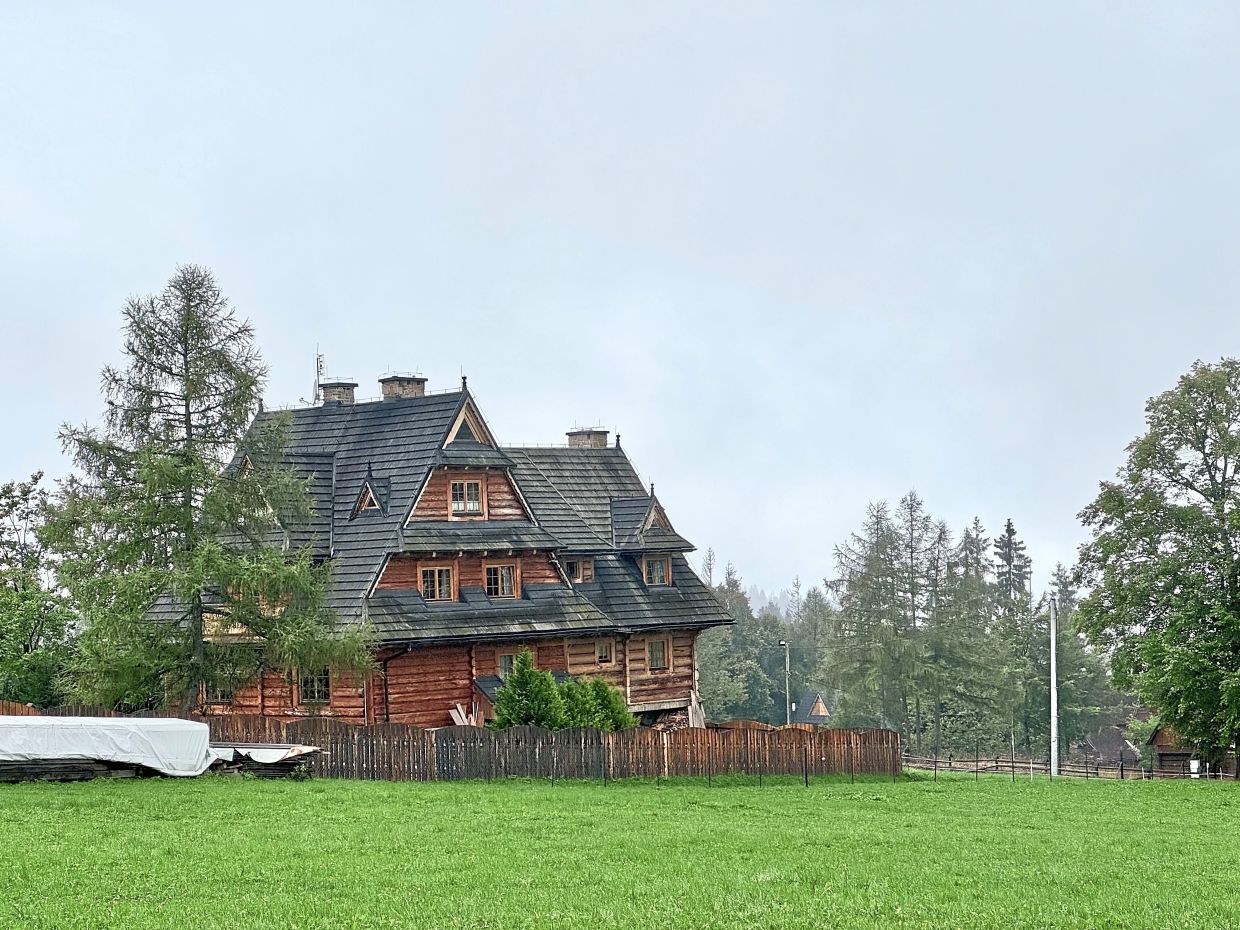
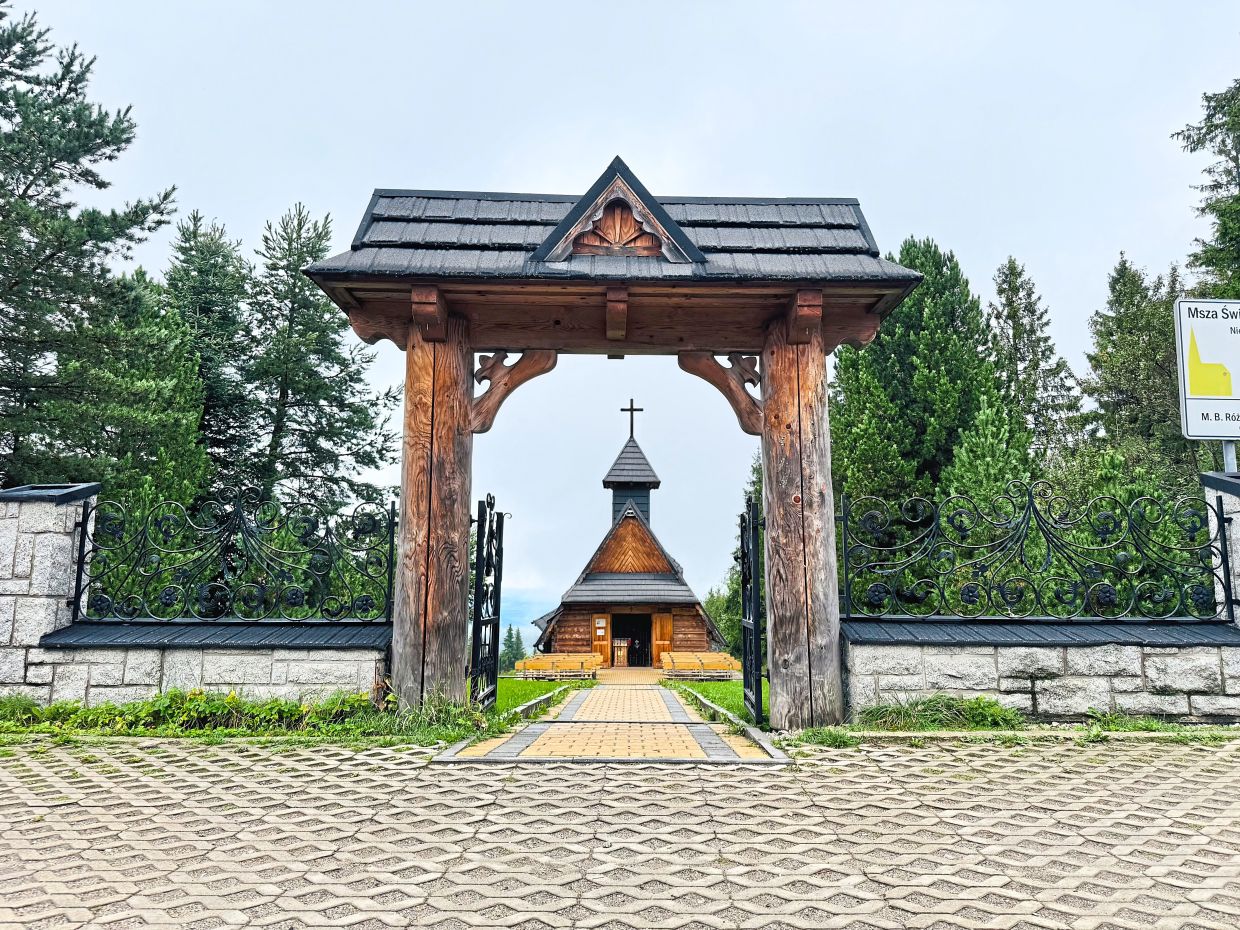
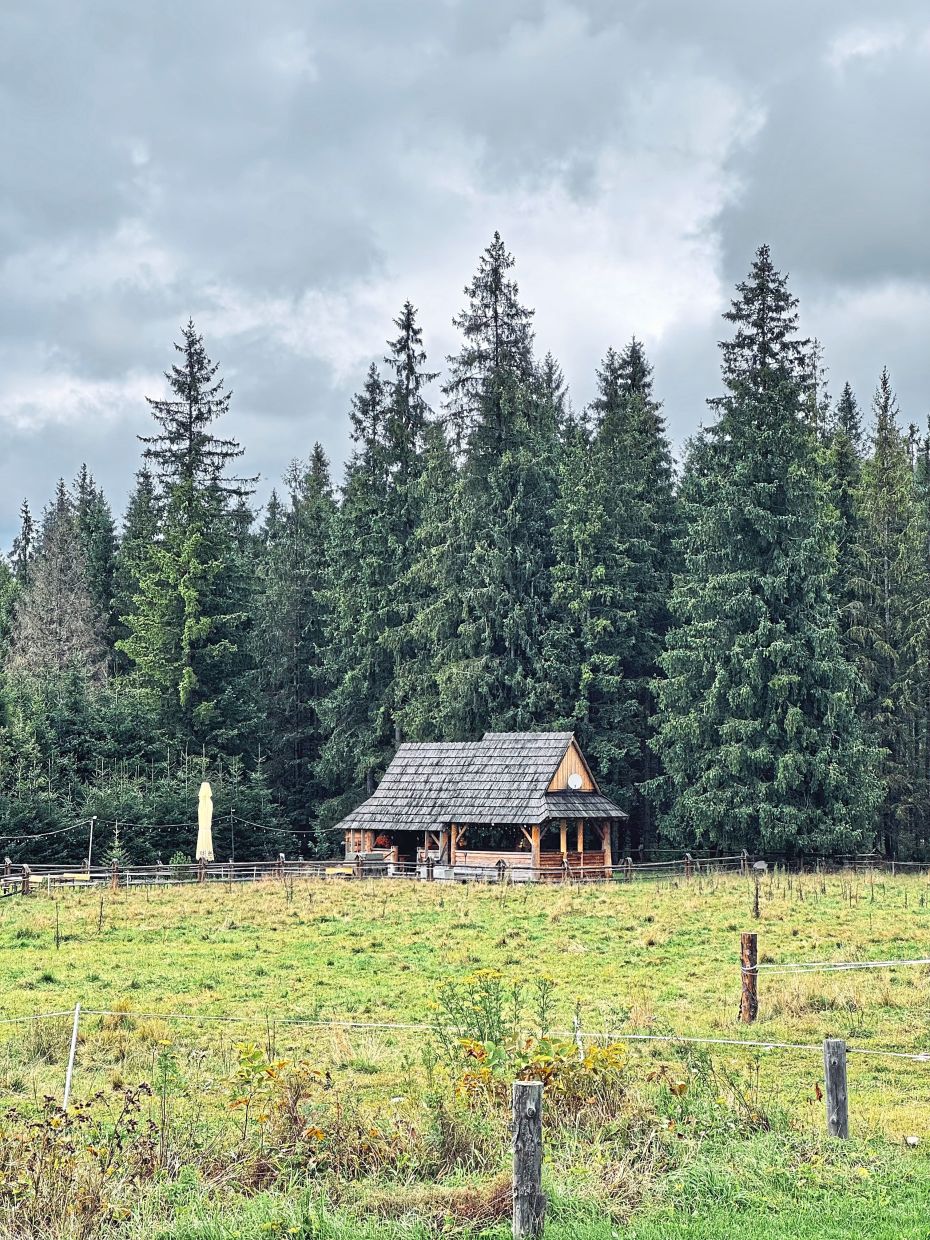
What really caught our eye were the town’s wooden homes. Our driver, Kornel, who was taking us and five other travellers from Australia and Britain on a day trip, told us these timber structures, topped with steep roofs, are a fine reflection of Goral tradition.
The Goral people, Poland’s highlanders, have lived in Zakopane for centuries.
The pitched roofs, Kornel shared, were made to survive heavy snow and harsh winter winds.
We took in the view one last time before continuing our journey to the Gubalowka Hill Funicular.
We joined the long line of tourists waiting to board the funicular; a short three-minute ride carried us up to Gubalowka Hill.
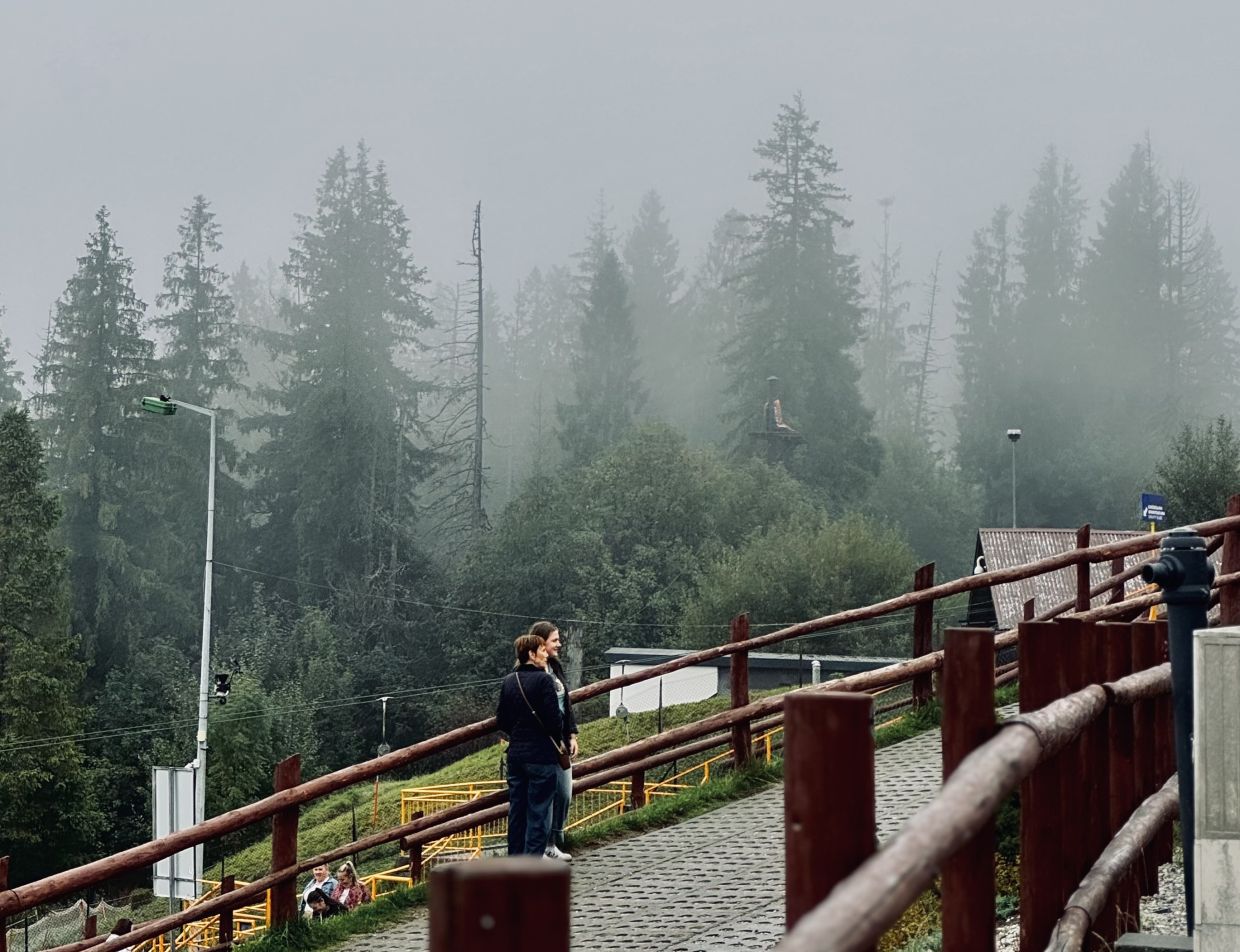
However, when we reached the viewing point at 1,120m above sea level, the mountains were completely hidden behind thick fog. Still, the mist added a layer of beauty to the towering pine trees.
There are food stalls here, but the prices are a bit steep, so it’s best to eat beforehand or bring some snacks with you.
Back at the station’s base, we wandered through the sprawling Krupowki Promenade, where a traditional market area filled with local produce and knick-knacks.
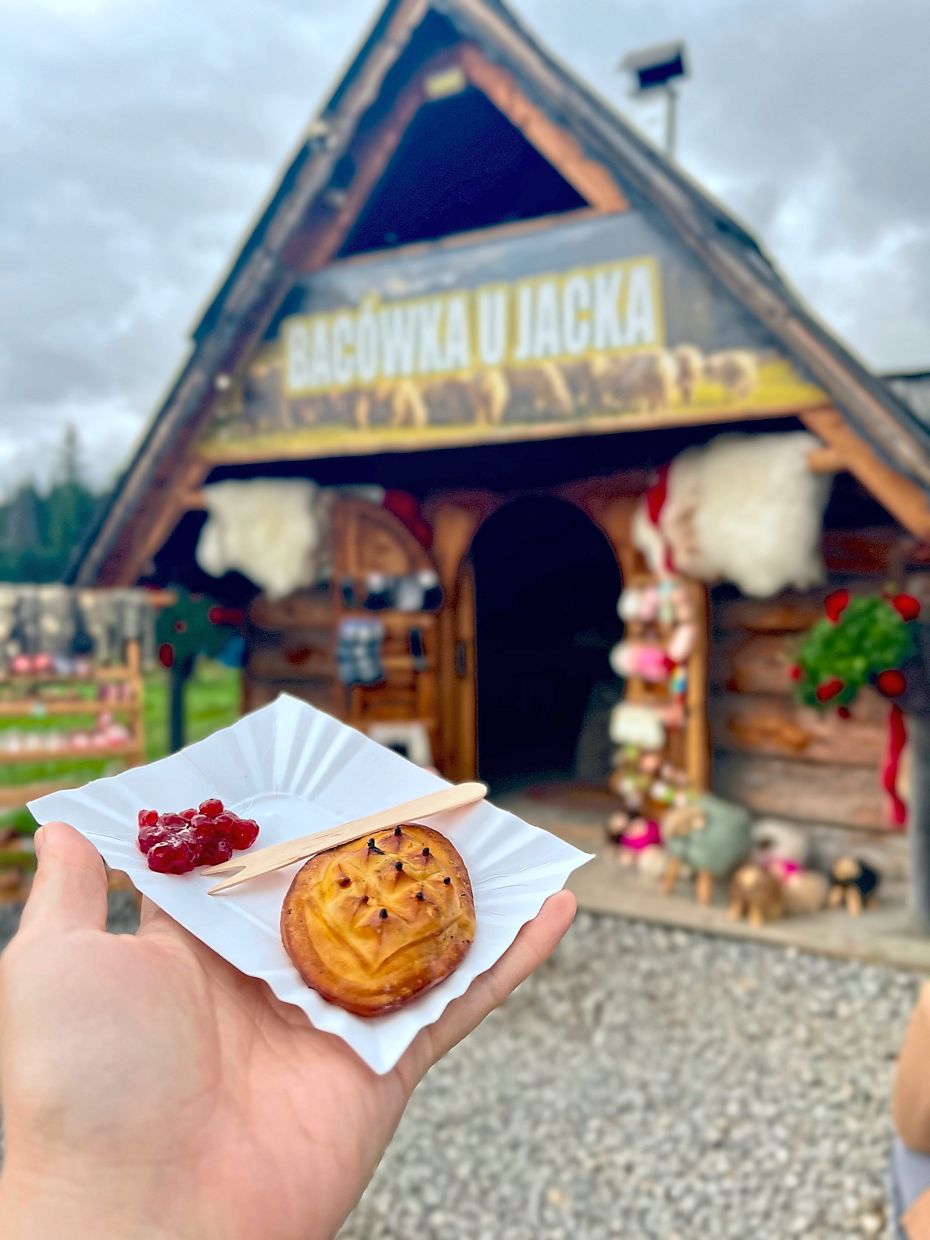
No visit to Zakopane feels complete without stopping by a shepherd’s cottage. The town is famous for oscypek, a traditional smoked sheep’s milk cheese. We tried ours at Bacowka u Jacka (a short drive from the station), paired with a shot of vodka, perfect for the chilly weather.
Our little group wrapped up the trip with a relaxing soak in the thermal baths. It has both indoor and outdoor heated pools, which was rewarding after a long day of exploration.
Krakow, Poland
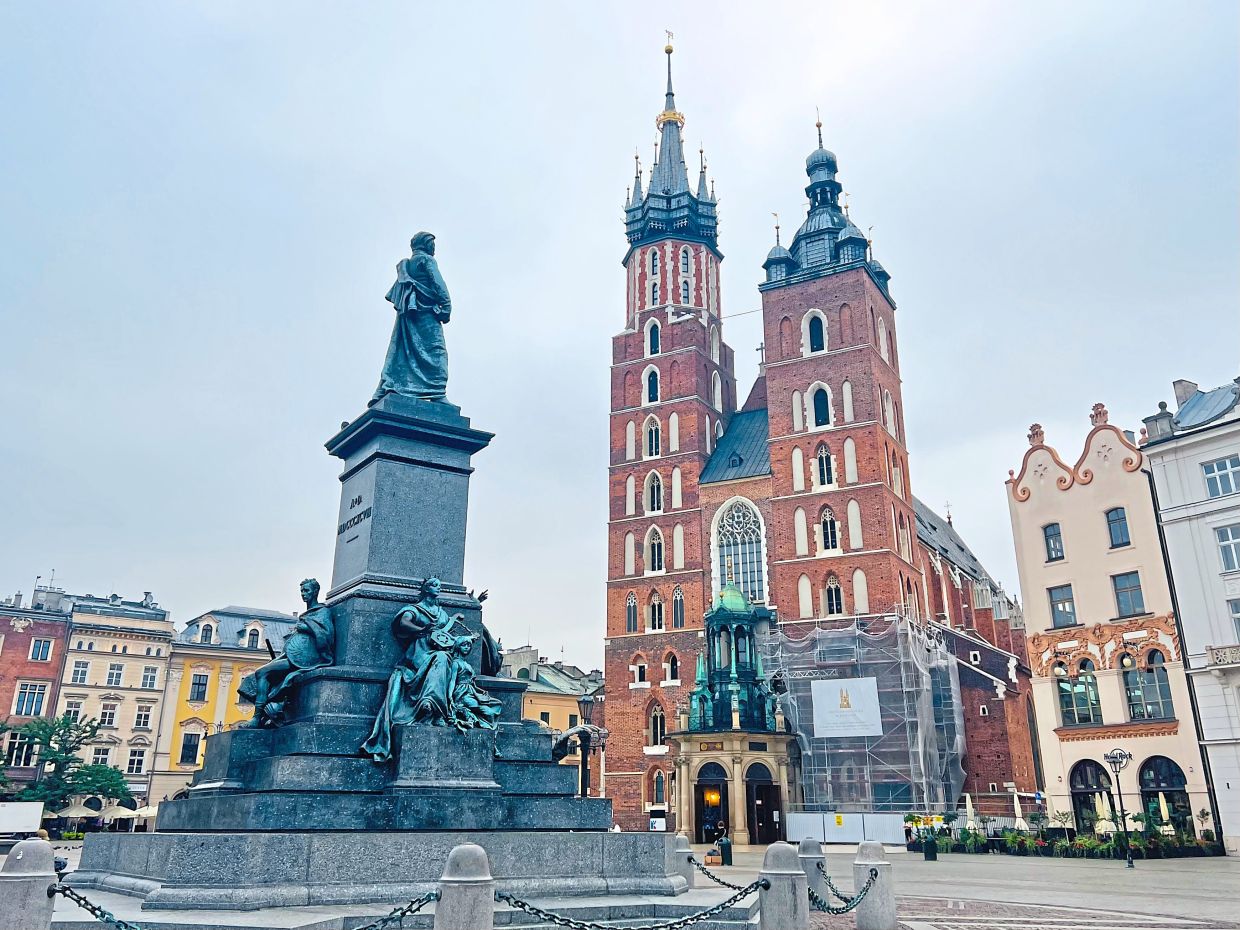
St Mary’s Basilica has been around for more than 650 years. — Photos: GISELE SOO/The Star
Krakow Old Town is both historically and culturally rich.
The magnificent St Mary's Basilica has been around for more than 650 years.
The basilica's interior is adorned with colourful stained glass and a beautifully-carved wooden altar.
From the viewing platform at Bugle Tower, you will be rewarded with a picturesque view of the market square.
Spot the alleged knife at Cloth Hall.
Wawel Castle is just a stone's throw from Old Town.
Explore the den of Krakow's legendary Wawel Dragon at the castle.
Cloth Hall is located in the Main Market Square at Old Town.
You can visit the Ghetto Pharmacy for free on its free admission day.
The best way to learn about Krakow's historic Jewish Quarter, Kazimierz, is via a free guided tour.
For a taste of local flavours, head to a ‘milk bar’, a government-subsidised eatery, which serves affordable meals.
Embark on a leisurely walk at Wieliczka town.
The enormous underground St Kinga’s Chapel is an architectural marvel.
The beautiful turquoise lake in the Wieliczka Salt Mine.
Visitors will come across sculptures carved out of salt at the Wieliczka Salt Mine.
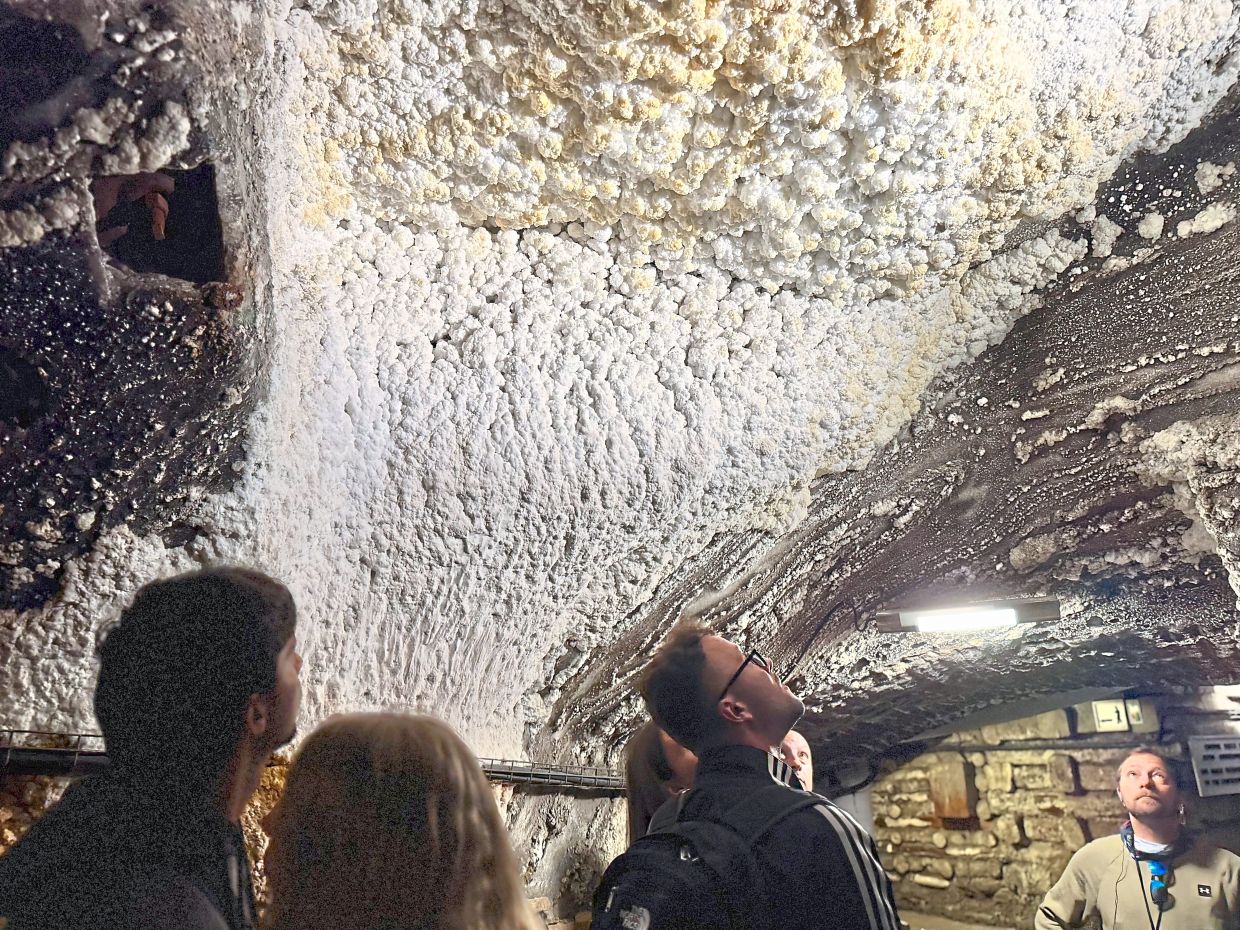
The wall at the Wieliczka Salt Mine covered in salt.
The unique wooden structures in Zakopane is a reflection of Goral tradition.
The unique wooden structures in Zakopane is a reflection of Goral tradition.
The unique wooden structures in Zakopane is a reflection of Goral tradition.
When in Zakopane, sample oscypek, a traditional smoked cheese made from sheep’s milk, with a shot of vodka.
Zakopane is dubbed Poland’s ‘winter capital’.