
In Madrid, Spain specialised tour guides are leading visitors past the customary landmarks to focus on an African heritage that barely appears in the country’s textbooks and collective memory. This follows a trend seen in other European cities where slavery and the colonial legacy have previously been seldom acknowledged.
Kwame Ondo, who has been offering Black history tours through Madrid since 2022, said growing up in Spain and not seeing any Black people in history books never sat right with him, so he decided to look into the subject himself.
“Obviously, when you start to research, you realise it’s a silenced history that’s been erased,” said Ondo, whose family moved to the southern region of Andalusia from Equatorial Guinea – a former Spanish-ruled territory that gained independence in 1968.
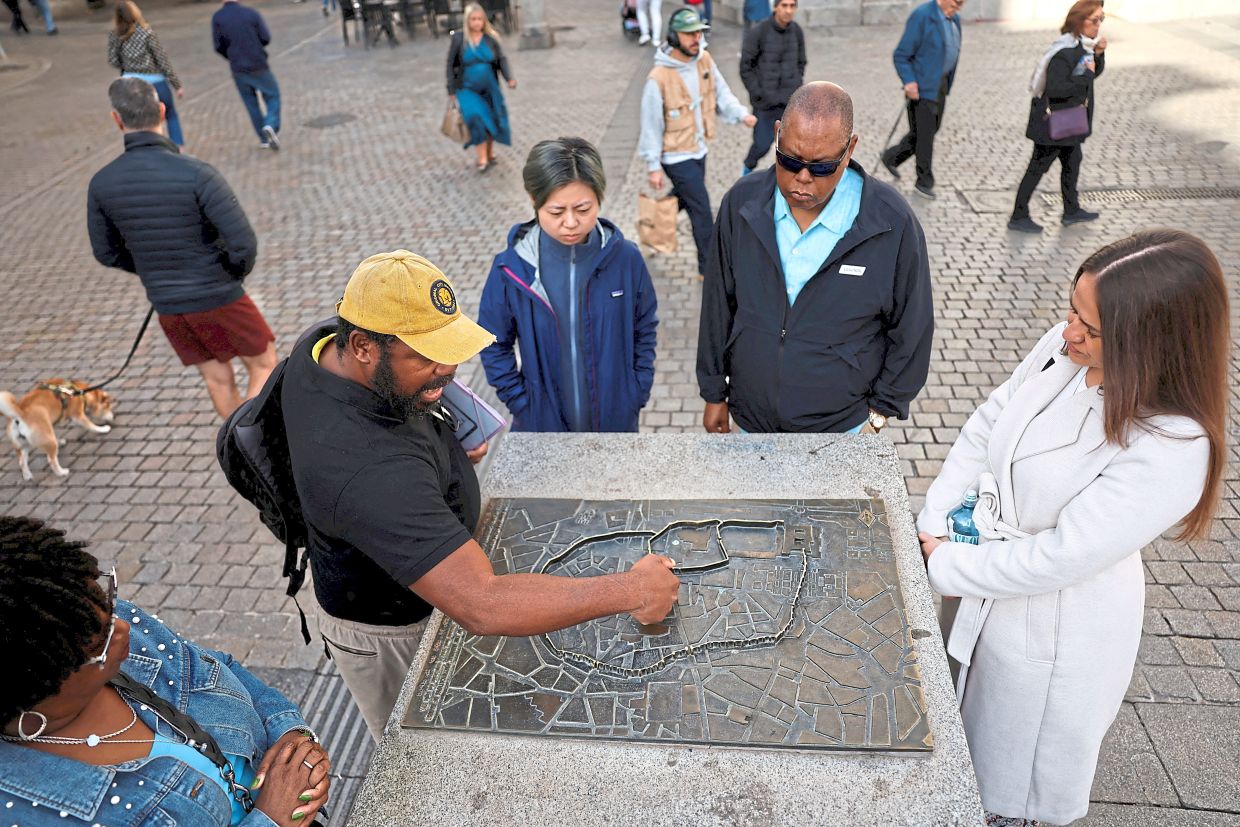
The revelation drove Ondo to create tours specifically highlighting that history. His company, Afroiberica Tours, mainly caters to foreign tourists, especially Black Americans.
Historian Antumi Toasije, a professor at New York University’s Madrid campus, said there was an “absolute void” in Spanish education regarding Africans’ presence in the country that social and community education initiatives could help close.
“It’s as if there had never been any, as if it were something recent that started in the 1980s after Spain joined the European Union,” Toasije said, standing before a statue of King Charles III – who personally owned tens of thousands of enslaved people.
Meanwhile, the Madrid Negro – “Black Madrid” – collective takes a more activist approach in its tours.
Co-coordinator Nieves Cisneros linked Spain’s current prosperity directly to slavery: “We can’t understand the industrial development in Catalonia or the Basque Country without knowing that it comes from the slave trade.”
During these tours, participants paste commemorative stickers honouring forgotten figures on facades and read Maya Angelou’s poem Still I Rise.
They also light candles for Antonio Solis – a member of a brotherhood that collectively covered funeral expenses for impoverished Black residents – in the street where he lived.
For Madrid Negro member Irene Marine, who is of Haitian descent, the work is deeply personal.
“My Afro-descendant side is touched by this because it’s all very invisible,” she said. “And my Spanish and Madrid resident side says: ‘Why didn’t I know this or study it? Why wasn’t I taught this?’.” – Reuters