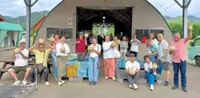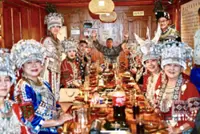
At the foot of an old apartment block in Macao, a tiny hotpot shop called “Win-to-Porridge” was bustling with people. We were lucky as our tour guide, Xiao Zhang, called the shop while picking us up from the airport.
“Leesan will be there in 15 minutes, please hold a table!” he was heard saying.
The place was adorable though a little cramped – 10 tables, maybe 50 seats – and filled with steam, chatter, and laughter. To my right sat three Japanese flight attendants; in front, a table of Taiwanese diners; further down, Koreans, mainland Chinese, and Malaysians. It was like a mini Asian summit.
The guide explained that before the pandemic, this little shop was beloved only by locals, serving live seafood hotpot, winter melon porridge, and fried rice noodles. It was nothing “fancy”, just the taste of the people.
But now, it has become an online sensation, a must-visit spot for travellers seeking authenticity when it comes to food.
Today’s travellers are no longer impressed by extravagance. They crave something real, soulful and grounded. That bowl of porridge doesn’t boast luxury ingredients, instead it simmers with the warmth of daily life.
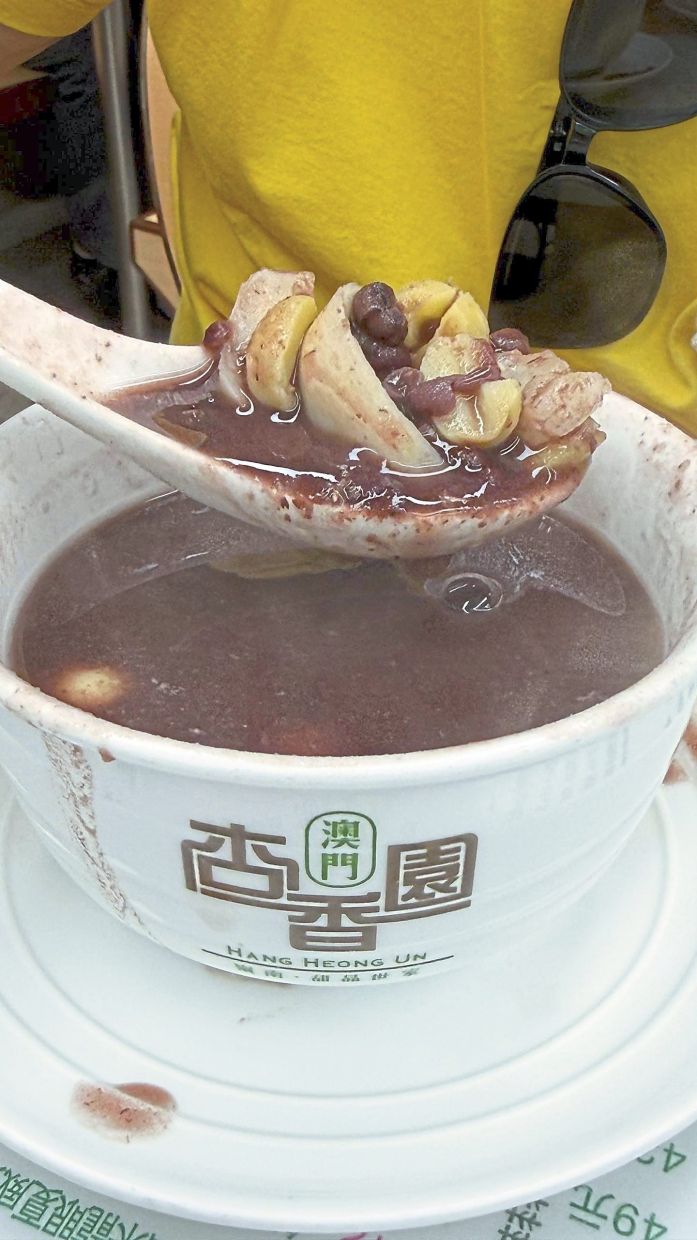
When my flight from Shanghai descended over Taipa in Macao, the neon skyline looked so surreal that I was worried the place had changed beyond recognition. Yet a few turns into the old peninsula streets, and there it was again – the nostalgic aroma of the past: almond dessert shop Heng Heong Yuen, Chang Chau Cafe’s egg tarts, Wong Chi Kei’s wonton noodles, Te Xiang peanut stall ...
The masters of these shops have changed hands several times, but the flavours remain steadfast. Between the new and the old, Macao composes its most harmonious symphony.
That evening, a huge LED screen in the street flashed: “Welcome, Delegates of the 18th World Chinese Entrepreneurs Convention!” I couldn’t help but smile.
I participated the 17th convention in Kuala Lumpur last year, handling the “travel and tourism” ground activities. It was an eye-opening experience. And now, to see the next one hosted in Macao felt like fate. I believe every delegate here will realise that Macao, tiny as it is, wields the power to host grand events with stunning finesse.
Don’t underestimate this little sparrow. Macao is a seasoned player when it comes to international conventions, concerts, and sporting events. Its facilities are world-class, its hospitality polished, and its talent pool truly global. Add to that a signature adaptability – a readiness to respond, pivot, and perfect – and you have a city whose event industry stands shoulder-to-shoulder with the best in the world.
The magic lies in balance: here, business and pleasure blend naturally. “Experience Macao” isn’t just a tourism slogan, it’s a lifestyle.
Wandering the alleys of the old district, I often sense a deja vu – the cityscape looks like Hong Kong, even the “ding-ding” rhythm of the traffic lights sounds familiar. Yet a closer look reveals Macao’s charm.
Its white-and-blue street signs are inscribed in both Chinese and Portuguese, weathered by time yet rich with cultural warmth. These signs mirror Macao’s soul: once a Portuguese colony for 422 years, now 26 years since returning to China, it serves not only as part of the nation but also as a key bridge to nine Portuguese-speaking countries.
Meanwhile, the “Forum for Economic and Trade Cooperation between China and Portuguese-speaking Countries”, held here annually, gives Macao real weight on the global stage.
And remember, Macao covers only 33sq km. According to a 2024 report by Forbes, Macao ranks second in the world (and first in Asia) in GDP per capita, at US$134,000 (RM553,622) based on purchasing power parity. Some people joke and say that it’s all thanks to the casinos and gambling industry, as well as the “1.4 billion generous mainland patrons”.
I just chuckle at this. Indeed, the gaming industry fuels Macao’s economy, with 27 casinos, seven slot machine halls, and annual revenues exceeding MOP230bil (RM118.69bil), more than 70% of which comes from mainland visitors.
But the real brilliance of Macao isn’t in its neon-lit casinos, it’s in how the city plays culture in harmony with chance. Central government support, geography, and timing all matter, but what truly impresses is Macao’s ability to preserve its cultural backbone and administrative intelligence amid the glitter.
Since the handover, Macao has deepened its Chinese cultural identity while retaining its Portuguese charm. The cobblestone lanes, church towers, and coffee aromas mingle with temple incense and the scent of porridge hotpot – an East-meets-West fragrance that defines Macao’s soul.
It’s a city that lets culture and tourism dance together: from Formula 1 street races and Unesco heritage sites, to water shows and Michelin dining, everything dazzles.
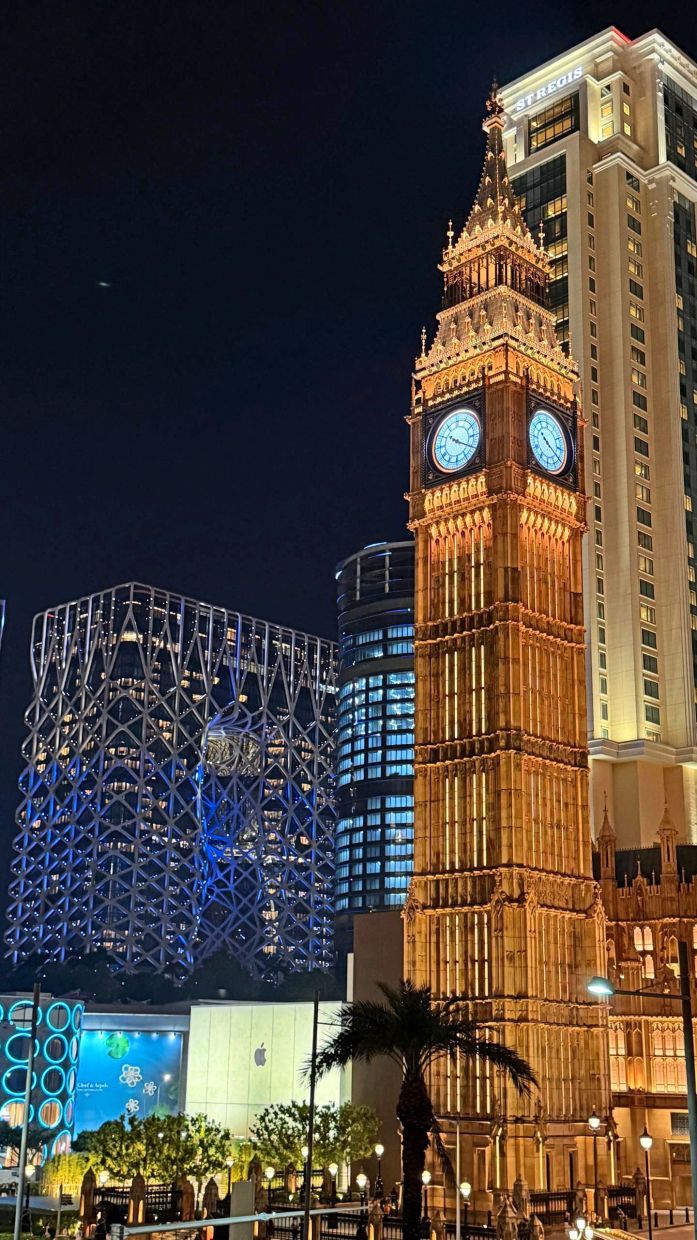
Over in Cotai, the “casino hotels” are far more than gambling halls. They house theatres, water parks, luxury malls, and restaurants serving cuisines from around the world. Shows like The House Of Dancing Water and Zhang Yimou’s 2049 blend water, fire, technology, and art into breathtaking spectacles.
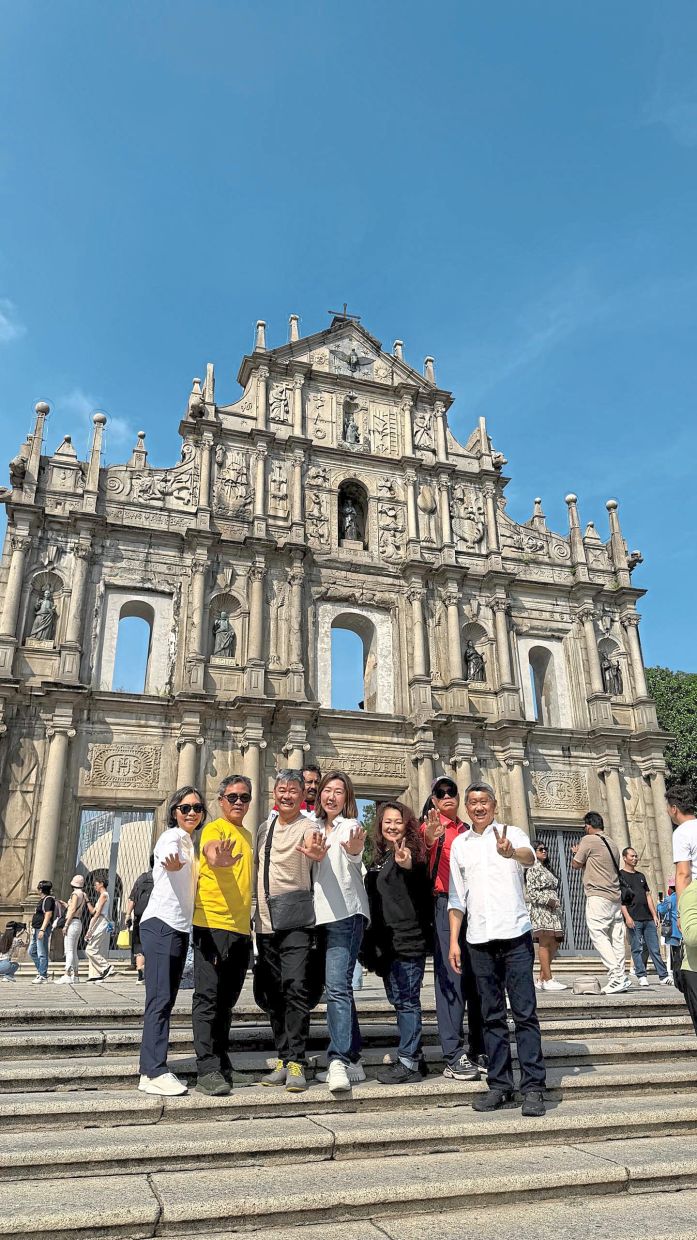
Meanwhile, the historic district still beats with its old rhythm – the Ruins of St Paul’s and Senado Square stand together with almond cookie and pork jerky shops as they are all timeless keepsakes.
Macao has truly earned its golden badge as an “international entertainment capital”. It went from seven million visitors in 1999 to a record 35.8 million in 2018, rebounding post-pandemic to 34.9 million in 2024, with average stays of 1.2 days. Group tours are up 60%, driving local prosperity.
The 680,000 residents are also well cared for – the government even distributes an annual “red packet” of MOP10,000 (RM5,161) for permanent residents, MOP6,000 (RM3,097) for non-permanent residents.
Macao’s success boils down to one word: awareness. It hasn’t been blinded by casino wealth. Instead, it has diversified early. Tourism, finance, conventions, and creative industries now make up nearly 40% of its economy. With agility and precision, the city thrives on a “light-asset, high-value” model that wins it global respect.
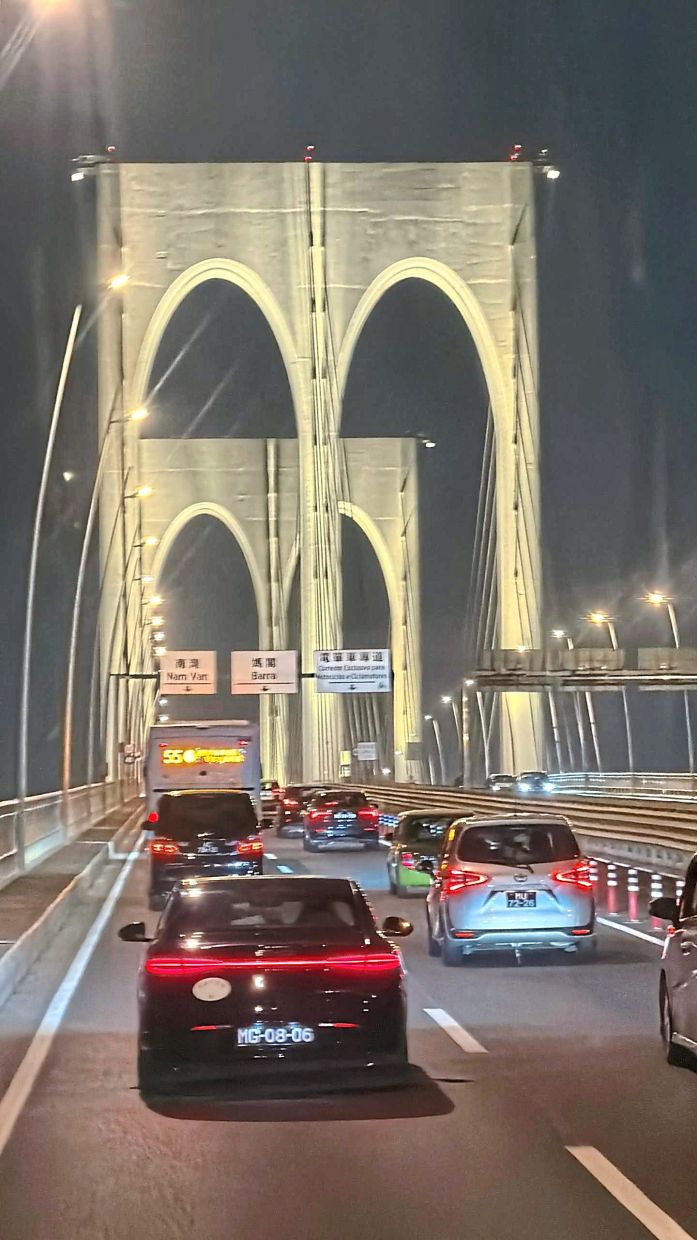
Of course, none of this would be possible without its engineering marvels. The 55km-long Hong Kong-Zhuhai-Macao Bridge, built at a cost of MOP160bil (RM82.59bil), has turned Macao into a connected powerhouse. Add to that a 16km light rail and seamless Hengqin border crossing, and you have a true multi-stop travel wonder: morning river cruise in Zhuhai, seafood lunch in Hengqin, a show in Macao by night, and dim sum in Hong Kong the next day.
As for hotels, Macao’s lineup could outshine Vegas. The Morpheus Hotel, designed by the late Zaha Hadid (who also designed Beijing Daxing Airport, among many other outstanding buildings), stands like a woven sculpture. It is an illuminated dream at night.
After four days and three nights in this compact wonderland, one thought stayed with me: Macao really is a little sparrow that soars high. A quarter century after its return, the city proves that small places can have grand visions, and limited resources can breed limitless wisdom.
Tiny as it is, Macao is a sparrow that knows how to fly – and dares to.
The views expressed here are entirely the writer’s own.
Leesan, the globe-trotting traveller who has visited seven continents and 151 countries, enjoys sharing his travel stories and insights. He has also authored six books.