
A good rear bike light isn’t just an accessory; it’s a lifesaver.
Any cyclist who has spent significant time on the road will tell you that this small investment is non-negotiable for safety.
Its primary job is simple yet critical: making you visible to other road users – motorists, lorry drivers and motorcyclists – day and night.
While it may seem insignificant, that small, blinking red light provides a vital spark of attention that can make all the difference in a driver’s perception.
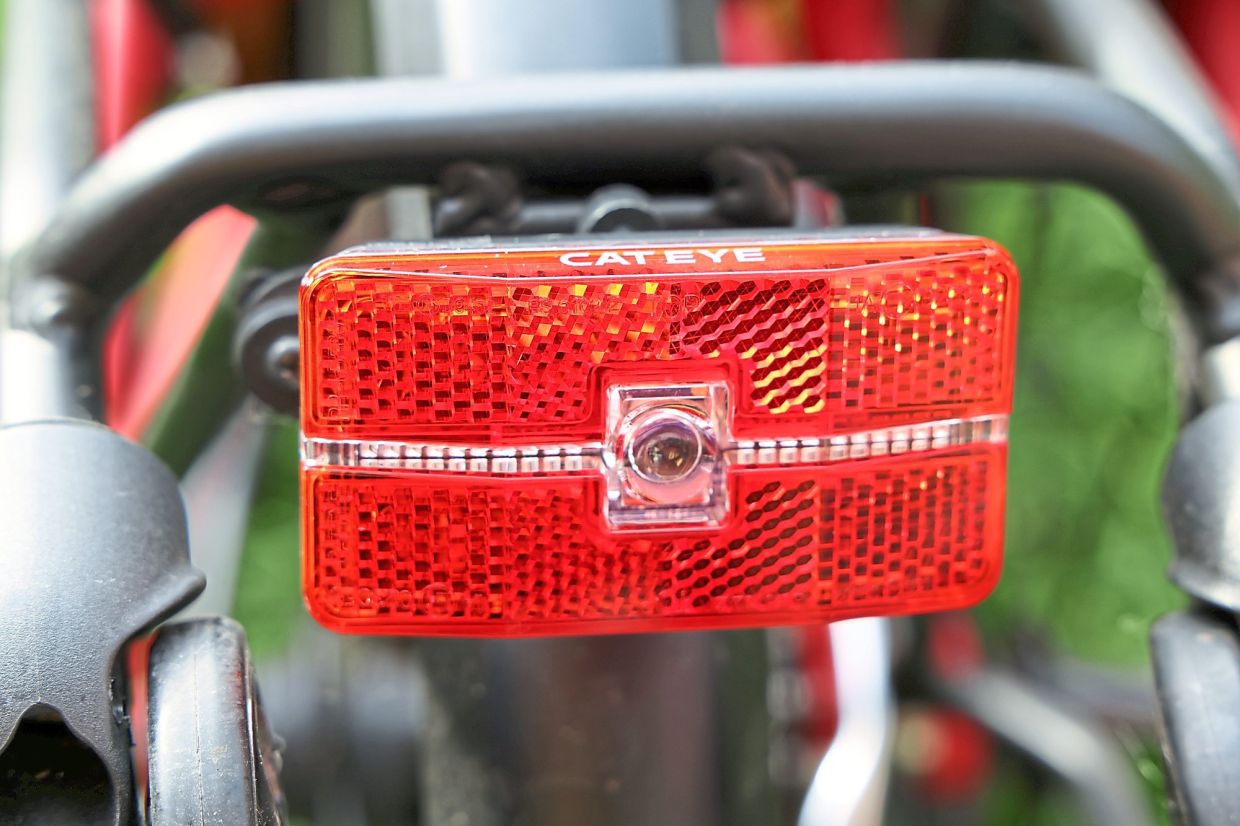
For cyclists, the market offers a dizzying array of options.
The most basic lights start as cheaply as RM6. These are typically powered by ubiquitous AA or AAA batteries, a convenient feature when you need a quick replacement from any convenience store.
Generally, the larger the battery, the longer the runtime, though even smaller batteries can power efficient LED lights for a considerable duration.
The main drawback? You must remember to remove alkaline batteries when not in use, as they can leak and corrode, permanently damaging the light’s casing and circuitry.
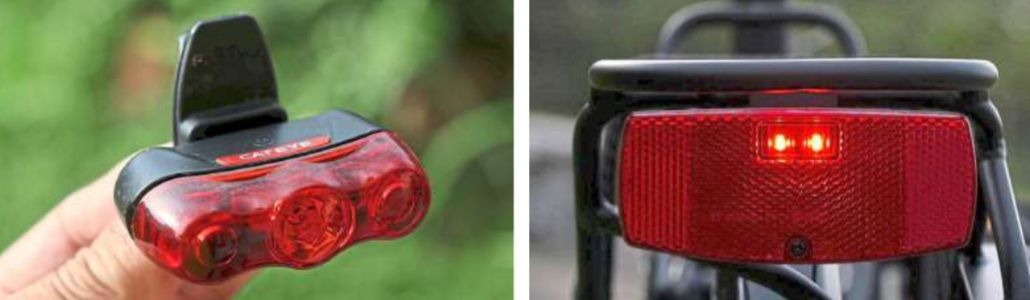
Thankfully, even entry-level lights are now quite advanced.
They often come with practical features like steady beams, multiple blinking modes and visibility that can extend 500m or more.
Many clip neatly beneath the saddle or onto the seat post and can withstand more bumps and knocks than you might expect.
But high-end rear lights take things much further.
They come packaged with multiple mounting choices, sleek rubber straps for quick removal and integrated rechargeable lithium batteries.
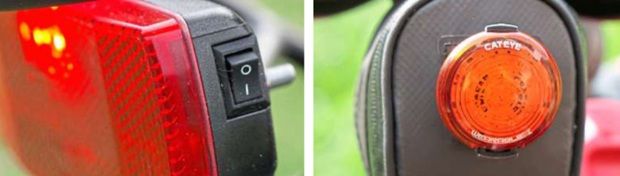
Modern models feature USB-C ports for easy charging and their LEDs are significantly brighter and more efficient than those in cheaper versions. Requiring minimal maintenance, they offer impressive brightness levels.
This brightness is measured in lumens, and while the numbers vary, the superior versions are powerful enough that their flashes can be seen from a considerable distance down the road, even in bright daylight.
Given the unpredictable tropical weather in this part of the world, a water-resistant light is equally important.
Look for a light with a proper IPX water-resistance rating to ensure it survives sudden downpours, road spray and the occasional drop onto the pavement. The higher the IPX rating (on a scale from IPX0 to IPX8), the more durable the light.
A well-built, highly-rated light can withstand bouncing off mid-ride, with internal electronics tough enough to keep going.
Not all rear lights rely on traditional batteries. Touring bikes often use dynamo-powered lights, which draw energy from the bike’s movement.
A small capacitor stores enough energy to keep the light glowing for a short while even when the bike stops.
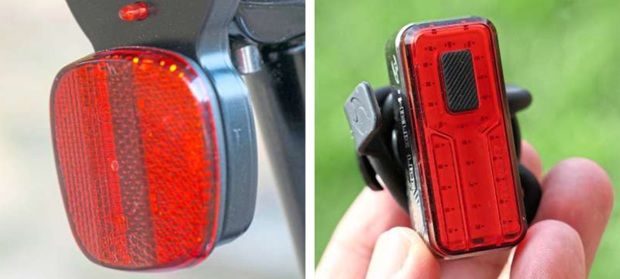
The trade-off? They are bulkier and typically mounted on the rear rack.
Then there are the versatile wearable lights – tiny, featherweight and easy to clip onto a saddlebag, backpack or even a jersey.
These run on long-lasting button cells that can last up to 100 hours.
While not as bright as a primary light fixed to the bike, they are bright enough as a stand-alone backup, with visibility up to 50m.
Many cyclists pair them with a stronger rear light for added visibility from multiple angles.
It may be a simple tool, but this little red light fundamentally changes the riding experience.
It is a fundamental piece of safety equipment that no rider should be without.