The forest on Gunung Berembun doesn’t reveal its stories easily.
On most mornings, mist drifts through the tall jungle trees like smoke from a fire that never burned out.
To hikers, it’s just another weekend peak in Negri Sembilan – a 1,014-metre climb through damp earth and leech-friendly trails.
But beneath the quiet green lies a tale of war and a bomber that never went home – a story the mountain has held for almost 80 years.
The date was Aug 23, 1945, just eight days after Japan’s surrender, when a long-range B-24 Liberator broke the stillness of these hills. The war had ended, but not the mission.
That night, the Royal Air Force plane, carrying eight airmen, took off from the Cocos (Keeling) Islands – a remote Australian territory in the Indian Ocean – bound for Malaya.
Their task was humanitarian: to drop agents, supplies and medical aid to Allied prisoners of war still trapped in the jungles.
But somewhere over Negri Sembilan’s ridges, thick clouds rolled in. No one knew what happened next.
The bomber flew into the mountainside near Gunung Telapak Buruk, just beyond Berembun, and vanished into the forest.
For half a century, the jungle told no one.
The Orang Asli – particularly from the Temuan community – had long spoken of besi terbang (“flying iron”) scattered deep in the hills, but their stories stayed within their own circles.
It wasn’t until the 1990s that hikers and amateur historians “rediscovered” the wreck, when forest access became easier via logging roads.
Even then, it took official recognition for the story to resurface.
The wreckage, long forgotten, was confirmed as B-24 KL654/R only after the British Ministry of Defence’s Joint Casualty and Compassionate Centre (JCCC), together with the Royal Air Force and Malaysian authorities, conducted a survey in 2006.
Despite the discovery, the skeletal remains of the eight crew members – including Flight Lt John S. Watts – were not laid to rest until six years later, at the Cheras War Cemetery in Kuala Lumpur.
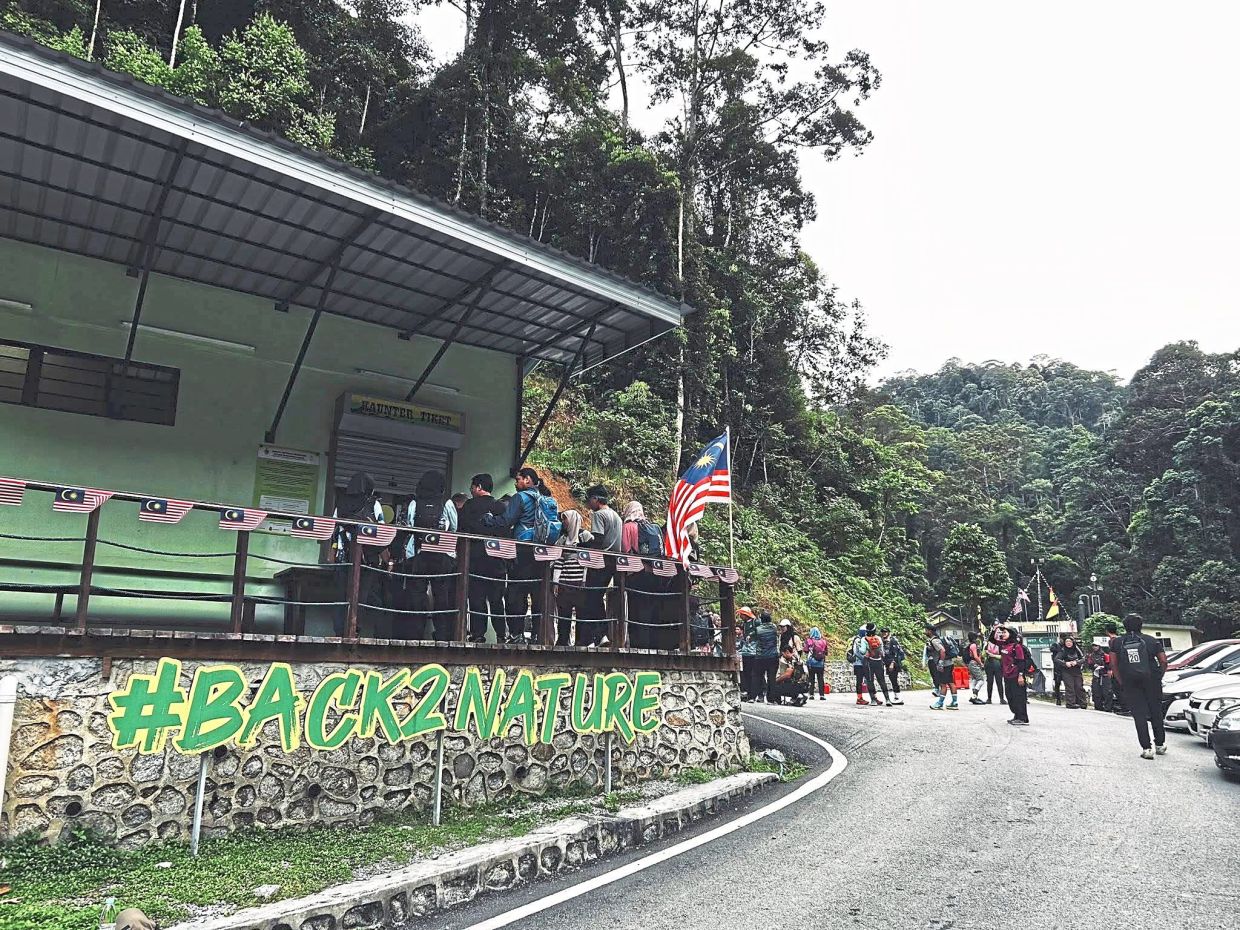
To reach the mountain, hikers start from Pantai, a quiet village outside Seremban.
There’s little to suggest history hides in these hills – only the sound of morning insects and the low chatter of trekkers lacing their boots.
The climb begins gently, then rises through lowland dipterocarp forest where the air is heavy with humidity.

Roots snake across the trail like old cables, and the scent of rain drifts down from the ridge.
Most hikers take two to three hours to reach the summit. There’s no sweeping view waiting at the top – only a shaded clearing, a modest wooden sign and the wind whispering through trees.
For some, it’s a let-down. For others, it’s part of the mountain’s quiet spell.
Berembun doesn’t perform. It listens.
The story, however, doesn’t end at the summit. A narrow path leads deeper into the forest, toward Telapak Buruk – another hour’s trek.
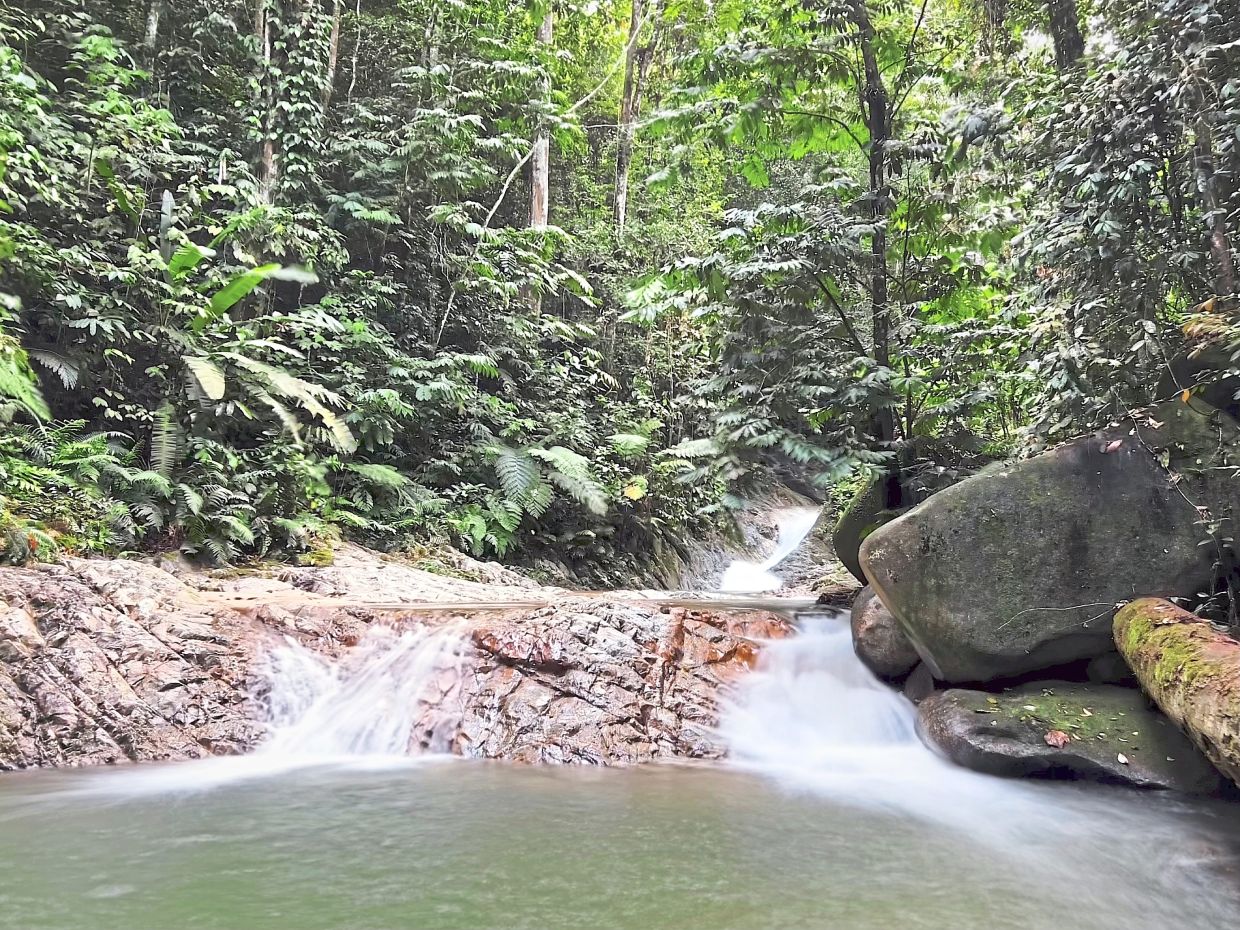
The air cools. The trail darkens under a thicker canopy. And then it begins to appear: the wreckage.
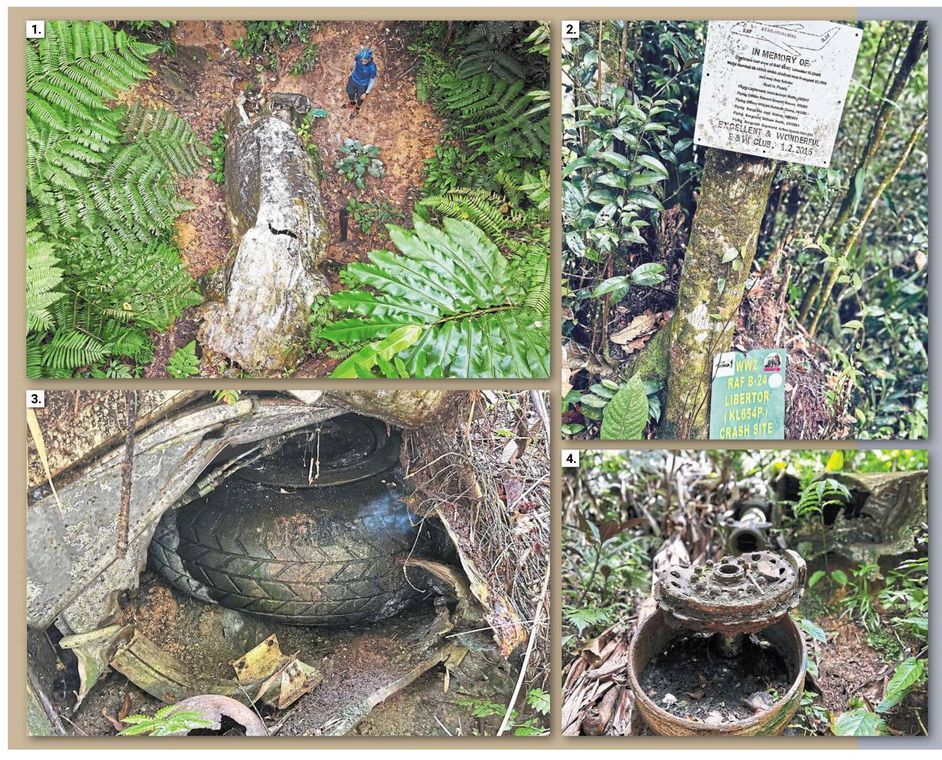
A propeller half-buried in the earth. A wheel rim rusting into the soil. Wing fragments draped in vines.
No monument marks it. No signboard explains it.
It’s simply there – silent, scattered, reclaimed by the forest.
This is what makes Gunung Berembun different from other Malaysian peaks.
It’s not the height or the view that matters here. It’s the way the mountain holds history without saying a word.
Walk long enough through the ridge, and you’ll feel a stillness that isn’t just from nature.
It’s the stillness of something that happened – and was forgotten.
The jungle doesn’t romanticise war. It just keeps what falls into it.
Follow Johnny Yong’s hiking adventures through his videos and photos on:
• Facebook: https://www.facebook.com/johnnyy79
• Instagram: https://www.instagram.com/johnnyy929
• YouTube: https://www.youtube.com/@YOLOSOLOJY24