If you ever get bitten by a snake, don’t believe what you see in the movies.
Tying a tourniquet, slicing your arm, or trying to suck out the venom are all dangerous myths that can turn bad luck into tragedy.
The old cut-and-suck technique may have been accepted in the 1800s, but modern toxicology and first-aid science show that venom enters the bloodstream far too quickly for that to work.
Fire and Rescue Department senior officer Noorizun Kechik, who leads the department’s King Cobra Squad for the northern region, says those outdated methods have no place in real emergencies.
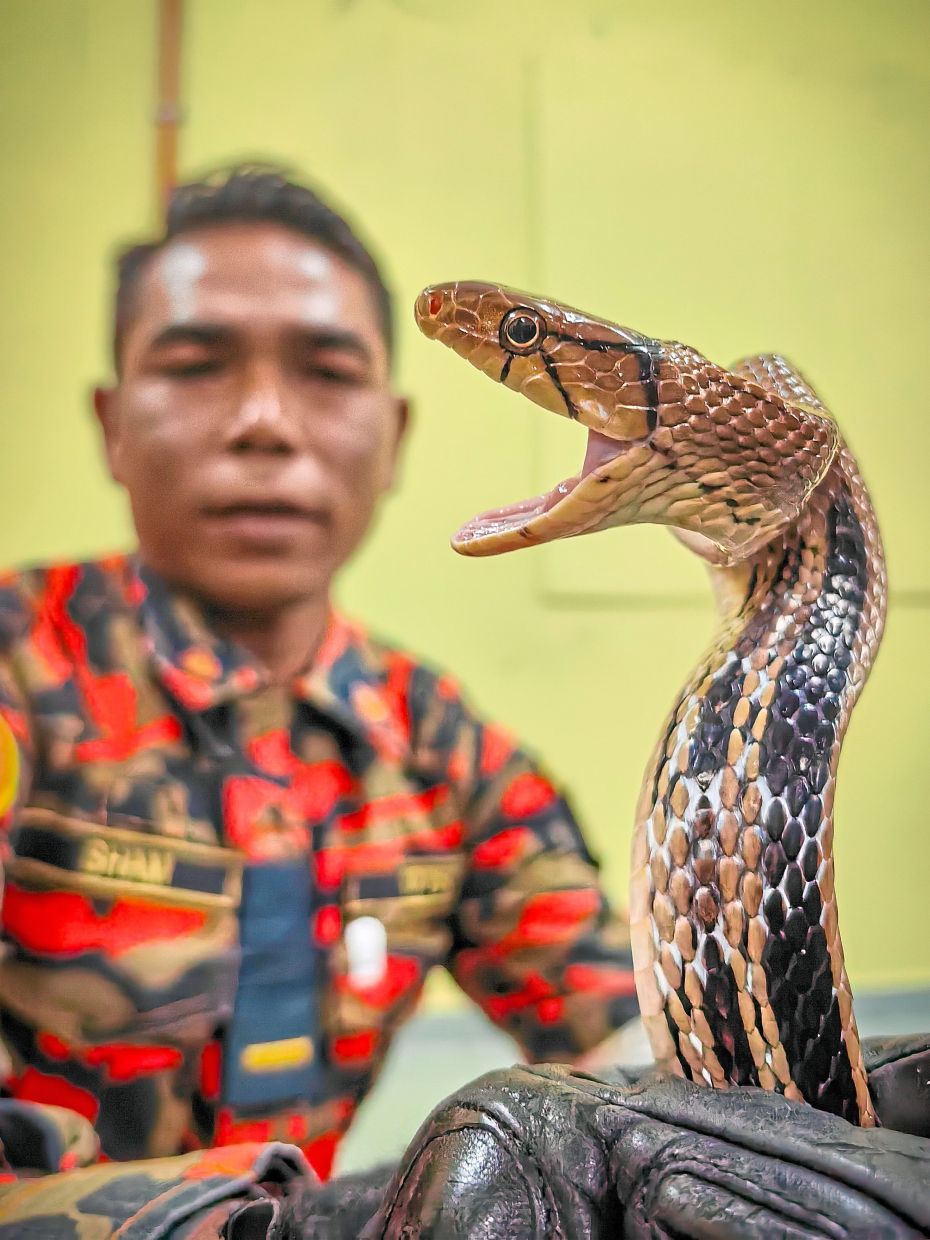
“When bitten by a snake, do not tie a tourniquet, slice the flesh or attempt to suck the venom out, as often shown in movies,” he warns.
“Using a tourniquet can trap venom locally, causing severe tissue damage and even amputation. When untied, the sudden rush of venom into the bloodstream can make things worse.”
He adds that slashing the wound only increases bleeding and the risk of infection, while sucking the venom is both useless and dangerous – it can expose the rescuer to the poison through the mouth.
Instead, Noorizun advises victims to stay calm and call for help immediately by dialling 999 or alerting the nearest rescue or medical facility.
“Move to a safe place away from the snake. Try to identify its species, but don’t attempt to catch or kill it.
“Minimise movement, as physical exertion speeds up blood circulation and spreads the venom faster.
“If necessary, lightly wrap the wound or immobilise the limb with a splint, and get to the nearest hospital right away.”
Only government hospitals, he notes, stock antivenom, which must match the species of snake involved.
“If the exact species can’t be confirmed, doctors may use a polyvalent antivenom that covers several types, though it’s less targeted than monovalent antivenom, which is specific to one species.”
Remaining calm, he stresses, can make a crucial difference.
“Do not run or panic – keeping your heart rate low slows the spread of venom. Move calmly and slowly to safety.”
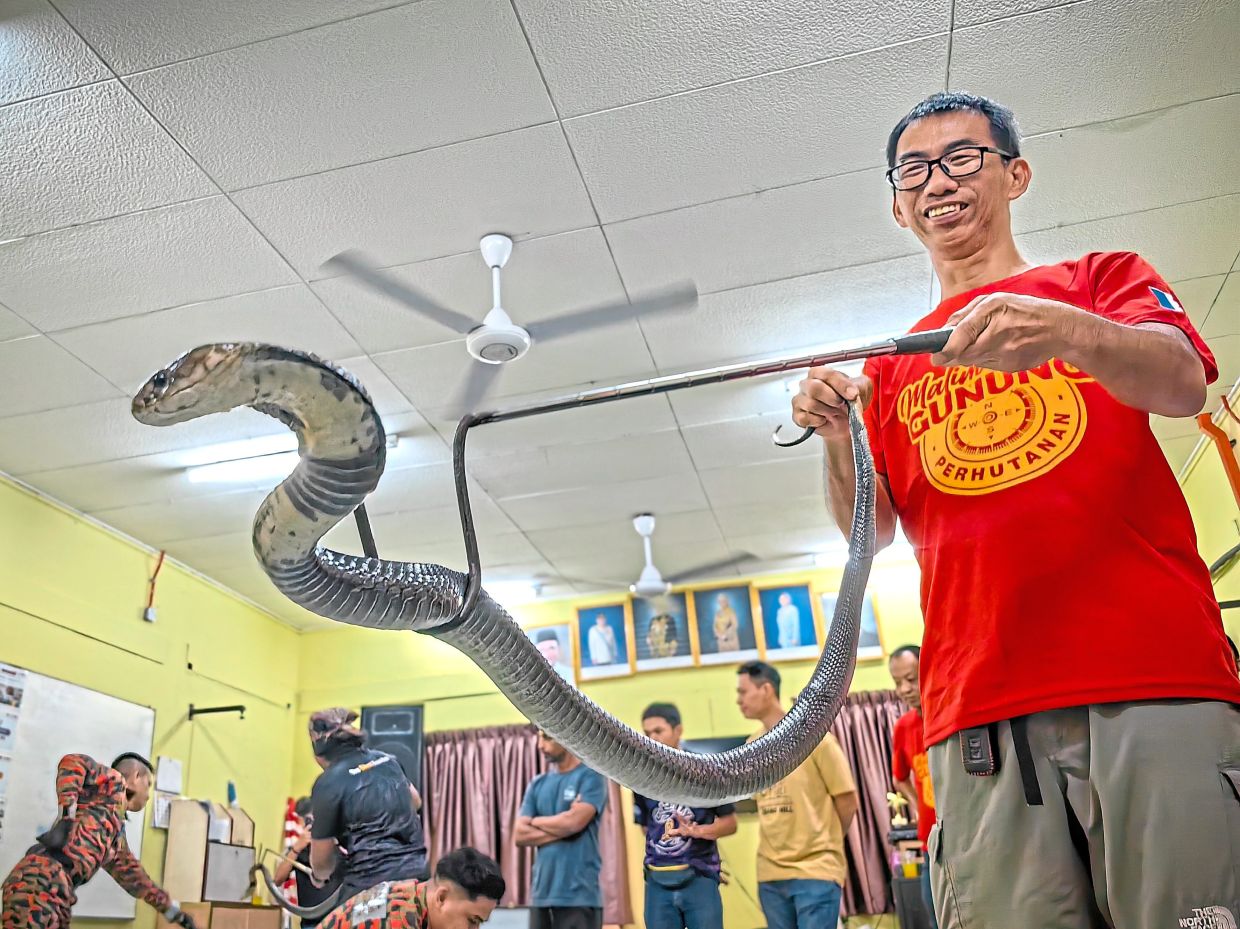
Noorizun, who regularly trains emergency responders and outdoor guides on snake handling and first aid, shared his expertise at a recent workshop organised by the Penang Forestry Mountain Guides Association.
Twenty participants – including outdoors guides and nature enthusiasts – learnt how to identify, understand and handle snakes safely in the wild.
“Malaysia is home to about 215 species of snakes living in diverse habitats and elevations, but not all of them are dangerous,” he explains.
“Common non-venomous species include the reticulated python, rat snake, racer snake, cat snake, tree snake, whip snake and bronzeback.”
Among the venomous ones, kraits, coral snakes and vipers demand respect, while king, monocled and spitting cobras are among the most feared for their potent neurotoxic venom.
“Cobra bites can cause paralysis and severe tissue necrosis – meaning your flesh dies and rots,” says Noorizun, who has survived a cobra bite himself.
“Victims experience intense swelling and pain. In severe cases, dead tissue may require surgery or even amputation.”
Even non-venomous snakes can be dangerous, he adds, as they kill prey by powerful constriction.
During the workshop, participants handled several live snakes under expert supervision – an experience that helped them shed common fears.
“When properly understood, snakes aren’t creatures that go after humans. They only attack when provoked or threatened,” he says.
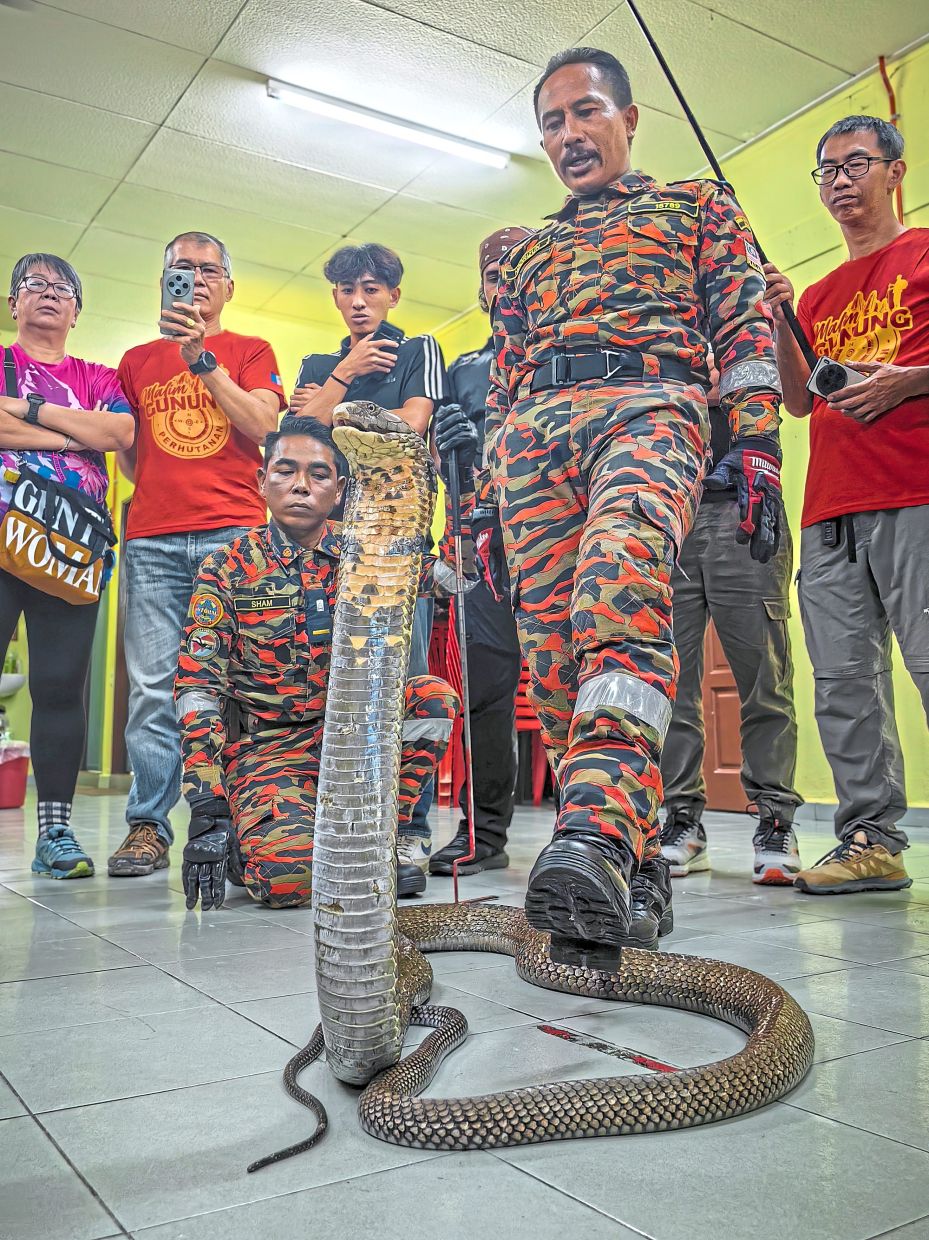
A tense moment arose when participants formed a tight circle around a 4m-long king cobra, its head raised and hissing loudly.
“The cobra only reacts to erratic movements and is otherwise not aggressive. If left alone, it prefers to retreat,” Noorizun assures.
Snakes, he explains, rely on a remarkable combination of senses to hunt and navigate.
“They detect prey and threats through vision, vibrations and chemical cues.
“Many species use their forked tongues to collect scent particles from the air and ground, which are then analysed by the Jacobson’s organ – a special sensory organ in the roof of the mouth,” says Noorizun.
Understanding these creatures, he says, is the key to avoiding conflict – and saving lives.
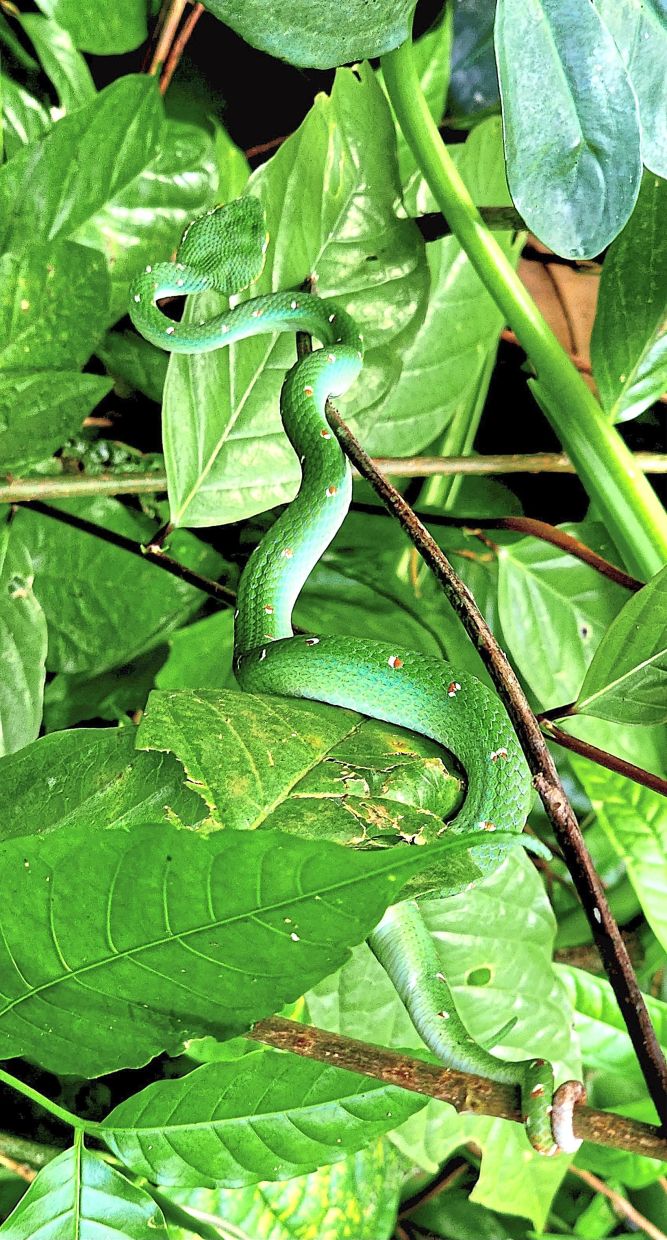
The workshop participants left with more than just newfound confidence. They also gained respect for a creature long misunderstood.
Because in the wild, knowledge and calm can make all the difference between panic and survival.