It may seem hard to believe but you can actually take a comfortable bus ride to the base of Mount Everest. This has been possible for some years on the China side of the mountain, via Tibet.
For real mountain climbers, who would usually take about a week to reach the base camp on the other side through Nepal, the idea of taking a bus up seems repulsive.
But if you are 64 years old with no plans of hiking for that long, especially in torturous situations, then you are probably encouraged to opt for the easy way up the mountain.
The journey begins in Kuala Lumpur, where I took an AirAsia flight to Chengdu, China, and then another flight to the city of Nyingchi to kickstart my Tibetan adventure.
The city sits at an elevation of 2,949m above sea level, and is supposed to help our travelling party of Malaysians gently acclimatise to the high altitude.
Over the next few days, we made our way through Tibet, stopping at various small towns, before entering Chomolungma – the Goddess Mother of the World – which is what the Tibetans call Mount Everest.
The bus journey from Lhasa to Shigatse, Tibet’s second largest city, took over six hours, which was mainly uneventful except for certain periods when the ride offered stunning views of the Yarlung Tsangpo River and rugged high-altitude plains.
We also saw pilgrims lying prostrate – bowing and stretching their body flat to the ground – at some of the villages.
We also stopped occasionally to stretch our legs and to use the public toilets, which were mostly in miserable conditions – what a turn-off!
I reminded myself that I shouldn’t expect touristic luxury and comforts when travelling in such a way, and that the views will eventually make up for the rough edges. That will be the ultimate reward that awaits us.
From Shigatse, we headed towards Tingri, a small town that serves as the last major stop before the Everest Base Camp or EBC.
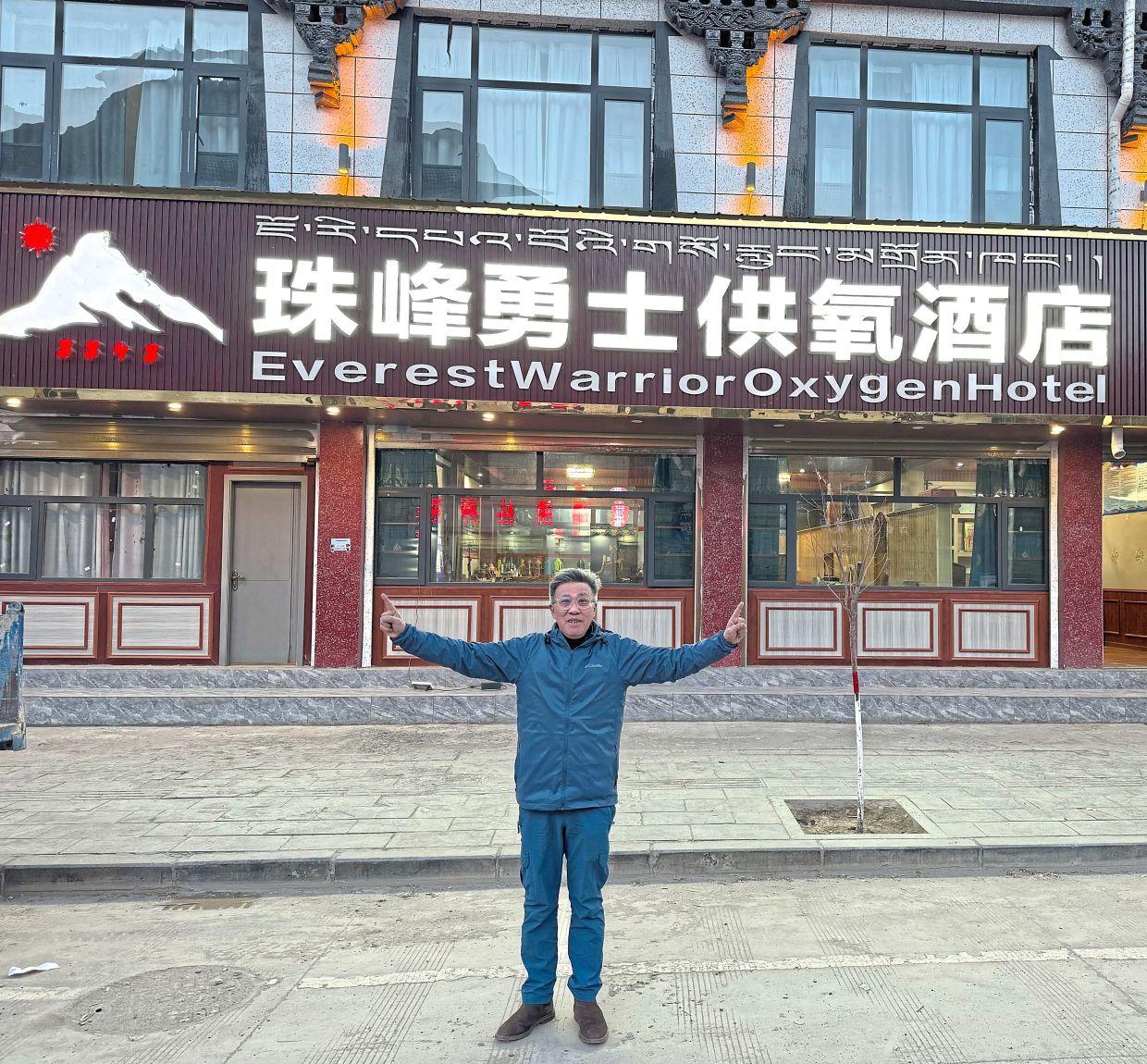
We spent the night at Zhufeng town where there were decent and comfortable hotels for guests to prepare themselves for the early morning ride to the EBC.
Many of the hotels had strange names such as the Everest Warrior Oxygen Hotel but it was a good reminder for visitors – that we may need to use oxygen canisters as the air was thin up there.
My wife, Florence, experienced massive headaches and had trouble breathing properly, and we knew that it would not be possible for her to join us to the EBC the next day.
My poor wife suffered the entire night and I felt bad for her, but at the same time, I was also too excited to fall sleep because I was going to the base of the world’s highest mountain!
Up and away
Our guide told us very specifically and directly that there were no rooms for heroes on the trip. The EBC sits at around 5,200m, and many have ended up in hospital because they couldn’t deal with the altitude sickness.
Each of us was given a cylinder of oxygen to help with breathing, and were told to take things slow and stay hydrated.
The Chinese rules were clear – no one can drive up to the EBC on their own; only the government-sanctioned buses, called “eco-buses”, are allowed.
The final stretch of our journey included rough roads and switchbacks with occasional military checkpoints.
You’ll need a Tibet Travel Permit and an Aliens’ Travel Permit to reach this area – which our agency had dutifully arranged prior to the trip.
There were certainly plenty of expectations among the passengers on the bus, which included many Russian tourists. We had all made a long trip to get to this side of Tibet, and the journey was mostly tough and uncomfortable.
For most of us, too, this was our chance to add another tick to our bucket list.
We knew that our journey to the top of the world was going to be spectacular as the skies were clear that day. The sun was out, there were no clouds and certainly no rain expected.
The ride was something to remember and treasure as the scenery was amazing. We saw glaciers, expansive valleys, running rivers and plenty of yaks grazing along the way.
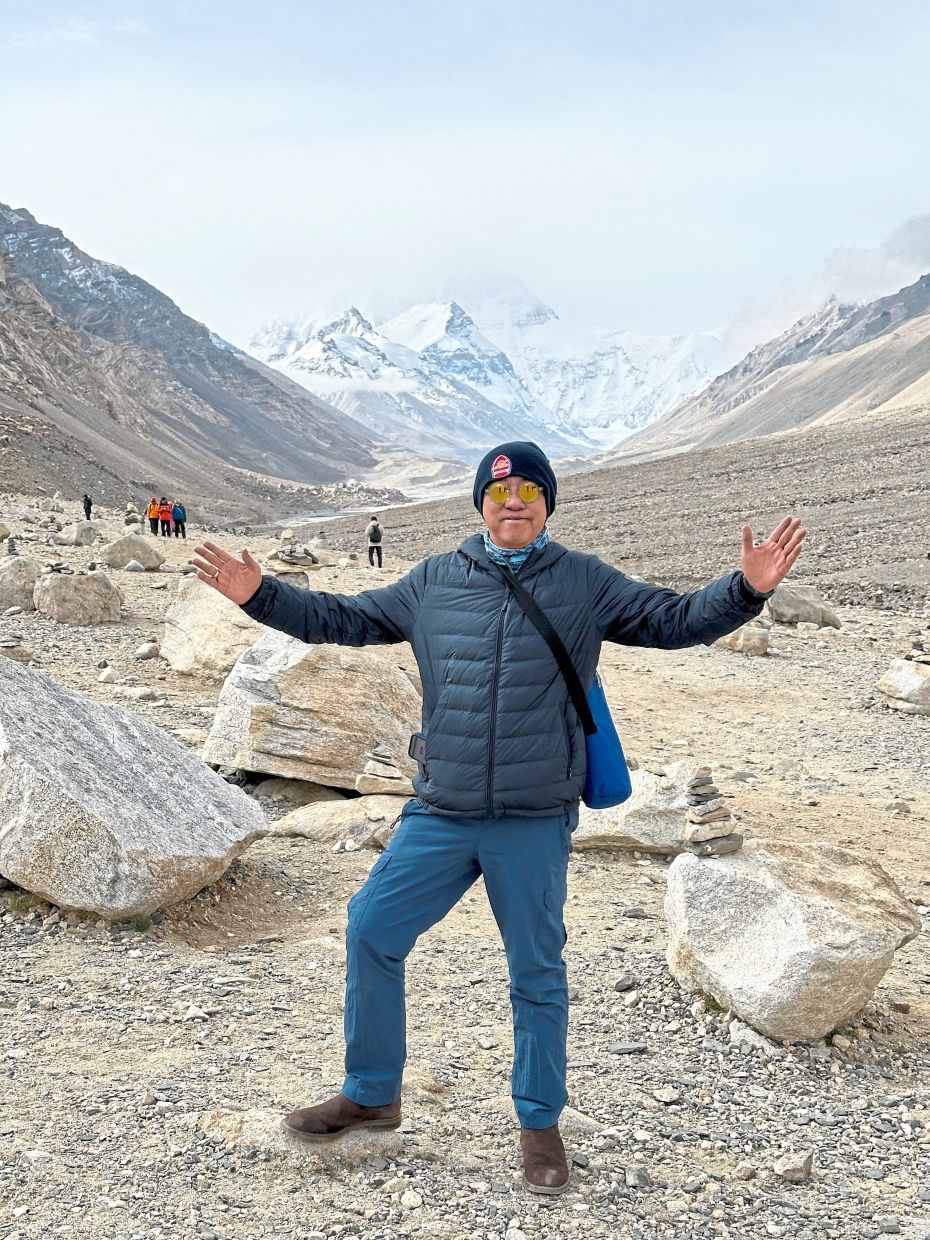
After about an hour, the majestic Mount Everest appeared before my eyes. This was the most stunning and mesmerising sight I had ever seen. To put it simply – it was pure magic!
The clouds had kindly parted ways to make everything look even more surreal and divine. I felt small as I soaked in all the magnificence. I was so thankful that I had made it here with my close friends, though I felt really bad and guilty that my loved one, Florence, was not by my side.
While enjoying the view, I suddenly realised that I didn’t have my oxygen canister with me. In my excitement, I had left in the bus.
Luckily, I did not have the need for it.
I was reminded not to be too overly excited about being at the EBC, but I didn’t care. I was in a hurry to have as many pictures taken with the glorious background.
I took the Jalur Gemilang out of my bag but was angrily shouted at by a Chinese ranger who gestured that no flags or banners were allowed at the EBC. This was really surprising to me, and it didn’t help that I could not understand Chinese.
Our poor Tibetan guide said he risked having his licence taken away for not advising me about this in advance.
As the excitement died down, I thought of the first person to conquer Mount Everest, Edmund Hillary. His wise words were: “It’s not the mountain we conquer but ourselves”, which I took to mean that the best places are the ones that are most difficult to reach.
As the saying goes, I felt like I was on top of the world, even though I was actually at the bottom!
Taking a bus to the EBC
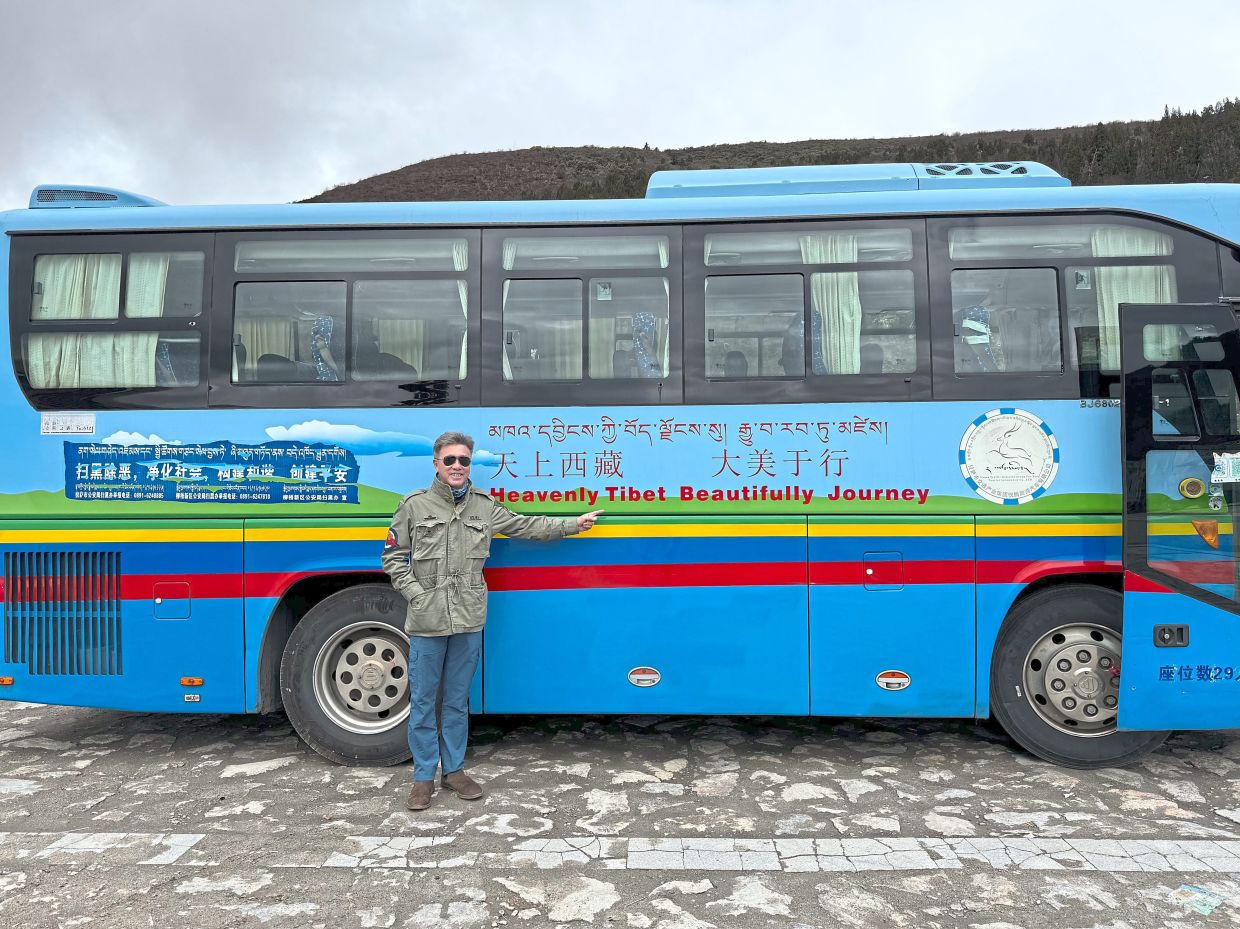
One of the government-sanctioned ‘eco-buses’ that travellers can take to the EBC. — Photos: WONG CHUN WAI
The writer at the EBC with a view of the stunning Mount Everest in the background.
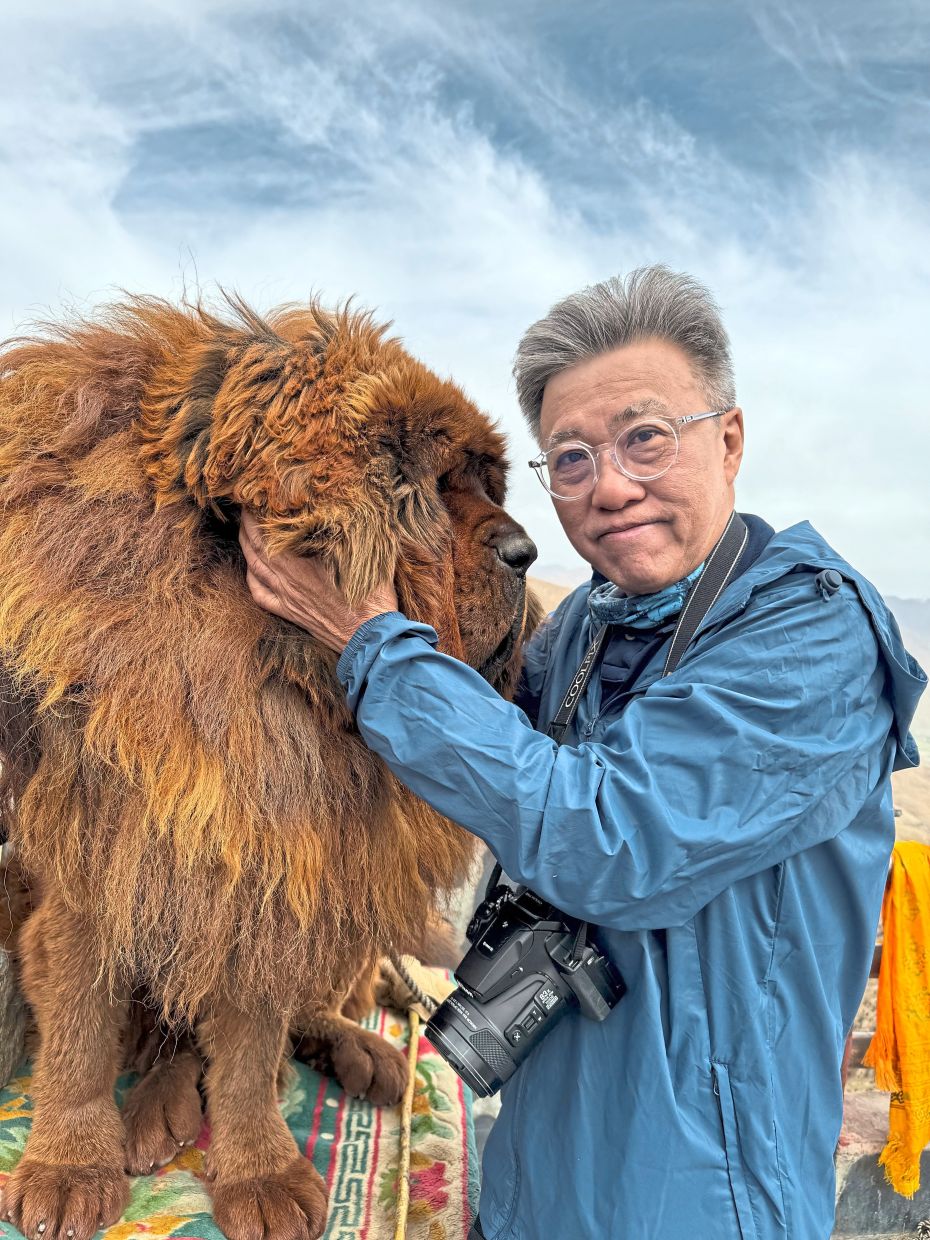
The writer with a giant Tibetan Mastiff.
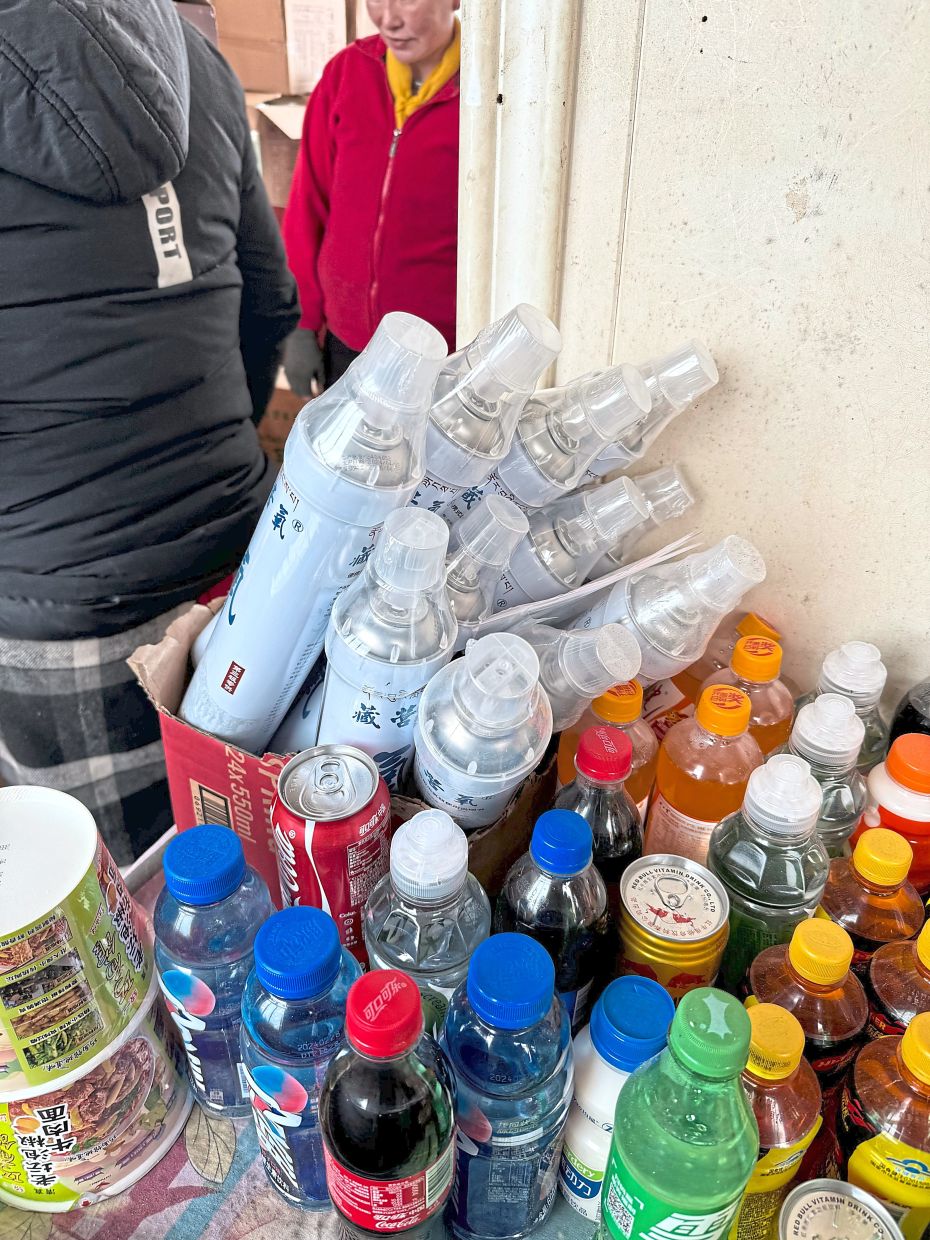
Oxygen canisters, drinks and even cup noodles are sold along the way.
Oxygen canisters, drinks and even cup noodles are sold along the way. It is wise to always keep hydrated when in high altitude areas.
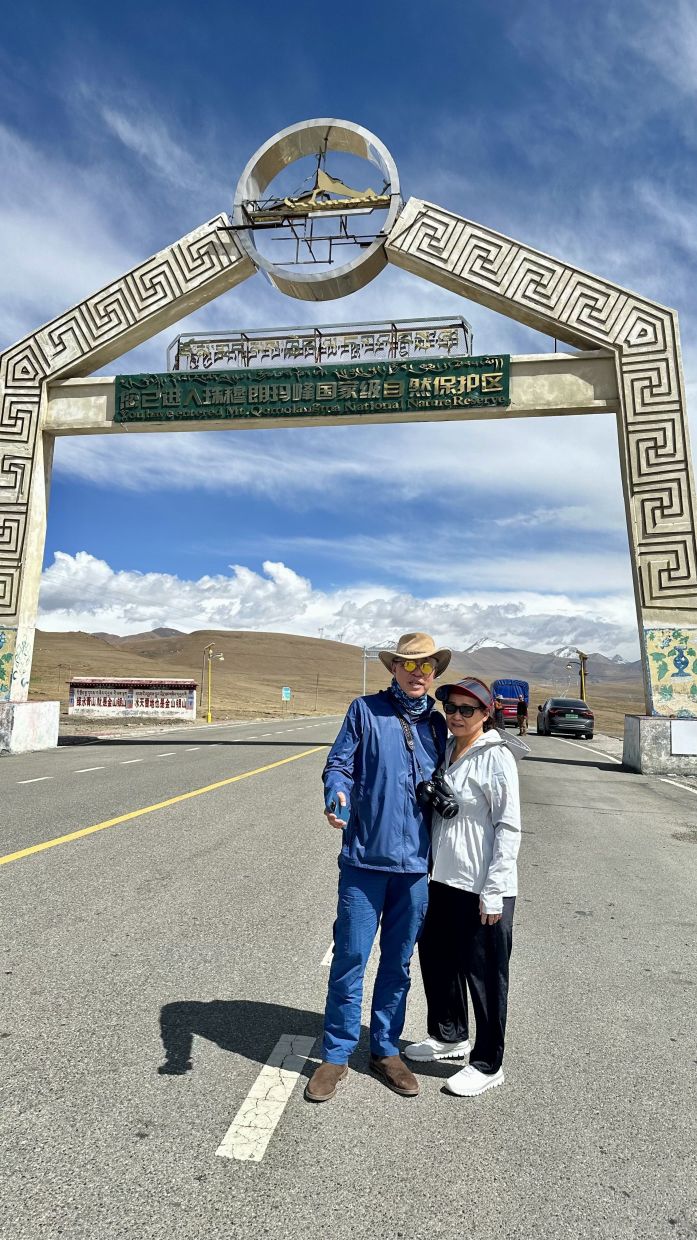
The writer and his wife Florence, who was already experiencing altitude sickness when this picture was taken below the arch of the gateway into the Mount Everest national park.
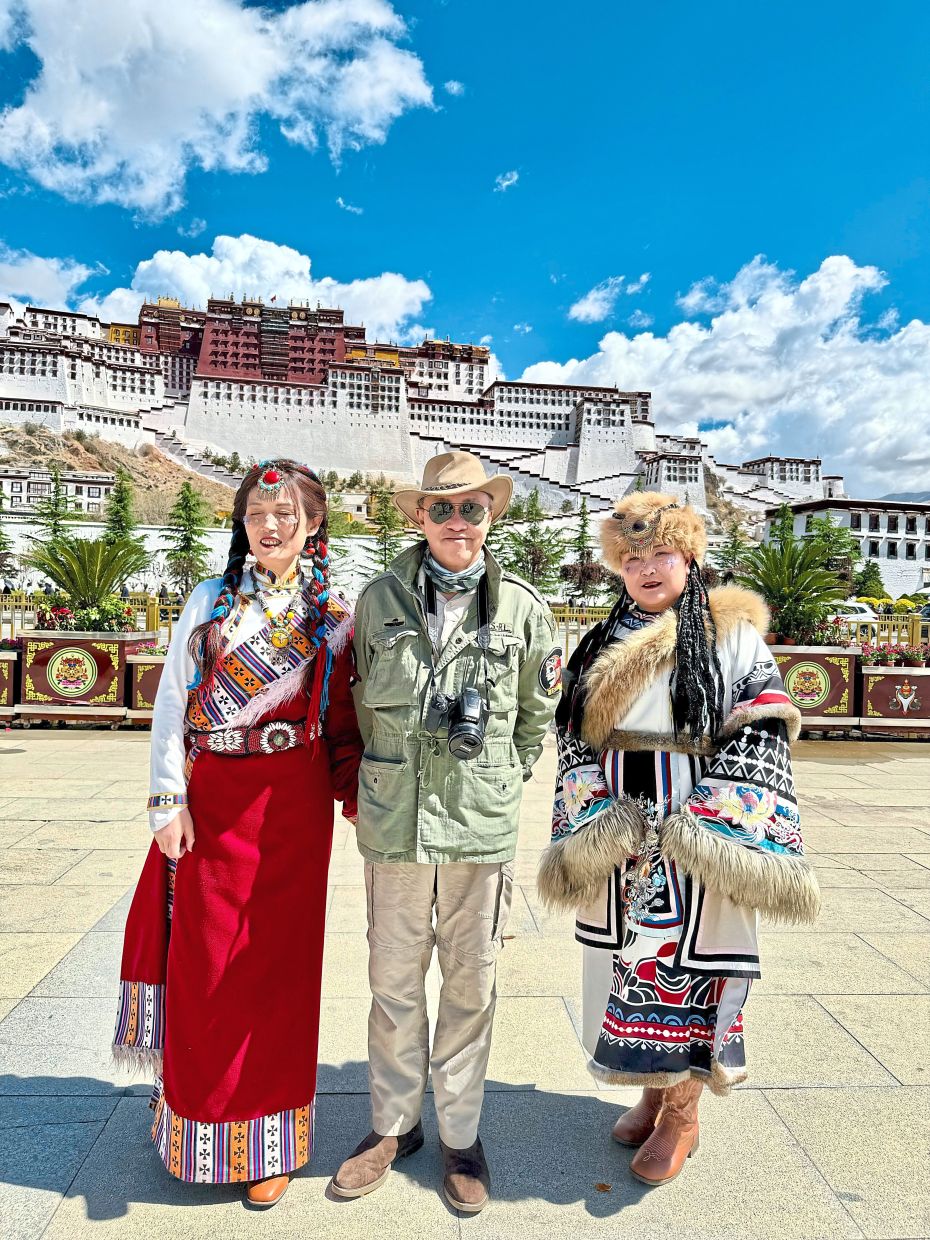
The writer with some locals clad in their traditional costumes in front of the Potala Palace in Lhasa, Tibet.
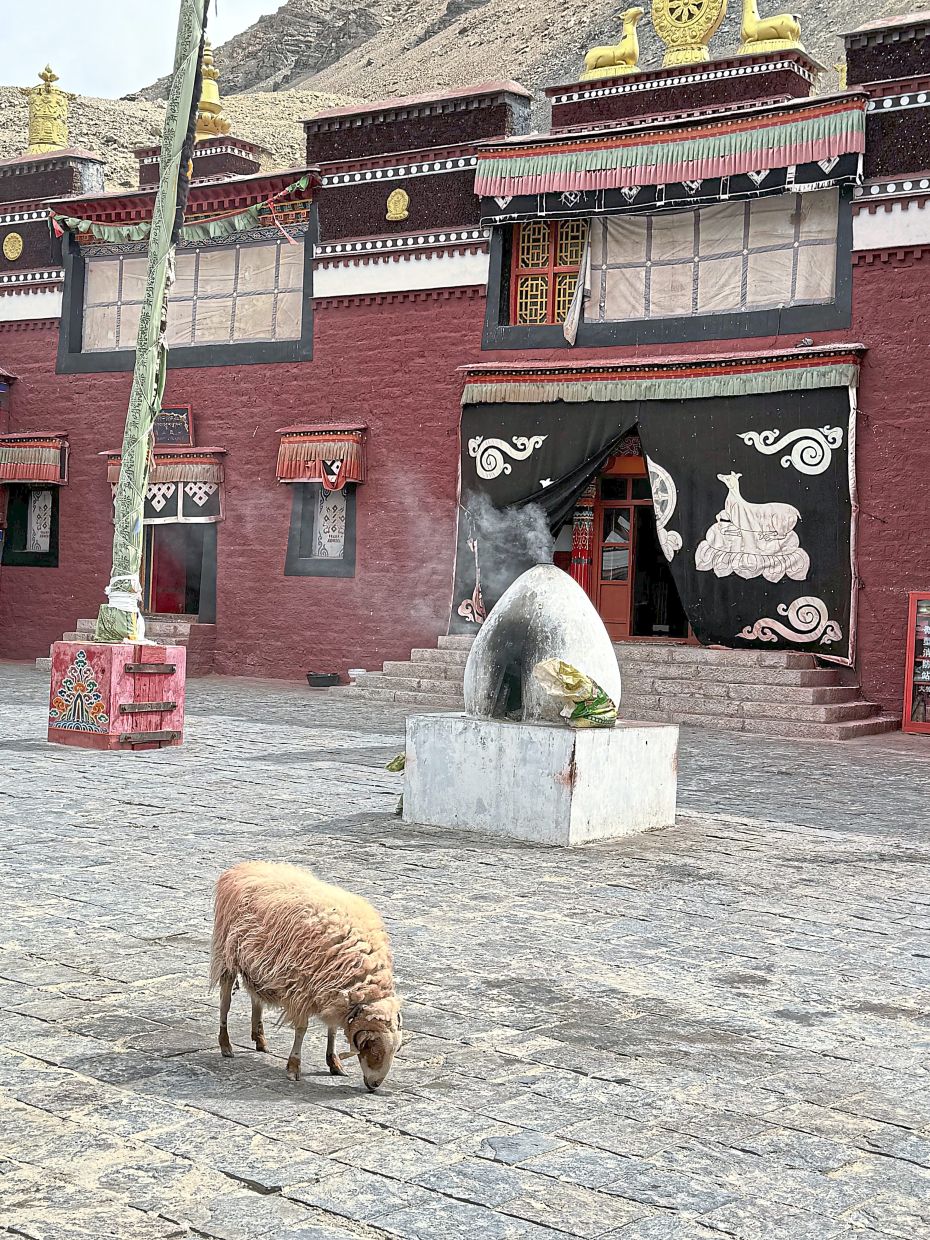
The Rongbuk Monastery near the EBC is said to be the highest monastery in the world, located about 5,000m above sea level.
The writer at the tiny town of Tingri, the last stop before taking the bus to the EBC.
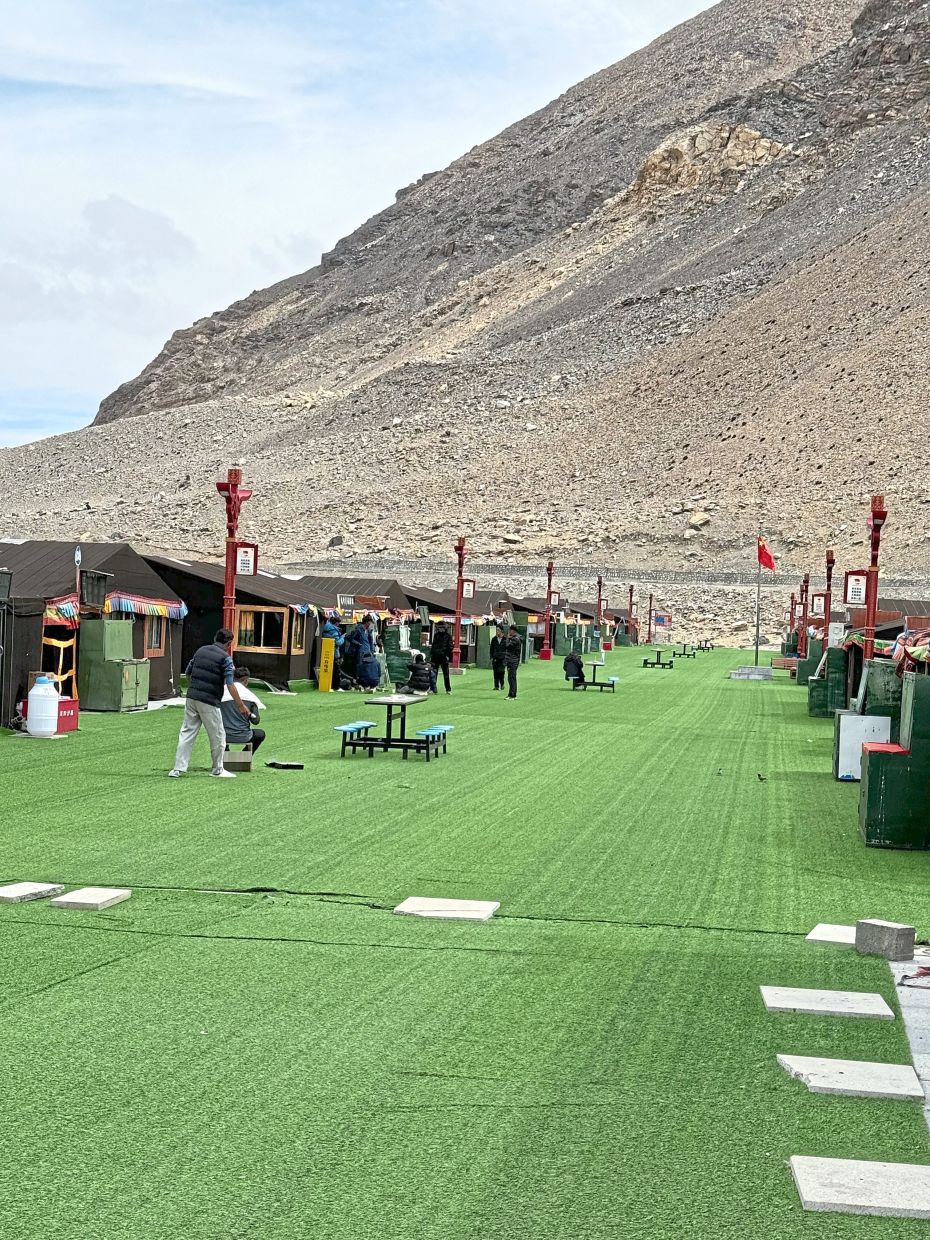
The camps at the EBC built by the government had basic facilities but was very clean and well organised.