Strolling through the streets of Beyoglu in Istanbul, Turkiye feels like walking into a well-worn history book. It is both a commercial district and a residential neighbourhood, where modernity and antiquity, noise and serenity, blend together seamlessly.
Outside cosy corner cafes, a few tables and chairs always await weary customers.
Travellers slow their pace here, order an Arabica coffee or a steaming glass of Turkish black tea, paired with trays of colourful Turkish delight, some fluffy local bread and other snacks. That’s when you realise what it really means to enjoy travelling: not rushing, not chasing time, but simply pausing under a foreign sky, cherishing each passing second.
Istanbul, a city straddling two continents – Asia and Europe – has always been a natural crossroads of Eastern and Western culture and civilisation. She does not need to pretend, be polished, or declare any identity – her geography and history have already made her one of a kind.
To travel to Istanbul is not about “checking off” a list and leaving after a day, but about staying a few days longer and letting your heart soak it all in ... until you truly fall in love. Don’t you agree?
Besides, the Turkish people themselves are a sight to behold. The men are often tall, broad-shouldered, strong-featured and wear beards, radiating a rugged charm. The women, meanwhile, embody a blend of Eastern and Western features – fair, delicate skin, with strong, beautiful eyes. It’s a kind of beauty that often catches you off guard.
Don’t believe me? Just look at the policemen and policewomen patrolling the streets and you’ll see that I’m not exaggerating.
From the Karakoy pier, I climbed uphill to the heart of Beyoglu. This is essentially a hill-town stamped with colonial footprints, once home to the French and British communities in the 14th century. Streets climb the slope, flanked by French-Ottoman-style buildings, while the narrow, winding alleys are its true signature.
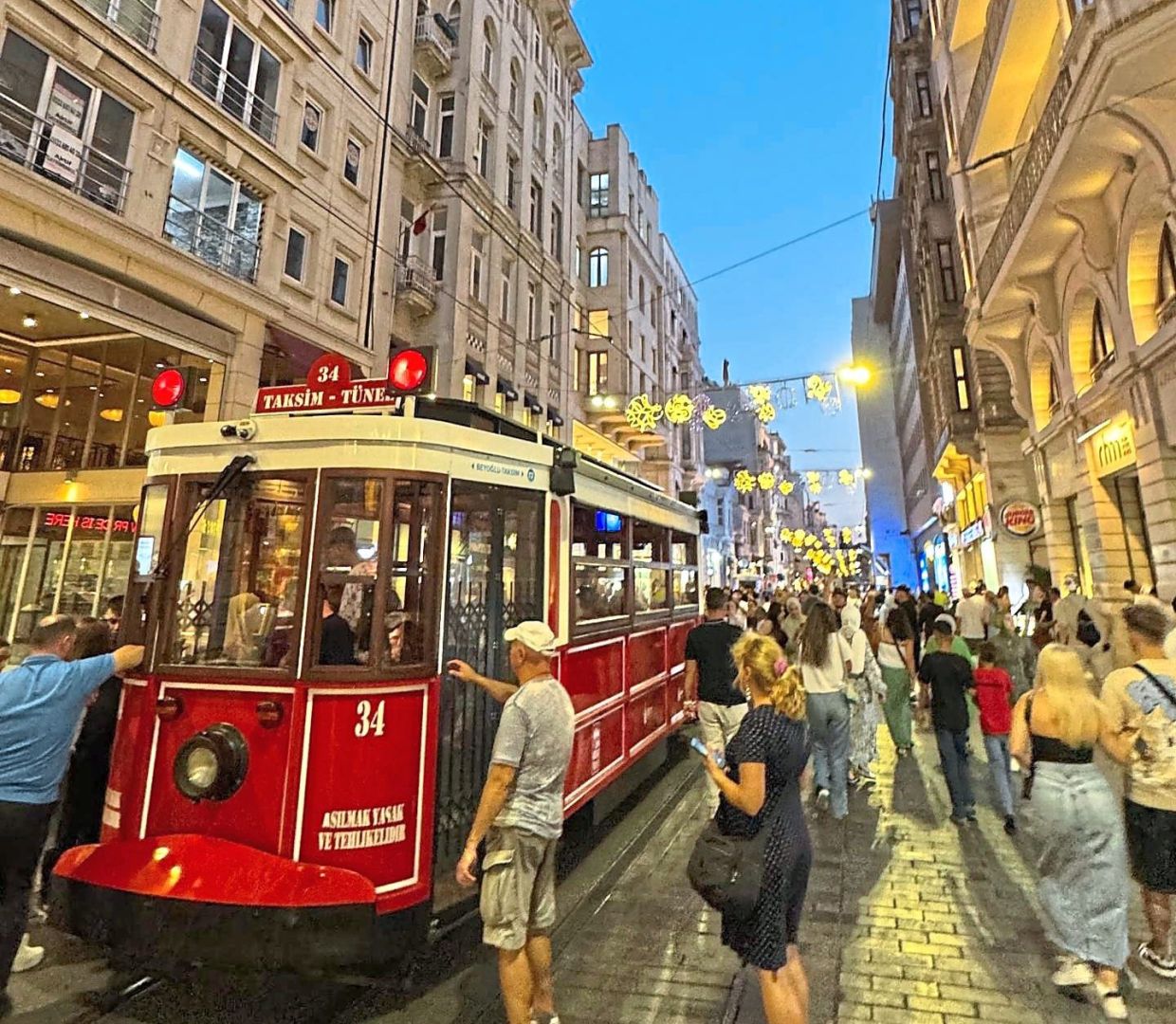
Don’t miss the vintage British-influenced tram that still runs slowly up and down, carrying passengers straight through history.
The cobblestones laid 700 years ago are still here, narrow enough for only a single yellow taxi to squeeze by. When one drives across the granite road, its bright colour contrasts sharply with the old stone walls, turning the whole scene into a vivid oil painting.
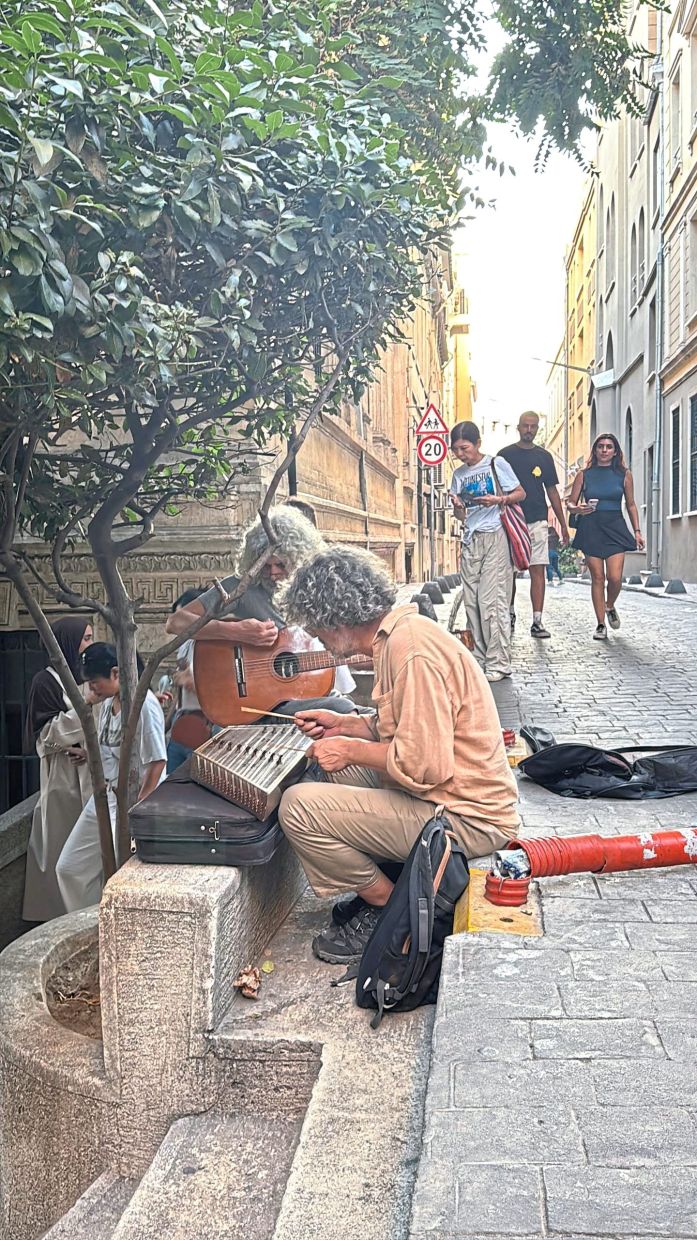
Street musicians can be found almost anywhere, playing traditional instruments. Their bright notes gather small crowds – some taking photos, others swaying with the rhythm. Music has always been like this: it needs listeners, applause, and sometimes, just a little encouragement.
Turkiye has no strict tipping rule, yet in the service industry, a gesture of generosity is expected. After all, for many, their livelihood depends on “your satisfaction” and “your kindness”.
At the very top of Beyoglu stands an unmissable landmark: the Galata Tower. Built in 1348, it once served as a military watchtower and even a prison under the Ottomans. Today, it’s one of the most visited tourist attractions in the city.
From its summit, the Bosphorus spreads out like a deep-blue ribbon, dividing Istanbul in two while gently binding Asia and Europe together.
Around the tower, cafes, bars, and food stalls line the streets, while a shopping avenue – about 2-3km in length – invites you to linger.
At the end of August, when the summer night air drops to a cool 18°C, strolling here feels like pure pleasure.
That said, when shopping in Istanbul, you’ll notice that local retail brands are not as plentiful. Familiar names like LC Waikiki or menswear brand AVVA appear here and there, but the real stars are the dessert shops. They’re everywhere, and always packed. Turks do love their sweets!
Baklava dripping with honey, nut rolls, sesame nougat – each one is unapologetically sweet and bold. If you love desserts, this is the place to be. Order a cup of tea and a plate of sweets ... life can be that simple.
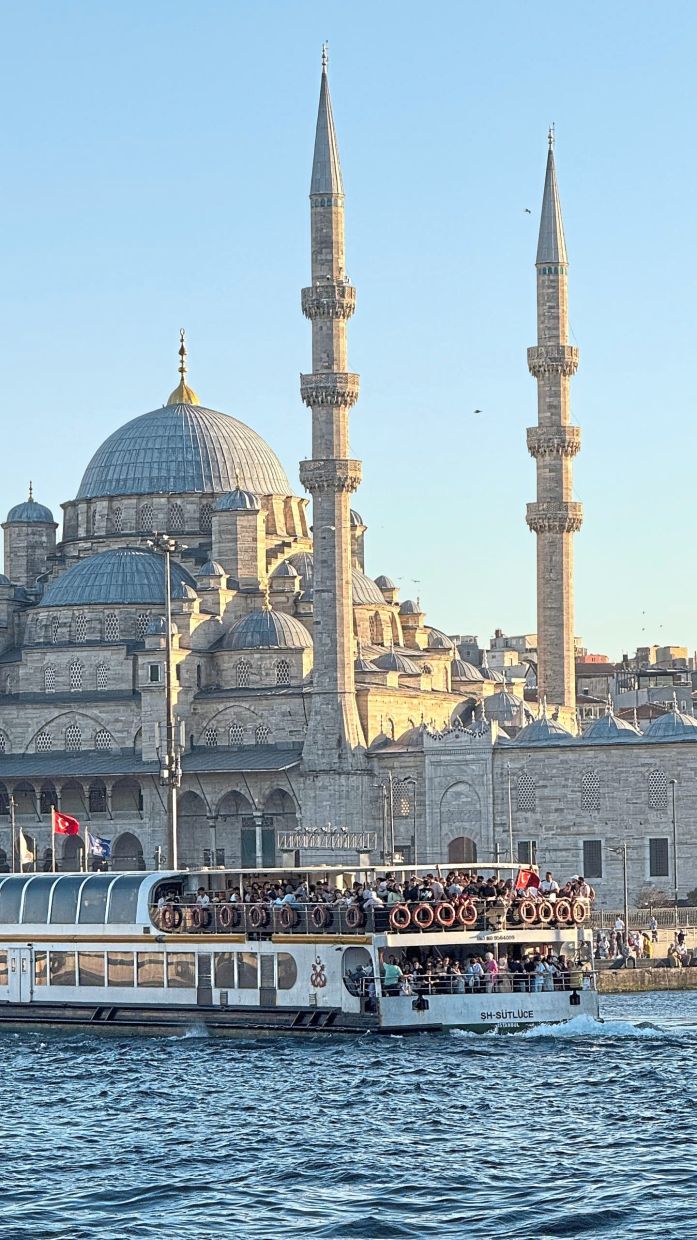
As I wandered on, a friend texted me. “Is it safe there? Isn’t it close to the Middle East – aren’t there wars?” Clearly, many still see Turkiye through a lens of “instability and danger”.
Safety remains the top concern for most travellers. But what does safety really mean? A place without crime at all? Or a journey where you experience more kindness than harm? I’d argue for the latter.
Risks exist everywhere, but more often than not, it is smiles and acceptance that serve as the best protection.
Locals had warned me about Istanbul’s “shoeshine” boys. Their trick is to “accidentally” drop a brush. If you pick it up, they’ll insist on polishing your shoes, then – with broken English – tell you a sob story about a sick child or not having eaten for days, before charging you 200 lira (about RM20).
A scam? Maybe. Did I fall for it? Yes.
But honestly, I didn’t mind. These small hustles carry no real malice – they’re just a way for some people to survive. And with tourist police patrolling every corner, you never truly feel unsafe. Istanbul isn’t as intimidating as outsiders think. In fact, it’s disarmingly friendly.
Perhaps that’s why Istanbul defies any single label. She is both a scroll of history and a stage of modern life; she offers European romance and Middle Eastern warmth; she is crowded and chaotic, yet capable of giving you serenity in a quiet morning.
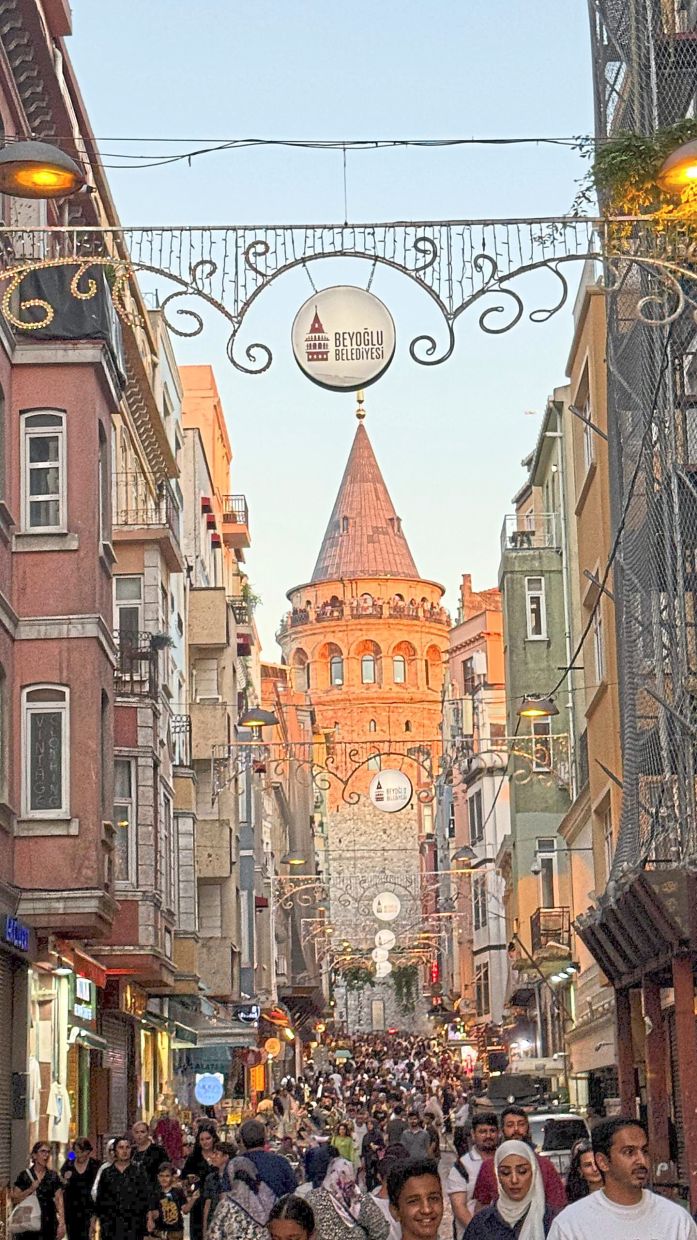
What makes travel unforgettable isn’t how many monuments you visit or how many dishes you try. It’s when a city makes you remember her breath. Istanbul is exactly that kind of place – one that lingers in the heart. Visit once, and you’ll want to return a second, even a third time.
And so, when I left her again, one unspoken confession echoed in my mind: “My heart is tied to Istanbul.”
Expert tip: Don’t exchange any currency at the Istanbul Airport as the rates are poor and they charge a 4% fee. Wait until you reach the city, where exchange booths are everywhere and they don’t take commission.
The views expressed here are entirely the writer’s own.
Leesan, the globe-trotting traveller who has visited seven continents and 151 countries, enjoys sharing his travel stories and insights. He has also authored six books.