
Nestled deep within Sarawak’s Mulu National Park lies a geological wonder that is millions of years old.
Named Clearwater Cave or Gua Air Jernih, it is the longest underground cave in South-East Asia and the eighth longest in the world, stretching 265km beneath the ground in Mulu National Park, a Unesco World Heritage Site.
Known for the beautiful subterranean river that flows through the cave, it is open for visitation, though exploring it is no easy feat as one would first have to climb nearly 200 stone steps.
“Clearwater Cave is famous for its beautiful structure and unique flora and fauna. Visitors can enjoy the limestone formations along an 800m trail without needing to venture deeper inside,” said Richie Philip, 35, a Mulu National Park nature guide.
During a recent familiarisation trip to the park organised by the Sarawak Tourism Board and in collaboration with Gaya Travel Media, a handful of journalists had the chance to explore the place.
The journey to Clearwater Cave required a boat ride along the Melinau River, where you get to see views of stunning limestone cliffs, lush tropical forests and longhouses.
From the small wooden jetty, visitors must then tackle the 200 steps, which will take you to the cave.
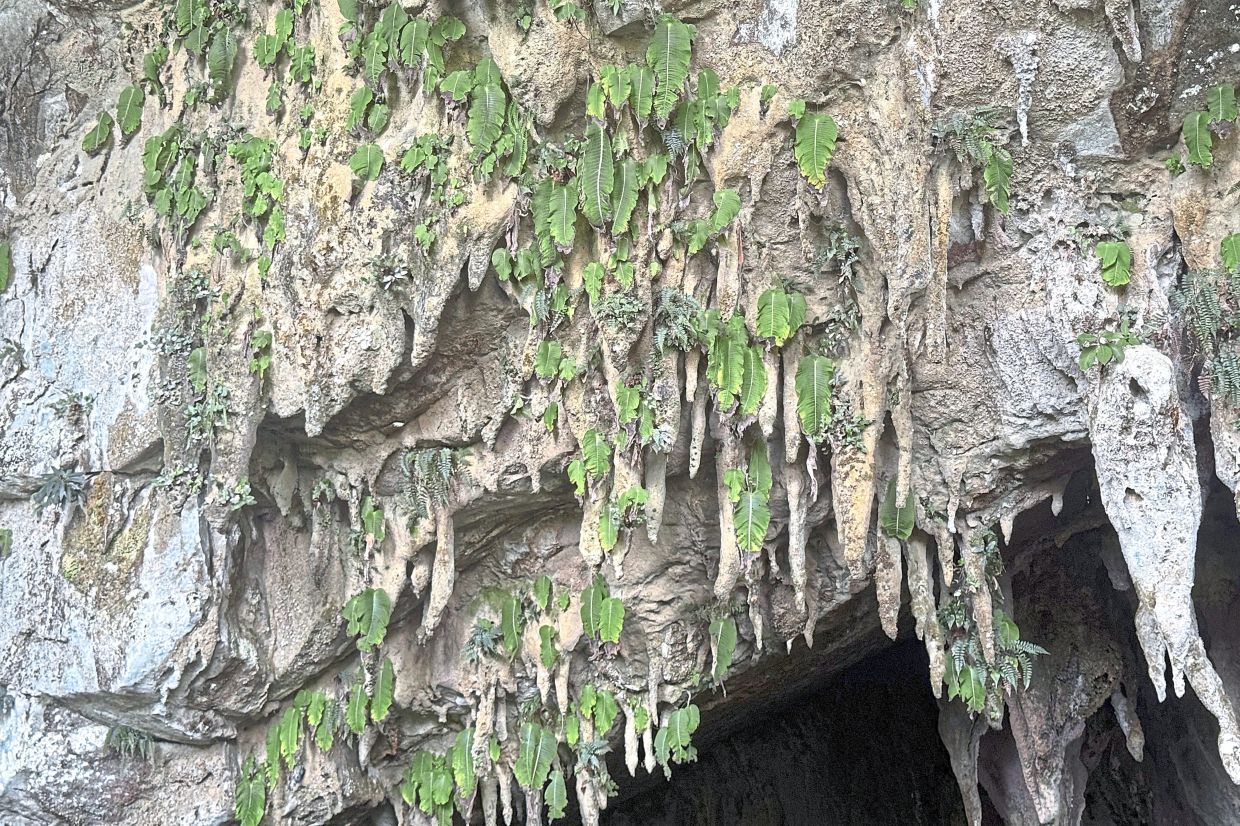
At the cave entrance, several botanical treasures of Mulu can be sighted, including the one-leaf plant (Monophyllaea pendula), a rare species that produces only a single leaf throughout its life; and the slipper orchid (Paphiopedilum sanderianum), an exotic species with long dangling petals that grows only on Borneo’s limestone terrain.
The true reward of the adventure awaits at the foot of the cave, where visitors can bathe in the clear and cool river flowing within.
“The river, which originates from Mount Api and flows into the Melinau River, is home to unique species such as the blind crab, blind catfish and soft-shelled turtle.
“Although the water looks crystal clear, visitors are advised not to drink it directly as it may be contaminated by bat and swiftlet droppings,” Philip said.
Another unique feature here is the phytokarst rock formations. These formations are created in areas of limestone caves where sunlight is present. The rock is eaten away by bacteria, leaving behind sharp spikes that angle towards the daylight.
“The spikes, resembling the pinnacles of Mount Api, add to this area’s spectacular geology,” Philip added.
Visits to Clearwater Cave are often paired with a trip to the Wind Cave, located nearby. If Clearwater Cave highlights “water” as its central theme, Wind Cave showcases natural airflow that can be felt in certain chambers – two elements of nature that complete the Mulu experience. – Bernama