
For anyone who has strung up a bow, the finger tab is more than just a strip of leather. It is the bridge between the archer and the string.
Most recurve archers, especially Olympians, won’t shoot without one. Traditional bowhunters and barebow shooters also rely on tabs, though often in simpler forms, to protect their fingers and steady the release.
Slip it on, draw back, and suddenly this modest accessory transforms into an indispensable part of the shot.
Traditional archers have used the split finger style tab for centuries.
It has a simple design. Neatly cut leather, trimmed to protect the fingertips from the bite of the string.
The tabs come in all shapes and sizes, fitted for children to adults, left- and right-handed shooters alike.
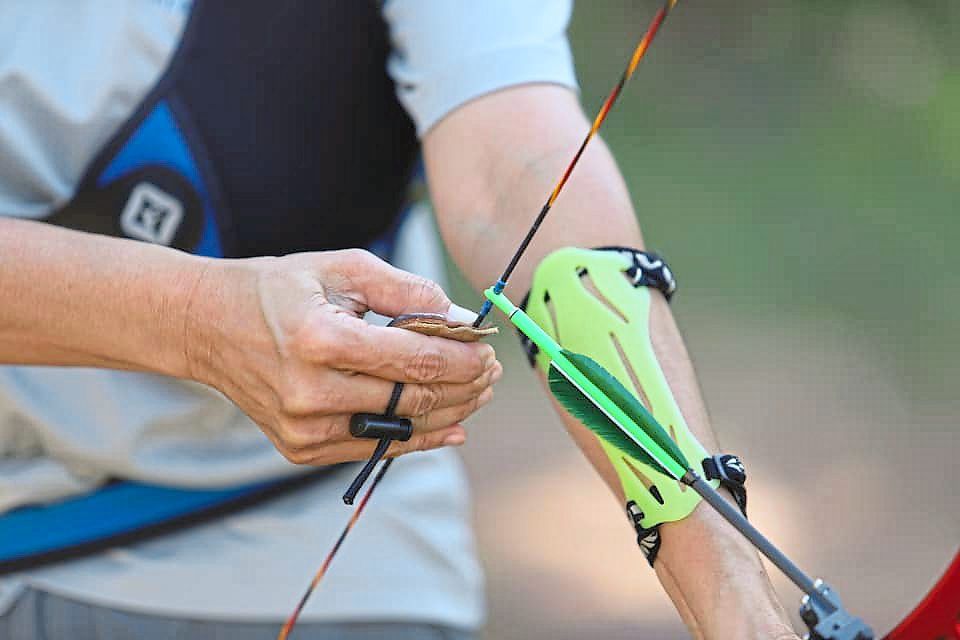
The basic tab can be bought for as little as RM40 in a pro shop.
But such simplicity also comes with sophistication.
At the highest levels, for those competing in the Olympics, the finger tabs are fine-tuned for precision.
They are built with metal frames, thumb rests and finger spacers.
The tabs are engineered based on research and feedback from the world’s top archers.
A piece of this specially engineered tab can cost more than RM500 each.
The South Korean designs are well-regarded for their high-performance tabs.
They are often produced from premium Cordovan or horsehide leather for durability and a buttery-smooth release.
For the traditional bowhunter, the plain tab is good enough.
It has a loop for the middle finger, sometimes an elastic cord to stop it slipping and is hard enough to withstand years of shooting.
For long-lasting and rugged, the buffalo leather takes the top spot.
Barebow archers keep things raw and straightforward. They rely on a tab that’s just a single piece of leather, used with the “three-under” method.

In this context, the tab is not just about protection but a measuring tool.
Barebow archers practice “string walking”. A method that counts stitches on the tab to judge distance, relying on both touch and sight.
For this kind of tab, they are widely made in Europe and Australia, designed with competitive shooters in mind.
Like any gear, the tabs don’t last forever.
The leather wears thin, especially at the edges, after countless draws and releases.
But oiling the leather helps to prolong the tab’s life. It keeps it supple and resistant to cracking.
However, the tab’s number one enemy is the wet weather. The rain makes it slippery and can cause a disaster for a competing archer.
For this reason, seasoned archers carry spares in their quiver, ready to swap when one fails.
In competition, judges also examine the finger tabs for extra markings or unfair tweaks to ensure competitors abide by the rules.
The judge has the right to ask a competitor to swap to a new tab if they have doubts about this leather piece.
Small as it is, the finger tab can make all the difference in a shootout.
Whether worn by a professional or a novice, this unassuming strip of leather keeps the draw smooth, the release clean, and the fingers safe for the next shot.
From the hunting field to the Olympic line, leather tabs come in many shapes. Each has its own purpose, feel and tradition.
Basic Split-Finger Tab
The classic design is for traditional archers. A flat piece of leather with a finger loop, simple but effective. It cushions the fingertips and makes repeated shooting possible.
Buffalo Hide Tab
Favoured by traditional bowhunters who want toughness. Buffalo hide is dense and long-lasting, able to endure countless draws and releases with minimal wear and tear.
Cordovan Tab
The gold standard for Olympic recurve shooters. Cordovan, a fine horsehide leather, is slick, durable and gives a clean release.
Often paired with metal frames, thumb rests and spacers.
Horsehide Tab
Another high-grade accessory. Slightly softer than Cordovan, it offers comfort and durability, making it popular for its high quality at a more affordable price.
Barebow Tab
A single slab of leather for the “three-under” style. Simple, functional and sometimes stitched for consistency. Barebow archers use the stitches to gauge distance through “string walking”.
Custom Tabs
Some archers cut their own from scrap leather. Nothing fancy, just personal fit and feel. For many, this do-it-yourself approach is part of the tradition.
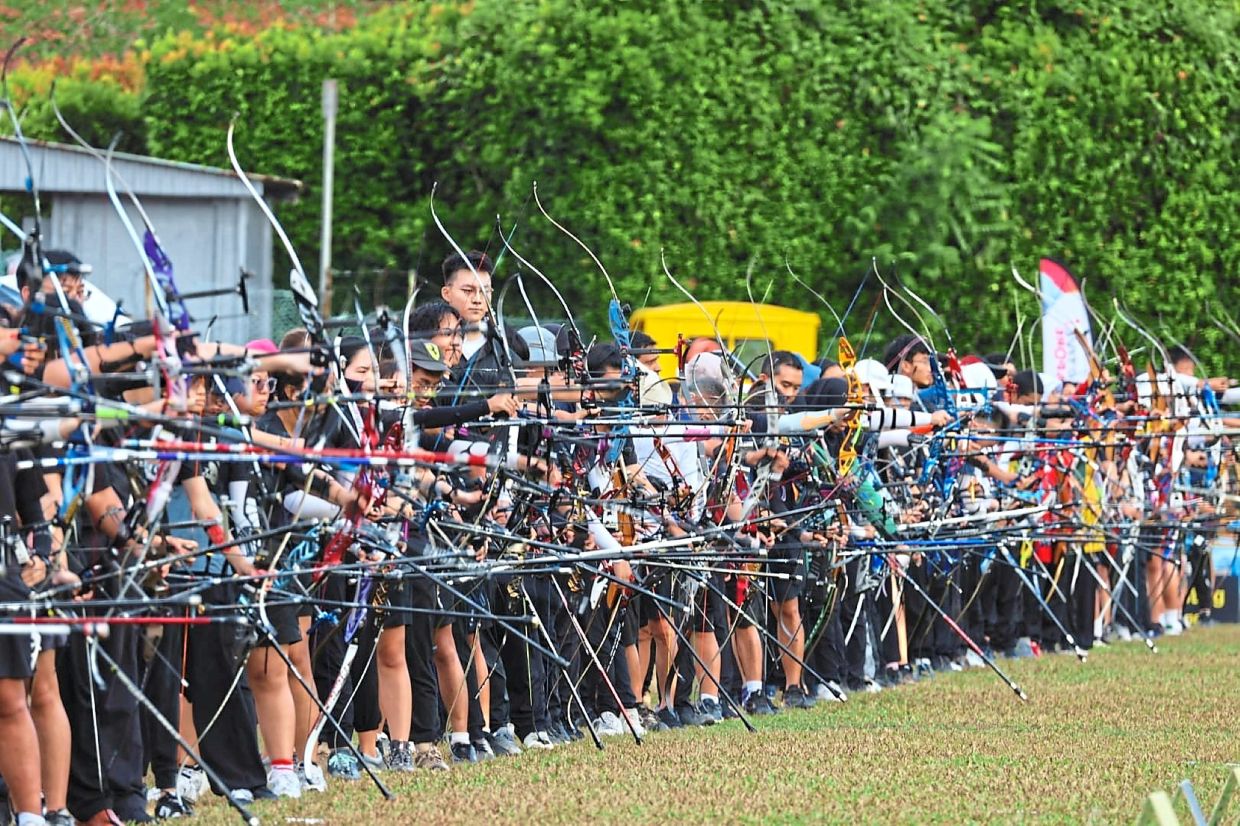
Olympic Recurve Bow archers at an outdoor tournament.
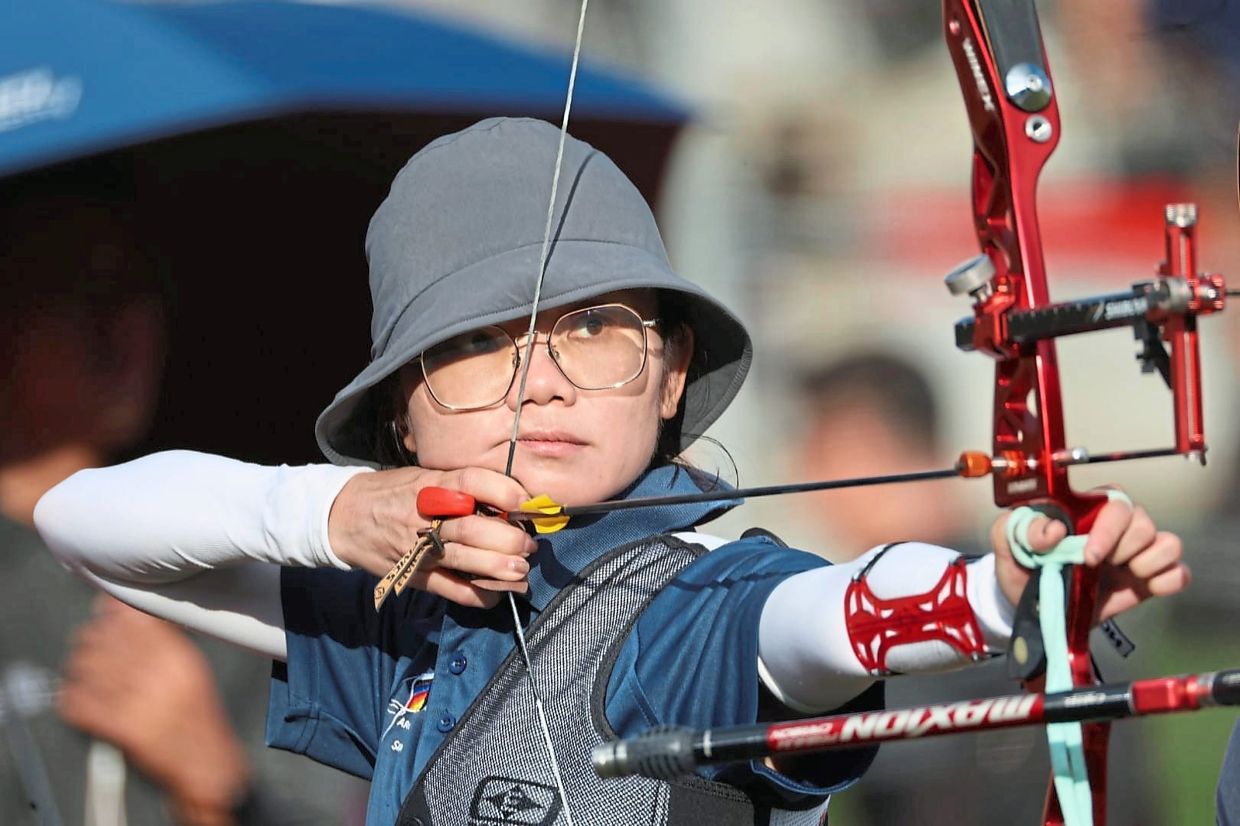
An archer maintaining her aim in full draw with a split finger tab.
A junior archer drawing his bow with a finger tab.
A close-up view of an archer using a tab to grip a bow string.
A simple barebow tab produced by Spigarelli, an Italian bow manufacturer.
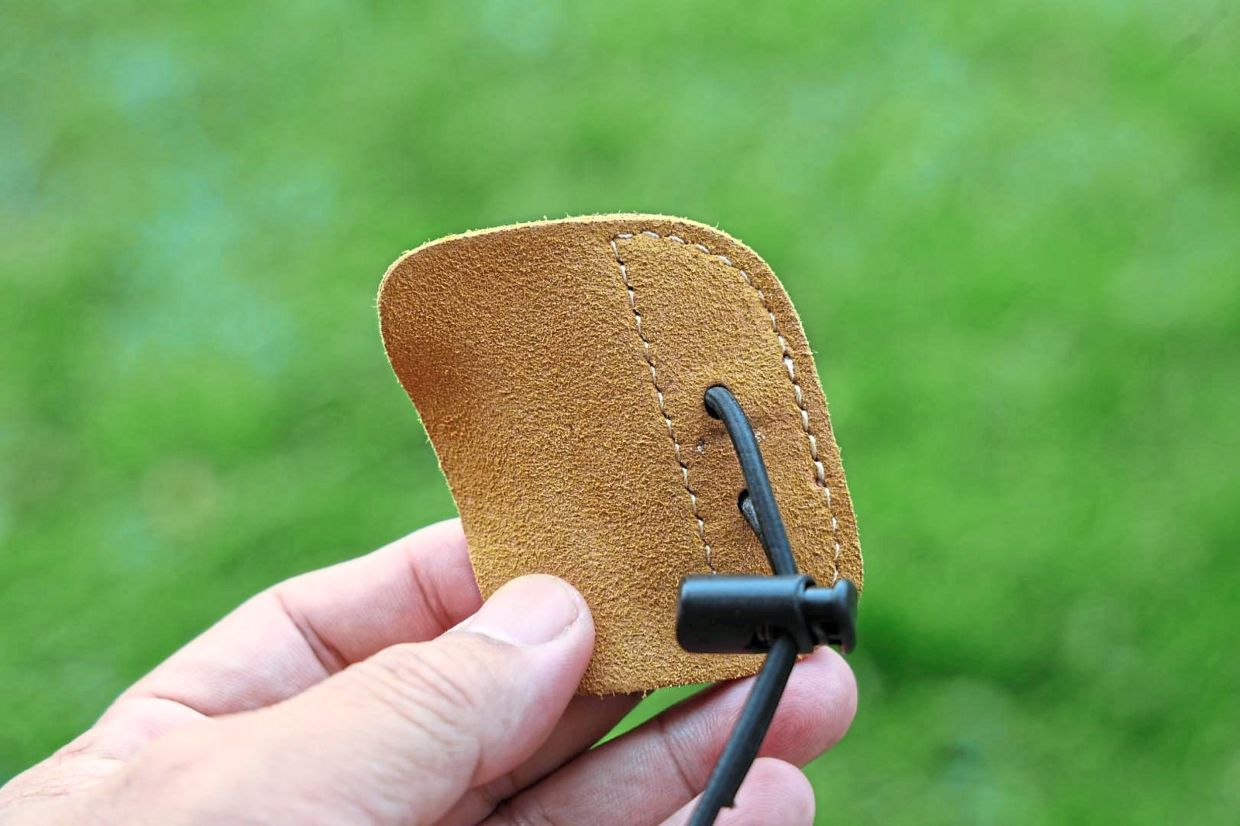
The soft felt lining on a barebow tab offers comfort for the archer.
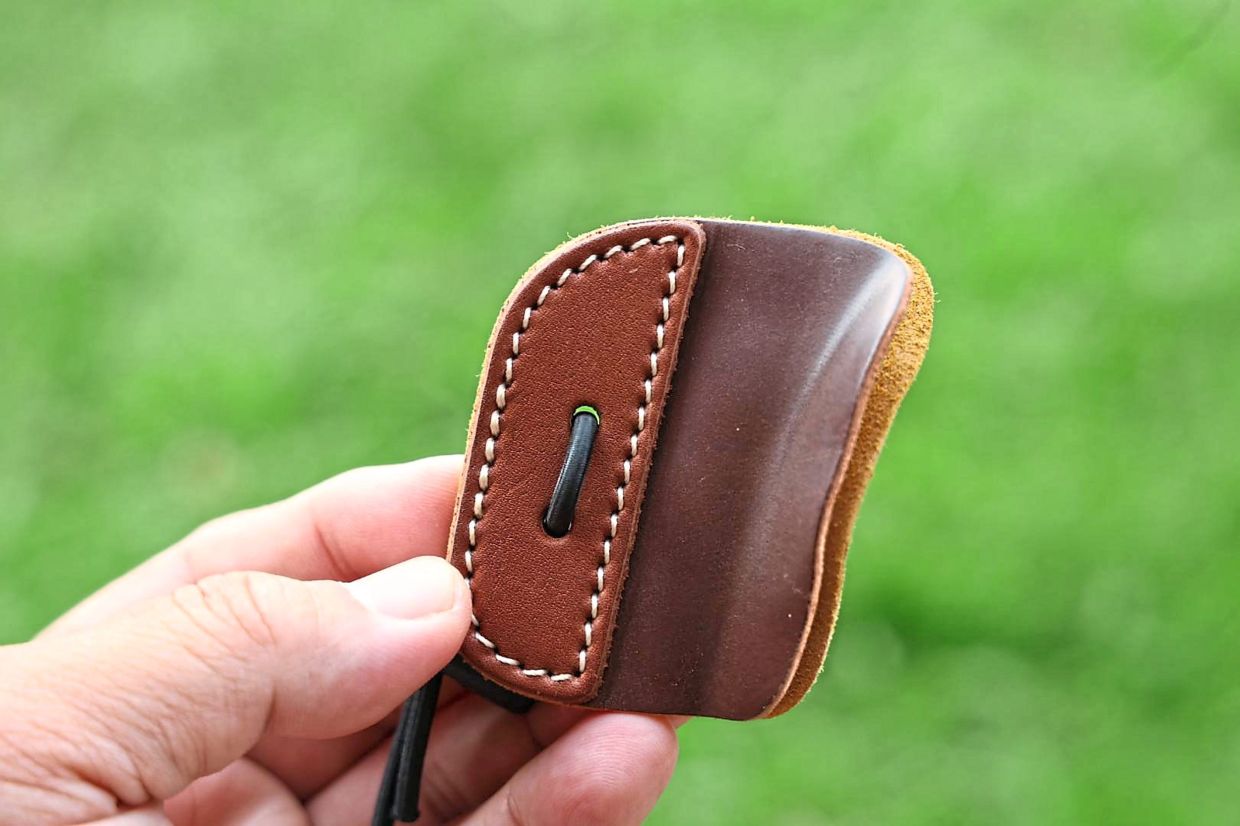
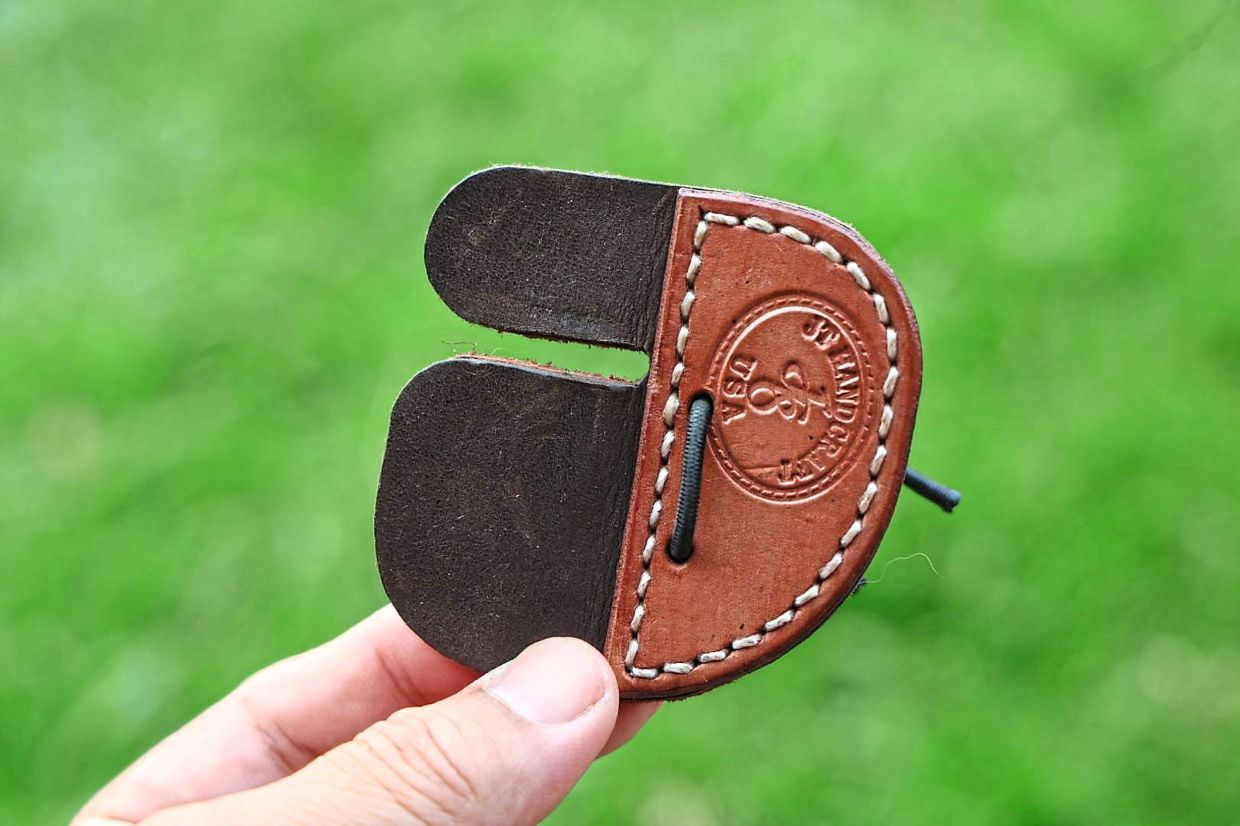
A beautifully crafted artisan finger tab made out of buffalo hide.
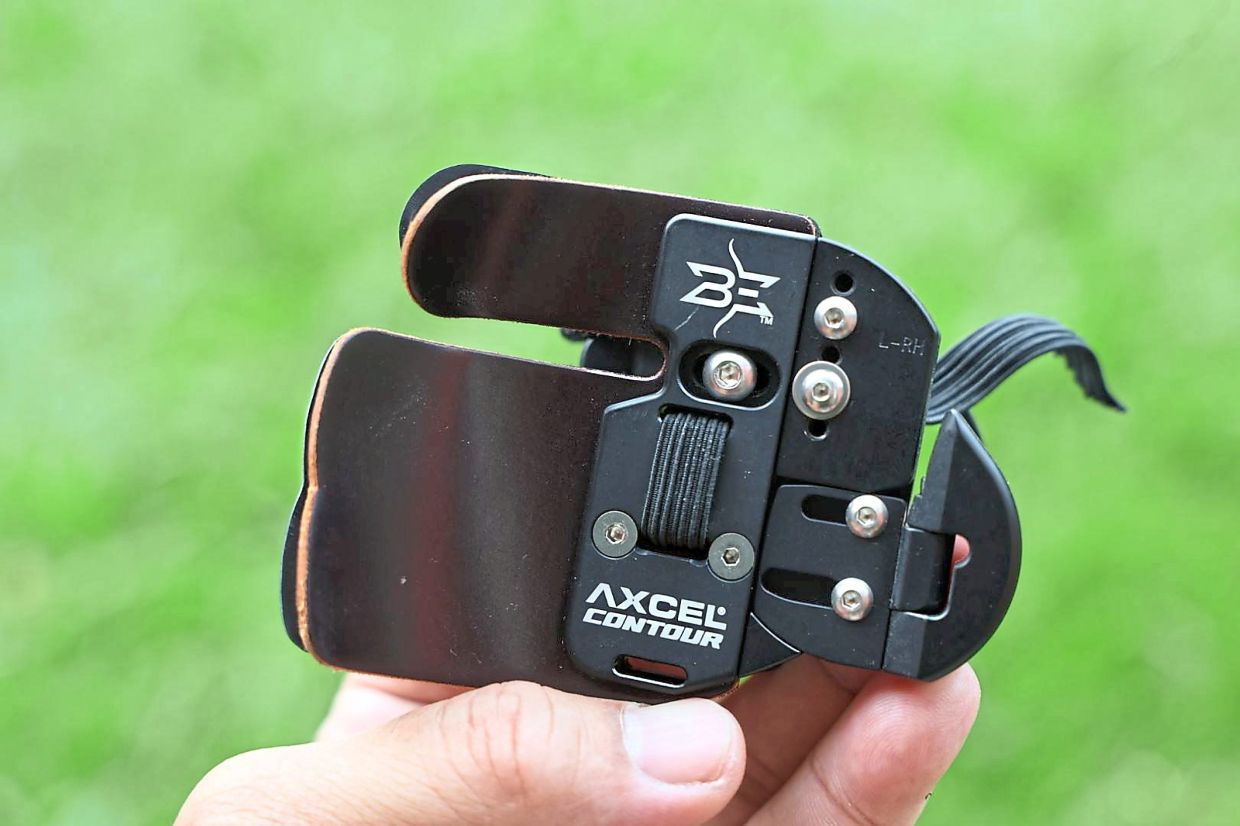
A high-end finger tab by Axcel Archery from the US, featuring customizable settings based on the archer’s shooting preferences.
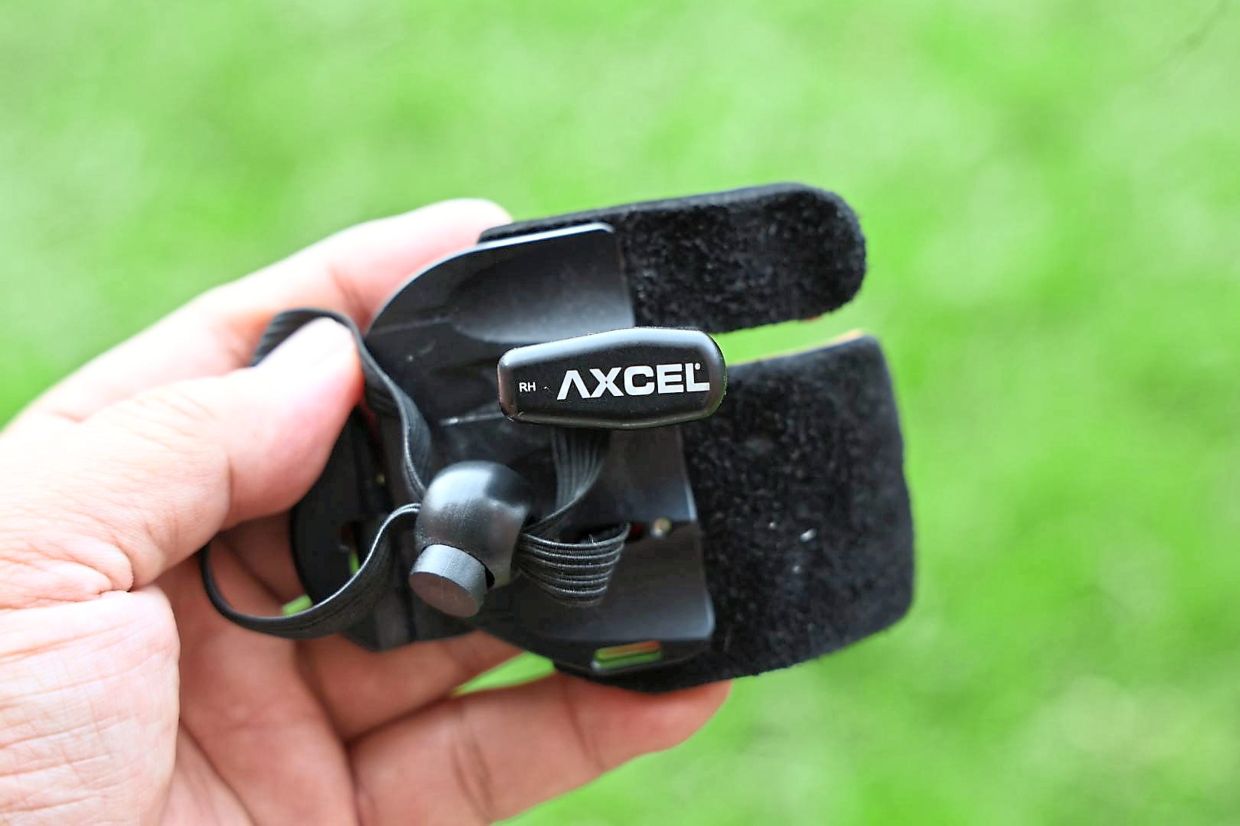
The three-layer finger guard and an adjustable finger space to prevent pinching the bow string.