
A weathered anti-aircraft cannon, military motorbikes and armoured personnel carriers covered in sediment, and, in between, colourful fish greet us at this wreck.
It’s the remains of the SS Thistlegorm, which draws thousands of divers a year to this spot off the Egyptian Sinai Peninsula.
The British cargo ship sank during World War II and was only rediscovered in 1956 by French oceanographer Jacques Cousteau.
It lies at a depth of around 30m and is comparatively well-preserved and easily accessible – a combination which makes the wreck a popular diving spot.
The world’s seas – from Norway to Malta, from Aruba to Australia – are the graveyard of countless sunken ships which attract divers. The fascination they exert can probably be explained by a mixture of drama, transience and the experience of nature.
The people on board have often lost their lives, the substance of the ship is slowly decomposing and marine plants and fish are making it their new home.
“Wrecks are foreign bodies on the seabed, but over the years and decades they become artificial reefs,” says diving instructor Frank Ostheimer from the German Scuba Diving Association. “They are therefore taken over by Nature and decay more and more over time.”
What’s the story
One particularly colourful wreck is that of the freighter Jane C lying at a depth of 27m off the Caribbean island of Aruba. Shimmering corals have formed on parts of the shipwreck’s outer hull, while manta rays and moray eels swim around it.
And the freighter’s tale is an adventurous one. The country’s customs officials are said to have discovered several tonnes of cocaine on board and therefore sunk the ship in 1988 so that it could serve as an artificial reef, says the Aruban tourism authority. Legend or truth? Whichever, it’s certainly a good story.
It happens from time to time that a ship is sunk to serve as an artificial reef and diving spot. In 2022, the wrecked oil tanker MV Hephaestus – after officials first made sure that it had been carefully cleansed of oil and lubricant residues beforehand – was sunk off the Maltese island of Gozo.
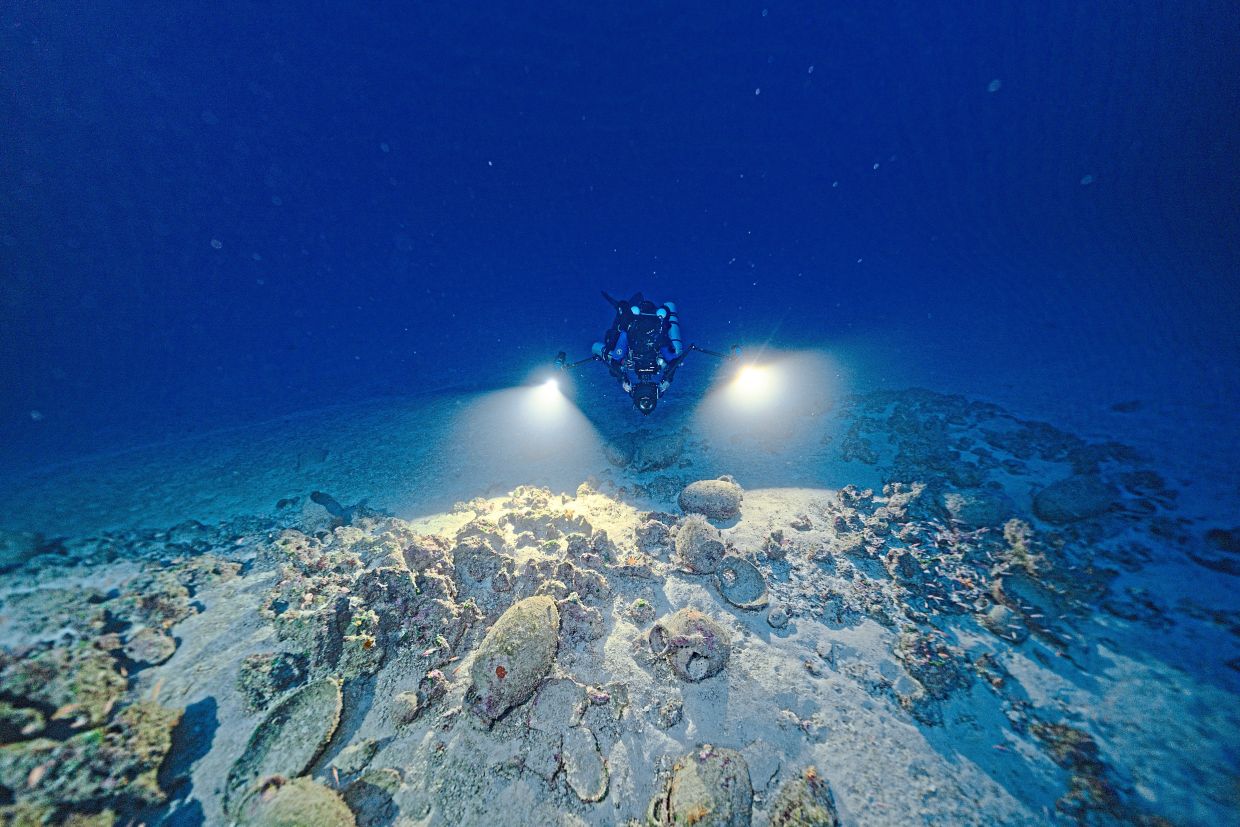
Ostheimer says wreck diving opportunities and locations are increasing. On the one hand, new ships are being discovered all the time, for example in the Baltic Sea.
On the other hand, he says, nature conservation measures in the Mediterranean are helping the underwater world to recover and become more attractive for divers – including for exploring wrecks.
Be it in Spain’s coastal region Costa Brava or off Mallorca, off the Croatian island of Rab or the Istrian town of Pula, or the western coast of Sicily, where the Pavlov, a tanker that sank in 1978, lies near Trapani, there are plenty of opportunities for shipwreck diving in Europe alone.
Diving professional Ostheimer personally recommends Hyeres in the south of France. There are a whole series of wrecks there – many from World War II, but some of them older.
At least two of them jut up above the surface, making them ideal for beginners to explore.
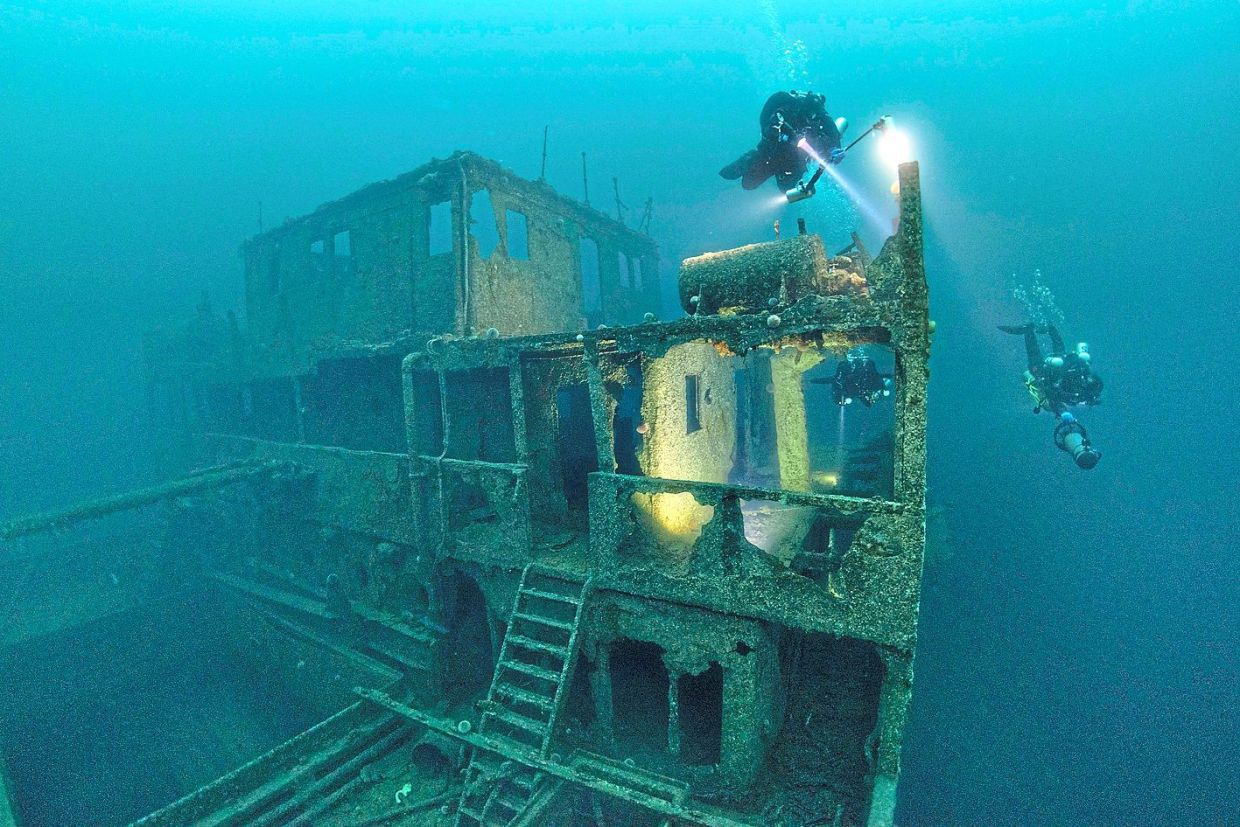
“The Donator is also located here, one of the most beautiful wrecks in the world – with vegetation and a variety of fish comparable to the tropics,” Ostheimer says.
Warships included
Other exciting diving areas are in Norway. “There are many wrecks from World War II here,” says Ostheimer. “Back then, ships often travelled at night, protected by the shore, and when they were bombed, they tried to touch down on land.”
One spot with several wrecks close to shore is off Gulen near Bergen. The water here is cold, so this is only suitable for divers who are used to such temperatures.
Warships also lie at the bottom of the sea in Scapa Flow, a bay between the Orkney Islands in the north of Scotland. It was used as a natural harbour during World War I – the German High Seas Fleet sank itself here months after the end of the war and just a few days before the Treaty of Versailles was signed in June 1919.
Today, a number of wrecks can be dived to here, including three battleships and a minelayer from this fleet.
However, two wrecks of British battleships that were sunk in Scapa Flow during the World Wars are off-limits to divers as they are sea graves. More than 1,600 soldiers were killed in the sinkings of the HMS Royal Oak and the HMS Vanguard.
These are officially-designated war graves, so the diving bans must be strictly observed, says Ostheimer. Otherwise, for wrecks where diving is permitted, the following rule still applies: “Nothing may be taken away.” – Tom Nebe/dpa