




It was the stuff of an epic adventure tale that my cousin and I had set our sights on.
The misty mountains of Virunga in Rwanda was at the heart of it. We had envisioned trekking to see the mountain gorillas out in the wild last year, but 2024 turned out to be the worst year for me. My mother, who had always supported my love for travelling, lost her battle to cancer. In a single twist of fate, I had lost my world.
But I had earlier promised her that I would continue our shared love of seeing the world. So, in mid-June this year, my cousin and I flew into Kigali, Rwanda for our adventures.
Upon arriving, we were whisked away to the Virunga mountains. The 100km journey through hilly landscapes brought us to Ruhengeri town, our gateway to the mountain gorillas.
The night before our epic trek, my stomach was twisting from a mix of anxiety and grief. What felt like a long and quiet night finally ended when the alarm rang early the next morning.
Our driver picked us up to register at the Volcano National Park headquarters, along with the other tourists. We were divided into groups of about eight people each, based on our age and fitness level.
A different family of gorillas was assigned per group – ours was the formidable Igisha clan, the largest one with over 30 members living pretty high up the mountains.
We eagerly started our journey, heading to the “starting point”. The 90-minute walk was quite scenic, aside from the “gorilla massage” roads, a phrase coined by the locals to describe the severely rugged road conditions.
From the starting point, we began our “real” trek. Earlier, our guides had given us a list of do’s and don’ts when the gorillas are nearby, as well as some sounds used for communication.
For example, a simple clearing of one’s throat indicates that we’ve “come in peace” while a loud cough means danger.
We were told that if a gorilla comes running at us, it is imperative that we stayed still and acted submissive.
We had trekked for almost two hours through the jungle of bamboo shoots, thistle and nettles. The ever-changing movement of the gorillas made it difficult to set up a proper or regular trail.
This is where the trackers come into play, whose role is to pinpoint the whereabouts of the gorilla and radioing back to the guides at the headquarters.
The permit alone for this tour is US$1,500 (RM6,308) per person, so for that price, you really want a gorilla sighting.
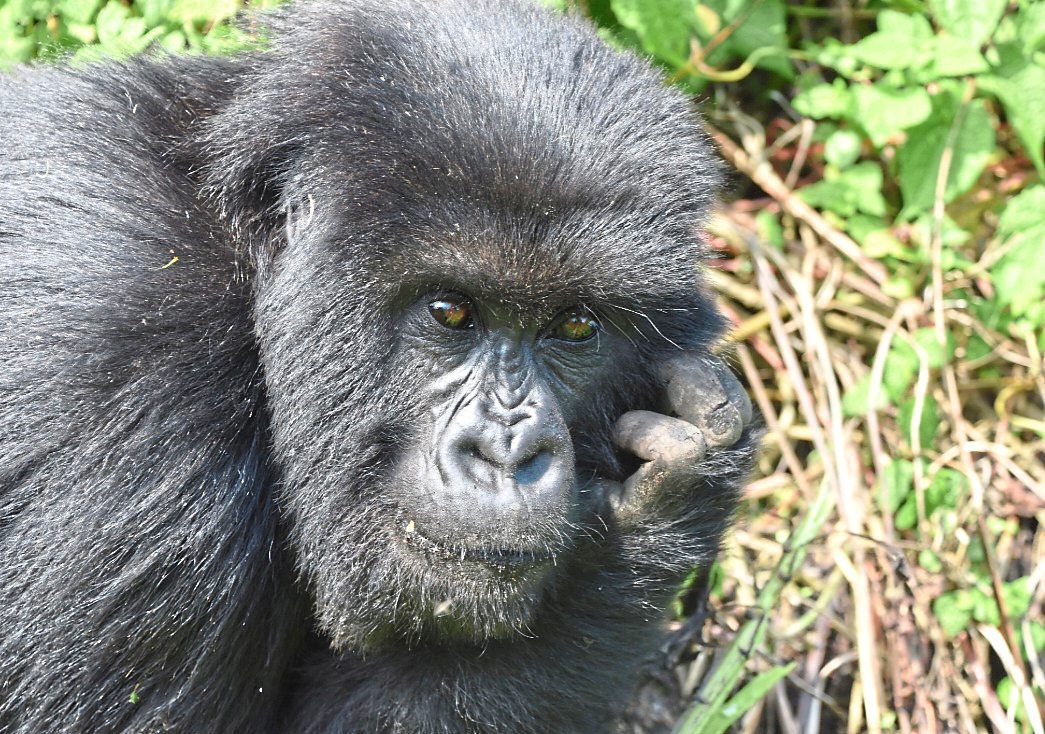
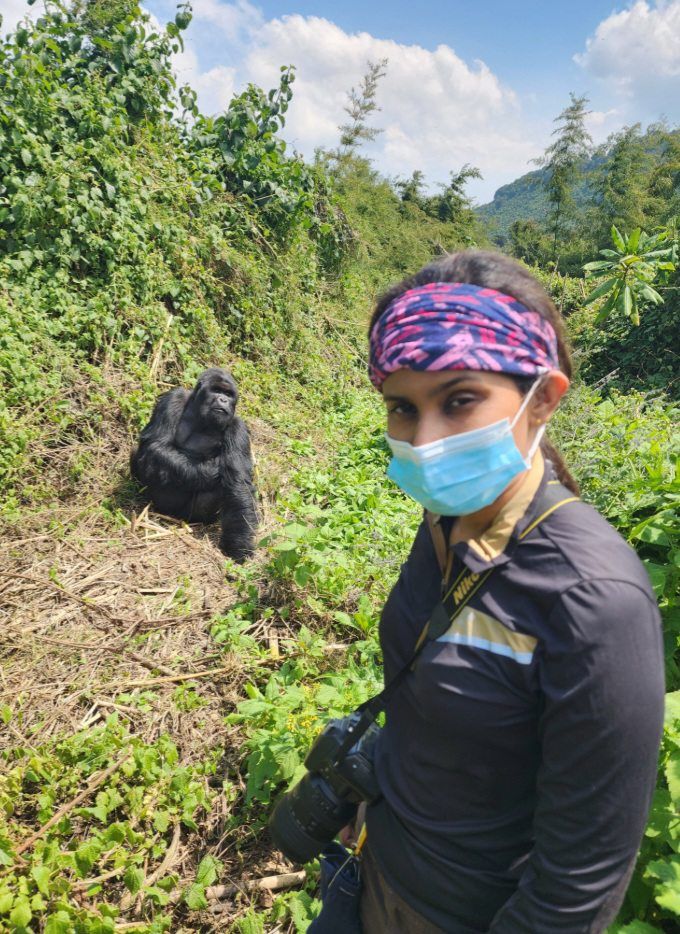
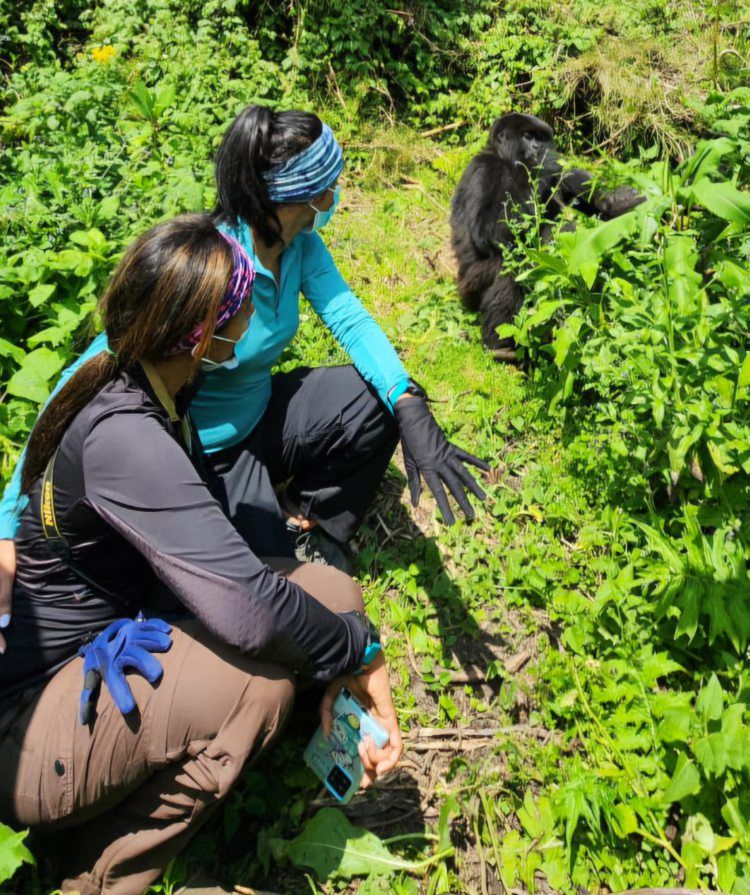
When we finally saw the gorillas, we were so happy. They were an arm’s length away from us, and we observed them quietly for about one hour. A silverback even brushed its body against us. I did not feel fear, instead I felt respect for it, as well as a sense of kinship.
The next day we trekked for almost six hours to Karisoke Research Centre, which was founded by conservationist Dian Fossey. It is located between Mount Karisimbi and Bisoke, near the border of Congo.
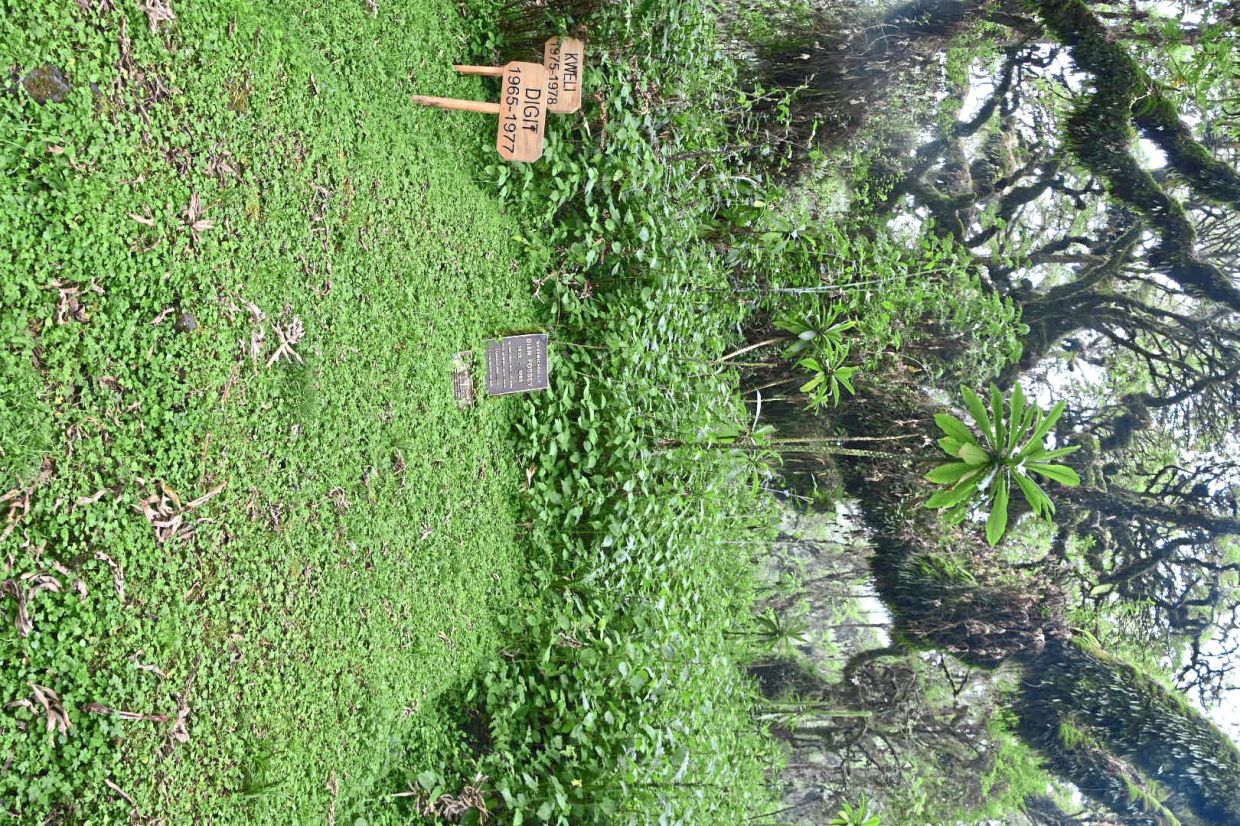
Much of Fossey’s research on mountain gorillas was done here. It is also where she was brutally murdered, and where her grave currently lies.
At 3,000m, the mist billowed in, enveloping the forest like a white veil. Along our path, we stumbled across another group of mountain gorillas close to the centre. Needless to say, we finally had our “gorillas in the mist” moment.
We toured the ruins of the campsite and paid our respects to Fossey and the gorillas that were buried near her. I knelt and placed strands of my mother’s hair on the moss-soft grave. A quiet release, nothing but absolute bliss ...
“This one is for you, Mummy.”
The views expressed are entirely the writer’s own.
Up close with gorillas in Rwanda
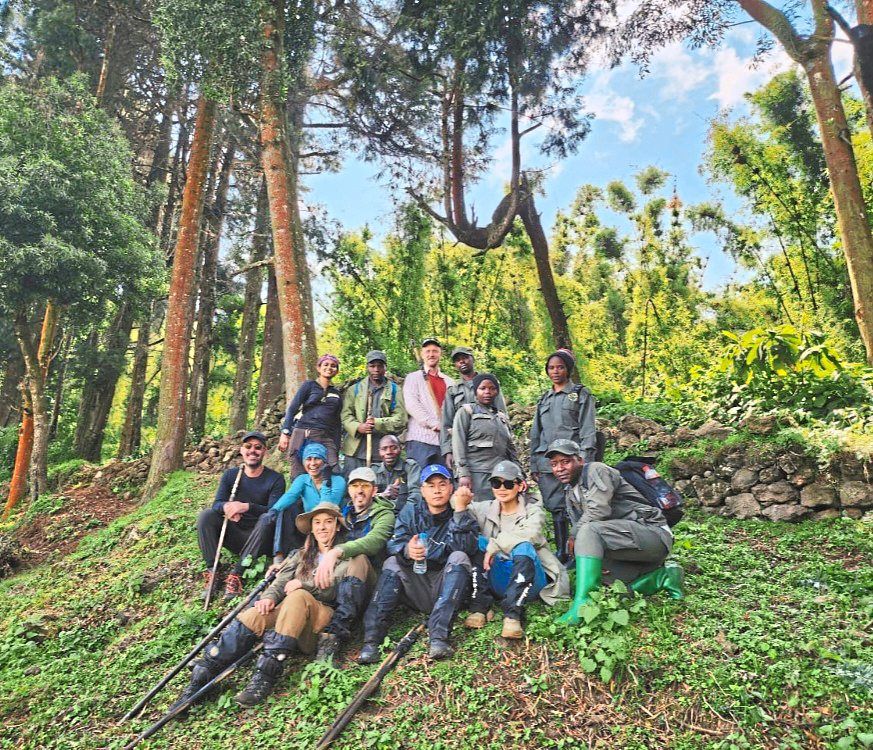
The group of tourists with their trackers and guides at the start of their journey. — Photos: Dr JEEVITHA BRAMA KUMAR
One of the gorillas that the writer could get close to in Rwanda.
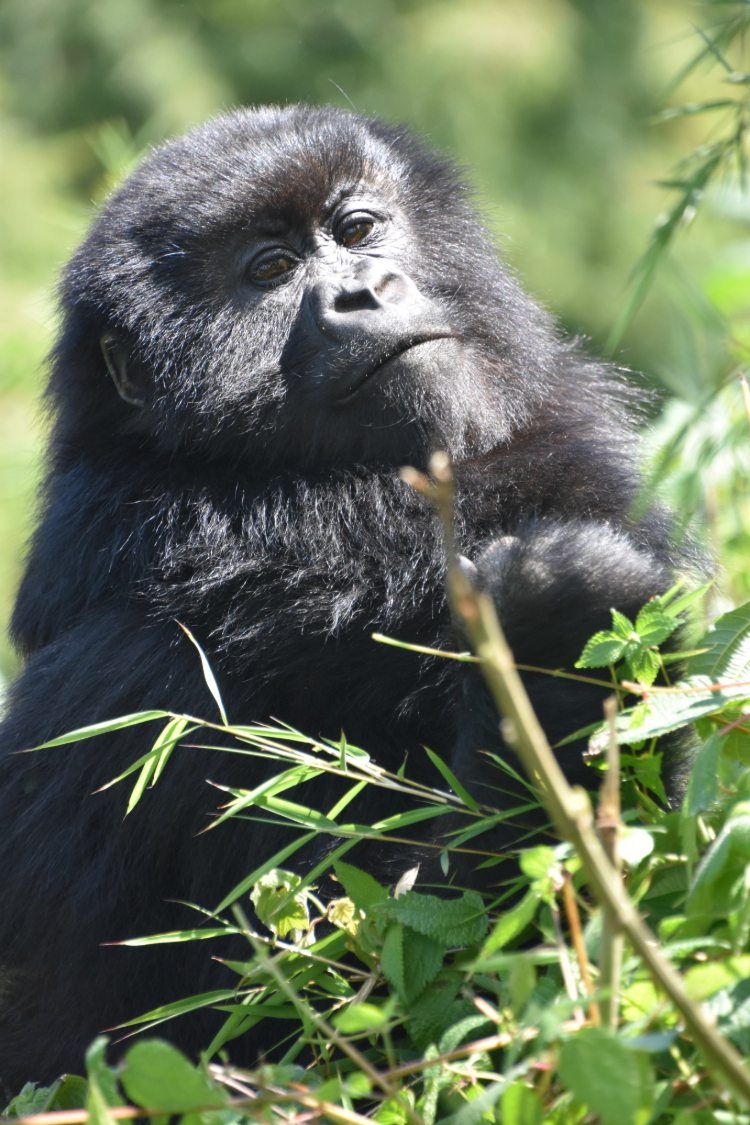
A young gorilla observing its surroundings.
The writer waiting patiently with one of the gorillas. Tourists are asked to wear masks when the gorillas as near so as not to infect them with any diseases.
The writer (in black) and her cousin getting up close and personal with a gorilla.
Fossey's final resting place next to her beloved gorilla, Digit.
