
Siem Reap in Cambodia doesn’t just exist on a map – it drifts somewhere between memory and myth.
Stroll its tree-lined boulevards at dusk and you feel the town pulling you backwards, into a French colonial reverie where men sweated through linen suits, telegrams were scratched out with fountain pens, and the night was always cooled by a gin and tonic. The tuk-tuks and neon are there, yes, but if you squint, the whole place flickers in sepia. Time doesn’t pass here, it lingers.
It was in January of 1933, barely months after the Grand Hotel d’Angkor opened, that then Sultan of Johor Sultan Ibrahim ibni Sultan Abu Bakar arrived. Reportedly, his two nights set the tone: this was no mere stopover but a sanctuary where royalty, legends, and wanderers could gather before venturing out to Angkor’s stone temples.
The hotel, designed by French architect Ernest Hebrard, mixed Art Deco with Khmer touches. Its iron elevator still creaks, its gardens bloom, and its corridors carry echoes of Charlie Chaplin, Somerset Maugham, and Jacque-line Kennedy. War nearly silenced her – during the Khmer Rouge years the hotel was abandoned – but Raffles restored her dignity in the 1990s. It then became Raffles Grand Hotel d’Angkor.
Today, the grand staircase and slow-turning fans still make you feel like you’ve stepped into a sepia photograph.
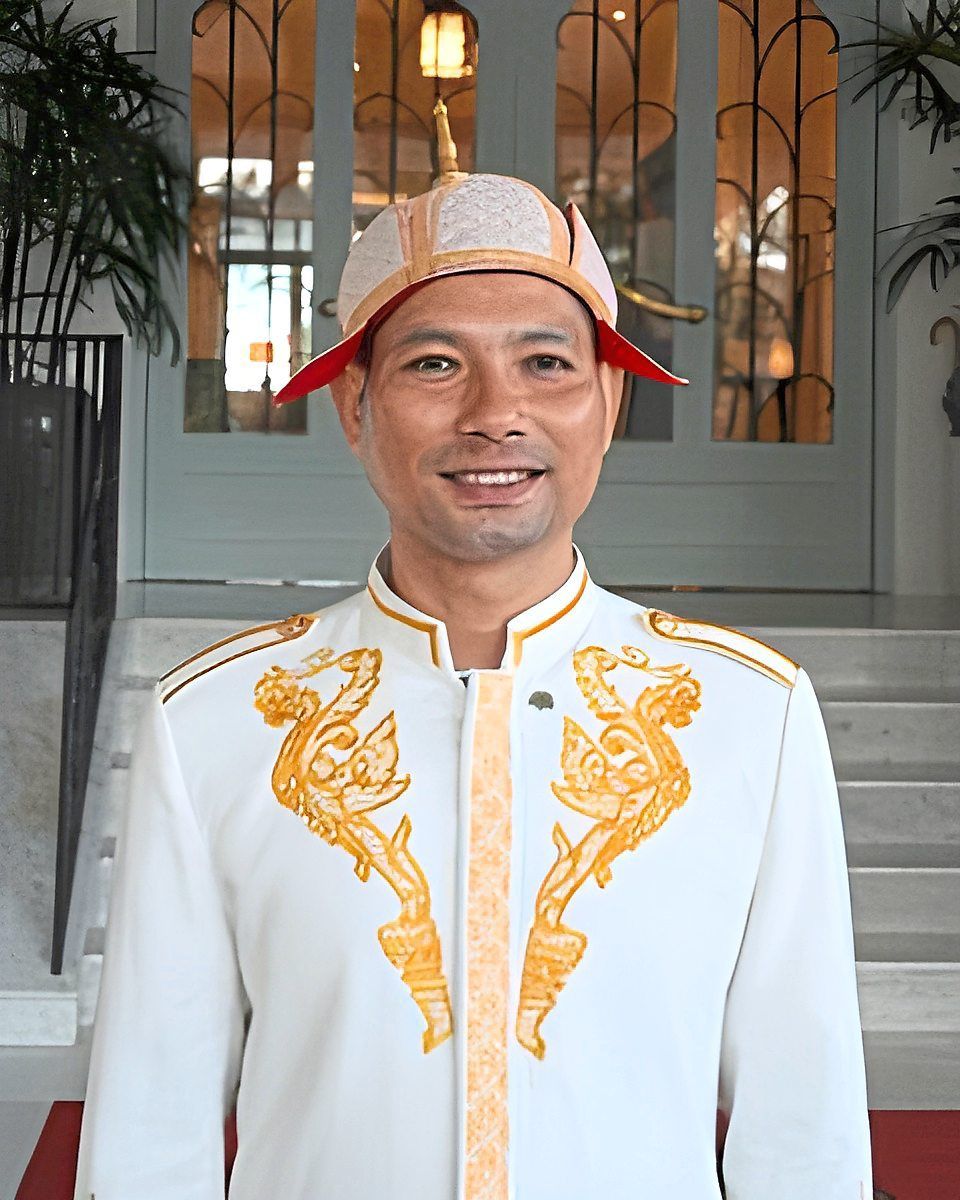
At the Elephant Bar, Cambo-dia’s gins tell the country’s story in a glass: Kulen alive with lemongrass and turmeric, Seekers sharpened with Kampot pepper, Samai’s smoky rums. Each sip is earthy, floral, or fiery, as if the jungle itself were distilled.
And then there are the ruins, the reason Siem Reap exists at all. Angkor Wat at dawn feels like a secret the jungle meant to keep, its towers etched against a fire-painted sky. The Bayon, with its hundreds of serene faces, stares back knowingly. Ta Prohm, strangled by silk cotton roots, stages a duel between man and nature. Preah Khan sprawls like a forgotten city, swallowed by vines. These stones carry stories of Jayavarman kings who drew from the Indian Chola dynasty, reshaping temple plans, iconography, and gods into something unmistakably Khmer.
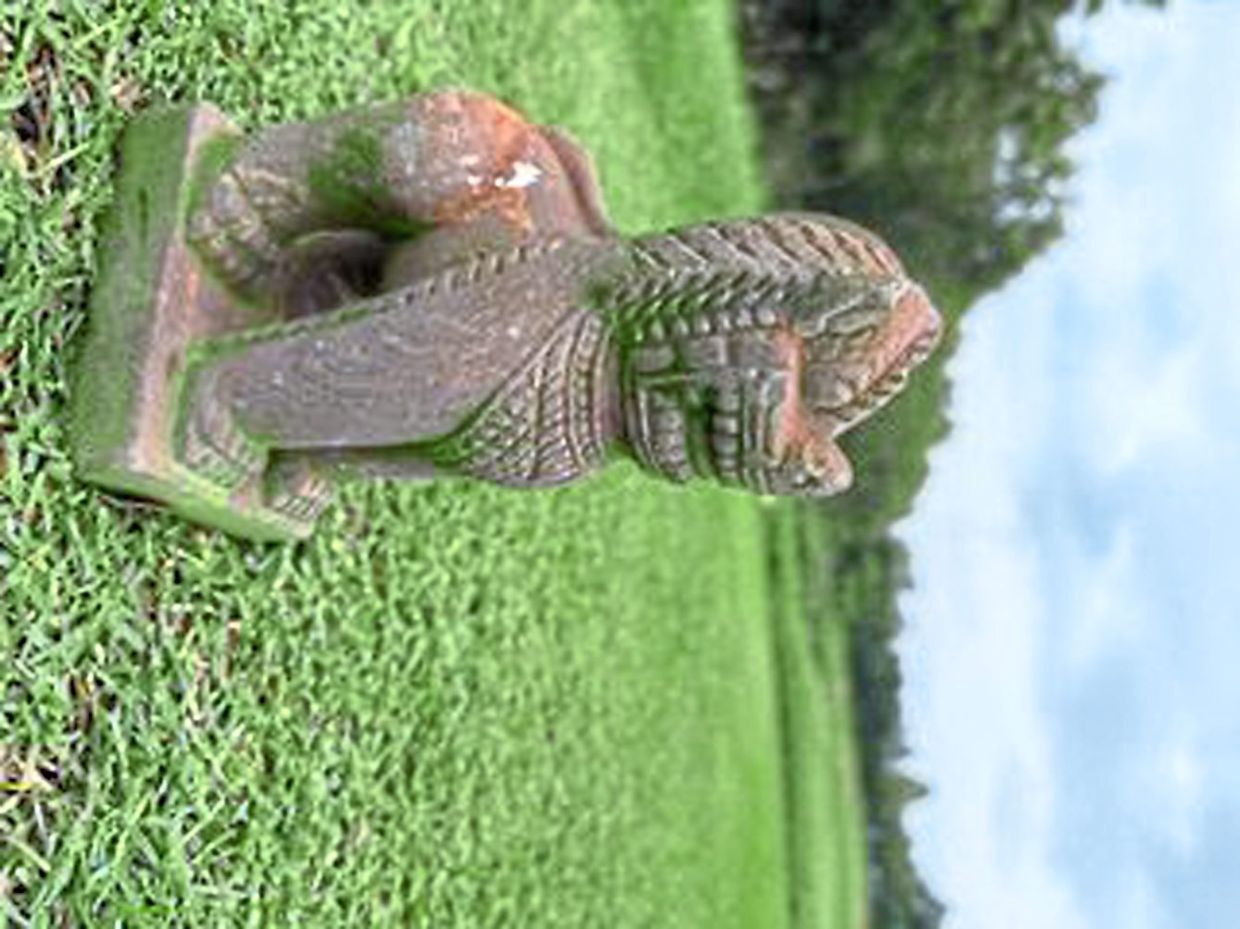
To “discover” these ruins in the nineteenth century must have felt like walking into a dream.
But to understand Siem Reap, you must eat. At 1932, Raffles’ signature restaurant, Executive Sous Chef Dorn Doeurt crafts tasting menus that feel like edible archaeology. Royal Khmer dishes – Amok trei, the silken fish custard; Saraman curry, thick with cloves and cardamom; and duck consomme with straw mushrooms – become dialogues between eras.
Each pairing of wine and spice feels like a footnote to history.
Across town at Abacus, French technique seduces Khmer soul. In a lush pavilion, beef lok lak arrives lacquered in sauce worthy of Paris, while Cambodian amok is reimagined with finesse. Foie gras bows to Kampot pepper, finding common ground on the plate.
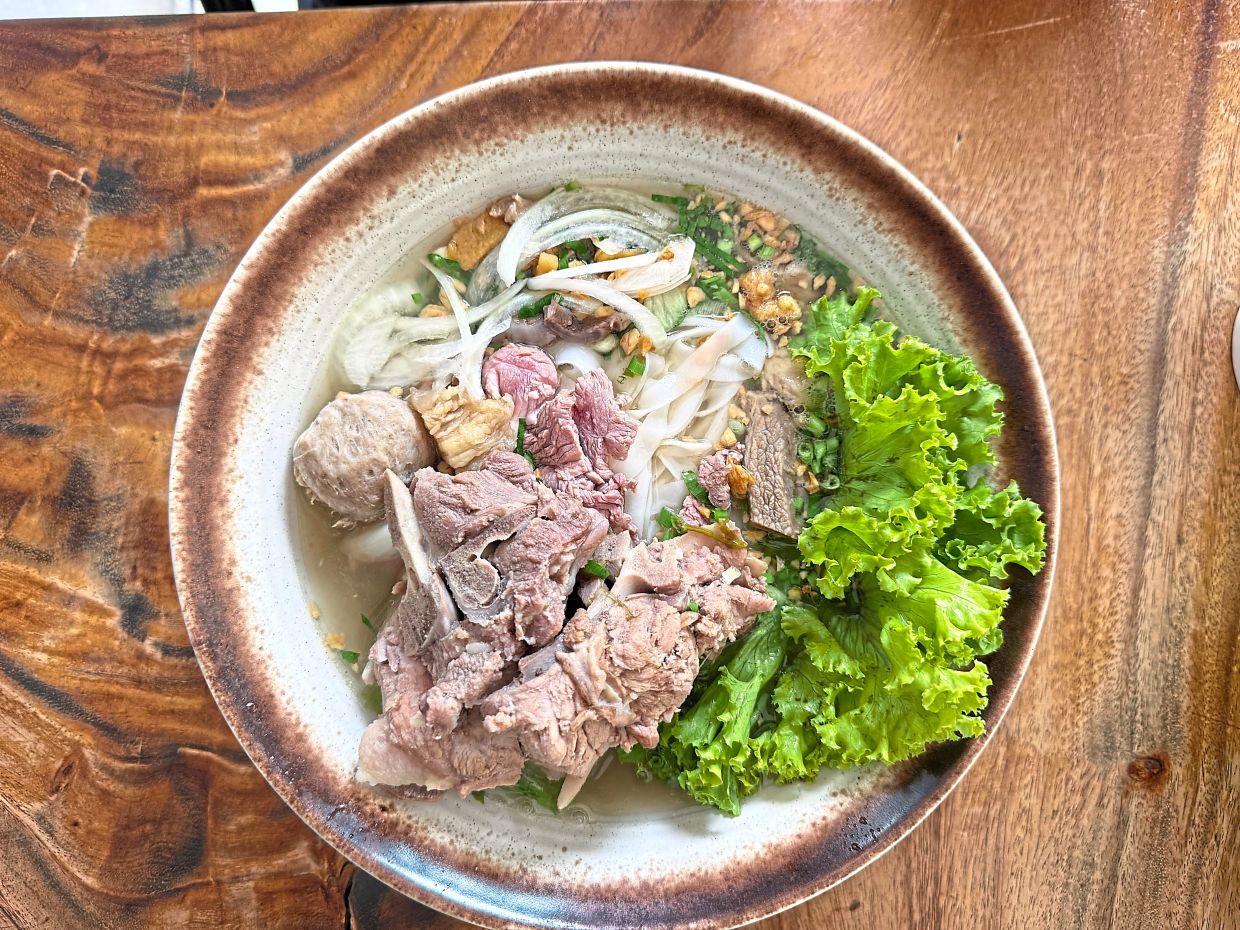
And then there’s Lao Noodles. For US$2.50 (RM10.50) you sit shoulder-to-shoulder with locals, the air thick with steam, the fan barely cutting the heat. A bowl arrives: rice noodles in broth tended all day, brightened with lime and sharpened with chili oil. No sommelier, no ceremony, just a dish that humbles you with its honesty.
You leave overfed, undercharged, and convinced no banquet could match that plastic stool miracle.
That’s Siem Reap. A town where royalty once arrived with elephants, where a hotel still whispers stories through marble and fans, where gins taste like the jungle, where fine dining courts history, and where the soul of the place reveals itself, at last, in a humble bowl of noodles. And if temples and tuk-tuks aren’t enough, Nick Faldo’s Angkor Golf Resort stretches out just beyond town – a championship course carved into the Cambodian plain, proof that even here, the game travels well.
The words expressed here are entirely the writer’s own.
Abbi Kanthasamy blends his expertise as an entrepreneur with his passion for photography and travel.