
Travelling solo has been gaining traction in recent years, especially among young working adults who seek to escape their daily grind.
According to a report by Grand View Research, the global solo travel market had an estimated value of US$482.34bil (RM2.033 trillion) in 2024. The projected annual growth between 2025 and 2030 is 14.3%, but the Asia Pacific (Apac) market is expected to exceed this with its estimated growth of 16.1%.
Based on another study that focused on travel trends within Apac, individuals aged 25 to 34 are the ones doing the most solo travelling.
Scoot, the low-cost subsidiary of Singapore Airlines, recently commissioned a survey that comprise travellers from Malaysia, Thailand, Singapore, Indonesia, and Australia.
Between March 20 and 27, global public opinion and data company YouGov conducted the survey on 5,000 respondents. These respondents must have either travelled alone within the past 12 months or plan to do so in the next 12 months from when the survey was conducted.
The aforementioned 25- to 34-year-old travellers make up 30% of the total respondents, followed by those aged 35 to 44 (23%). A similar pattern is identified through the data, which shows 58% of single ticket bookings are made by individuals aged 25 to 44. Data also reveals that 40% of the bookings made in 2024 were single ticket bookings.
Based on these age groups, it can be surmised that Millennials (those born between 1981 and 1996), which account for 40% of the respondents, make up the largest pool of solo travellers in the Asia Pacific.
In contrast, folks of the Silent Generation (1928-1945) are the least interested – only 1%, and all coming from Australia – to travel solo. This actually makes sense as it may be too risky or difficult for older people to travel on their own, especially to new destinations.
Australia also has the highest percentage of Baby Boomer (1946-1964) solo travellers in Apac, amounting to 30%.
The highest proportion of Gen X (1965-1980) solo travellers comes from Thailand (27%), while Singapore holds that record for Millennials at 51%. Indonesia has the most number of Gen Z (1997-2009) solo travellers (39%).
For Malaysia, Millennials lead the way when it comes to solo travel, followed by Gen Z and Gen X; only a few Malaysian Baby Boomers still opt to travel on their own.

Why and where
Demographic profiling of Apac solo travellers shows that there is an equal number of men and women who enjoy travelling on their own. They are well-educated, as 59% of the Apac average are degree holders, and financially independent (78%).
Solo travellers also tend to be frequent travellers, with 62% taking two or more trips in the past year.
Trip duration typically lasts for four to seven days for 45% of the solo travellers, while 32% enjoy eight days or more and 23% prefer one to three days.
The accommodation preference for more than half (55%) of the respondents is hotels with a three-star rating or below. The least favoured is rentals or hostels, while some prefer staying with friends, and opting for bed-and-breakfast properties or luxury hotels.
Contrary to what many may believe, solo travelling isn’t a trend that finds its appeal mostly among singles. Data shows that single solo travellers make up 36% of the Apac average, while travellers who are married or in relationships stand higher at 56%.
Solo travellers are motivated to travel alone as they enjoy the freedom and flexibility to create personalised itineraries. Aside from that, solo travellers are also motivated by the personal growth and development that they experience when travelling alone.
This chance to take a break allows them to focus on themselves and pursue their hobbies and interests without compromises.
Some solo travellers also like to make new like-minded connections while on their journeys, and experience different cultures and activities they would typically forgo when holidaying with others.
Meanwhile, the preferred holiday type for solo travellers in the Asia Pacific is “city breaks” – they enjoy going on short getaways to towns or cities. A holiday immersed in culture and history comes next, followed by a nature-focused holiday, a beach holiday, and visits to friends and family.
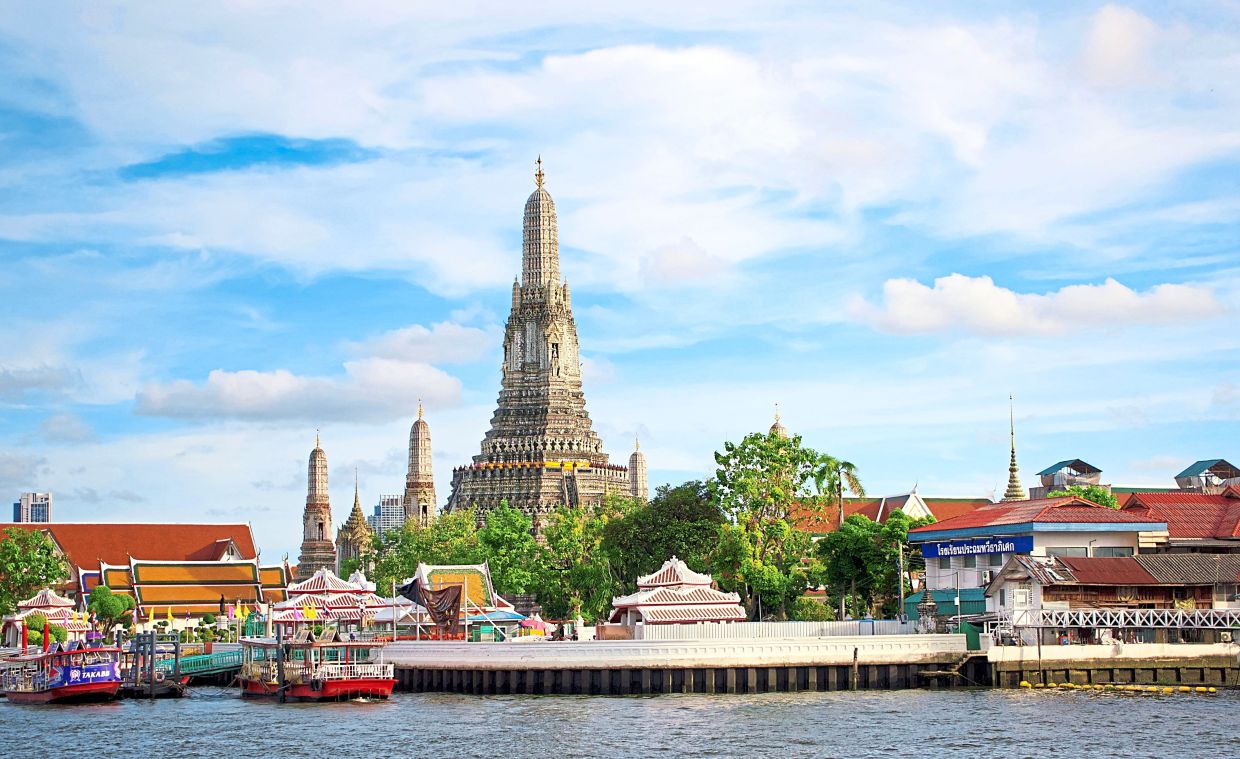
Trips focused solely on international destinations are preferred only by 15% of Apac solo travellers. A higher percentage opt for only domestic travel, while more than half prefer a mix of both.
Countries in the region that were preferred by Apac solo travellers in the past year include: Thailand (24%), Australia (23%), Malaysia (22%), Indonesia (18%) and Japan (17%).
In the coming 12 months, many are headed to Japan (26%), Thailand (23%), Australia (21%), Malaysia (17%) and Singapore (16%).
Online travel agency websites and social media platforms are the top channels for travel inspiration. The former is used more for accommodation and in-destination transportation suggestions, and the latter for food and activities recommendations. The top channels to check for flights are official airline websites or apps.
When it comes to air tickets, economy class is still the preferred option (86%!), followed by business and first class.
Surprisingly, low-cost airlines are not the top choice; even though the key factor for folks when booking flights is “affordability”. Nearly half the respondents prefer flying with full-service carriers, and less than a quarter choose low-cost airlines.
New routes
Soon, solo (and non-solo) travellers will have more travel options as Scoot is expanding its Thailand and Japan routes.
For Thailand, Scoot will begin its five times weekly flights to Chiang Rai from Jan 1, 2026. Overall, the airline will operate 111 weekly flights to Thailand; this month it is increasing its flight to Bangkok from 35 to 39 times weekly.
As for Japan, Scoot will begin flying to Okinawa on Dec 15 (three flights per week), and to Tokyo’s Haneda Airport on March 1, 2026.
Scoot is increasing its flight frequencies to select destinations within South-East Asia, too. Check the airline’s website for more information.