Like many plans, the journey of discovery across Sarawak began with a group of travel writers over some cool beverages.
I’m not sure what the collective noun for travel writers is. Is it a press, a newsroom, an atlas, or maybe a laptop? But there we were, just exchanging stories, and then the topic turned to Visit Malaysia 2026, and what journeys we planned to write about.
Various ideas were discussed, especially on what visitors might like to read and places they might like to explore. It was assumed that the main destinations were already well known, but among those off the well-beaten path, there were some real gems.
Access to the more remote parts of Malaysia is always a problem, with cars, trains, and buses filling in the gaps not served by air travel.
This led to a discussion on how best to get to these destinations and how visitors currently reach them. Do tourists know about Kuala Kubu Bharu in Selangor, Kuala Kangsar in Perak, the Perlis State Forest, the Niah Caves in Sarawak (which was just inscribed into the Unesco World Heritage Site list), or Kudat in Sabah, for example? We wondered whether records were kept and statistics were available for us to look at.
Hatching a plan
With no obvious answers, a plan was hatched to explore a Sarawak journey – from Kuching to Miri – in a minibus. While tourists can fly to Kuching, Miri, Sibu (all with their own international airports) and Bintulu (domestic airport), we concluded that few made road journeys, choosing to fly to the destinations to explore them, rather than drive or be driven.
Buses, coaches and vans, like those made by CAM, are the workhorses of transportation, providing the essential link between airports, hotels, tourist attractions and sites in any destination. CAM, a Malaysian brand founded in 2009, specialises in light commercial vehicles and products ranging from pick-ups, light trucks, vans, minibuses and caravans to heavy machinery and mining trucks.
There appeared to be more questions than answers, and rather than simply taking buses between the destinations, our group obtained the use of a CAM 20-seater minibus, called a “Co-Star”. With just seven of us onboard, there was ample room for us and our luggage – this was a blessing, as the seats weren’t overly spacious.
The Sarawak road tour was conceived by CAM and the publisher of Asian Buses as a way of encouraging more travellers to explore the possibilities of bus, coach, and van travel in Malaysia’s largest state.
One thing led to another, and our simple plan to explore off-the-beaten-track destinations became bigger, and a way of showing bus fleet owners along the way the versatility of the minibus.
We even had the honour of having Datuk Sri Abdul Karim Rahman Hamzah, Sarawak’s Tourism, Creative Industry and Performing Arts Minister, flag us off in Kuching.
Abdul Karim gave a short speech about the importance of tourism in Malaysia, especially with Visit Malaysia 2026 fast approaching. As many as 35.6 million tourist arrivals are expected next year, while a good RM147bil in tourism receipts is the target.
The minister added that Sarawak, too, is boosting promotions to ensure that many of these tourists are enticed to visit the state.
Abdul Karim also shared that Sarawak’s transportation network is unique. As the largest state in Malaysia, many of its attractions are located long distances apart. This remoteness attracts mainly international tourists, and travelling into the wilds of Borneo appeals to many adventurers.
Many of the journeys into the state’s remote areas are possible today, and are said to amaze foreign guests. This then enables visitors to discover and learn about more rural communities.
Kuching connection
Our adventure began with an exploration of the city of Kuching and its surroundings, both on foot and on the minibus. We stayed at the Pullman Kuching, which was just a short walk to the historic shophouses that extend along the city side of the Sarawak River.
The heritage streets are home to souvenir shops along the Main Bazaar, while Carpenter Street is home to food outlets like Black Bean Cafe which sells local coffee, Jak Ma’An Cafe which specialises in Melanau cuisine, and the Lau Ya Keng food court, where we had the iconic Sarawak laksa and tucked into kolo mee.
We also took a cruise along the Sarawak River to admire landmarks such as the Legislative Assembly, the region’s largest flagpole, the Darul Hana Bridge, and the exterior of Brooke Dockyard, which houses a museum.
To accustom ourselves to driving the minibus, we took a one-hour drive to Damai Beach to admire the sunset before heading to the delightful Cove 55 boutique resort for dinner that included some delicious local dishes such as umai (a kind of ceviche) and midin (fiddlehead fern).

Sibu via Simanggang
Heading north along the mostly four-lane Pan Borneo Highway (PBH), we started to appreciate how this was another important initiative that has created accessibility in Sarawak.
The PBH is one of the region’s most ambitious projects, envisioned to connect Sabah and Sarawak with Brunei and Indonesia’s Kalimantan. Initially proposed in the 1960s, the highway has evolved into a transnational network aimed at enhancing regional integration, economic development, and rural connectivity.
Spanning some 2,325km, the Malaysian segment of the PBH runs 1,200km in Sarawak and 1,125km in Sabah. It plays a crucial role in connecting remote areas, reducing travel times, and facilitating trade.
Another aim is to facilitate tourism, hence our mission.
Currently, most of Phase 1 of Sarawak’s PBH, covering 786km to Miri, is completed. While not the smoothest ride in parts, the minibus handled the conditions very well. We were impressed with the ease of parking due to its turning circle and rear-view mirror. Driver visibility was excellent, seat belts were installed, and the air conditioning kept the heat and humidity at bay.
The traffic along the four-lane highway is light, so we didn’t have to worry about other vehicles. All this was important, as we were also conscious of road and bus safety and the unfortunate increase in bus accidents in recent times.
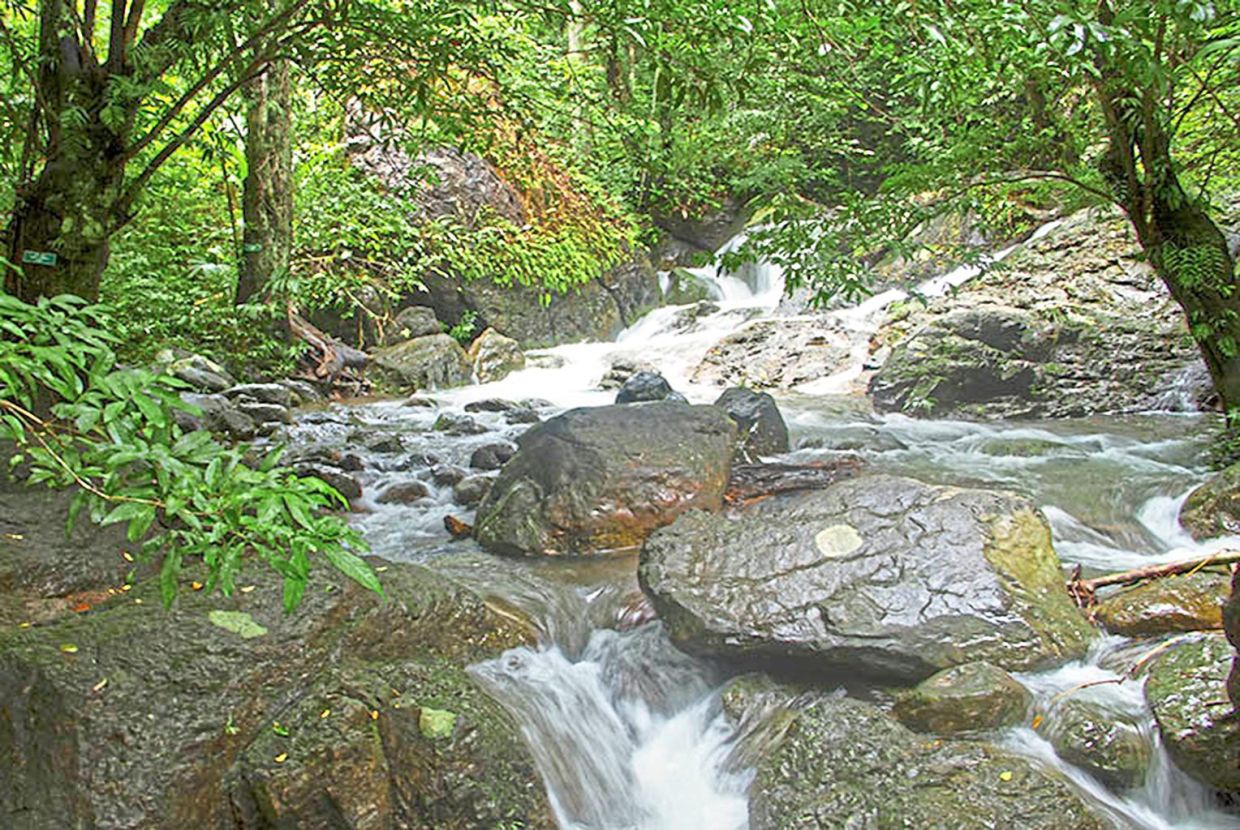
We made several stops along the way, including the market in Serian and Ranchan Recreational Park just off the highway beyond this market town.
The Sri Aman district had captured the attention of a few of us, so we decided to deviate from the PBH into the riverine town of Simanggang, located some distance from the coast on the Batang Lupar River. This strategic town was once protected by Fort Alice, built by the White Rajahs, and now repurposed as an informative museum.
Other attractions in the town include the Tze Yin Khor Temple, which attracts local Foochow devotees. Another great find in the town was 72 Kapitan Cafe, where we dined among memorabilia, a massive collection of Coca-Cola bottles and cans, and antiques from the district.
Riverside Sibu
It was a long but rewarding day, and Sibu was a most welcome sight, especially with a kaleidoscopic sunset over the Rajang River. The night market was in full swing when we dropped by early in the evening, and we were impressed that different types of food were being sold in stalls alongside each other.
Sadly, there’s no seating in the markets, so we sought refuge in a nearby coffee shop to enjoy our purchases from the market, alongside those we ordered from the shop.
Time was allocated the next morning to explore two other markets – one, a very local one called Pasar Sungai Merah, and the other, Central Market, which is one of Asia’s largest. Both are very clean, and what impressed me most with the larger market was the range of upriver products, plus live poultry wrapped in newspaper and ready to carry home, just like in the old days.
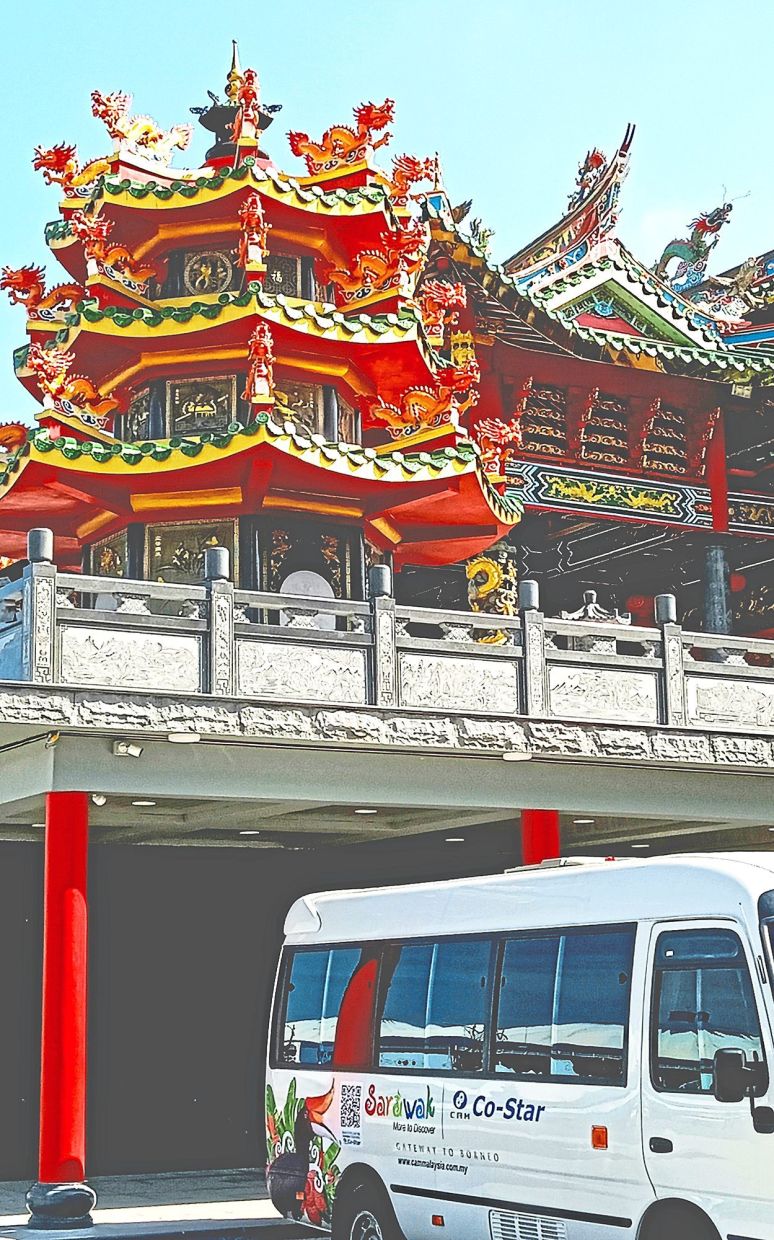
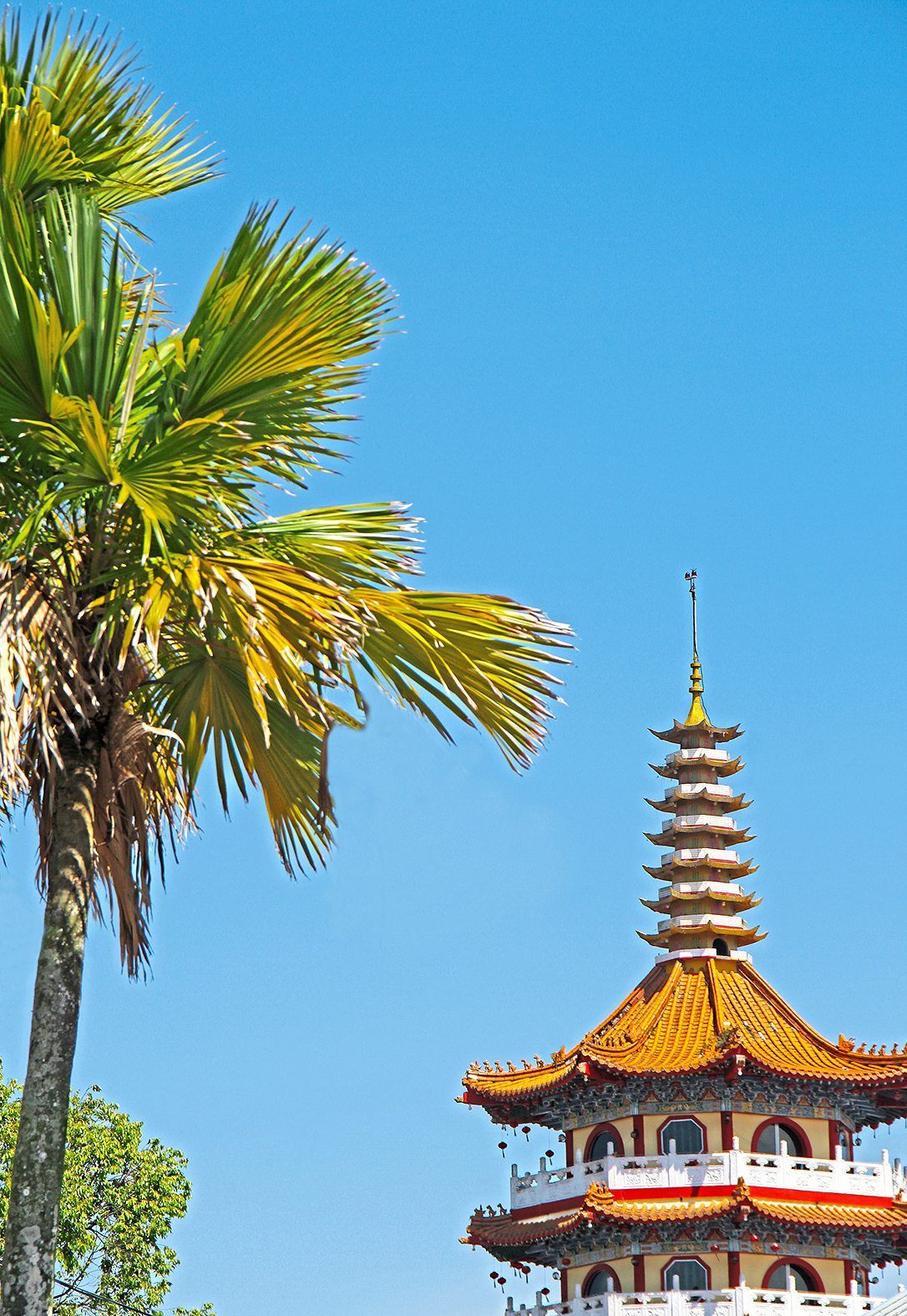
Nearby, the ornate Taoist Tua Pek Kong Temple, dating back to the 1850s, is a landmark building, standing beside the ever-busy riverfront.

Sibu to Bintulu
The drive from Sibu to Bintulu was just a few hours, so we set off from Sibu at a leisurely pace. The road is lined with many longhouse communities, but we had been told that it’s best to make prior arrangements to visit them.
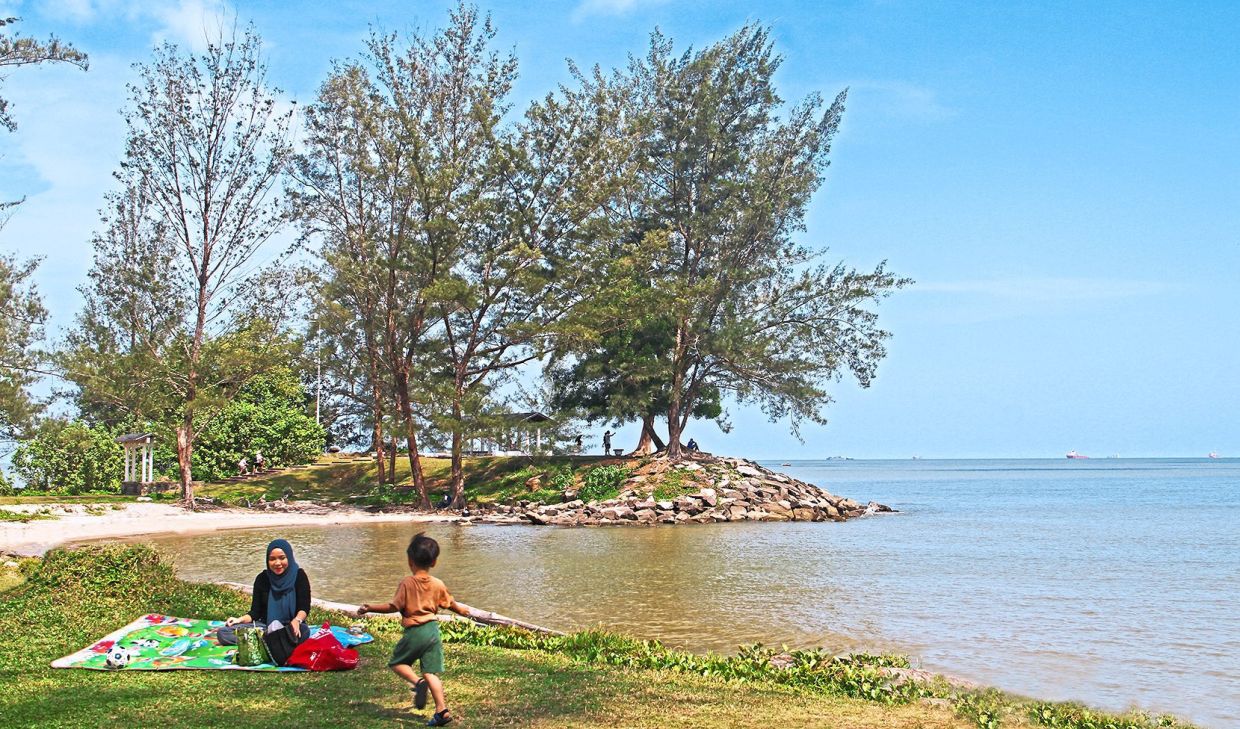
We pulled into Bintulu just before sunset and were impressed to see so many people out playing on the grasslands that were, when I last visited, the town’s “airport runway”. Planes now land to the south, and the former runway is now popular for recreation with the locals.
The night market was getting in full swing when we got there, and being a Friday night, it was the main show in town.
Bintulu is forging ahead, as it’s the nearest town to the industrial development of Similajau just to the north. We were all surprised at this development, as well as Similajau, which we passed the next day.
We discovered that Bintulu was home to Sarawak’s first legislative assembly meeting, held in 1867. It is said that Charles Brooke, five British officers, and 16 Malay and Melanau chiefs met to manage the state’s affairs.

Bintulu to Miri
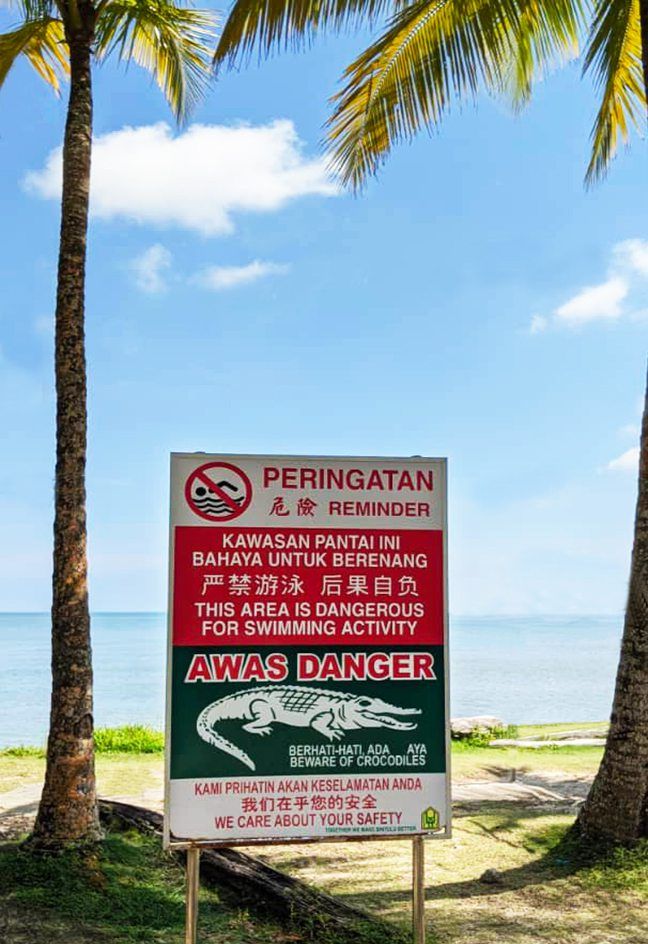
After looking at the impressive Tua Pek Kong Temple in the town centre, we headed north to check out the beachfront parklands. The water even looked tempting enough for a swim until we noticed a crocodile warning sign.
Our original plan had us visiting Niah Caves to appreciate why it was recently recognised by Unesco as a World Heritage Site. However, it’s a long walk into the caves from the park headquarters, so we decided to just look at the interpretation material and move on.
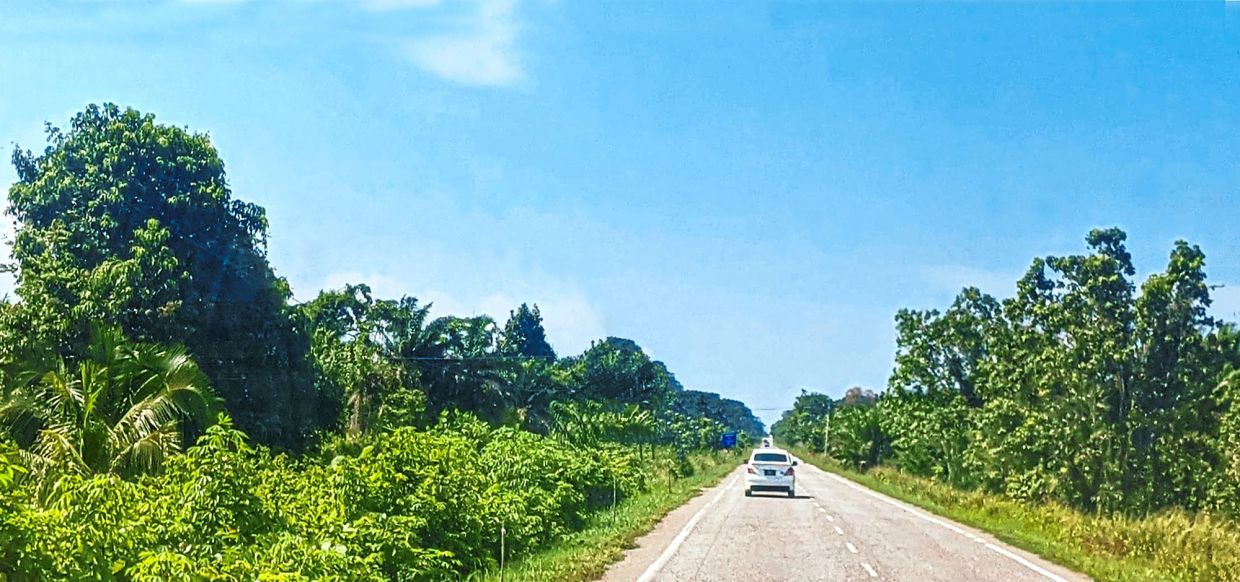
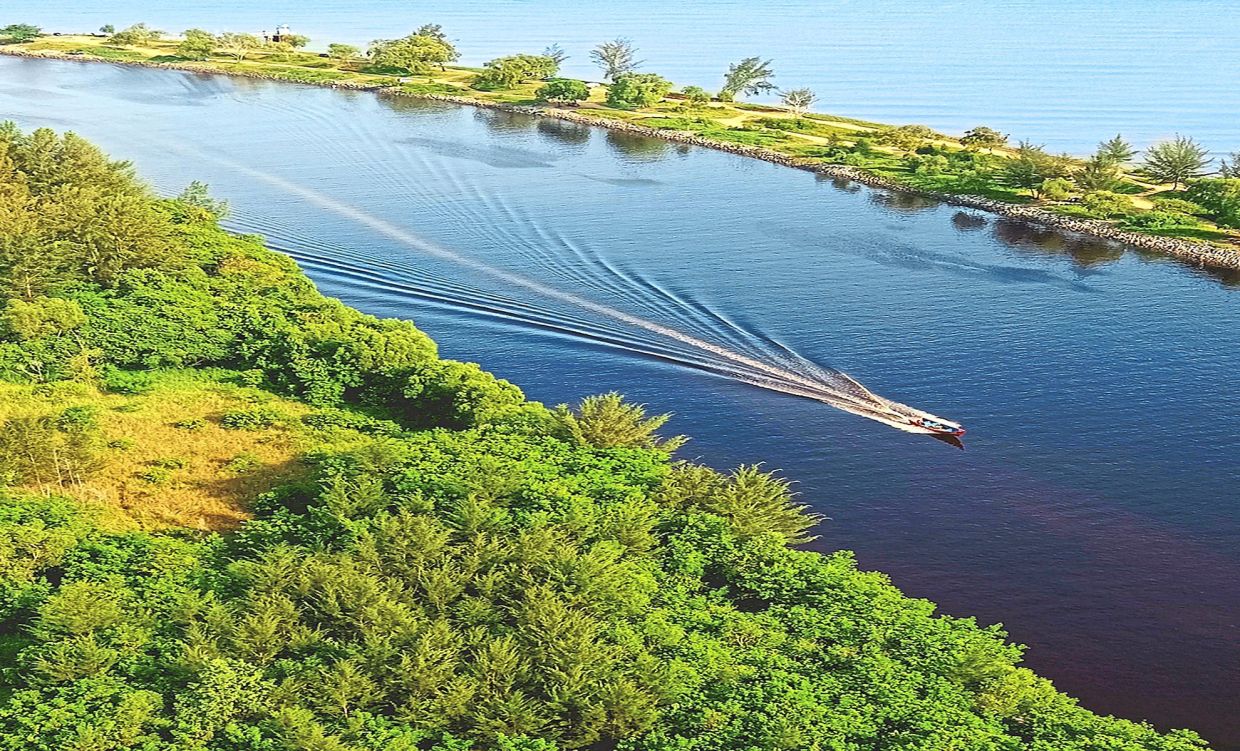
A decision was also made to deviate from the PBH and take the coastal route via Bekenu and Tim’s Seaside Hideout Resort, where we admired the near-deserted beach with a cool beverage or two. Being a two-lane road, it was much slower than the PBH, but we weren’t in a hurry, and the coastal views were most impressive.
We pulled into the well-located Pullman Waterfront Miri to retreat to its 24th-floor club lounge to toast our arrival and the end of our adventures, while admiring the setting sun over the South China Sea.
The Miri River flows into the sea, so its constant oil rig servicing boats and fishing fleet provide constant distraction to the hotel’s guests.
This trip proved that there’s much more to Sarawak than the main tourist destinations and that driving enables closer inspection of the detail in the fabric of the state’s culture.
Driving from Kuching to Miri
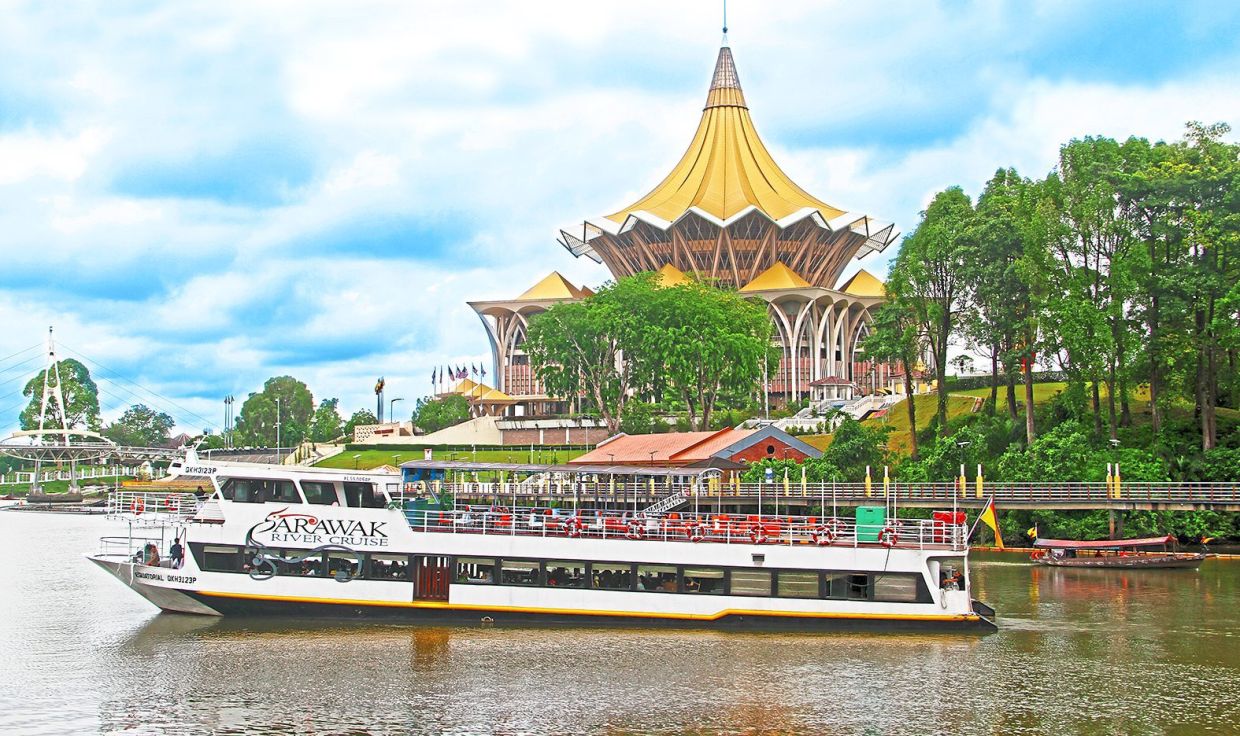
Cruises along the Sarawak River in Kuching pass landmarks such as the Legislative Assembly. — Photos: DAVID BOWDEN
The group of writers took a detour from the Pan Borneo Highway along quieter coastal roads like this one.
The ornate Taoist Tua Pek Kong Temple in Sibu dates back to the 1850s.
The writer and his group of writer friends went on a mini Sarawak odyssey in a CAM minibus, seen here in Bintulu.
You can relax by the beach at Time’s Hideaway, located just south of Miri.
Everyone loves the parklands along the beachfront in Bintulu.
Swimming can be a little dangerous in some parts of Sarawak so always look out for signboards like this one!
Stop by the Ranchan Recreational Park in Serian to cool off at the waterfall.
A woman and her child relaxing at the beach in Bintulu.
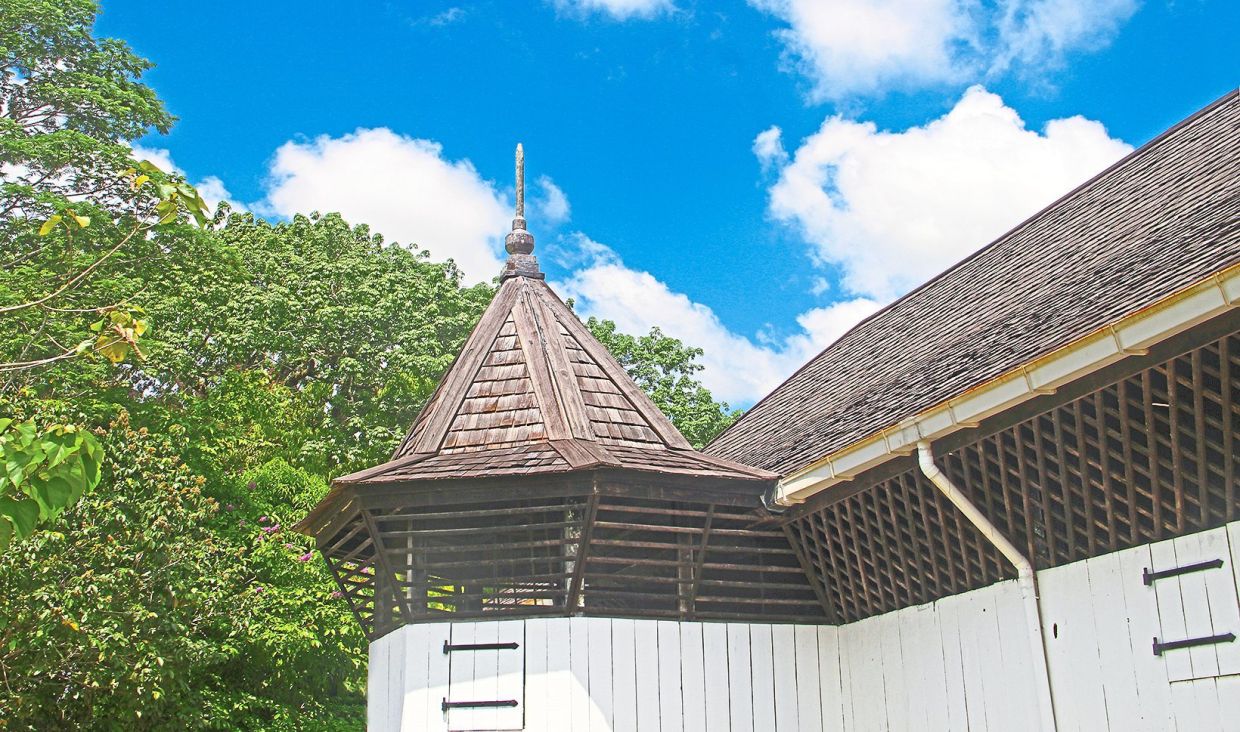
Fort Alice is the leading tourist attraction in Simanggang.
The Miri River flows into the South China Sea.
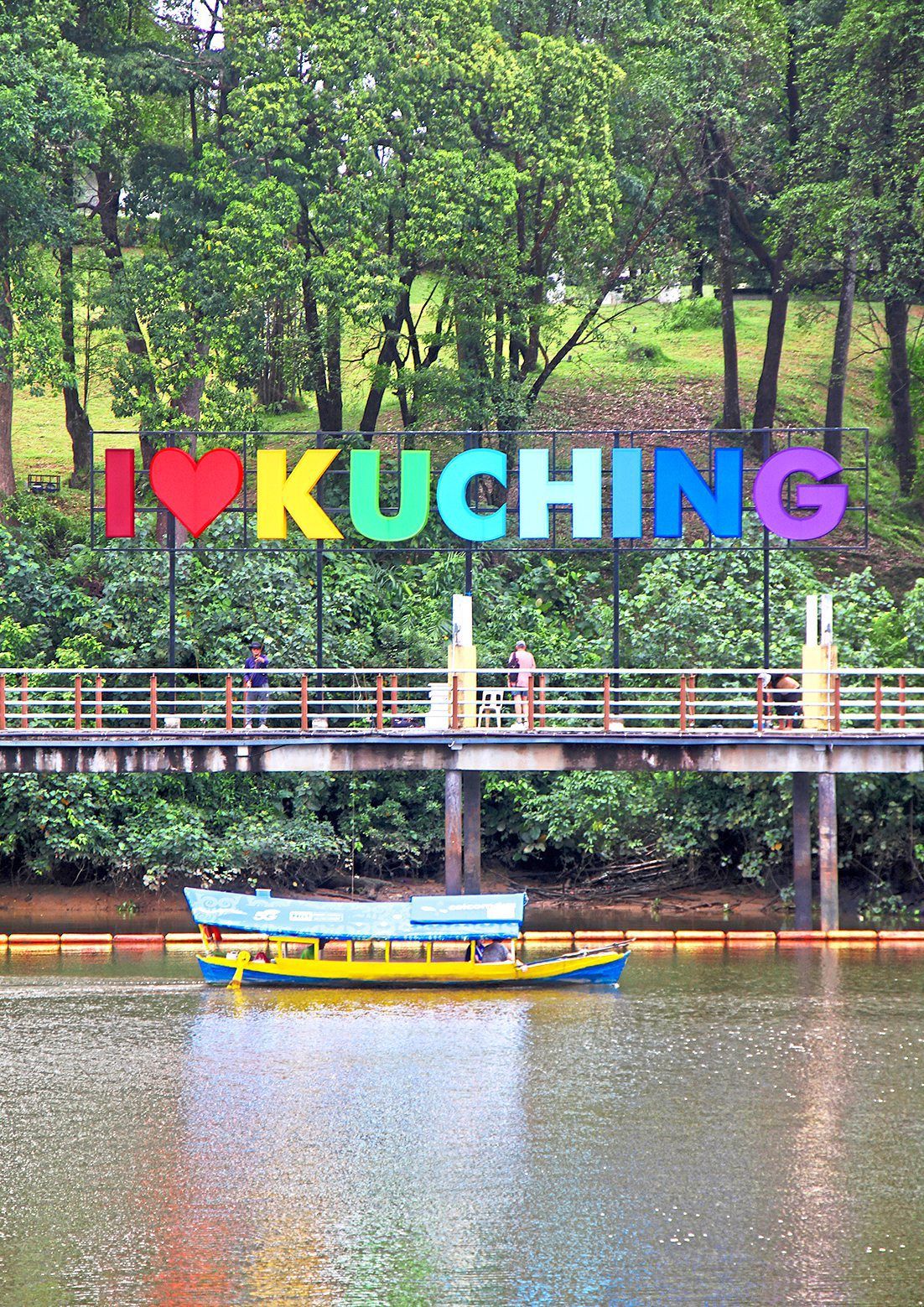
When in Kuching, take a perahu tambang to go across the river.
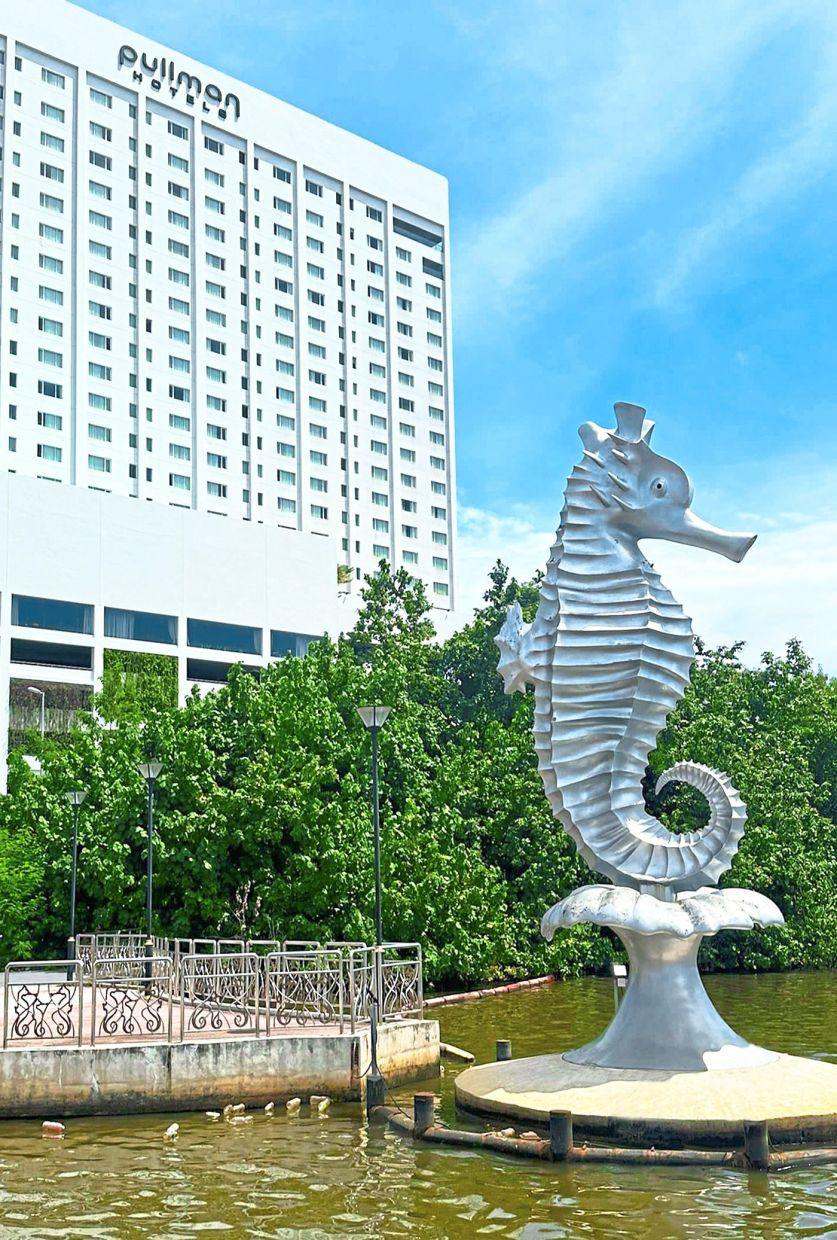
The seahorse monument on the Miri River is one of the city's attractions.
Tua Pek Kong Temple is a dominant landmark in Sibu.