
Whether seasoned or novice, most travellers tend to struggle with mastering this particular thing: The art of travelling light.
Anxiously walking past airport staff hoping they won’t weigh your backpack, nervously eyeing the scale as you check in your luggage, or desperately struggling to lift your carry-on bag to place it in the overhead bin.
If any of these scenarios resonates with you, then unfortunately, you are among the ones who have yet to master the art.
Admittedly, I face the same predicament on my every travel. Hence, the pursuit of seeking wisdom from travellers who emblazon their social platforms with proclamations of “how to pack light”, “how to travel with carry-on only”, “best travel hacks” ... the list goes on.
Gleaned from these posts are tips and advice that may range from relatable to, perhaps, best approached with caution (donning multiple layers of clothes to avoid excess baggage fees is one hack that won’t fly at every airport).
Ultimately, travelling light boils down to efficient packing. From selecting the correct luggage to knowing how and what to pack, these can make or break your journey.
Less is more
As a solutions engineer who frequently travels for work, packing light has become a habit for Edward Go, 28.
He has cultivated a proactive approach to his packing, having grown accustomed to travelling “... more than 10 times a year, mostly between Malaysia and Singapore”, Go says.
Sticking to “only the essentials”, Go shares he not only uses travel-size bottles for his toiletries, he will even forgo bringing any if they are provided by his accommodation.
“For electronics, use universal adapters with more ports to minimise the number of chargers to carry around,” he says, explaining that “the weight also adds up”.
His packing light habit comes in handy even on personal travels, such as the trips to California (United States) and Barcelona (Spain) that he took with his girlfriend, Valerie Lim, 28.

Lim, who works as a product manager, is a “wanderluster” who travels at least once every quarter, she says.
“Over the past year, I’ve been to the US, South Korea, China, parts of Europe, and Japan,” she lists her recent trips.
While Lim often checks in her luggage when flying, she says that she is open to using only a carry-on for shorter trips, especially to tropical countries where she wouldn’t need to pack bulky clothing.
She admits that she is drawn to the benefits of carry-ons, such as saving on checked baggage fees on certain airlines.
“Having just a carry-on is also more convenient. It lets me get out of the airport faster, since I don’t have to wait for my bags at baggage claim. Plus, dragging a heavy suitcase around can be chaotic, especially when I’m travelling solo and moving from place to place,” she explains.
Like Go, she forgoes bringing certain items to reduce luggage weight. “If I’m staying at a hotel, I don’t need to bring towels, basic amenities or a hair dryer since they’re usually provided,” she shares.
“For trips where I want to disconnect and be more present, I’d leave my filming gear behind, which would also help lighten my load.”

Another reason for this is to maximise space in the luggage, “... so we can bring back more things whenever possible”, she says, adding that she and Go would make space for souvenirs on their travels.
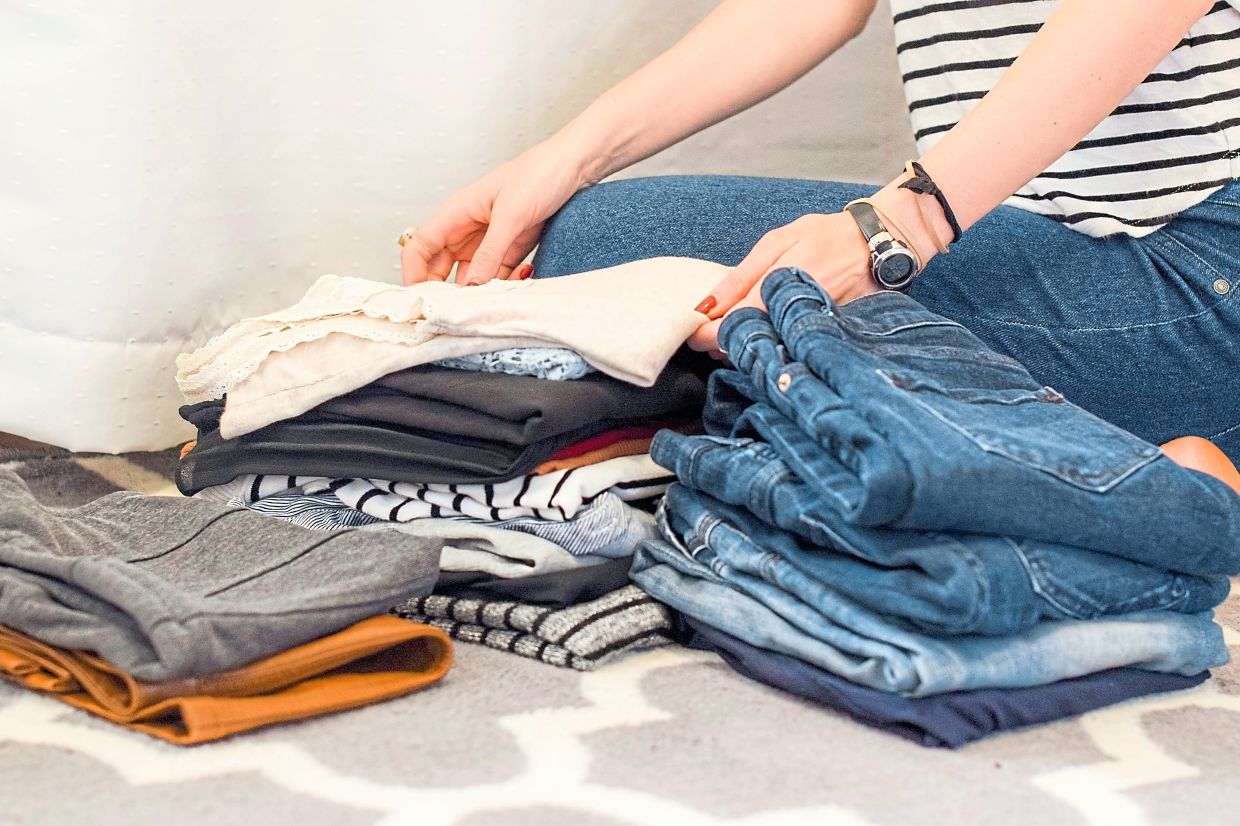
To further maximise space, Go even recommends using the folding or rolling technique when packing.
“Pack smartly – you would be surprised how much space you can save if you fold or roll up your clothes properly, and use vacuum packing,” he suggests.
When weight matters
Of course, apart from the items encased within, the bag chosen to carry these items is also of the essence here.
Naturally, the bigger the bag, the heavier it weighs. Not to mention, only bags up to a certain weight are allowed in the cabin – anything heavier will need to be checked in and placed in the cargo below.
Aimara Mayorca, 37, and Gordon Letschert, 39, experienced this first-hand during their 2023 trip to Malaysia.
Used to the more generous 10kg allowance that most international airlines typically have, Mayorca says that they were thrown “... a curveball with the 7kg cabin baggage limit” practised by some budget airlines.
“We had to check our carry-ons for once,” she says.

In situations like this, luggage made from lightweight materials can really help with weight management.
Previously, hardier cases tended to translate to heftier bulk. Fortunately, with modern invention, there is no longer a need to sacrifice durability for lower numbers on the scale.
Among the renowned brands that boast sturdy luggage with no compromises to their weight is Tumi. Its lightweight luggage options can be found across a few collections, including 19 Degree, Alpha Bravo and Voyageur. The lightest of these is the International Carry-On – clocking in at 2.84kg.
For travellers looking for added flair, the brand’s limited-edition pieces released in conjunction with its 50th anniversary (this year) might hit the spot. Among them is the International Carry-On from the 19 Degree Aluminium collection.
You might think crafting luggage from aluminium defeats the lightweight purpose, but it actually helps you from overpacking. There is absolutely no give to its structure, so you can’t force “just one more pair of shoes” when you pack.
This ultimately ensures you adhere to the weight limit.
That said, polycarbonate (PC) and polypropylene (PP) are typically the go-to materials for lightweight hardside luggage. PC is the more impact-resistant of the two thermoplastics, but PP is lighter.
Softside luggage, meanwhile, is made of materials like nylon, canvas and polyester for even lower weight and more flexibility.
Both hard and soft types are available from many luggage brands ranging from high-end to budget-friendly.
Samsonite Freeform, Briggs & Riley Baseline and Travelpro Platinum Elite are some of the luggage collections that seasoned travellers tend to gravitate toward due to their lightweight yet durable designs. The latter brand is especially favoured by pilots and cabin crew, so you know its luggage offerings are well-suited for frequent flyers.

Practice makes perfect
The more you travel, the more opportunities you’ll have to fine-tune your packing. This rings true for Mayorca. In 2021, she and her husband Letschert traded their corporate jobs for a life on the road – one that takes them all over the world.
Describing themselves as “professional light-packers, full-time adventurers”, they have visited various destinations on multiple continents since then. Among the places they’ve spent time in were Bosnia and Herzegovina, the Netherlands, Indonesia and Singapore.
Packing light on their travels has not been much of an issue to them. In fact, Mayorca says that they have become “... pros at checking the weather and local customs” before they pack.
“We stick to warm-weather destinations or travel during warmer seasons, which makes it easier,” she shares. “But – we’ll admit it – Bosnia and Herzegovina surprised us with a chilly, rainy few weeks, and we had to run out and buy a sweater. Other than that? No regrets.”
Having decided to put down roots in Mexico, one of the destinations they travelled to and became enamoured with, she assures that “the travel bug is still alive and well”.
Their blog (Ways Of The World) now focuses more on “helping others move to Mexico”, but she says that they still travel about twice a year, whether to visit family in the US or for vacation.

The next big trip for them is another visit to Asia at the end of the year, specifically to Vietnam, Indonesia, and then back to Malaysia once again.
Their first visit here two years ago lasted 30 days, during which they explored Kuala Lumpur, Penang and Sabah mostly by train and bus (plus the plane ride to the Bornean state, of course).
“This made packing light even more worth it,” says Mayorca, adding that less stuff always translates to easier travel.
This time around, they would only be returning to KL. But it’s safe to say they would be packing just as light as they previously did.
“We stick to a warm-weather wardrobe with pieces that mix and match easily, and I always bring basics like a pashmina, white sneakers and a denim jacket,” Mayorca says, sharing what’s on her packing list. She also posts her lists for fellow travellers to peruse on her Ways Of Style blog.
She and Letschert abide by a golden rule: Pack for your realistic travel life, not your fantasy one. “Bring what you actually wear on a regular vacation day, and only pack pieces you love and fit you well,” she advises.
She also shares a bonus tip: “Pick a colour palette! If everything mixes and matches, you’ll always have something to wear.”
This is a method that Go and Lim also utilise in packing their respective outfits. Go favours the space-saving that it allows, while Lim loves that it curbs overpacking.
“I tend to pack versatile, neutral-toned clothing that I can mix and match easily,” says Lim.
“It’s amazing how many outfits you can create from just a few pieces. This way, I stay stylish without overpacking.”