In 1996, my mother walked the Great Wall of China with her friends but gave up halfway through the tour because it was too strenuous. She regretted that decision.
Then, 29 years later, she stood with me and my kids on China’s Huangshan, staring at yet another daunting flight of steps. This time, she vowed not to give up so easily.
We had arrived in Hangzhou two days earlier. It was 5°C, as a cold front had swept across China turning the initially balmy spring into winter. After touring the famed West Lake, we took a 90-minute high speed train ride to Huangshan.
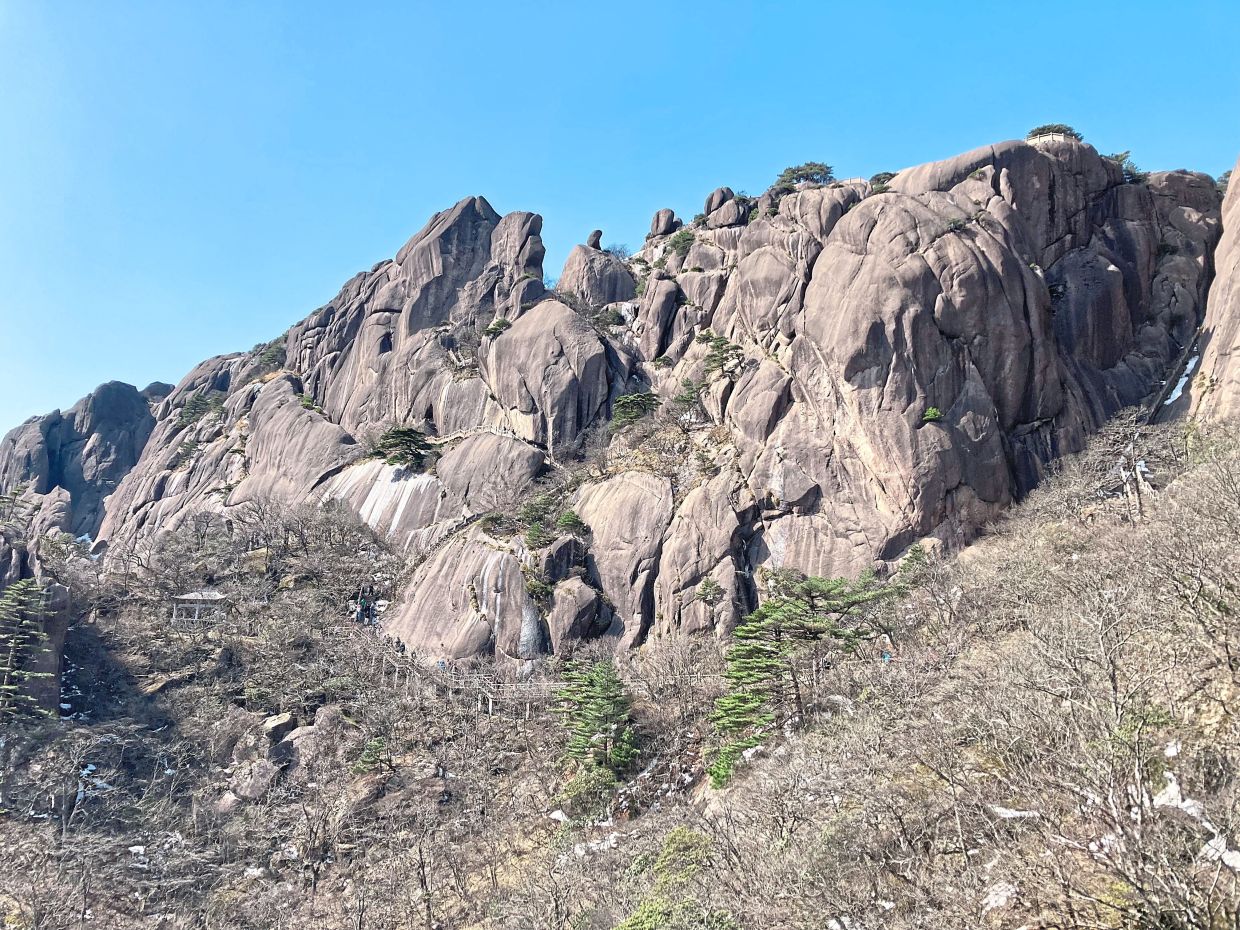
Also known as the Yellow Mountain, this Unesco World Heritage Site is famed for its strange pines, stunning granite peaks and misty views. Huangshan is a collection of 36 major summits across a vast area, and it’s seen as the greatest mountain in China.
Three cable car lines run up and down the mountain from different directions, but to truly appreciate the unique scenery, one would need to take a gruelling hike between the stations, across multiple peaks.
I had viewed the trek with trepidation, as my six-year-old is a reluctant walker. We opted to start our climb from the easier route at the back of the mountain, and end it by going down the front where the steepest paths were located.
To our delight, we saw patches of snow dotting the slopes as the cable car ascended. Apparently, the cold snap had brought three days of snowfall prior to our arrival.
We alighted from the cable car at 9.30am, and the kids dived right into a snowbank with glee.
At first it was an easy hike through gentle slopes, passing notable attractions such as Stalagmite Peaks, Black Tiger Pine and the Stone Monkey. As we approached Bright Summit, the second highest peak, we encountered our first challenge as the path began to climb relentlessly upwards.
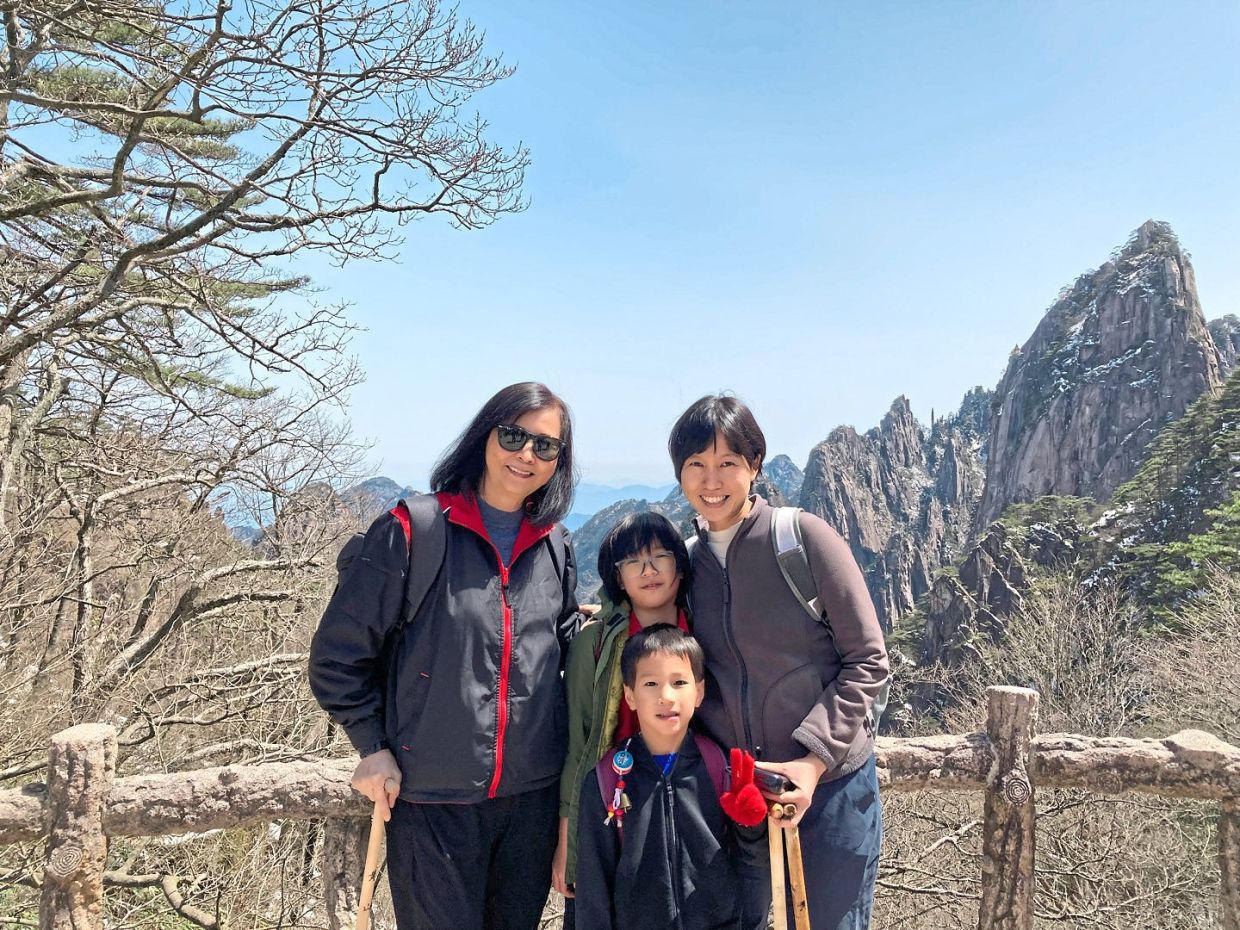
My nine-year-old ran ahead easily, but the younger boy struggled to keep up with his short legs, and fellow hikers encouraged him with “Jia you, xiao huo zi (Keep it up, little fellow)!” as they passed by.
Bright Summit is named for its flat, wide top which garners uninhibited sunshine all year long. Its central position commands panoramic views of all the surrounding peaks, and also demarcates the boundary between the front and back of the mountain.
From this point on, the landscape of snowy pine woods gave way to dramatic peaks, sheer cliffs and undulating valleys.
We reached the summit at 1pm, and took a well-deserved break. The boy fell asleep on my lap after his lunch, thoroughly exhausted, but we roused him after 30 minutes as we had to press on to the cable car station before it closed at 5pm.
The next leg of our journey was marked by an endless series of steep steps going up and down, accompanied by jaw-dropping views.
We lost count of the number of slopes we’d navigated, and fatigue started to set in. Thankfully, no one complained. The kids were still occupied with snowballs, while my mother plodded behind, slow but determined.
Our spirits rose after passing Lotus Cave, as our destination was near. There was nobody around except a porter with his sedan chair, and he offered to carry us to the cable car station for CNY150 (RM88) each.
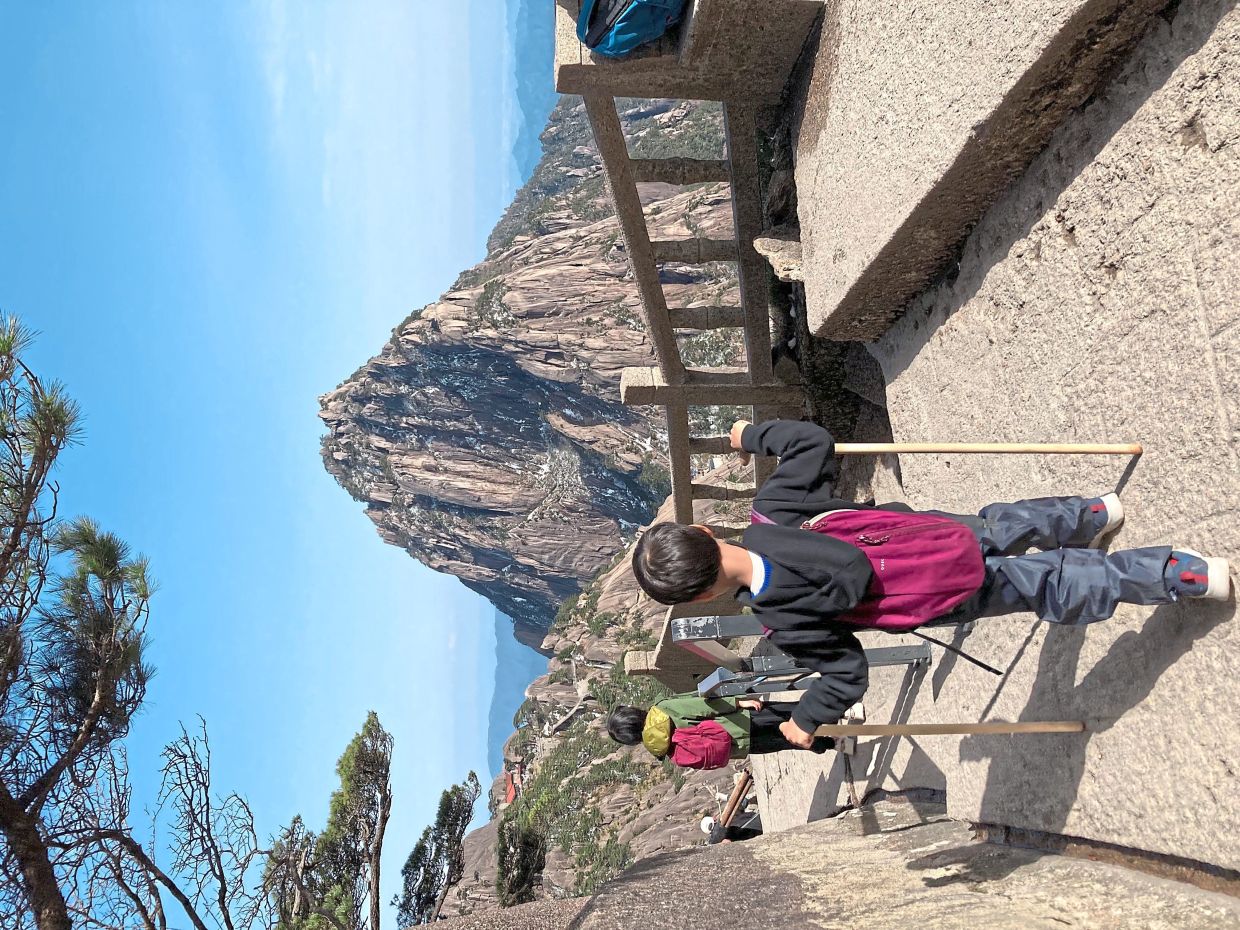
“The toughest stretch is up the next slope,” he warned. We dismissed him, as we had conquered so many stairs, what’s another few?
We were humbled quickly when the path narrowed into a steep staircase carved into the side of the mountain. A waist-high guardrail was all that stood between us and a precipitous fall. My fear of heights paralysed me, but it was too late to turn back now.
The steps were almost vertical at parts, and the kids began to feel scared even as they climbed valiantly. Quashing my own terror, I told them to keep their eyes only on the next two steps and look at nothing else. My mother trailed far behind, praying she would not fall and hurt herself.
After what felt like an eternity, we finally reached the top. I crawled up the last step with shaking legs and collapsed on the side, wiping cold sweat off my brow. We took a brief rest and then continued on, past Lotus Pistil Peak and the Peacock Stone, down another long staircase with the magnificent Tiandu Peak rising ahead. There was a big loop around the mountain, and then another slope and at last, arrived at the cable car station after 4pm.
As the cable car descended, I looked back at the majestic peaks with awe and respect. We had hiked 22,000 steps across 15km, and that was only half of what Huangshan had to offer. More importantly, the mountain had shown us that young or old, our limits of perseverance were greater than we ever imagined. We had conquered, not the mountain, but ourselves.
The views expressed are entirely the writer’s own.