It wasn’t long after Paloma Lanna started Paloma Wool that her brand began to receive the type of attention many designers only dream of.
Its colourful, printed clothes were featured in publications like British Vogue and The New York Times. Celebrities like Kaia Gerber and Bella Hadid became de facto ambassadors, as did a number of fashion influencers on TikTok and Instagram.
Paloma Wool designs were frequently replicated by fast-fashion companies, and the clothing even inspired home decor.
But as her label’s influence grew, Lanna, its creative director, had a realisation. She was sick of herself.
As the Covid-19 pandemic set in, Paloma Wool, founded in Barcelona, Spain, in 2014, became linked to an aesthetic known – sometimes derisively – as “avant-basic”.
Involving candy-coloured patterns, quirky silhouettes, retro swirls and checkerboard accents designed to stand out on social media, the style echoed Lanna’s own tastes, those on which she had built Paloma Wool.
“I didn’t want to wear those pieces anymore,” Lanna said. “Creating the pieces I want to wear is really important.”
Customers seemed to be craving something different, too. Fashion’s center of gravity began to shift toward the expensive but understated look popularised by The Row.
Read more: ‘Follow, follow, follow’: The designer who never expected his bags to go viral
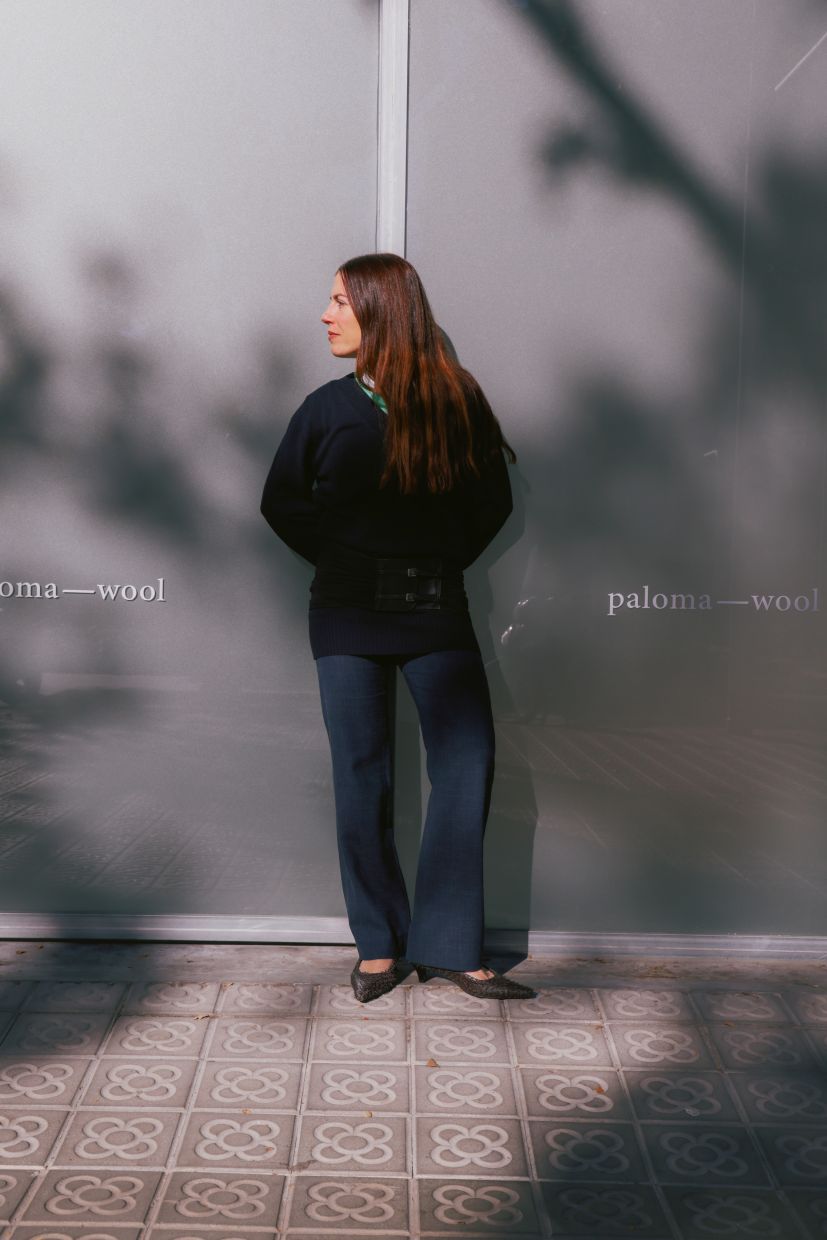
In 2022, out went the chequerboard yoga pants and yin-yang sweaters. In came tailored, earth-toned clothing in sharp, clean lines, ranging in price from US$200 (approximately RM812) to more than US$1,000 (RM4,060), straddling the line between mass market and luxury.
Though some newer items evoke Paloma Wool’s early playfulness, like a pair of polka-dot pants that Hailey Bieber wore this summer, the brand today is largely unrecognisable from the version that dominated social media feeds at the start of the 2020s.
Its pivot – which Lanna credits to her changing personal taste rather than any trends – has been noted by industry insiders and everyday shoppers alike.
A skirt-trouser hybrid the brand introduced after its makeover has been exalted as a fashion staple by Vogue, and spotted on celebrities like Jennifer Lawrence.
“It wasn’t so childish,” Lanna said of the label after its reinvention, adding, “What we had been doing during the pandemic was so homemade.”
She says the brand has matured as she has.
Lanna, who started the label at 23, is now 35. She is married and a mother, a lifestyle depicted in a recent Paloma Wool marketing campaign that some praised for its careful balance of aspiration and reality.
In the ads, models dressed in Paloma Wool are surrounded by kitchen clutter, toys and toddling children.
Now Paloma Wool may come up in the same conversations as The Row and Proenza Schouler, said Doralice Belli, head of merchandising at the ecommerce platform Farfetch, which has sold Paloma Wool since 2021.
At the legacy retailer Nordstrom, which began offering the brand in 2024, it is positioned alongside labels like Tanner Fletcher and Emily Dawn Long in Space, a section focused on emerging designers.
Paloma Wool is “one of our top sellers”, said Rickie De Sole, Nordstrom’s fashion director.
In another sign of its growing legitimacy in the industry, Paloma Wool now also shows at Paris Fashion Week.
And last year the privately-owned brand, which Lanna started on Instagram and for a decade had no brick-and-mortar locations, opened three stores: in Barcelona, New York and, in December, London.
Paloma Wool’s Barcelona store – its largest – is in the city’s Eixample district and doubles as the brand’s headquarters. Despite the company’s Spanish roots, its largest market is the US, said Pau Feu, Paloma Wool’s CEO and Lanna’s husband.
Read more: Style Watch: Malaysian creative Daniel Hazeq approaches fashion with intention
Lanna’s understanding of the fashion industry is partly owed to her upbringing.
Her mother, Paloma Santaolalla, and her father, Miguel Lanna, together started Globe, a mid-tier label that became popular in Spain in the 1980s. They later founded another label, Nice Things.
Her uncle is also in the fashion business – he runs a womenswear label called Indi & Cold. And her grandparents owned boutiques in San Sebastián, the Spanish resort town where Lanna was born.
As she watched her parents build their brand over years, fashion became “intuitive and physical” to her, she said.
They encouraged her to study business in college and, not long after she graduated, the death of her father in 2012 led Lanna to start working with her mother.
She cycled through roles across her parents’ company, working with suppliers in India and China before settling into marketing.
Being inside the machinery of their business kindled in Lanna a desire to build one of her own, she said. The result was her namesake brand, which combines Lanna’s given name with “lana”, the Spanish word for wool, which is pronounced similarly to her surname.
To Lanna, who named Chemena Kamali’s Chloe, Miuccia Prada’s Miu Miu and Dario Vitale’s short-lived Versace as inspirations, Paloma Wool is a “project” that has merged her interests in art, fashion and photography, and has allowed her to commoditize her point of view.
“It was important for me to have my own voice,” Lanna said. “My parents’ brand had their vision and their voice. Working for them was really nutritive for me, but I also felt very boxed in.”
Paloma Wool’s growth of late, she said, is less a taste of what’s to come than it is a sign that she is on the right track.
“Getting big is not the goal,” she said. “It’s a consequence of doing things correctly.” – ©2026 The New York Times Company
This article originally appeared in The New York Times.