Wei Koh has never merely told time.
He has also spent two decades shaping the culture around it.
The 55-year-old has channelled his boundless curiosity into a global lifestyle empire.
He founded a watch magazine and a British men’s style title.
His latest venture, Man Of The Hour on Discovery Channel is an eight-part series that travels from Los Angeles to Geneva, Paris and Singapore to meet the makers, families and iconoclasts redefining modern watchmaking.
The series, produced by Singapore production company Refinery Media, is hosted and executive produced by Koh.
Season 1 opens the atelier doors at Swiss stalwarts F.P.Journe, Chopard and De Bethune; traces the revival of Danish brand Urban Jurgensen; follows Kosovo-born watchmaker Rexhep Rexhepi’s journey from refugee to revered master; examines Swiss brand Greubel Forsey’s relentless pursuit of precision; and peers into French luxury house Louis Vuitton’s future under Jean Arnault alongside movement maestros Michel Navas and Enrico Barbasini, before landing in the kinetic universe of Switzerland’s MB&F.
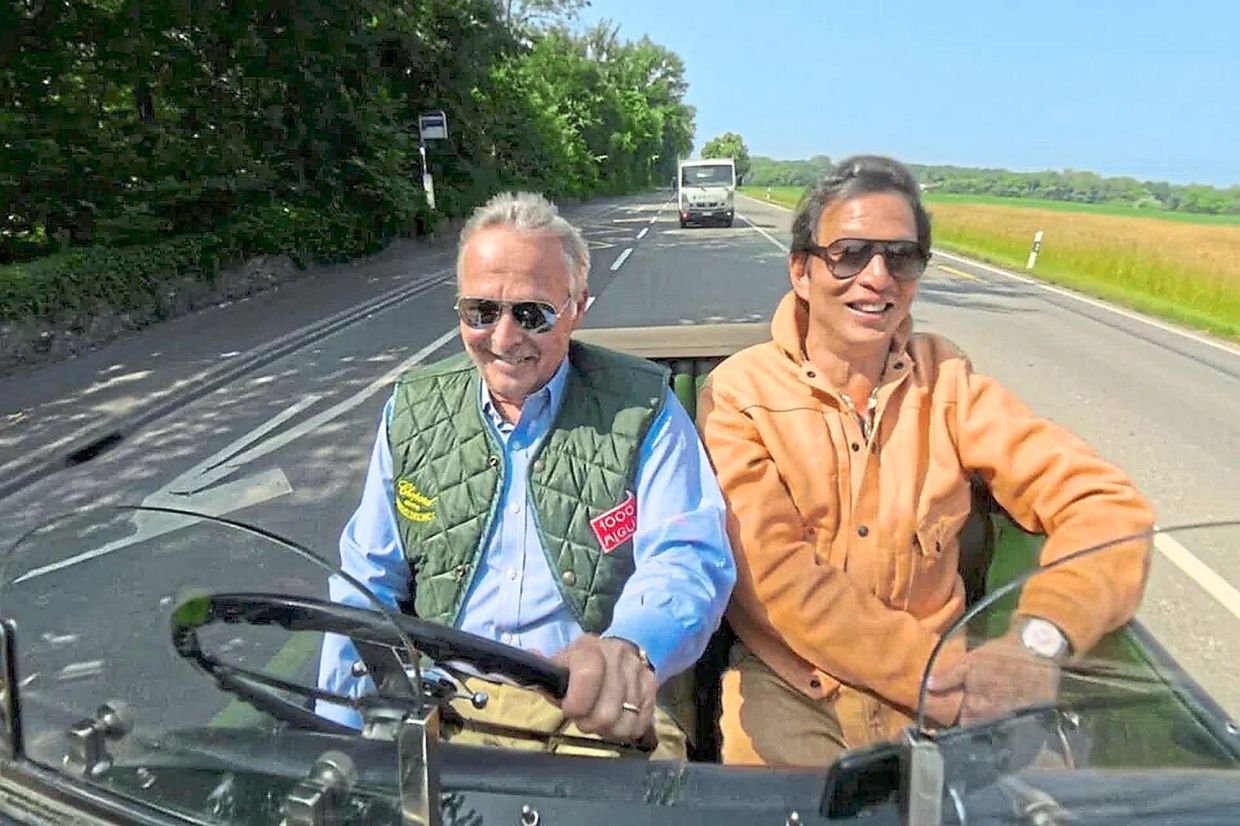
The approach is personal; it shows how legacies are built, how families sustain them and how passion and perseverance turn into watchmaking craft.
It comes at a time when interest in watches is growing and timepieces are seen not just as tools, but also as works of art, investments and heirlooms.
Koh says the series is more than a love letter to watches.
“This isn’t just a documentary about horology,” he says. “It’s also about the lives, laughter and struggles of people I deeply care about.”
Give us the 15-second pitch for Man Of The Hour.
Man Of The Hour is a television odyssey into the heart of horology, a mythical realm presided over by geniuses, poets and madmen capable of expressing the very limits of human ingenuity through the micro-mechanical universe of watchmaking.
While the world of watch collecting might sound like a secret cabal where its devotees speak in a bizarre patois of archaic French engineering terms mixed with coded reference numbers, it is − to me − a hidden universe where one of the most vibrant art forms thrives.
I call it art because in a world where digital time is pervasive, a mechanical watch has no pragmatic reason to exist beyond transmitting emotion to its wearer.
To me, the watch − with its oscillator vibrating multiple times a second − is the mechanical system that most closely approximates the human body and the beating heart.
In the last couple of years, watches have exploded in popularity.
People have gone crazy in particular for a small subset known as “independent watchmaking”, which is the focus of Season 1 of the show.
The series celebrates watchmakers as rock stars and poets. What’s the most unglamorous, grease-under-the-fingernails moment you witnessed while filming?
The most authentic individual we featured is Denis Flageollet, the co-founder and technical guru of De Bethune.
He forages for ore in Saint Croix in the US Virgin Islands, which he uses to forge his own metals in the foundry behind his house.
It is powered by a wood fire fuelled by trees he chops down himself.
Despite living like a hermit, he creates timepieces that speak with a remarkably avant-garde seductive power.
The series covers independent watchmakers who prioritise craft over profit. Greubel Forsey says it “doesn’t make money” despite astronomical prices. Do you admire that purity or think it is commercially naive?
Neither Robert Greubel or Stephen Forsey are businessmen.
They approached watchmaking from this incredible place of sheer creativity, making a huge contribution in terms of improving the performance of the mechanical watch and also establishing the highest level of finishing the industry has ever known.
This makes their watches incredibly hard to create.
When they started their company, they had 100 watchmakers making 100 watches.
That meant each guy basically spent one year making one watch.
So, yes, they were not making any money despite the high price of their timepieces.
If you try to make artists into businessmen, you crush their souls.
They are purely involved in creation. It is Robert’s stepson and the brand’s chief executive Michel Nydegger who is in charge of finding the balance between commercial well-being and artistic authenticity. — Straits Times