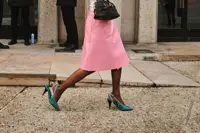
On a cloudy Sunday morning in October, Craig Wright was at the Tuileries Garden in Paris for Premiere Classe, a twice-annual accessories trade show held around the time of Paris Fashion Week.
“We don’t really need to do these shows anymore, but it’s good for people to see us and see what we are up to,” Wright said.
He was speaking about his brand Dragon Diffusion, which has had a presence at Premiere Classe for about a quarter-century.
Throughout the trade show, the Dragon Diffusion stall was visited by buyers from stores around the world, like Hug, a Chinese boutique with locations in Chengdu, Shenzhen and Aranya, and Halo Shoes, in Portland, Oregon.
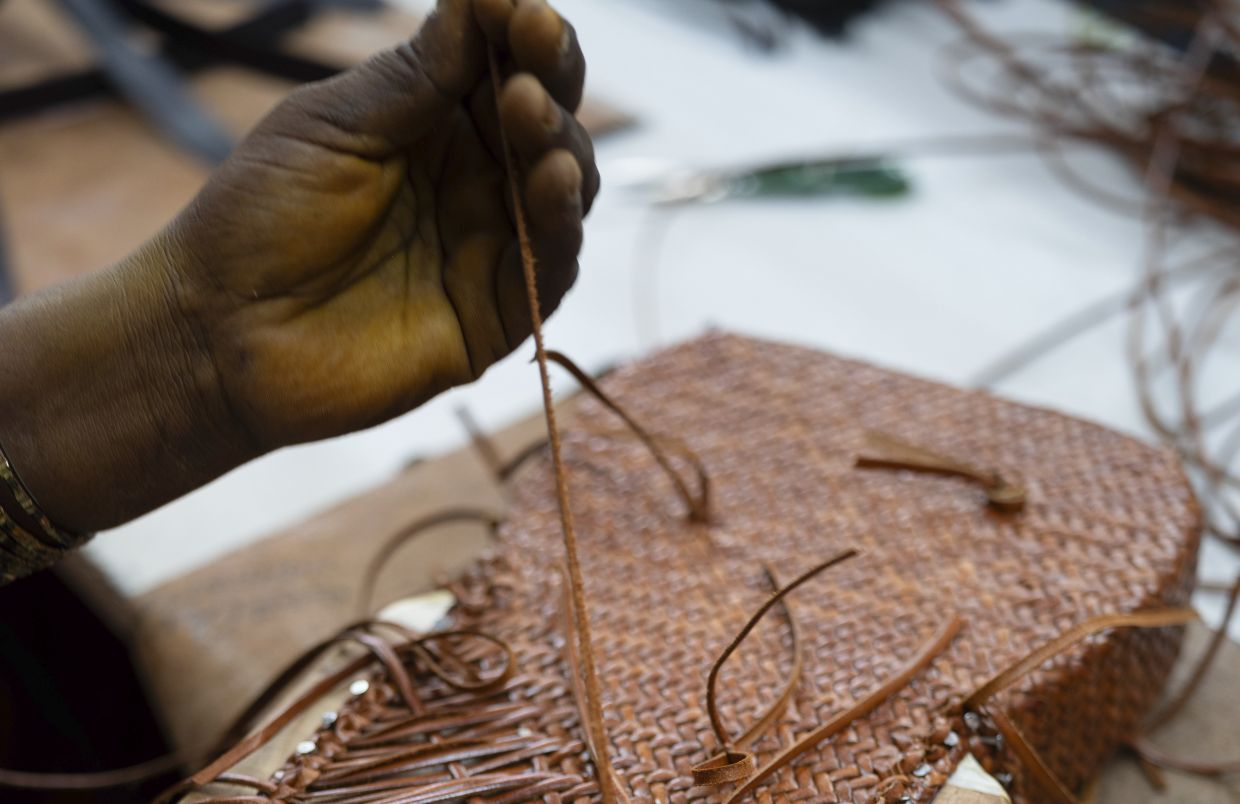
They had come to see the latest woven-leather bag, shoe and belt designs developed by Wright and made by artisan weavers employed by him in India.
One of the first places to carry Dragon Diffusion in America was Lost & Found, a store with locations in Los Angeles and Santa Monica, California.
Its owner, Jamie Rosenthal, has been selling the products for two decades.
She was “gobsmacked”, she said, by the number of woven Dragon Diffusion creations she saw out and about in Paris this year – a phenomenon also observed by local publications like Le Figaro.
“I saw so many girls with the bags in the metro, on the street,” Rosenthal said.
Read more: How Hatta Dolmat designs for impact, keeping fashion both responsible and bold
It was an ascendant moment for a brand that has long had a cult following, thanks partly to its associations with Ashley Olsen and other discerning people who have carried the bags, which typically cost between US$400 and US$600 (approximately RM1,650 to RM2,470).
Model Ella Richards, 29, is among them.
“It’s like Bottega,” Richards said of the way Dragon Diffusion’s woven handbags resemble the intrecciato designs from Bottega Veneta.
“I think they’re chicer than Bottega,” she added.
As Rosenthal put it, Dragon Diffusion was “if-you-know-you-know for a long time”.
The same could be said for Wright, 67, who over the years has quietly earned a reputation as a leather goods whisperer.
As he has grown Dragon Diffusion, he has also done leather and weaving work for various labels: 45R, Chanel, Dior, Louis Vuitton, Loewe, Prada – even Bottega Veneta.
About 60% of Wright’s work is for brands that are not his own, he said.
It’s a reason he doesn’t like to give interviews, preferring to stay “very much underground”, as he put it.
Another reason Wright has resisted giving interviews, he said, was advice he received from Frances Stein, a fashion editor turned accessories designer for brands including Chanel: “Don’t spend money on press agents or publicity. The bags will sell themselves.”
Wright has been working with hides since adolescence, he said.
Born in Christchurch, New Zealand, he was raised in nearby Kaikoura by his maternal grandmother, who he said was Indigenous Maori.
In his teens and early 20s, he worked the 4am to 10am shift at a local sheepskin tannery, where, he said, he would sometimes snooze on shearling skins used as material for Ugg boots.
An avid surfer, he spent as much of his spare time as he could in or near the water.
“‘Do you think you’re going to be sailing and surfing forever?’” Wright recalled being asked by his father back then.
Wright’s daughter, Jane Wright, a 29-year-old designer at Zara Home, said he is still very much a “shy surfer bro” at heart.
In his mid 20s, Craig Wright came to the US. He found work developing leather goods, like a braided belt made of a single leather strip.
He continued working with leather, in America and Europe, establishing Dragon Diffusion in Belgium in 1988 – a year that coincided with the lunar calendar’s year of the dragon.
Wright started Dragon Diffusion in Belgium after he had found a sort of mentor there in Ivan Kadic, an engineer who had invented specialized machines for producing woven leather goods.
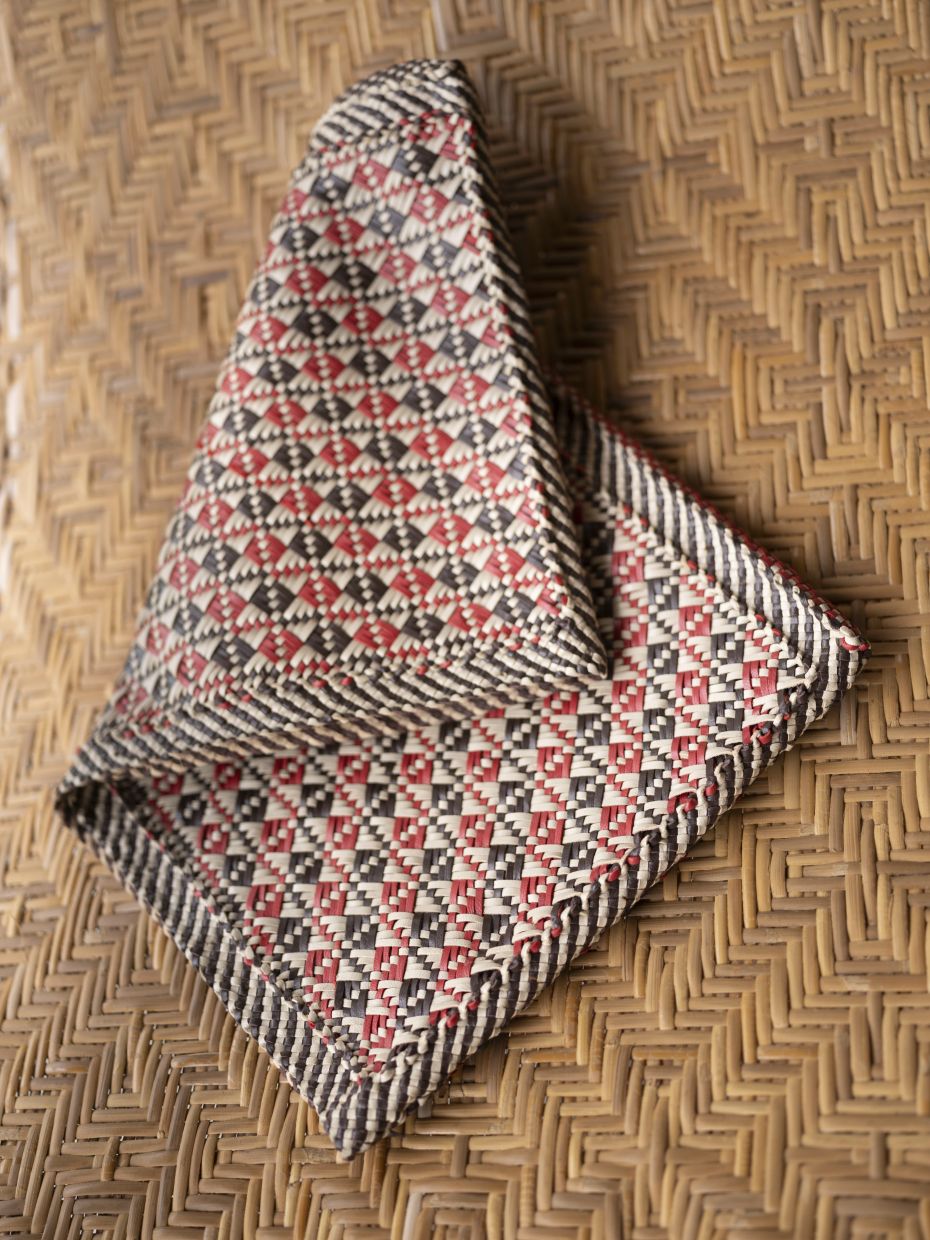
Wright is now the majority owner of a factory in Ranipet, India, about a three-hour drive from Chennai. Called AB Global, it is where Dragon Diffusion bags are made, a process that involves machinery invented by Kadic.
Wright, who lives in Brussels, spends about four months a year in India, he said. He otherwise works mostly at Dragon Diffusion’s headquarters in Belgium.
This summer, the company moved from a location in Brussels to a much larger space outside the city.
Corinne Poux-Bernard, who worked at Hermes from 1992 to 2012, in positions overseeing bag and luggage design, said that Wright showed an “ambidexterity” for leather work done both by hand and with machines.
Read more: From gowns to pantsuits, Michelle Obama looks back on her fashion as first lady
Dragon Diffusion bags typically begin as life-size sketches drawn by Wright on big sheets of paper. Many of their shapes and weaves are rooted in global basketry traditions.
A point is for them to show their craft.
The brand’s Maori Kete bag, Wright said, was inspired by the kete baskets woven with flax and sedge plants by Indigenous Maori on mainland New Zealand (his Maori grandmother used a kete to collect seashells, he added).
Most Dragon Diffusion bags are made with water buffalo leather from the northern Indian state of Punjab. Goat, sheep and cow skins are also used.
Leathers are often vegetable-tanned, cut into strips, dyed, then dried (preferably in the sun).
Afterward, the leather strips are waxed and treated with heat “to ensure colour fastness and to nourish the leather,” Wright said.
The AB Global factory employs about 700 weavers, Wright said, who together handle about 43 miles of leather strips a day.
They hand-weave bags on wooden lasts made for the factory by a pair of carpenters. Another team of about 275 artisans, known as attachers, finish the bags.
Dragon Diffusion’s most popular bag is a style called the Santa Croce, which has a weave that took six months to perfect, Wright said.
Were it not for help from a weaver named Selvam, Wright added, whom he has been working with for 30 years, he might never have figured out the design.
“Selvam solved the thing by free-handing it,” Wright said.
Some products hold special significance for Wright.
The Maori Kete bag, he said, along with the Octo Multi, a bag made using a knotting technique that involves combining leftover leather strips in as many as 14 different colours.
It was conceived by a weaver named Shweta, and he still has the prototype design at his office.
“I always bring it to the trade shows,” he said, holding up the prototype bag woven with black, brown, pink, blue, yellow and other leathers.
“It’s my good luck bag,” Wright added. “But my favourite bag is the next one – whether it’s for Dragon or someone else.” – ©2025 The New York Times Company
This article originally appeared in The New York Times.