Practically every first lady in modern US history has faced scrutiny over her appearance, especially when it comes to her hair.
Nancy Reagan, who consistently wore a neatly styled feathered bouffant, would have her hair done at least once a week and was rarely seen with a strand out of place.
The “fantastically chic” Jacqueline Kennedy was said to run a brush through her hair 75 times a night.
But care is no safeguard against criticism: Kennedy’s glamorous hairstyles made her a political liability, while Reagan’s braided hairpiece at a state dinner was pilloried in the press as “a crown”.
For Michelle Obama, who in 2009 became the first Black first lady in the US after her husband, Barack Obama, was elected president, the criticisms over her appearance were swift.
Her sleeveless sheath dresses drew too much attention to her sculpted arms and made her look masculine, some said, while others thought her fondness for cardigans made her look “kooky” or too casual.
But she quickly learned that no element of her appearance was going to be more politicised than her hair, which, unlike that of the 54 first ladies before her, was kinky and curly in texture.
Read more: Through adversity, a new aesthetic: The Princess of Wales’ fashion evolution
She chose to keep it straight during her eight years in the White House.
“I knew that I couldn’t give them anything else until the country got to know me,” Michelle said in a recent video interview.
“Others were trying to write our story before we could write it ourselves. So I was like, Let me not create another distraction; let me focus this country on getting to understand me as the first lady through my work and my actions.”
In her new photo book, The Look, which was released Tuesday (Nov 4), Michelle writes about the many facets of her personal style, and about how she leveraged fashion to draw attention to causes she deemed most important, like education, military families and children’s health.
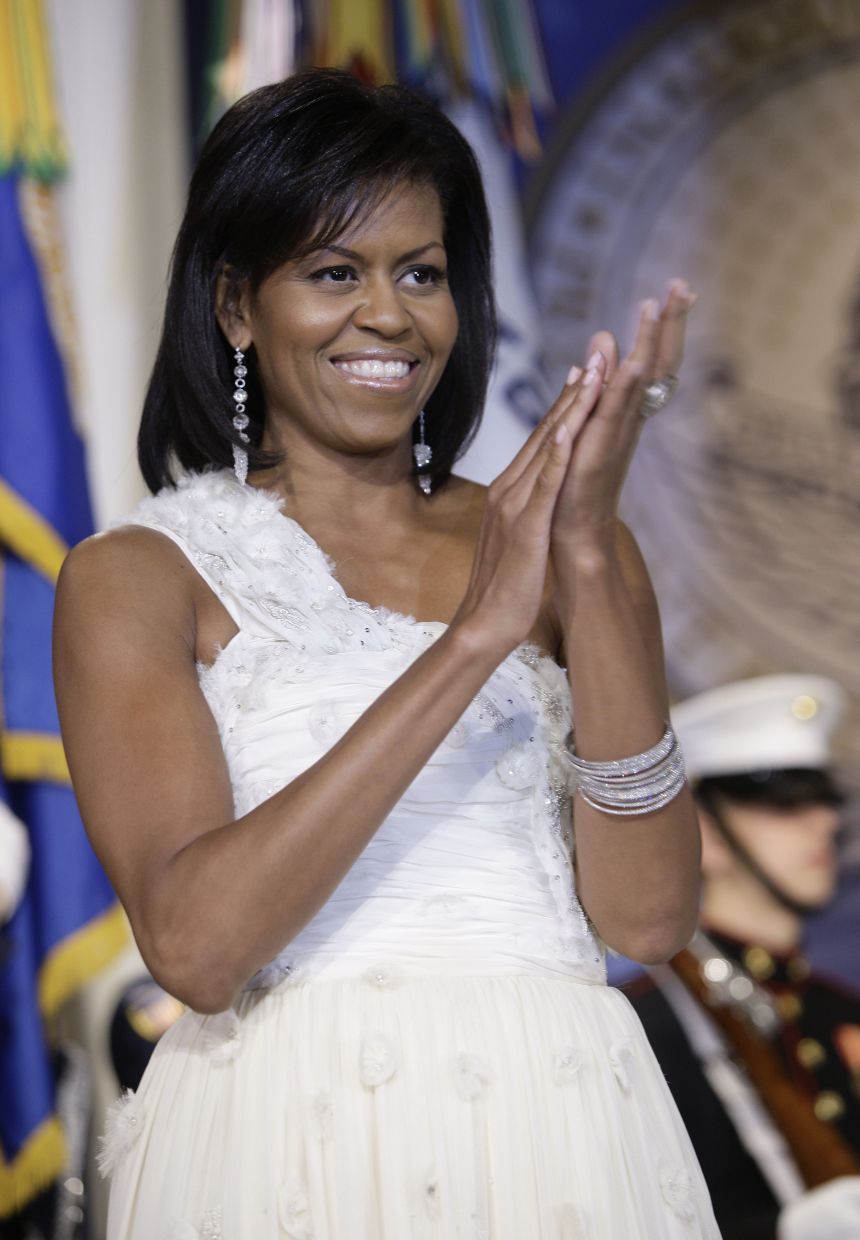
During the second term, she began exploring different fashion looks, but left her hairstyle mostly untouched.
Using hair to make a statement
In The Look, Michelle suggests that Black women’s personal style is often pulled in two directions: toward “respectability” or toward authenticity.
For some, that’s deciding on whether or not to press your hair straight on a sweltering July day or choosing not to remove cornrow braids before a job interview.
“We didn’t feel like we had the leeway to show up in the world as our full selves,” she said.
“I was a corporate lawyer before I was first lady: No one who was a woman of colour was wearing braids or their hair naturally. Our mothers didn’t do that.”
She writes in the book about the natural hair movement, a celebration of braids, cornrows and other natural styles that roughly coincided with her years in the White House.
At the time, many Black women were moved to do “the big chop”, a term for cutting off their chemically processed hair to regrow it in its naturally curly state.
In 2025, it’s easy to say that Michelle could have worn her natural hair while in the White House and simply chose not to.
Her choice not to participate in the movement was itself a statement. It said this was how a respectable Black woman needed to show up.
“It’s not a thing I feel like I need to reconcile,” she said.
“I mean, I understood why I had to do it then, and I would argue with anybody who said that I had the freedom to do something differently because I think that’s just fantasy.”
In 2008, a photo of a fist bump between her and her husband on the presidential campaign trail was interpreted by right-wing commentators as a “terrorist fist jab”.
The bizarre reaction peaked with a cartoon on the cover of The New Yorker that depicted the first lady wearing camouflage and an Afro.
Looking back on her hair choices as first lady, Michelle said she made the necessary sacrifices for the time period.
“But I do feel a deep sense of pride and a warmth for this generation of young women who are doing things differently,” she said.
She said her decision to wear braids – as when she campaigned for former vice president Kamala Harris during her White House run in 2024 – arose from the same impulse she had as first lady to use her platform to deliver a message.
Read more: 'Of steely, precise armour': Melania Trump's fashion once again under scrutiny
Although Michelle is now embracing her natural hair in public, she is well aware that hair-based discrimination continues to affect everyday Black people, especially in schools and in the workplace.
In 2018, a Black six-year-old in Apopka, Florida, was prohibited from entering his school because of his dreadlocks.
That same year, a Black news anchor in Mississippi was told that her natural hair was too unprofessional for television. And in 2019, a Black high school wrestler in New Jersey was forced to cut his dreadlocks at a match.
Several states have responded to the headlines by passing versions of the Crown Act, a federal bill seeking to prohibit discrimination based on a person’s texture or style of hair.
According to Michelle, frustration over the policing of Black hair was a major reason she wrote about hair in her new book: to advise those in power that what’s on top of a person’s head shouldn’t play a factor in hiring decisions.
“It’s ridiculous,” she said. “You don’t understand our hair; you don’t even know what you’re asking.”
For Michelle, being able to take full advantage of the versatility of her hair wasn’t always a given.
But she said she didn’t resent the time she spent wearing her hair straight while in the White House: There was a bigger job to do, after all. – ©2025 The New York Times Company
This article originally appeared in The New York Times.