Remember the it-bag? You know, the kind of handbag that once upon a time materialised and almost overnight seemed to embody a moment.
The kind of handbag that became a badge of belonging and insiderness, an experience so desirable that it made owning the tote or shoulder style or clutch desirable too, leading to a sort of mass mind-meld of acquisition.
Back in that time, going to a fashion show in Milan could be like going to an it-bag convention.
Fashion houses handed out what they hoped would be the bag of the season as if it were candy, and editors would happily take their new accessories out to play until bag after bag of the same style were all lined up like ducks along the front row.
That all mostly ended with the rise of social media, the advent of the age of the micro-trends and the fracturing of consensus.
But at the recent Bottega Veneta show in Milan, Louise Trotter, the new creative director, brought the bag bonanza back. Albeit in a somewhat more deconstructed form.
Read more: Why double-breasted suits are making a fresh comeback in menswear fashion
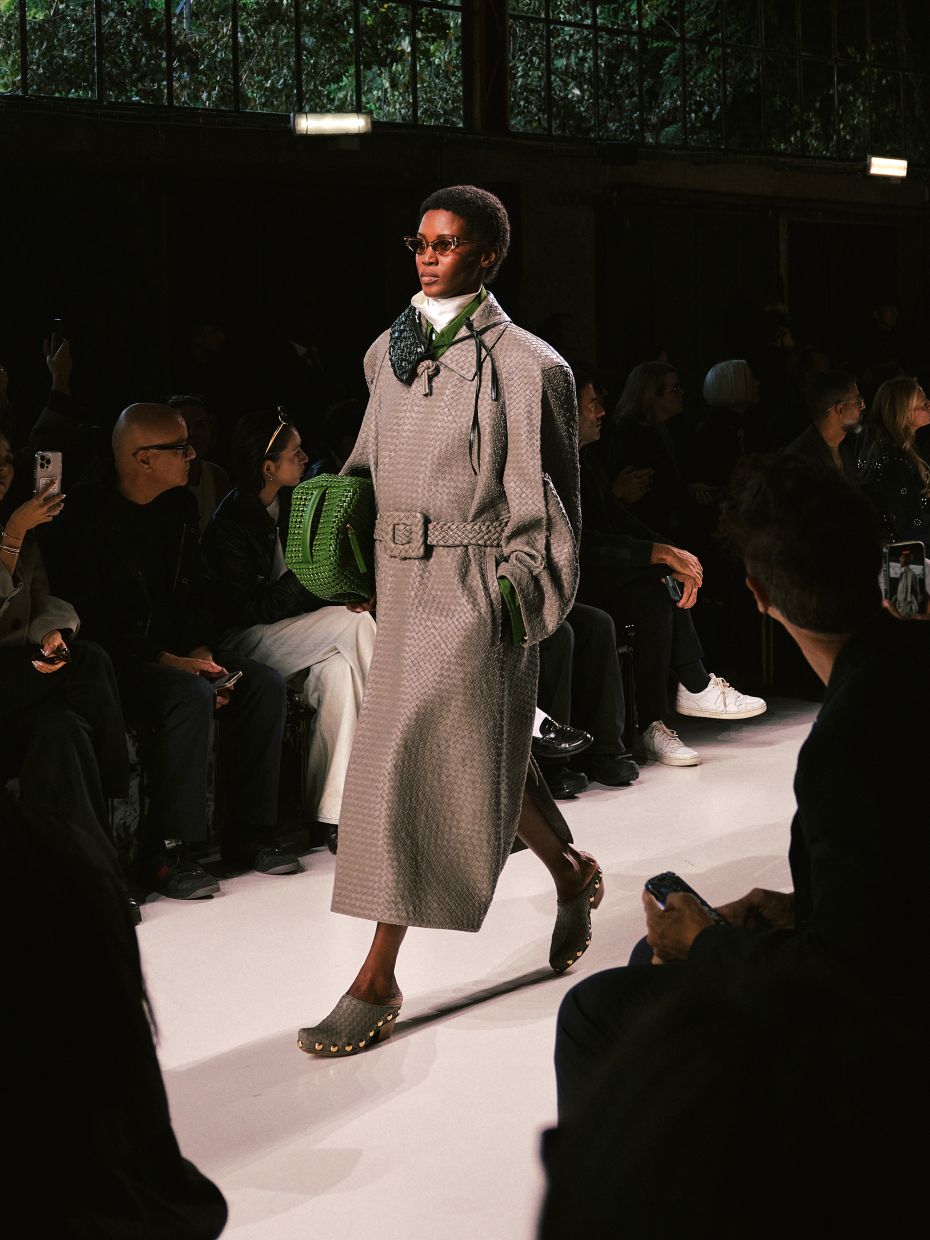
And she did it by leaning into the signature Bottega Veneta intrecciato, or woven, leather handbags, created by the brand’s founders Michele Taddei and Renzo Zengiaro in 1966 and made more famous by its first female creative director, Laura Braggion (Trotter is the second).
Lauren Hutton was in attendance, carrying a version of the woven Bottega bag she carried in the 1980 film American Gigolo. It was effectively a mascot for the show.
But Trotter didn’t stop at a bag. She used the intrecciato technique, and the high-touch emphasis on craft that it implies, as part of the foundation of her entire collection.
There were leather trench coats and shiny patent leather tunics made from intrecciato; tuxedo jacket lapels, overcoat belts, epaulets, collars and the uppers of shoes – all intrecciato. Intrecciato big and intrecciato small. A panoply of intrecciato bags, from suitcase-size duffels to mini evening croissants.
It was like an intrecciatopalooza!
So much so that it began to seem a little too on the nose.
All that inescapable intrecciato overwhelmed the major suiting that was also part of the collection, and meant that even the nonwoven leather and suede looks started to suggest handbags.
And basing the exaggerated, extended shoulder line of long, curvy jackets and coats on the line of the Cabat tote from 2002, even in a season where oversize tailoring is making a comeback and sloping shoulders are everywhere, was too much – too much shoulder and too much bag reference.
On the other hand, corset tops that revealed the actual shoulders and were constructed to fall louchly off one arm, paired with high-waist barrel pants, were cool.
Things got more interesting when Trotter took the intrecciato technique and applied it to alternative materials like cotton fisherman’s knit, strips of fragile chiffon, upcycled feathers and even recycled fibreglass needles.
Read more: Why stripped-down style with subtle details will always be timelessly chic
She combined the latter with – yes – leather, though you couldn’t see it.
The fibreglass was extruded from a woven base to form shimmering masses that looked like alien pelts in steel gray, sienna and gold and, when cut into sweaters and skirts, moved as if constantly being brushed by an unseen hand.
They were bizarre and protective and compulsively touchable and served, along with some pointy-toe cowboy clogs that may become the equivalent of an It shoe, as an antidote to all that bourgeois leather.
It was a reminder that in a world obsessed with artificial intelligence, such handwork and heritage and weird human imagination, all woven together, may be the biggest luxury there is.
That’s an idea worth carrying into the future. – ©2025 The New York Times Company
This article originally appeared in The New York Times.