
Ask The Expert is a monthly column to answer your questions on topics related to fashion and beauty.
In this edition, Inari Jewellery founder and creative director Eva Woon answers your queries on handmade, demi-fine jewellery.
I keep hearing about handmade, demi-fine jewellery. How different are they from mass-produced pieces? – Sera, KL
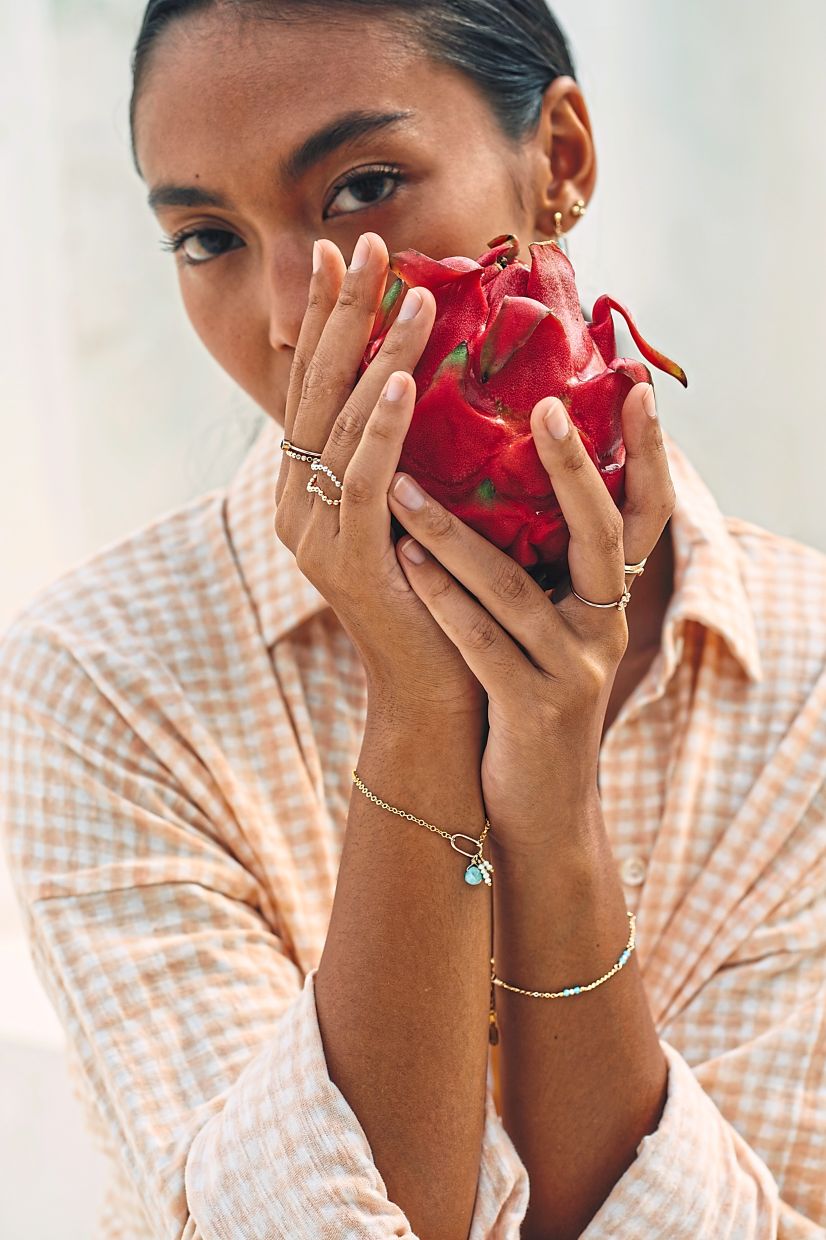
There’s an energy to handmade jewellery that you just don’t get with mass-produced pieces. Every part of the process is intentional (demi-fine is a term used to describe pieces that falls between inexpensive costume jewellery and pricey fine jewellery).
From the initial design trials, to hand-bending and soldering each element, to the final sanding and polishing. Each piece carries the imprint of the maker.
We make most of our pieces with a person in mind. Sometimes that means adjusting the chain length to fit a petite frame better, or customising a bracelet for a meaningful gift.
No two are ever exactly alike and that’s what makes them special.
In a world where so much is made fast and made to look the same, handmade stands out because it’s slower, more thoughtful and full of character.
What goes into making a single handmade piece, and how long does a custom item take? – Karen, Kuching
If it’s a made-to-order piece from our existing designs, it’s quite straightforward – we usually need about two to three working days to complete it, since the design and prototyping phase is already done.
But for full custom projects, like engagement rings or sentimental heirloom pieces, the journey is longer and much more collaborative. On average, it takes two to four months.
We start with a discovery session to understand the story, the intention behind the piece and the wearer’s preferences.
From there, we either begin gemstone sourcing or start the design sketches.
That part can take time, especially if the couple or client is still figuring out what feels right to them.
Once everything is confirmed, we move into the crafting phase.
But it’s worth noting – as a small team, we’re often working on multiple projects at once, so timelines also account for that.
Handmade means made with care, and co-created with the person it’s for.
How are materials chosen and where do they come from? – KJ, Penang
We work with materials that are built to last and that align with our values – mainly gold filled, gold vermeil, sterling silver and natural gemstones.
Most of our gold filled and sterling silver come from the US, where there are stricter standards around quality and content.
For example, gold filled legally requires 5% of the piece’s weight to be solid gold, which means it doesn’t tarnish easily and holds up with daily wear. This also requires proper care of the pieces.
We also recycle and reuse our own off-cuts to reduce waste where we can.
And when it comes to gemstones, we tend to source from smaller, independent suppliers from different parts of the world.
It’s important to us to work with partners who are transparent and share similar values around craft and integrity.
Is handmade jewellery more sustainable than factory-made? – Devi, KL
It can be but it depends on how each business operates.
Sustainability is a layered conversation: it’s not just about the material itself, but also how much you produce, how much goes to waste, and whether you’re making it with intention.
Handmade jewellery allows for more control.
We produce in small batches, often only after an order is placed or based on the data of how popular a particular design is.
That means we avoid overproduction, and we aren’t left with excess stock that ends up on clearance or in landfill.
Factory-made jewellery often requires large minimum orders, which pushes brands to produce more than they might actually need. That’s when wastage becomes an issue.
With handmade, we also have full visibility into our process – from sourcing to finishing – and can make more responsible decisions along the way.
On the contrary, it’s harder to know if the factory is adapting responsible production at every step of the way given that you are far removed from the day to day production.
How do I know I’m getting quality when buying handmade jewellery? – Diana, KL
Start with transparency, especially around materials. Look out for clearly listed terms like “gold vermeil”, “gold filled”, or “sterling silver”.
If the material is vague or says “gold plated” without further details on the base metal, it’s worth asking questions.
Then, pay attention to the construction. Are the chains and clasps well assembled? Are the gemstones securely set? Is the finishing clean?
Handmade doesn’t mean perfect, it means personal. But a well-made piece should still feel sturdy and look polished.
Read more: The claw grip is trending, and it says a lot about women’s fashion woes
What are some red flags when buying jewellery online? – Jaslina, PJ
One of the biggest red flags is vague or misleading material descriptions.
If something is labelled “gold plated” or “hypoallergenic” but doesn’t specify the base metal, that’s usually a sign to dig deeper.
Some brands will even describe their jewellery as “gold” but when the price tag is RM200, you know it’s not solid gold.
It’s these little details that matter, because poor-quality base metals are often the reason behind allergic reactions or quick tarnishing.
There’s also a lot of loose terminology used in the industry.
Some brands list a mix of terms without clearly explaining what they mean, which can confuse customers rather than educate.
That lack of transparency is another red flag. Gemstones and pearls are another tricky area.
I’ve had customers tell me they bought pieces advertised as “natural” gemstones or pearls, only to find out they were glass or plastic.
Real pearls, for example, won’t look identical and if you rub two against each other, they’ll release a fine powder. Fakes don’t.
Unless you truly trust the brand, it can be hard to tell what’s real just by looking at photos.
My advice is to check reviews, see if the brand shares details about their sourcing and materials, and maybe start with a smaller piece first.
And lastly, watch out for brands calling themselves “demi-fine” without actually using demi-fine materials.
That label should mean gold vermeil, gold filled, sterling silver and genuine gemstones anything less, and it’s just marketing. A little research goes a long way.
Do you have any questions on fashion and beauty? Email us with the subject heading Ask The Expert at lifestyle@thestar.com.my. Please include your name, address, contact number and if you prefer, a pseudonym.