When Abe Lange lived in the East Village of Manhattan, he would sometimes take his breakfast in Tompkins Square Park, wearing his favourite zip-up hoodie.
You might say it had seen better days: The black jersey had faded to a charcoal ombre, and large portions of the front and sleeves had worn away, revealing the inner thermal lining.
On more than one occasion, a kind passerby in the park tried to hand Lange some spare change.
“This hoodie was so decrepit-looking,” Lange, 27, recalled, adding that his groggy morning appearance probably didn’t help matters.
He has since retired the hoodie. The tattered garment is, however, available to designers and stylists for rental.
His prices start at about US$125 (approximately RM560) for three days, roughly a quarter of what Lange estimates as its retail value.
Sumshitifound, the Brooklyn shop Lange has run since 2019, is full of this sort of torn, moth-eaten – and what those in the know often affectionately call “thrashed” – vintage clothing.
Read more: How one fashion label got a boost from Meghan Markle's As Ever brand name
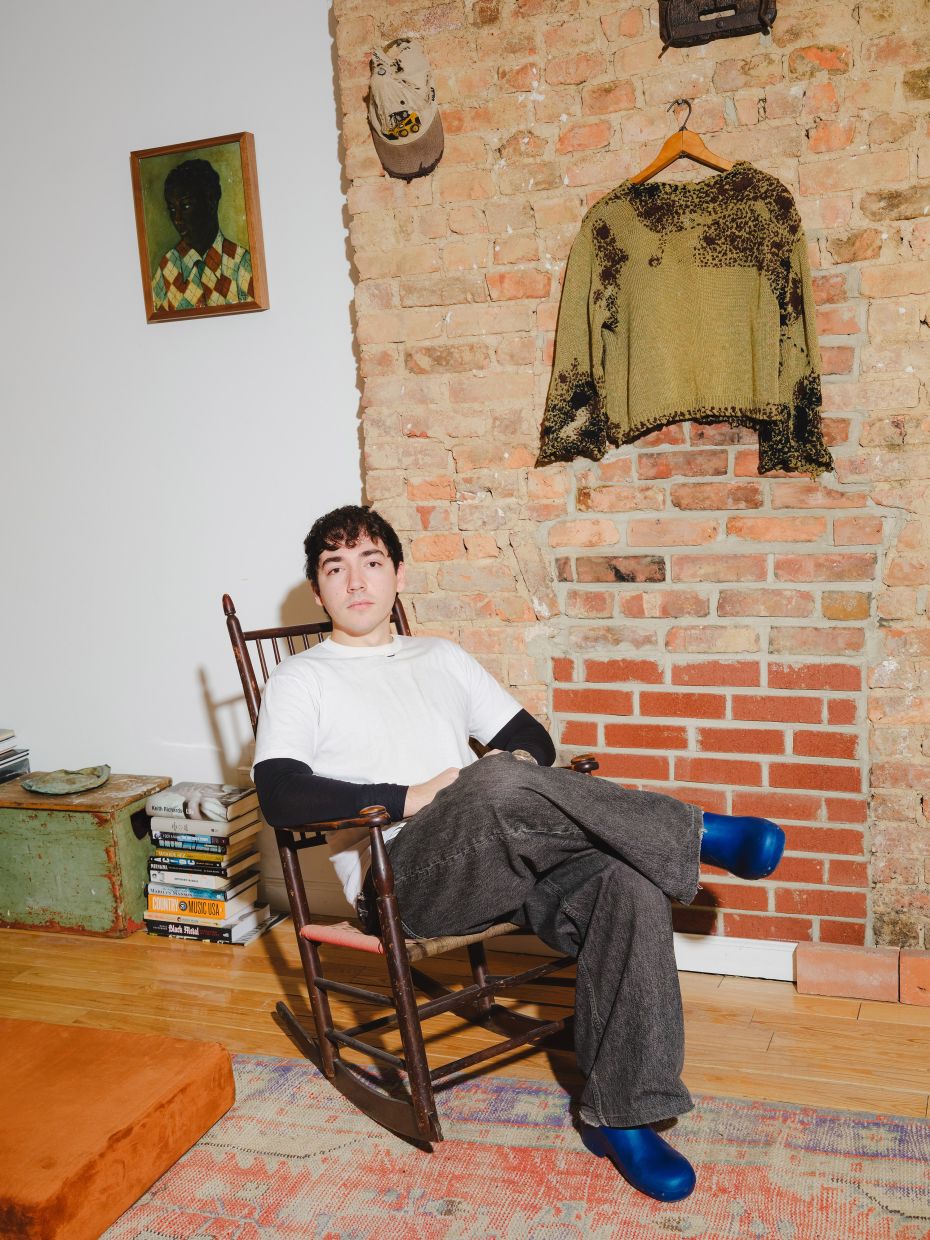
To some, these pieces may look like old rags. Others, though, see garments with history and character that stand out from the flatness of cheap fast-fashion and luxury brands.
“People want the Row, they want Hermes, everything perfect,” said Aulden Borthwick, a 20-year-old film student at New York University whose closet includes several threadbare items.
“There’s something about having a piece of clothing that somebody else wore and loved so much that it’s fallen apart, then fixed it up and then they continued to wear. That’s an affirmation that a piece of clothing is just great.”
Gabriel Lyons Loeb, who runs a small design firm in Manhattan, is of the view that clothes “gain a certain depth” with more wear.
According to him, the variation and heterogeneity in a piece of thrashed clothing “is just more interesting” than the pristine stuff.
Lange is part of a growing community of vintage dealers focusing on the distressed.
Many vintage brick-and-mortar stores carry garments here and there with a healthy patina.
In recent years however, a number of shops with strong Instagram presences have emerged, specialising in the field of fades: Remnants Vintage, Cotton Cowboy, Legarbaage, Elseware Vintage, Pasture Vintage and the aptly named Moth Food, to name a few.
“I have a pretty broad vision of what is acceptable to wear,” said Connor Gressitt of Legarbaage, who hosts a twice-annual event called Distressed Fest with Lange.
“I’m really into this idea of negative space in clothing, or what a normal person would call ‘holes.’”
It’s a style with a complicated history. More than two decades ago, John Galliano, the designer-cum-provocateur, drew inspiration from people in rags he came across in the streets of France for spring 2000 couture collection for Dior.
In the years since, trash bags have floated down runways for Lanvin, JW Anderson and Gareth Pugh, and faux-dirtied sneakers have come into vogue. In extreme cases, some critics have called the look poverty “cosplay”.
At the same time, distressed clothes – and denim especially – have established themselves as largely uncontroversial staples of the American wardrobe.
Pioneered by Diesel in the 1980s and epitomized by Y2K-era Abercrombie, pre-ripped and faded jeans may once have given rise to comments like “Did you buy them that way?”, but now hardly raise an eyebrow.
The style also has roots in grunge, characterised by the “threadbare flannel shirts, knobby wool sweaters and cracked leatherette coats of the Pacific Northwest’s thrift-shop esthetic”, as The New York Times reported in a 1992 article.
On a recent winter afternoon, among his collection of well-worn things – including a 1970s hoodie with a few paint stains, a white T-shirt that is more hole than cotton, and patchwork quilts and antique housewares – Lange considered how others might perceive his interest.
“If the haters are saying this is ridiculous, this is confusing, this thing is beat up, my main response would be, ‘You’re right,'” he said.
Lange sees what he does as “recontextualising” garments that are perceived to be at the end of their life.
“Sustainability is a flex,” he said, adding that many of the clothes he sells would be bound for a landfill otherwise.
For many, the appeal of an individual item comes from its wear: always unique, and impossible to reproduce.
Other people may have that same vintage sweatshirt, but do they have one with this particular stain across the front? Plenty of people have Levi’s, but they don’t have these, which are patched, torn and speckled with paint.
Read more: 'Socks you want to be noticed': Not your everyday mundane fashion item
“There is just this insatiable hunger for uniqueness,” said Avery Trufelman, the producer and host of the podcast Articles Of Interest, who compared worn-out vintage to NFTs.
As brands like Balenciaga and Acne Studios mass produce shredded jeans – including some whose tears are not tears at all but trompe l’oeil – and Maison Margiela sells a ripped sweatshirt for US$1,140 (RM5,000), some feel an intensified desire for the real thing.
And as vintage itself has become more popular, those who consider themselves real heads feel a pull toward the more obscure.
In the competitive world of vintage hunting, some of the biggest fanatics don’t covet the perfect pair of 501s but rather a 1930s jacket found in an abandoned mine shaft and tinged with chemicals (also for sale in Lange’s shop).
Where some cringe at the prospect of decades of dirt and grime on their clothes, others relish it.
“There is something cool about feeling someone else’s skin on you,” Trufelman said.
“People want to see signs of wear and tear. It’s a way of valuing someone else’s life and livelihood.”
But even those who embrace thrashed clothing as the apotheosis of a certain gritty authenticity might sometimes pause to wonder: How authentic is it, really, to wear clothes worn in by someone else?
“There is a whole stolen valor side to this: You didn’t earn those rips. You didn’t paint anything,” said David Alper, who owns the shop All-Time High in Los Angeles, where he works with local factories and wash houses to give his newly produced styles rips, fades and splatters.
He admitted that he could be considered guilty of it himself.
“I’m not a labourer – I’m never going to wear these jeans in that hard,” Alper said. “I just want the look.” – ©2025 The New York Times Company