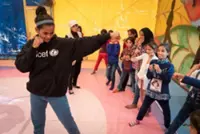
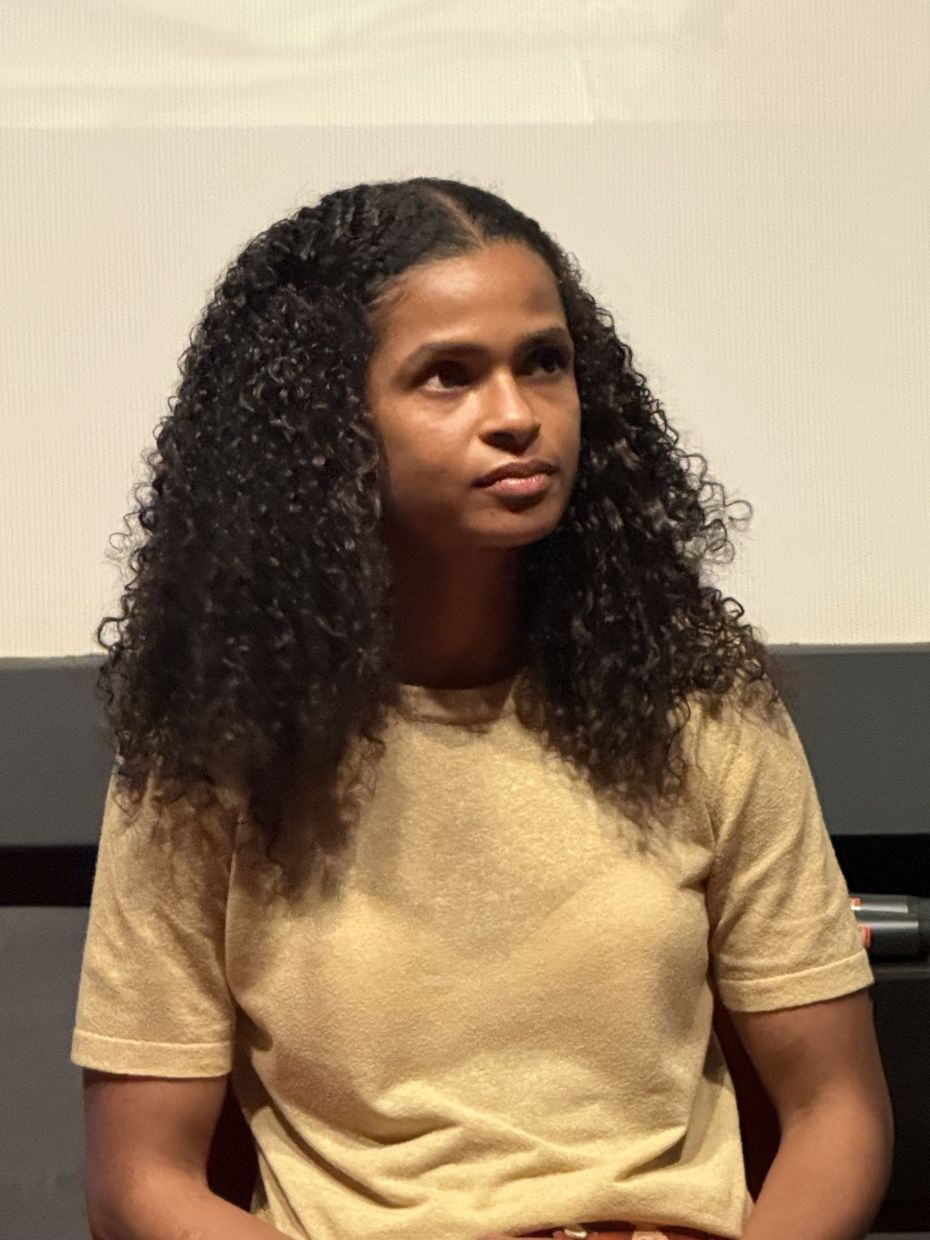
Ramla Ali clutches a water bottle and takes a sip.
The British-Somali boxer, social activist and model appreciates the importance of clean fresh water even more after a week spent in Dadaab refugee camp as special ambassador for Unicef.
Housing hundreds of thousands of refugees, mostly from Somalia, the camp in north-eastern Kenya is one of the largest and oldest in Africa, set up after Somalia plunged into civil war in 1991.
For Ali, who has visited many camps in the past, Dadaab holds a special meaning.
“This could have been me,” she says, looking at pictures of young girls with pink headscarves in a school she visited in the camp.
Born in Mogadishu, Ali’s family left when her brother was killed by a grenade.
As a refugee in Kenya, her mother recalls standing in line for food aid.
Ali was a toddler when the family were granted asylum in Britain.
That gave her opportunities the children stuck in the arid plains of Dadaab don’t have, starting with education in a school that is not overcrowded.
She was able to take access to clean water and shelter for granted. And above all, she had the chance to decide what to do with her life.
“For me, it’s really important to be amongst my people and to see what their life is like,” she says.
“Were it not for the strength, courage and resilience of my mum, that could have been me in that situation.”
Dadaab is home to more than 400,000 refugees. Many of the people at the camp have undergone child marriage, female genital mutilation and other child rights violations. Many more lack access to education.
Ali recalls meeting an 18-year-old woman who was stunningly beautiful in one of Daadab’s centres for young mothers.
“She told me that her life dream was to become a supermodel.”
But then she was raped at the age of 13 and gave birth at 14.
“When she gave birth, she said she no longer had dreams to be a model, because she felt her body was ruined,” Ali says.
But she looked further ahead.
“She now has a new dream to become a doctor. She wants to work hard so she can help girls like her, who have suffered similar things,” Ali says after meeting the young mother.
“That’s her new dream. She wants to create a better world for herself and her daughter.”
It’s one of the stories that put everyday problems into perspective.
“It just makes you realise that you need to be grateful for everything that you have, and you can no longer be complacent for what you don’t have.”
The visit made a major impression on her, Ali says.
“It was really important to just witness that and see that first time. I must admit, it has been the most inspiring and humbling experience I’ve ever had or witnessed in my entire life.”
She also saw at first hand the effects of aid cuts, the significant reduction or suspension of funding for foreign assistance programmes, particularly by the United States. Britain is also preparing to reduce aid as of 2027.
Water rations given to the Dadaab refugees have been halved to 8.5l a day to wash, cook and drink.
In a desert dominated by dust and heat, that reduction makes living conditions even harsher.
One of the young women Ali met fainted during the meeting due to dehydration.
“And it’s going to get reduced even more because in two years’ time, more aid is going to be cut,” she warns.
“It’s really hard to come to terms with the fact that the most vulnerable people on Earth, kids, are the ones that are going to be affected.”
Ali’s life story is an unusual one for a young woman from a strict Muslim community.
When she started boxing classes as a young girl, she had to do it in secret.
Later, she would be the first Somali boxer to compete at the Olympic Games and the first to win an international gold medal for the country in boxing.
But her roots remain integral to her work.
“I will build. I will elevate. I will support other black men and women with my platform, my sport, my finances and my time,” she vows. – dpa