British primatologist Jane Goodall, who transformed the study of chimpanzees and became one of the world's most revered wildlife advocates, has died at the age of 91, her institute announced Wednesday.
Goodall "passed away due to natural causes" while in California on a speaking tour of the United States, the Jane Goodall Institute said in a statement on Instagram.
In a final video posted before her death, Goodall, dressed in her trademark green, told an audience: "Some of us could say 'Bonjour,' some of us could say 'Guten Morgen,' and so on, but I can say, 'Hoo-hoo-hoo-hoo-hoo-hoo-hoo! That's 'good morning' in chimpanzee.'"
Tributes poured in from across the conservation world.
"Dr. Jane Goodall was able to share the fruits of her research with everyone, especially the youngest, and to change our view of great apes," Audrey Azoulay, director general of UNESCO, told AFP, adding Goodall had supported the agency's conservation work.
"My heart breaks at the news that the brave, heartful, history-making Jane Goodall has passed," actress Jane Fonda said on Instagram. "I loved her very much."
"I think the best way we can honour her life is to treat the earth and all its beings like our family, with love and respect," added Fonda, herself a prominent environmental activist.
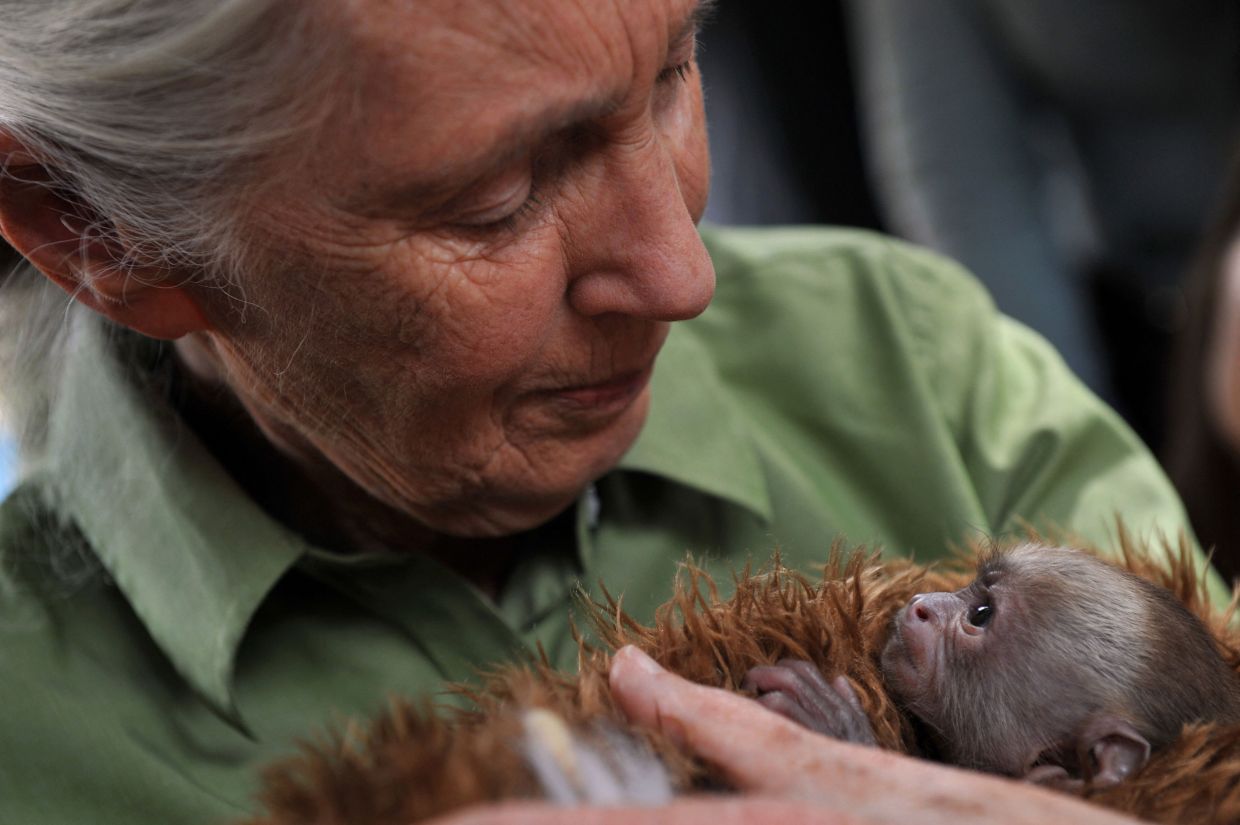
Groundbreaking discoveries
Born in London on April 3, 1934, Goodall grew fascinated with animals in her early childhood, when her father gave her a stuffed toy chimpanzee that she kept for life. She was also captivated by the Tarzan books, about a boy raised by apes who falls in love with a woman named Jane.
In 1957 at the invitation of a friend she traveled to Kenya, where she began working for the renowned paleontologist Louis Leakey.
Goodall's breakthrough came when Leakey dispatched her to study chimpanzees in Tanzania. She became the first of three women he chose to study great apes in the wild, alongside American Dian Fossey (gorillas) and Canadian Birute Galdikas (orangutans).
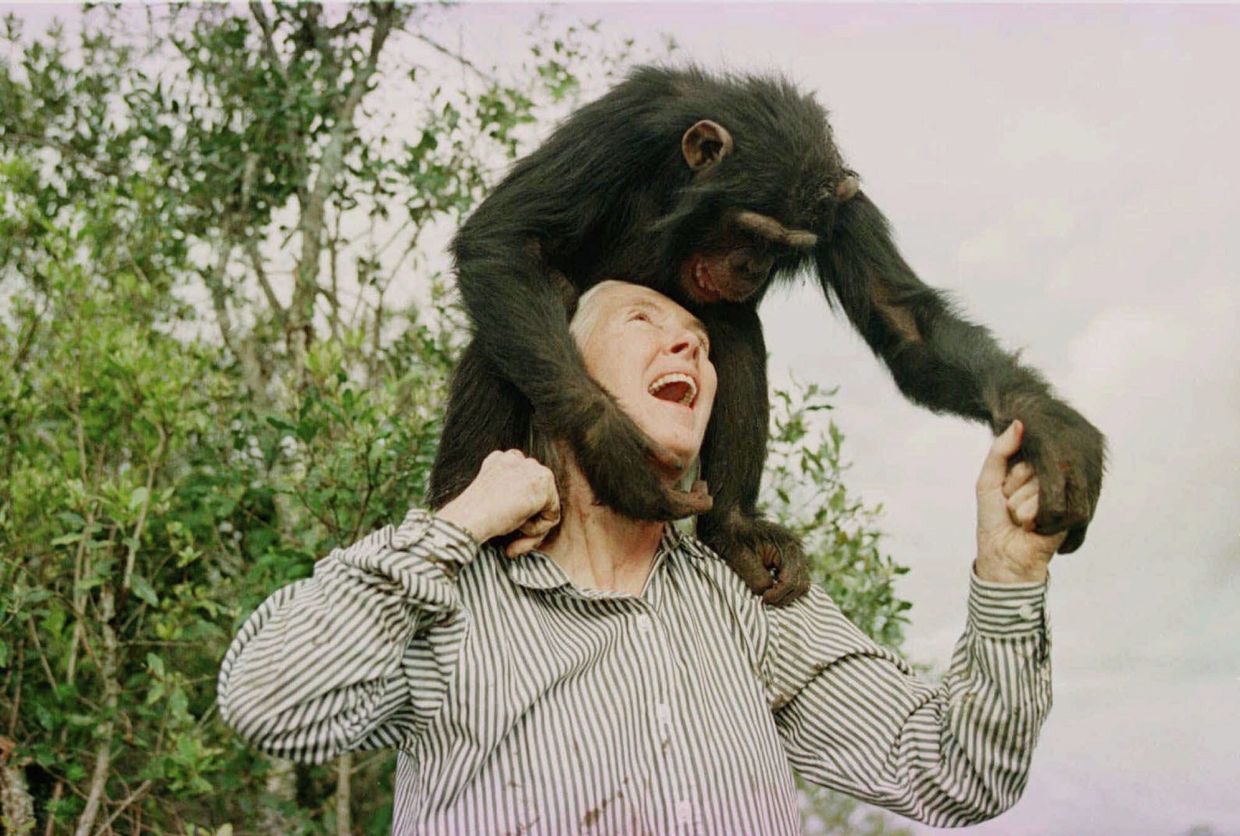
Goodall's most famous finding was that chimpanzees use grass stalks and twigs as tools to fish termites from their mounds.
On the strength of her research, Leakey urged Goodall to pursue a doctorate at Cambridge University, where she became only the eighth person ever to earn a PhD without first obtaining an undergraduate degree.
She also documented chimpanzees' capacity for violence -- from infanticide to long-running territorial wars -- challenging the notion that our closest cousins were inherently gentler than humans.
Instead, she showed they too had a darker side.
In 1977 she founded the Jane Goodall Institute to further research and conservation of chimpanzees. In 1991 she launched Roots & Shoots, a youth-led environmental program that today operates in more than 60 countries.
Her activism was sparked in the 1980s after attending a US conference on chimpanzees, where she learned of the threats they faced: exploitation in medical research, hunting for bushmeat, and widespread habitat destruction.
From then on, she became a relentless advocate for wildlife, traveling the globe into her nineties.
Goodall married twice: first to Dutch nobleman and wildlife photographer Baron Hugo van Lawick, with whom she had her only child, Hugo Eric Louis van Lawick, who survives her.
That marriage ended in divorce and was followed by a second, to Tanzanian lawmaker Derek Bryceson, who later died of cancer.
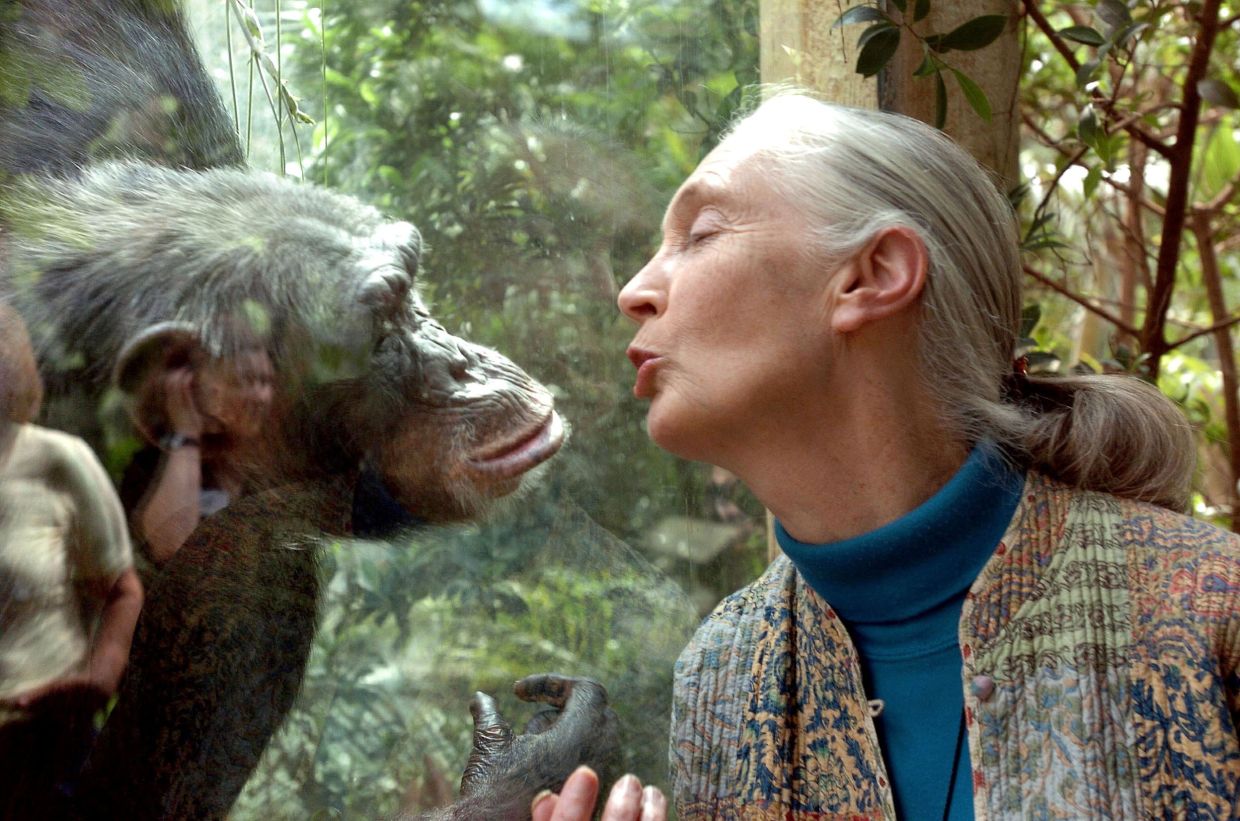
Message of hope
Goodall wrote dozens of books, including for children. She appeared in documentaries, and earned numerous honors, among them being made a Dame Commander by Britain and receiving the US Presidential Medal of Freedom from then-president Joe Biden.
She was also immortalized as both a Lego figure and a Barbie doll, and was famously referenced in a Gary Larson cartoon depicting two chimps grooming.
"Conducting a little more 'research' with that Jane Goodall tramp?" one chimp asks the other, after finding a blonde hair. Her institute threatened legal action, but Goodall herself waved it off, saying she found it amusing.
"The time for words and false promises is past if we want to save the planet," she told AFP in an interview last year ahead of a UN nature summit in Colombia.
Her message was also one of personal responsibility and empowerment.
"Each individual has a role to play, and every one of us makes some impact on the planet every single day, and we can choose what sort of impact we make. – AFP