


Nepal’s 'God of Sight' aims to make cataract surgery affordable and accessible beyond the country


By Agency
A Nepalese elderly patient waits for his eye patch to be removed at the Tilganga Eye Center in Kathmandu, Nepal. Photos: AP

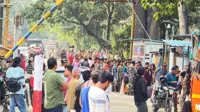
Just next to the Mayadevi temple where Buddha was born more than 2,600 years ago, hundreds of people lined up outside a makeshift hospital on a recent hazy day, hoping their fading eyesight could be restored.

A day later, these saffron-robed Buddhist monks, old farmers and housewives were able to see the world again because the nation’s renowned eye surgeon Dr Sanduk Ruit was there with his innovative and inexpensive cataract surgery that has earned him many awards.

At the visitor centre turned into eye temporary hospital in Lumbini, located 288km south-west of Nepal’s capital Kathmandu, the assembly line surgery made it possible for the nearly 400 patients to get Dr Ruit’s surgery in just three days.

“The whole objective, aim and my passion and love is to see that there remains no people with unnecessary blindness in this part of the world, ” Dr Ruit, also known as Nepal’s “God of Sight”, said.

Patients receiving anaesthesia before their cataract surgery at an eye camp in Lumbini, 288km south west of Kathmandu.

“It is important that the people receive equitable service and not that the haves receive it while the have-nots don’t. I want to make sure that everybody receives it.”

Many people in Nepal, most of them poor, have benefitted from Dr Ruit’s work. He founded the Tilganga Institute of Ophthalmology in Kathmandu and regularly visits remote villages high in the mountains and low lands of the Himalayan nation, taking with him a team of experts and equipment, bringing surgery to their villages.

Dr Ruit has already performed some 130,000 cataract surgeries and is now aiming to expand his work, taking it to as many countries as possible through a foundation he has formed with British philanthropist Tej Kohli which targets 500,000 surgeries in the next five years.

Dr Ruit said the idea of the Tej Kohli Ruit Foundation is to make cataract surgeries in Nepal affordable and accessible to all.

“We will scale it up globally to other parts of the world where it is needed, ” he said.

Dr Ruit pioneered a simple technique where he removes the cataract without stitches through small incisions and replaces them with a low-cost artificial lens.

Dr Ruit began his work in 1984 when the surgery was done by removing the entire cloudy cataract and giving thick glasses. He found that most people would not wear these glasses and chances of complication were very high.

So he pioneered a simple technique where he removes the cataract without stitches through small incisions and replaces them with a low-cost artificial lens.

Dr Ruit’s average surgery costs about US$100 (RM414). The surgery is free for those who can’t afford it. Patients rarely have to spend the night at the hospital.

Nepal has limited number of hospitals and health workers and services are out of reach for most people.

Cataracts, which form a white film that cloud the eye’s natural lens, commonly occur in older people but also sometimes affect children or young adults. The condition first causes vision to blur or become foggy because the eye is unable to focus properly.

Dr Ruit checking a patient's eye sight after his eye patches were removed at an eye camp in Lumbini.

As the cataract grows and matures, it can eventually block out all light. Exposure to harsh ultraviolet radiation, especially at high altitudes as in Nepal, is a major risk factor.

At the surgery camps in Lumbini, patients and family were all praise for the doctor.

Bhola Chai, a 58-year-old office worker, who had to retire because of his fading vision, was thrilled he could finally see again.

“This surgery has changed my life, ” Chai said.

Others who have already benefitted from Dr Ruit’s cataract surgery likened him to a god.

“The doctor is just not god-sent but he is a god to me, who has given me a new life, ” said Satindra Nath Tripathi, a farmer who benefitted from the surgery. “My world was completely dark, but now I have new life and new sight.”

With his fading eyesight restored, Tripathi is already looking forward to working on his farm, growing rice, wheat and vegetables. – AP

Get 20% OFF The Star Digital Access

Monthly Plan

RM 13.90/month

RM 11.12/month

Billed as RM 11.12 for the 1st month, RM 13.90 thereafter.

Best Value

Annual Plan

RM 12.33/month

RM 9.87/month

Billed as RM 118.40 for the 1st year, RM 148 thereafter.

Follow us on our official WhatsApp channel for breaking news alerts and key updates!

Next In People

Bespoke milliner makes World Cup-themed cowboy hats in Texas, US
South Korean pianist recreates himself as a one-handed performer after paralyzing stroke
Entrepreneur and father Ma Han Pin is redefining what success looks like
Malaysian veteran photographer and her son share work and family ties at The Star
A living dilemma: Syrians in Germany split over staying or returning to homeland
Entrepreneur and mother of four Nadia Nasimuddin on redefining wellness and bodycare
She's only 10, but she's taking college courses in the US
Iban woman leads Malaysia's parasitology and tropical medicine society
What keeps this Malaysian vendor delivering The Star for decades
Couple goals: Married medics face war side by side in Ukraine

Others Also Read
