The art of making 'parang' is dying, this Sarawakian bladesmith wants to revive it


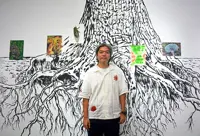
Zulhi is proud to be one of the last few parang makers in Lawas, Sarawak. Photos: The Star/Sheela Chandran

Like many other traditional crafts in Malaysia, hand-forged parang or machete is a dying trade. In Lawas, Sarawak, there is only a handful of these craftsmen around and bladesmith Zulhi Seali, 45, is proud to be one of them.

“I am the youngest and handsomest parang maker in Kampung Punang, Lawas, ” joked Zulhi, when we met in Nilai, Negri Sembilan in September.

He was one of the exhibitors at the Sarawak: Land of the Hornbills promotional campaign organised by the International Trade and Industry, Industrial Terminal and Entrepreneur Development Sarawak Ministry.

“Not many villagers are interested in parang-making because it requires physical strength and stamina. And lots of practice, patience and determination, ” he added.

Handcrafted parangs are used as an agricultural tool as well as for making furniture and building houses.

In 2008, Zulhi learned the art of parang-making from an elderly maker from Lawas. It took him several months to perfect the craft, including the nitty-gritty details that go into making knife sheaths and accoutrements.

The machetes, knives and blades made by Zulhi come in various shapes and handle designs.

“Some knifesmiths aren’t always willing to share the secrets of their trade. I am grateful my friend was willing to impart his parang-making knowledge to me.”

In the early days, Zulhi dabbled in bladesmithing on a part-time basis, making kitchen knives for his wife – 45-year-old homemaker Dayangku Norzainab Awangku Othman – and as gifts for family members. Over time, people started to order custom-made knives from the talented craftsman.

In 2012, the father of three gave up his full-time job as a security supervisor to focus on his growing bladesmith business.

“So far, I have received positive feedback for my knives and machetes. People are happy to buy them over factory-made ones because my knives are durable and long-lasting. I have many orders for machetes, which can be used for cutting and clearing farms.

“Being a bladesmith is the best decision I’ve ever made. I get to be my own boss and I have the satisfaction of crafting blades from raw metal, ” said the jovial man who, with his persona and hairstyle, can easily pass off as a 1990s rockstar.

Zulhi comes up with mock designs on paper or cardboard before crafting them into knives. He takes great pride in forging his steel knives, also called the art of “heat and beat”. This involves heating the metal to high temperatures to make it malleable. Then Zulhi hammers, beats and cuts it into shape.

Zulhi's workstation is very basic but he gets the job done. Photo: Zulhi Seali

The artistic metalwork is created in a makeshift den behind Zulhi’s home. Though the set up is simple, it is a place where he gets to spark his creativity.

His tools aren’t aplenty; he relies mainly on his angle grinder, metal files, clamps, tongs, hammers and anvils to make his creations. Sandpaper and a good set of metal files are must-haves to sharpen and polish the knives, he shared.

“One doesn’t need many high tech tools to create handmade blades. One just needs to have the right attitude, passion and skill to be a bladesmith, ” said Zulhi.

Spring steel is the choice material to make his blades due to its high resistance to bending, snapping and shattering. He uses natural materials like local wood (kayu malam and kayu belian) for the handles. It takes him between a day and a week to create a blade, depending on its size and accoutrements like flowers and Sarawak’s tribal designs.

The types of kitchen knives that he crafts include paring, cleaver and chefs. But his bestselling items are the machetes, especially in designs like Bowie, Latin, Panga, sheepsfoot and hawkbill.

Handles also come in different sizes, width and lengths, varying according to his customers’ hand sizes.

The price of the items ranges between RM20 and RM2,000.

It takes Zulhi between a day and a week to create a blade, depending on its size and accoutrements like flowers and Sarawak’s tribal designs.

One would notice that Zulhi’s fingers have hard calluses. His fist, palm and wrist are knotted with deep scars. Zulhi acknowledges them as part and parcel of his profession.

“Recently, I had a huge cut when a sharp metal piece chipped from the grinder and pierced my tummy. Luckily, I didn’t require any stitches but it took several weeks for the injury to heal, ” said Zulhi, raising his T-shirt to show the ridges of the scars on his stomach.

The many marks on Zulhi’s fingers and body is a clear indication that bladesmithing is one of the most hazardous crafts around.

Each day, he toils around fire, working with coal and molten metal to craft his knives. Let’s not forget how the sound of whirling cutters and grinders could damage his hearing, or how fire sparks could cause blindness.

It’s a tough job but Zulhi takes it in his stride. He is just glad to be one of the last few knife makers in his village.

“I am more than happy to teach the art of parang-making to the younger generation. This is one of Sarawak’s traditional crafts. Hopefully, more of the younger generation will step forward to be my apprentice.”

Get 20% OFF The Star Digital Access

Monthly Plan

RM 13.90/month

RM 11.12/month

Billed as RM 11.12 for the 1st month, RM 13.90 thereafter.

Best Value

Annual Plan

RM 12.33/month

RM 9.87/month

Billed as RM 118.40 for the 1st year, RM 148 thereafter.

Follow us on our official WhatsApp channel for breaking news alerts and key updates!

Next In People

Bespoke milliner makes World Cup-themed cowboy hats in Texas, US
South Korean pianist recreates himself as a one-handed performer after paralyzing stroke
Entrepreneur and father Ma Han Pin is redefining what success looks like
Malaysian veteran photographer and her son share work and family ties at The Star
A living dilemma: Syrians in Germany split over staying or returning to homeland
Entrepreneur and mother of four Nadia Nasimuddin on redefining wellness and bodycare
She's only 10, but she's taking college courses in the US
Iban woman leads Malaysia's parasitology and tropical medicine society
What keeps this Malaysian vendor delivering The Star for decades
Couple goals: Married medics face war side by side in Ukraine

Others Also Read