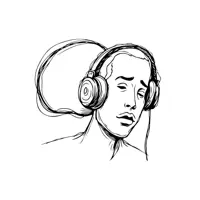
For some time now, I’ve been racking my brains over the question why so many people struggle with self-compassion or being kinder to themselves. Just mentioning the words “self-compassion” can make some people cringe or recoil at the mere thought they could reduce the inner voice that’s often critical and rarely content.
“Be kinder to yourself” is a wonderful idea and there’s plenty of research to suggest that people who are self-compassionate enjoy a range of benefits from the practice. If you’re self-compassionate, rather than being lazy or indulgent – a common misconception – you’re likely to be more responsible and accountable. Studies have found that self-compassion improves relationships, reduces anxiety and stress, develops greater resilience, and increases motivation.
On the other hand, self-criticism and receiving too much criticism can affect our mental health, create strained relationships, increase stress, and impair productivity and performance. Self-criticism can feel like a driving force; however, over time, even if we perform well in one or two areas of life, in other areas, such as relationships, anxiety levels or physical health can suffer.
The research is clear, and we know how to look online for tips and strategies to reduce stress, be calmer, and so on. The majority of us will agree it’s helpful to avoid excess stress or anxiety. So why is self-compassion difficult? What are the obstacles that stop us from easing up on ourselves?
Like many aspects of our psychology, it’s not as simple as “choosing” to change our behaviour. Were it so easy, psychotherapists and psychologists would soon be out of work.
Having enjoyed insightful conversations recently with close family and friends, a phrase came to mind I’m still fleshing out. I call it “toxic usefulness”. I’ve loosely defined it as the need to constantly be doing something, not for its utility or enjoyment, but rather born from a feeling that, to be worthy of respect, approval, or love, we need to be busy progressing towards or achieving goals of some kind. Part of this idea includes the realisation that many adults don’t indulge much in play.
I sometimes ask, “What do you do for yourself, just for fun, that doesn’t have an outcome tied to achievement or making progress?” Many struggle to answer this question. And it’s not to say making progress, achieving, and working hard aren’t important – of course they are. Being useful and contributing to society are valuable. The problem arises when we’re constantly pushing ourselves from a place of fear that, if we stop, we might lose respect, admiration, and approval of others. In extreme cases, we see this in people who say they “haven’t got time to be ill”.
I might ask, “If you took some rest, if you gave yourself permission to switch off for a few days, what do you fear might happen? What would that say about you?” Therein lies the difficulty with being kinder to ourselves.
The idea of it feels like we’re being self-indulgent, lazy, and putting our needs ahead of everybody else’s. These aren’t the kinds of qualities that are typically respected or admired, let alone approved.
Self-compassion is also difficult to quantify. If I tell you I’m in the process of writing a book or working towards a qualification, you immediately know what I’m doing and what the outcome is going to be. You might even be impressed, and that makes me feel good, it makes me feel like I’m doing something worthwhile and, therefore, I feel a sense of self-worth.
From this brief example we can see that to be seen to be doing something is highly praised and desirable, and so from an early age we learn that this is how we get love, care, support, and approval. The better grades I get, the quicker I meet expectations, the more needs I attend to while neglecting my own, the harder I work, the more approval I receive.
And yet, our tendency to do more, to be self-critical, to push ourselves and so on is likely contributing to the increased rates of stress, depression, and anxiety that we’re currently seeing globally. We see this in the workplace, in relationships, in how we relate to ourselves.
Something that’s toxic is defined as being very harmful or unpleasant in a pervasive or insidious way. Toxic usefulness describes the tendency to be constantly “on” with the underlying motive that, by being so, it ensures our worth as a person. As soon as we stop, our worth comes into question, usually by ourselves but others can also contribute to this negative message.
Self-compassion itself can be seen as something to achieve or perfect rather than something to practice and enjoy for its own sake, and we can receive the benefits as a by-product rather than something to be aimed for.
As the great Buddhist master Ajahn Chah advises, “Do not try to become anything. Do not be a meditator. Do not become enlightened. When you sit, let it be. When you walk, let it be.”
Sunny Side Up columnist Sandy Clarke has long held an interest in emotions, mental health, mindfulness and meditation. He believes the more we understand ourselves and each other, the better societies we can create. If you have any questions or comments, email lifestyle@thestar.com.my. The views expressed here are entirely the writer's own.
Already a subscriber? Log in
Get 20% OFF The Star Digital Access
Cancel anytime. Ad-free. Unlimited access with perks.