From keyrings and clothing to rainbow-coloured candies, unicorns seem to pop up everywhere in daily life.
Although the mythical creature has been part of the human imagination for thousands of years, its appeal shows no sign of fading.
But why does the unicorn continue to enchant people across generations?
"The desire for something that embodies hope, purity or magic is simply there. And the unicorn hits exactly this nerve," explains business psychologist Doreen Ullrich.
For children, unicorns often represent a protective, comforting presence. For adults, they can serve as symbols of joy or an anchor of happiness.
"They touch something that stays with us, even when we have long since grown up." For Ullrich, the unicorn is more than just sentimental: "It's symbolism in action."
Enduring pop culture appeal
The unicorn became firmly embedded in pop culture during the 1980s, especially through films and television.
One of the most iconic examples is the animated film "The Last Unicorn," released in 1982 and featured the voices of actors Mia Farrow, Angela Lansbury and Jeff Bridges.
The fascination has not waned since then - on the contrary. Major international brands such as Kellogg's, Starbucks, and Ritter Sport have launched unicorn-themed products, while popular video games like Fortnite have also incorporated the figure into their fantasy worlds.
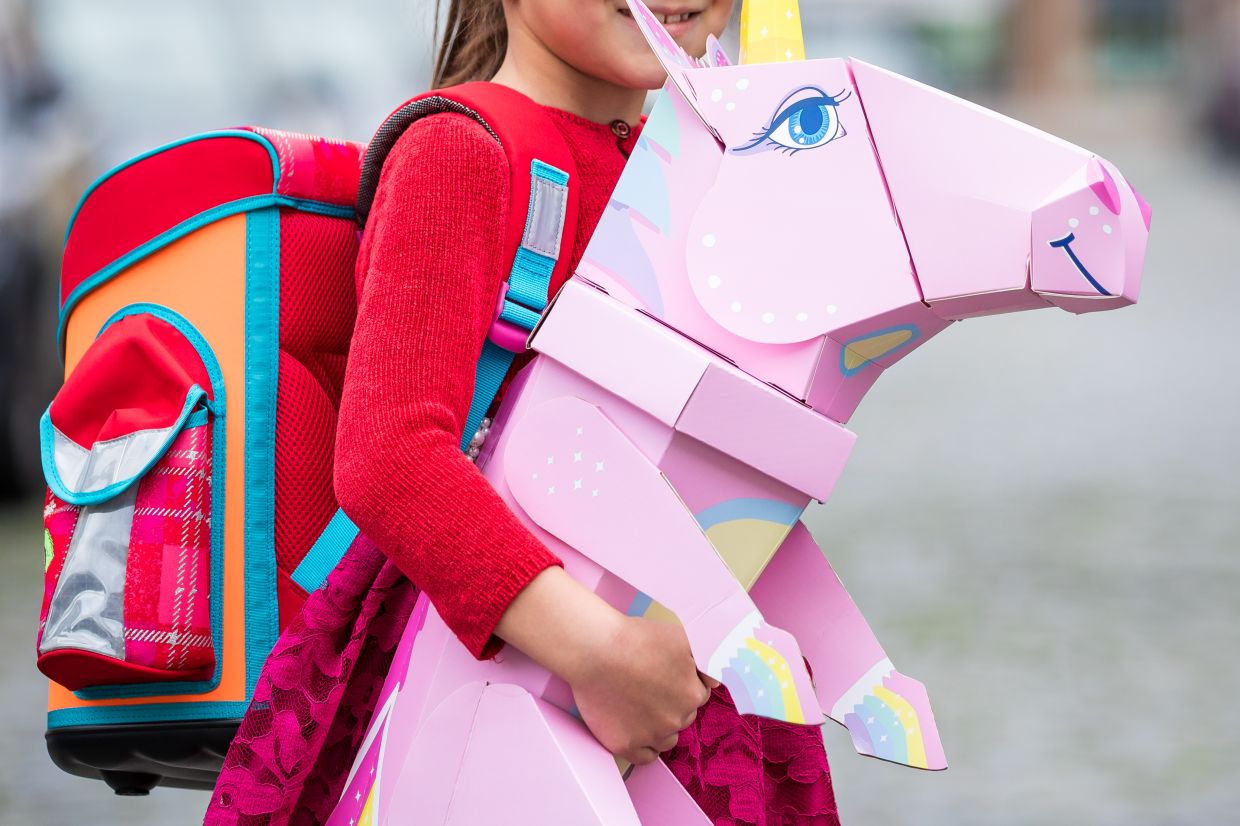
According to Ullrich, the success of unicorn branding is not driven by colour or sparkle alone.
Because the horse with a horn touches people, it works so well in marketing. However, she would not describe the mythical animal as a passing fad.
"It's not a trend," notes the business psychologist. "It is a symbol ... a reminder that magic still exists."
Unicorns in art and history
A recent exhibition, "Unicorn. The mythical creature in art," at Potsdam's Museum Barberini, comprised almost 150 works centred solely on the magical horse.
Chief curator of the Barberini, Michael Philipp, has explored the origins of the mythical creature. How can it be that an animal that no one has ever seen in reality is depicted so often?
The earliest depictions date back to the Indus Valley Civilization, around 2,000 BC, in what is modern-day Pakistan and parts of India and Afghanistan.
Philipp says there are many small seal stones - tiny carved objects used in ancient times to mark ownership or authenticate goods - but their exact meaning remains unknown.
There are also depictions from ancient Persia around 1,000 BC and from China around 200 BC. This means that the unicorn first appeared in history and art in Asia long before it arrived in Europe.
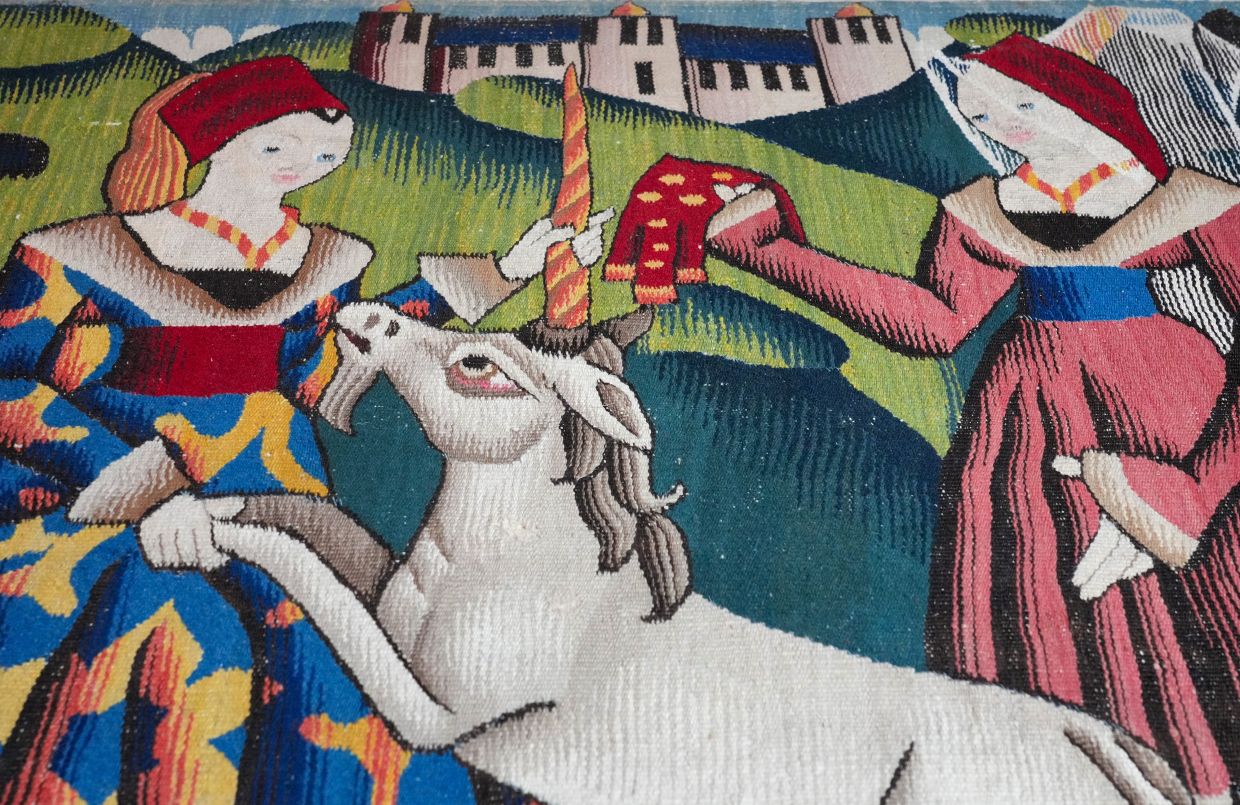
Today, the white horse seems to be the standard in unicorn depictions. However, the image has changed over the millennia.
According to Philipp, earlier depictions depicted a goat with a horn. In addition, the unicorn was considered wild and aggressive, even attacking elephants and could not be caught alive.
Towards the end of the Middle Ages, the more noble depiction as a horse finally prevailed, even though the goat's beard was often adopted, as the historian explains further.
Medical superstition
Today, the unicorn is omnipresent on mugs, clothing, decorations and in various other forms. However, the business surrounding the horned mythical creature started much earlier.
"It was believed that the unicorn's horn protected against all kinds of poisoning," says Philipp. In the Middle Ages and early modern times, the trade in alleged unicorn horns, which in many cases were actually the tusk of a narwhal, boomed.
"People rubbed pieces of the horn into small pieces and consumed them as a powder if they thought they were ill or poisoned," says Philipp.
Even aristocrats would have had a piece of horn on their dining table to protect themselves from poison.
Pharmacies were also stocked with supposed unicorn powder, Philipp explains. In the 17th century, many pharmacies began to be named after the mythical creature, as more narwhal teeth arrived in Europe at this time. This made them cheaper, which enabled more pharmacies to sell them.
Unicorn-themed products, ranging from sparkling cosmetics to herbal remedies, can still be found in shops and online today.
One UK-based online shop even claims its "unicorn horn powder" was made by "2 witches [who] have devoted their lives to saving and caring for the majestic magical creatures."
Unlike other creatures, the unicorn has no specific stories to which it is bound. Legends say it cannot be summoned or controlled; it appears only of its own free will.
And that, Philipp says, is part of its appeal.
"It is precisely this elusiveness, combined with its magical nature, that may still inspire the positive qualities people associate with it today." – By Magdalena Henkel and Alina Schmidt/dpa