
Whenever Cheryl Tan, 37, shops for her weekly groceries at the Old Klang Road market in Kuala Lumpur, she makes it a point to stop by the fruit stalls to pick up fresh produce for her family.
With four children aged between eight and 15, the human resource practitioner ensures that there is a good variety of fruits at home.
"We enjoy durian, mangoes, passion fruit, bananas, watermelon, tarap fruit (when we go back to my hometown, Kota Kinabalu), grapes and Japanese strawberries," she said during an interview in KL.
The Sabah-born, KL-based woman is among many Malaysians who make it a point to include local fruits in their daily meals, stating freshness and affordability as key reasons."We usually consume one type of fruit per day, so roughly seven different types/baskets per week. We go by affordability, i.e. one basket of fruit wouldn't cost more than RM20."
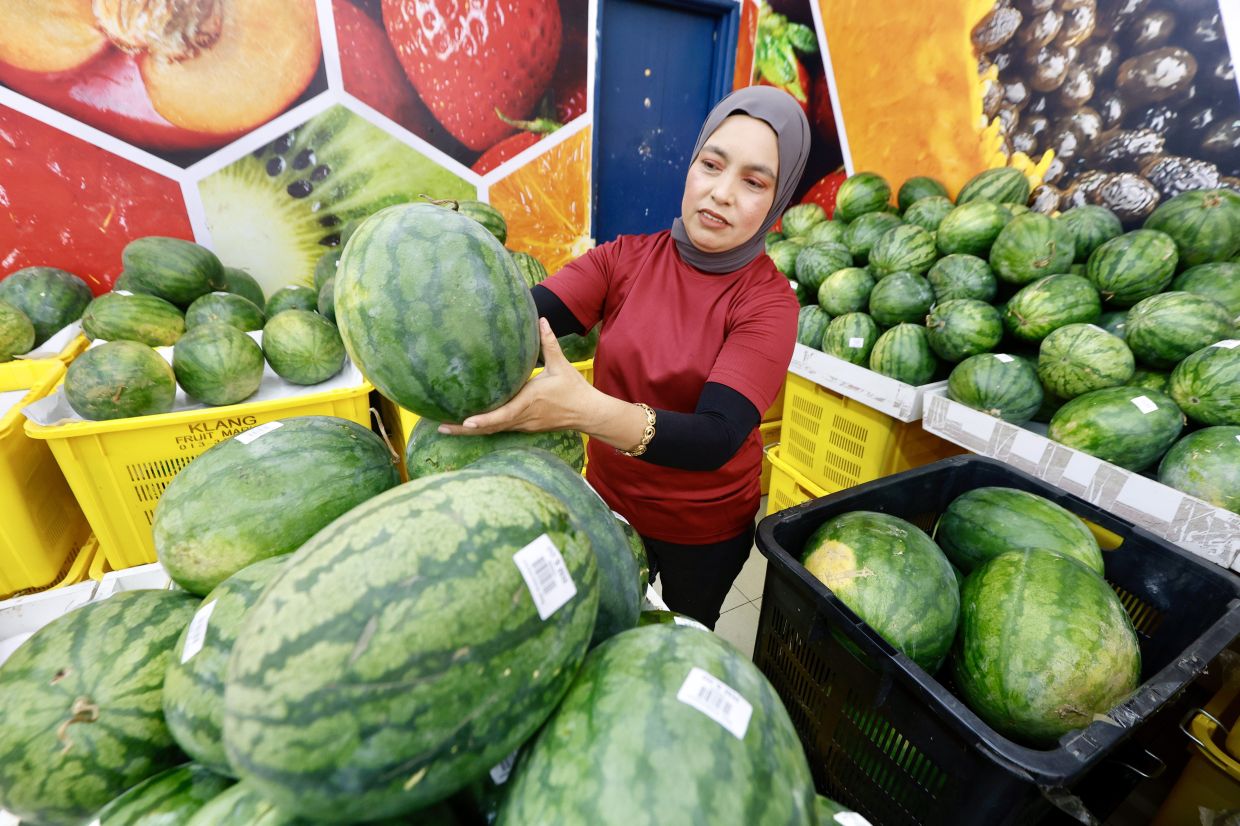
In the article 'Eat more local fruits, public urged', in The Star (Feb 4, 2026), Agriculture and Food Security Deputy Minister Datuk Chan Foong Hin called on Malaysians to support local farmers by choosing homegrown fruits.
He says eating local fruits promotes healthy eating habits and supports the rural economy.
With rising living costs, choosing locally grown produce has become increasingly important, helping farmers earn sustainable incomes while strengthening the nation’s food ecosystem.
Tan thinks local fruits are delicious and Malaysians should appreciate what our country has to offer.
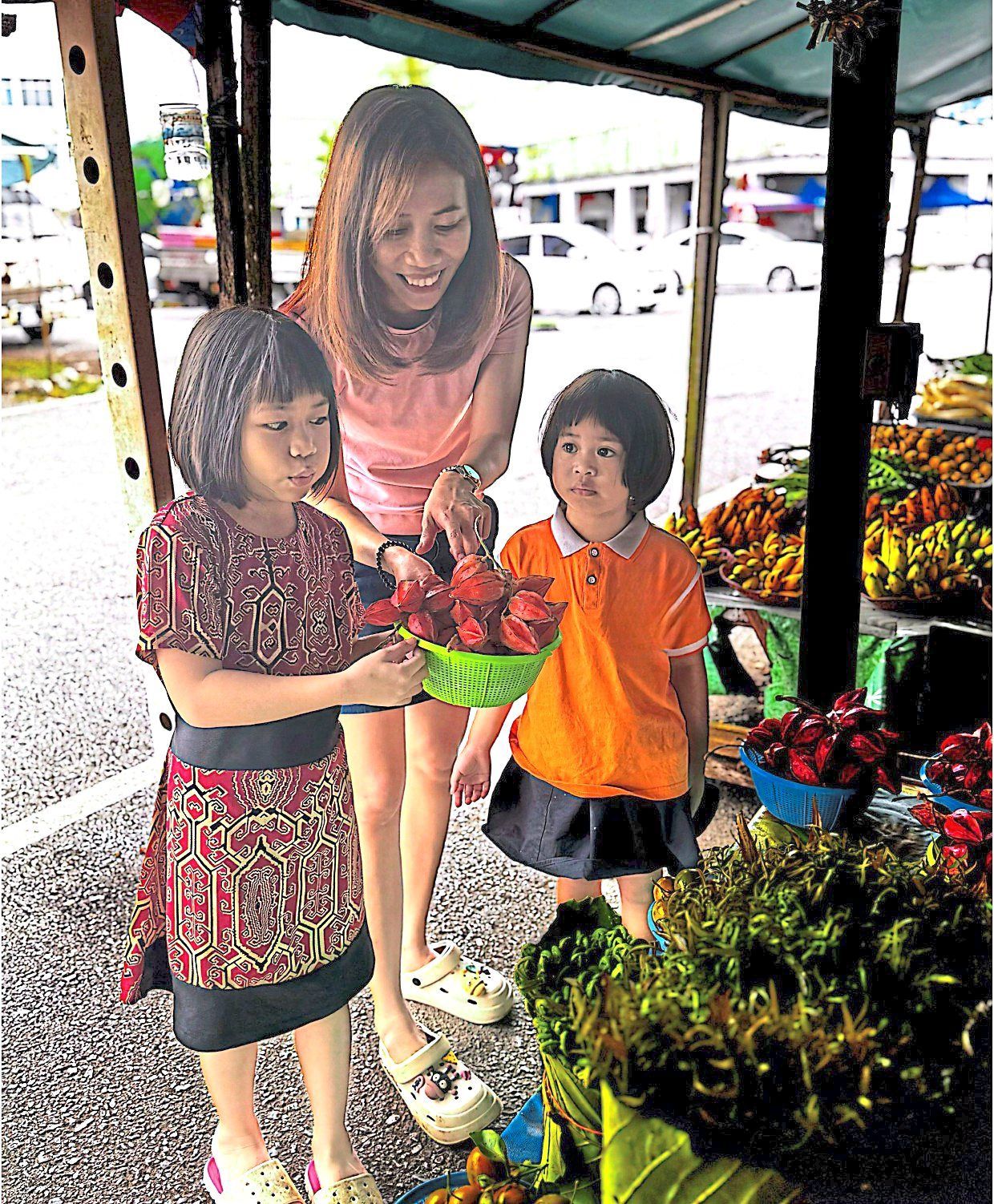
Businesswoman Safphia Judin shares a similar view. She prefers to buy her fruits and vegetables from a farmers' market near her home in Kampung Nangka, Kota Samarahan, Sarawak, citing affordability, freshness and support for nearby farmers.
"The produce is cheaper and fresher, and it also provides income for farmers in the neighbourhood," said Safphia, a mother of two daughters aged seven and five.
Safphia, who operates a home-based nail studio, adds that the selection often includes jackfruit, bananas and ciku, along with seasonal fruits native to Borneo such as buah dabai (Sarawak olive), buah isau (green longan), buah ucong and buah rambai.
"While we do consume grapes, apples and oranges, we prefer local fruits because each of them has a unique flavour," she said.
A healthier choice
Universiti Kebangsaan Malaysia associate professor Dr Wong Jyh Eiin says local fruits may offer nutritional advantages when they are fresher – with shorter storage times – and when they include tropical varieties that are naturally high in certain vitamins and protective plant compounds.
"Each fruit has its own characteristic nutrient profile, and some types are inherently richer in specific nutrients than others," said Wong, who is attached to the Nutrition Science Programme at the university's Faculty of Health Sciences.
"Vitamin C content is especially high in common tropical fruits such as guava, papaya and pineapple, as well as citrus fruits like oranges. Pro-vitamin A carotenoids are abundant in orange-fleshed fruits such as papaya and mango."

Wong adds that fibre content also varies widely by fruit type.
"Guava is among the highest overall, while apples and pears – when eaten with the skin – as well as oranges and berries, can also be good sources of dietary fibre. For polyphenols, which are plant compounds with antioxidant properties, berries and citrus fruits are generally among the richer sources."
However, Wong notes that differences in nutrient content are driven mainly by fruit type, ripeness at harvest and post–harvest handling and storage, rather than whether a fruit is local or imported.
She says eating locally grown fruits can help families maintain healthy diets during periods of rising food prices – not because they are always cheaper, but because they often provide higher nutrient value per ringgit, introduce variety through seasonal eating, and may reduce household food waste due to greater freshness.
"Because some local fruits are nutrient-dense, a small portion can meaningfully contribute to daily nutrient needs. For example, one serving of guava — about 110g — can provide three times the daily vitamin C requirement and around 6g of dietary fibre, which is roughly one-quarter of daily fibre needs," she explained.
"Seasonal fruits are often more affordable during peak harvest periods, allowing consumers to take advantage of lower prices by choosing what is locally in season. Local markets also commonly sell fruits individually, which helps households stretch their budgets rather than purchasing fixed-weight packs."
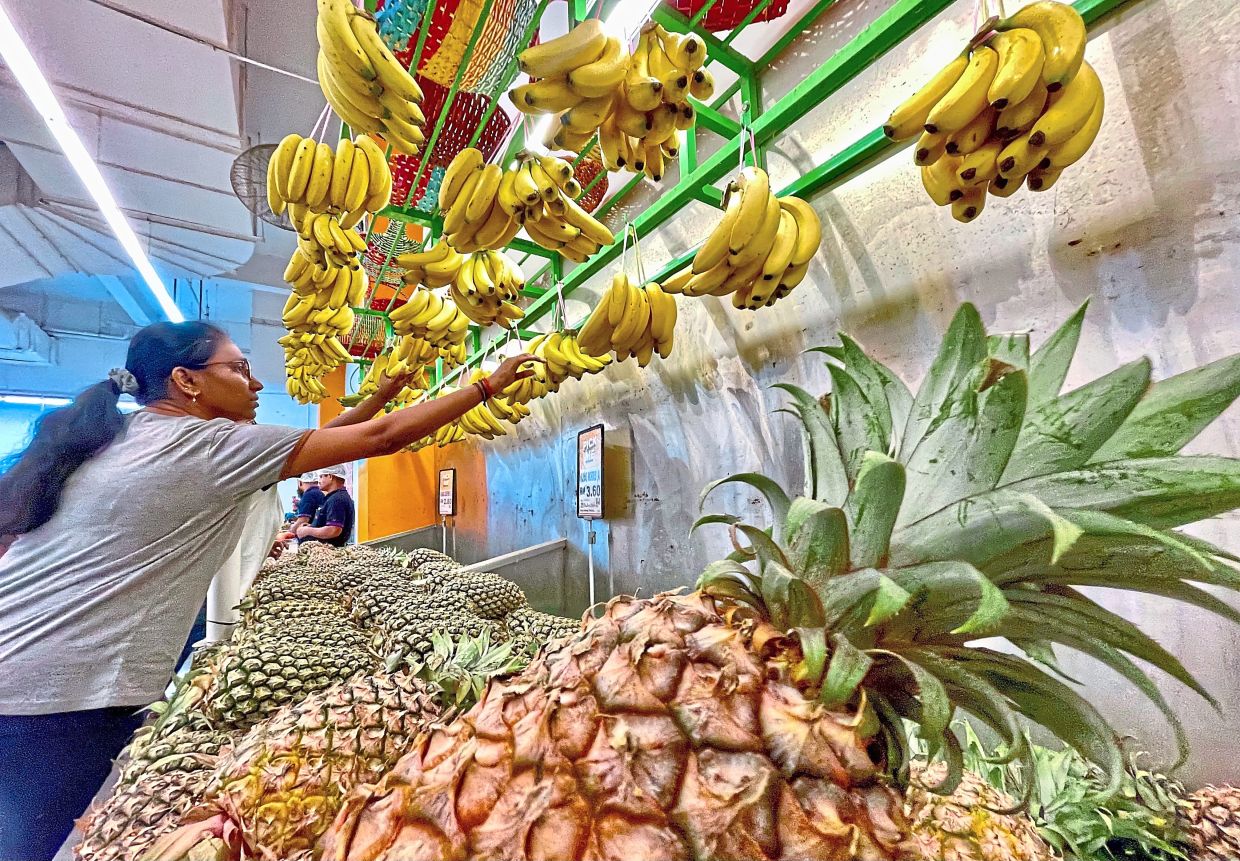
Wong adds that long storage periods are typical for some imported fruits, such as apples, which may be kept for months under refrigerated or controlled-atmosphere conditions before reaching consumers. Research shows that extended storage, temperature control and post-harvest treatments may reduce certain health-promoting compounds, including Vitamin C, folate and antioxidants, she says.
"Locally harvested fruits typically reach markets more quickly, which means they are fresher at the point of purchase and may last longer at home before spoiling. Shorter harvest-to-plate times can help households retain more nutrients and reduce food waste," she explained.
Another advantage of choosing local fruits is the reduction in carbon footprint associated with food miles. Wong notes that fruits destined for long-distance transport are often harvested before peak maturity, which can compromise flavour, texture and nutrient content.
"Even if the fruit ripens later in storage, it may not achieve the same sweetness, aroma or nutrient levels as fruit allowed to mature on the plant," she said.
"Choosing locally grown fruits not only benefits our health but also supports local farmers and rural economies. Because imported fruits such as apples and oranges are often cheaper due to global supply chains, local produce can be overlooked, limiting opportunities for domestic growers.
"When we increase demand for seasonal local fruits, we help strengthen farm incomes, sustain jobs, encourage diverse crops, and build a more resilient food system in the long run," said Wong, who encourages people to consume a variety of fruits because different fruits provide different combinations of vitamins, fibre and protective plant compounds.
Think local first
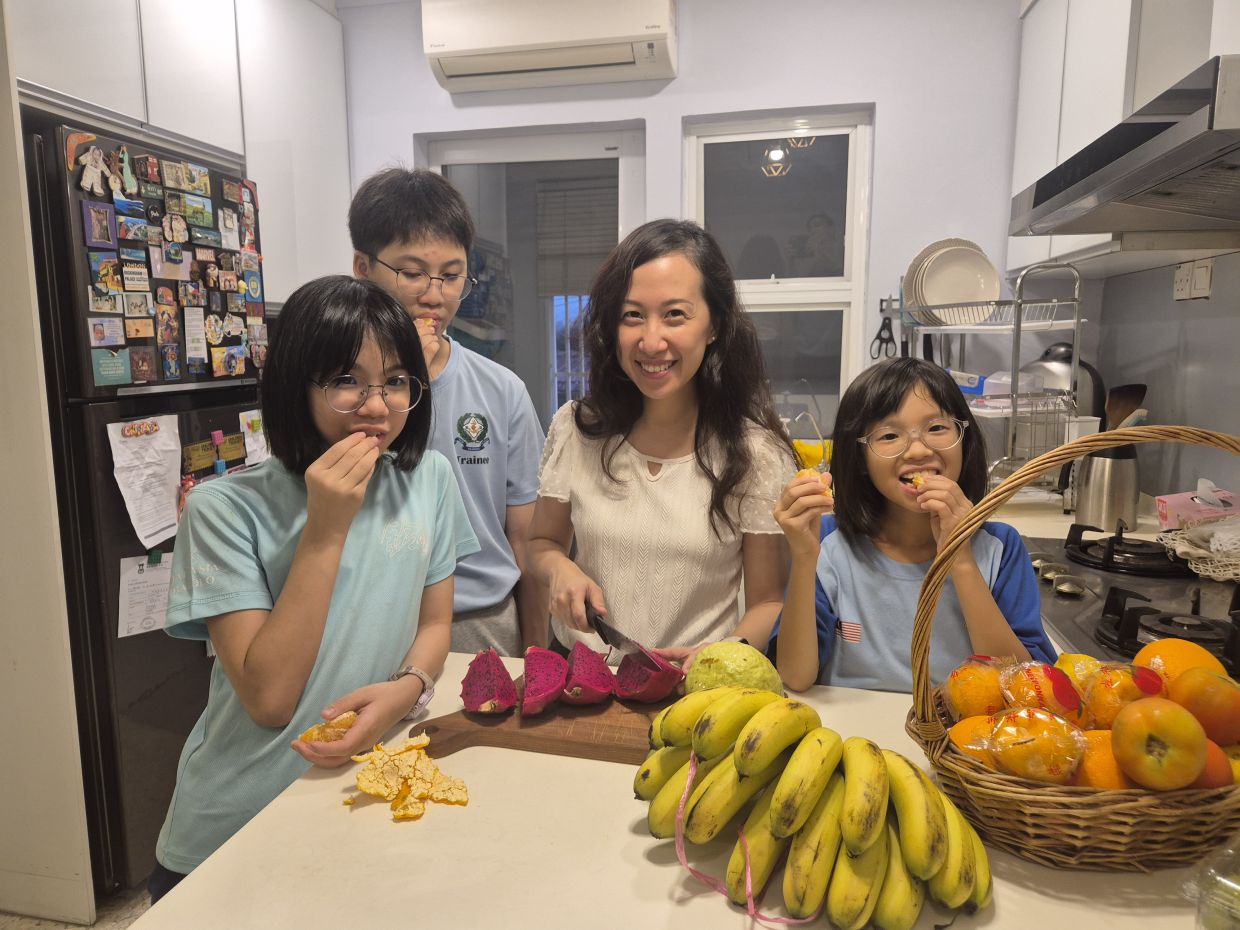
Tan serves local fruits daily, making them a regular part of her family’s meals. Photo: The Star/Sheela Chandran
Safphia brings her children, Eleanor Yeow (left) and Daisy Yeow (right) to the market to expose them to a variety of local fruits. Photo: Safphia Judin
Different fruits provide different combinations of vitamins, fibre and antioxidants, says Wong. Photo: Dr Wong Jyh Eiin
Choosing homegrown fruits supports local farmers, reduces food miles and promotes a more sustainable food system. Photos: The Star/Faihan Ghani
Eating locally grown fruits can help families maintain healthy diets during periods of rising food prices.
Photo: The Star/Faihan Ghani