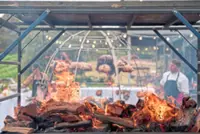
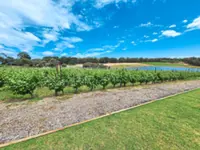
There are few culinary figures as revered as Argentinian celebrity chef, restaurateur and author Francis Mallmann. At the recent Pair’d Margaret River Region x Range Rover food and wine festival in Margaret River, Australia, held in November 2025, Mallmann was one of the key highlights.
Tickets for the Burnt Ends & Friends event that he headlined alongside Dave Pynt of Singapore’s Michelin-starred Burnt Ends were sold out within hours of going on sale.
Mallmann’s fame and lore are so widespread that even at the event, chefs in attendance were clustered in awestruck adulation around him.
That admiration isn’t without merit. Through the course of his career, Mallmann has earned the sobriquet “Godfather of Fire” and is credited with bringing traditional Patagonian fire-led cooking techniques to global acclaim.
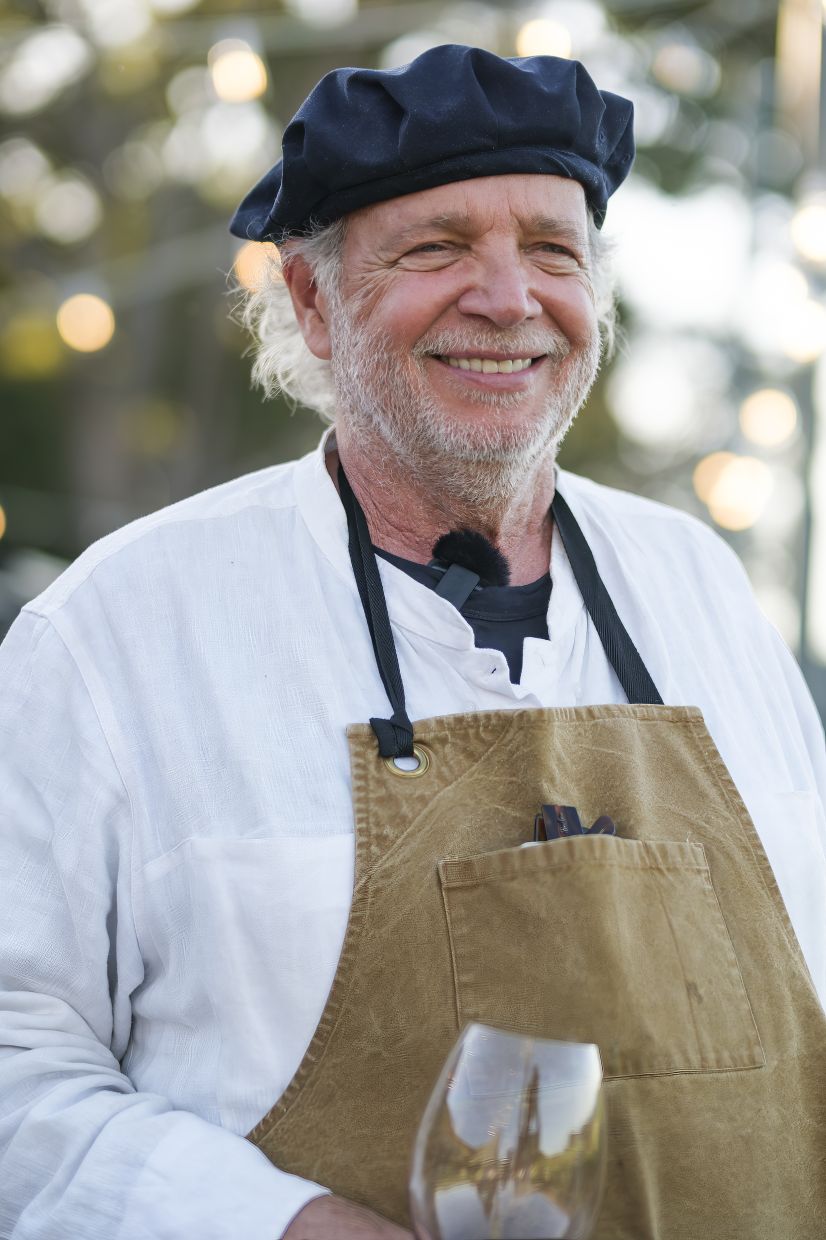
Mallmann is also probably Argentina’s best-known chef and counts fans in the ilk of David Beckham and the late Anthony Bourdain. A staple on Argentinian television shows, his repute and popularity only grew after he appeared on the Netflix global hit Chef’s Table.
Growing-up years
Mallmann was born in Argentina to famed physicist Carlos Mallmann and his Uruguayan wife. The family moved to Chicago in the United States soon after his birth, but when he was seven, they returned closer to home to Patagonia (the southern tip of South America, shared by Chile and Argentina), where he became closely attuned with his natural surroundings and developed an appreciation for the land.
“When we were seven, we moved to Patagonia. And without knowing it as kids, we inhaled this spirit of mountains, forests, rain, snow, lakes and animals.
“And then we lived in a house that was ruled by fire because the chimneys, the hot water, the heating system, and the kitchen were run by fires. So as kids, we were three brothers and our work was to keep the shed full of wood. And then we had to cut different sizes of logs,” says Mallmann, laughing.
Those early brushes with fire would end up having a profound effect on Mallmann later on in his career. But his early career was marked by a string of different experiences. He first opened a restaurant when he was 18 with a friend of his.

When he was 19, he moved to Paris and started working as a chef, gaining experience with redoubtable chefs like Alain Chapel and Paul Bocuse. He later moved to Argentina and opened a few restaurants, but his French culinary pedigree remained at the forefront.
At 40, he won a prestigious cooking prize – the Grand Prix de l’Art de Cuisine, meted out by the International Gastronomy Academy in Paris, France. Most people who win an award are in a state of jubilation; for Mallmann this led to a major mid-life crisis and career pivot.
“That prize was won by all my teachers in France. I thought, ‘Well, I’m happy for it – and sad, too – what’s happening? So I remember I went to Barcelona the next day, and I walked around the city for two days, thinking, crying, laughing. And I realised that I was like a musician who does covers of other singers.
“In those days, I already had five restaurants or six restaurants – I can’t remember exactly. And I started having wood ovens and planchas. Slowly, I switched out of French cooking, and I moved into my cooking today, which is related to South America and a lot of the native cooking,” he says.
Cooking with fire
Since those foundling years, Mallmann has become an instrumental figure in the world of open-fire cooking. He came up with the notion of seven different fires in Argentinian cooking and turned that into a book titled Seven Fires: Grilling the Argentinian Way.
He also has a number of restaurants to his name, including Ramos Generales in Mendoza, Argentina – named by Time magazine as one of the “world’s greatest places” – as well as Francis Mallmann 1884 and Sieta Fuegos, both of which are also in Mendoza, Argentina.
Outside of Argentina, he also owns and operates restaurants like La Boca at Faena in New York, USA; Los Fuegos in Miami, USA; El Garzon in Uruguay and Francis Mallmann au Chateau La Coste in France.
All his restaurants showcase his seven-fires philosophy and have a focus on fire experiences or open-fire cooking.
The ability to cook food over fire is the most ancient form of cooking and dates back nearly two million years. By the Palaeolithic era 200,000 years ago, this had evolved into primitive hearths. Since then, humans have found all sorts of ways to cook anything edible over fire.
In the years since he started specialising in Argentinian open-fire cooking, Mallmann himself has figured out how to cook with fire everywhere – he once cooked for 300 people in pouring rain and says he has even cooked over fire during a snowstorm!
“Everything is possible with fire. We get thousands of years of human experience with fire. So there’s always a way to cook with fire,” says Mallmann.
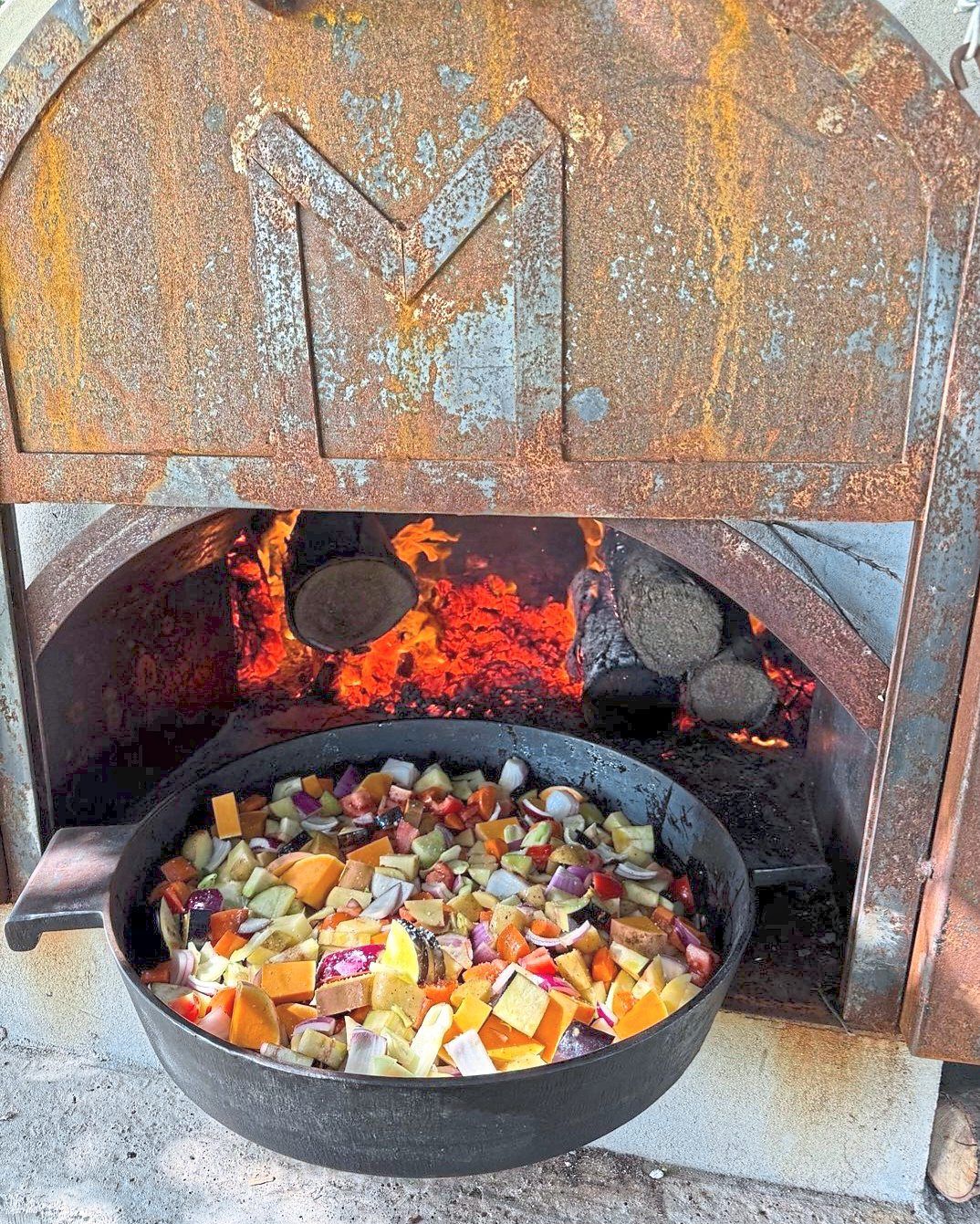
Mallmann’s seven fires dictate notable ways to cook with fire using Argentinian traditional techniques that he studied extensively by working with anthropologists as well as learning about native cooking methods and ancient forms of cooking.
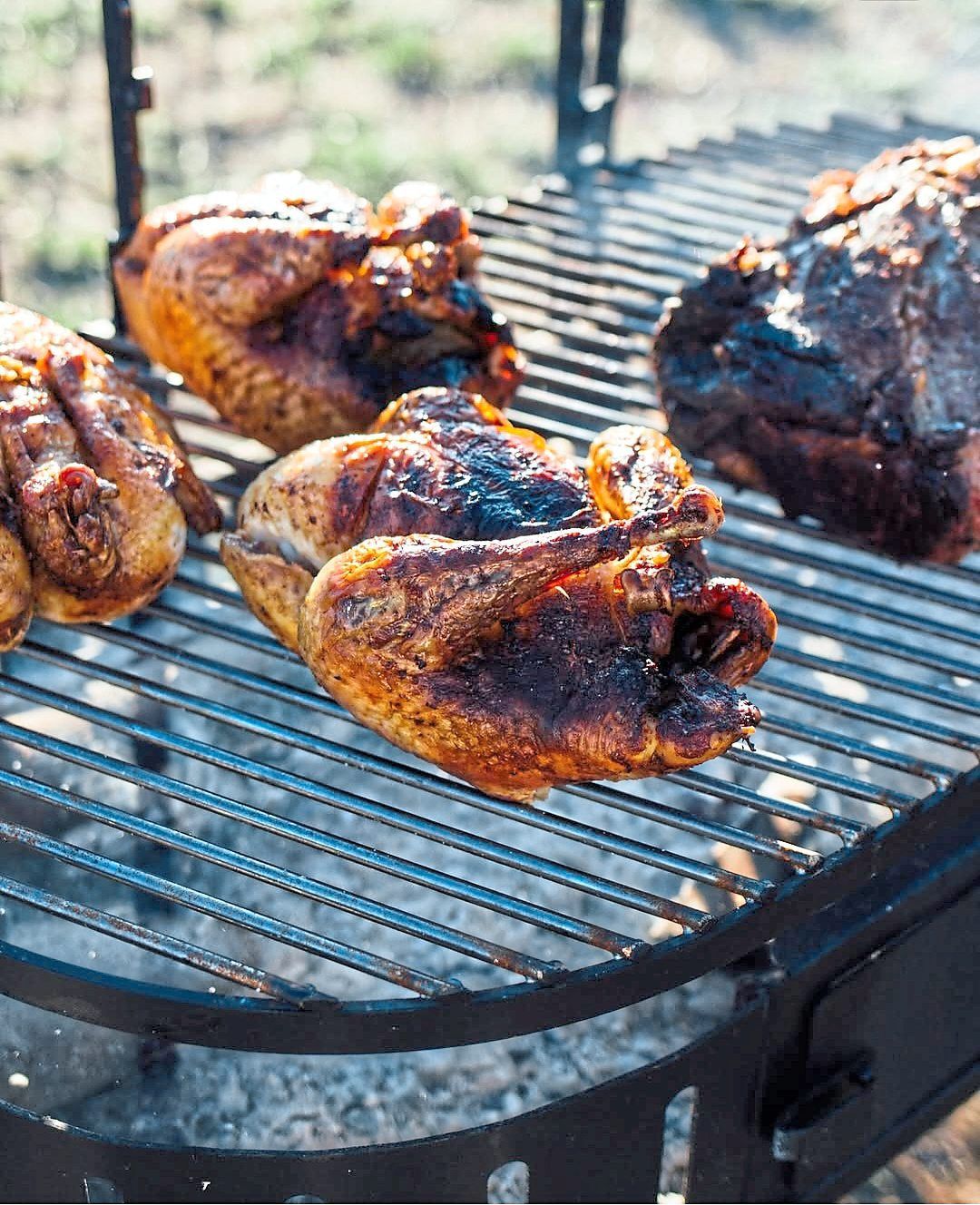
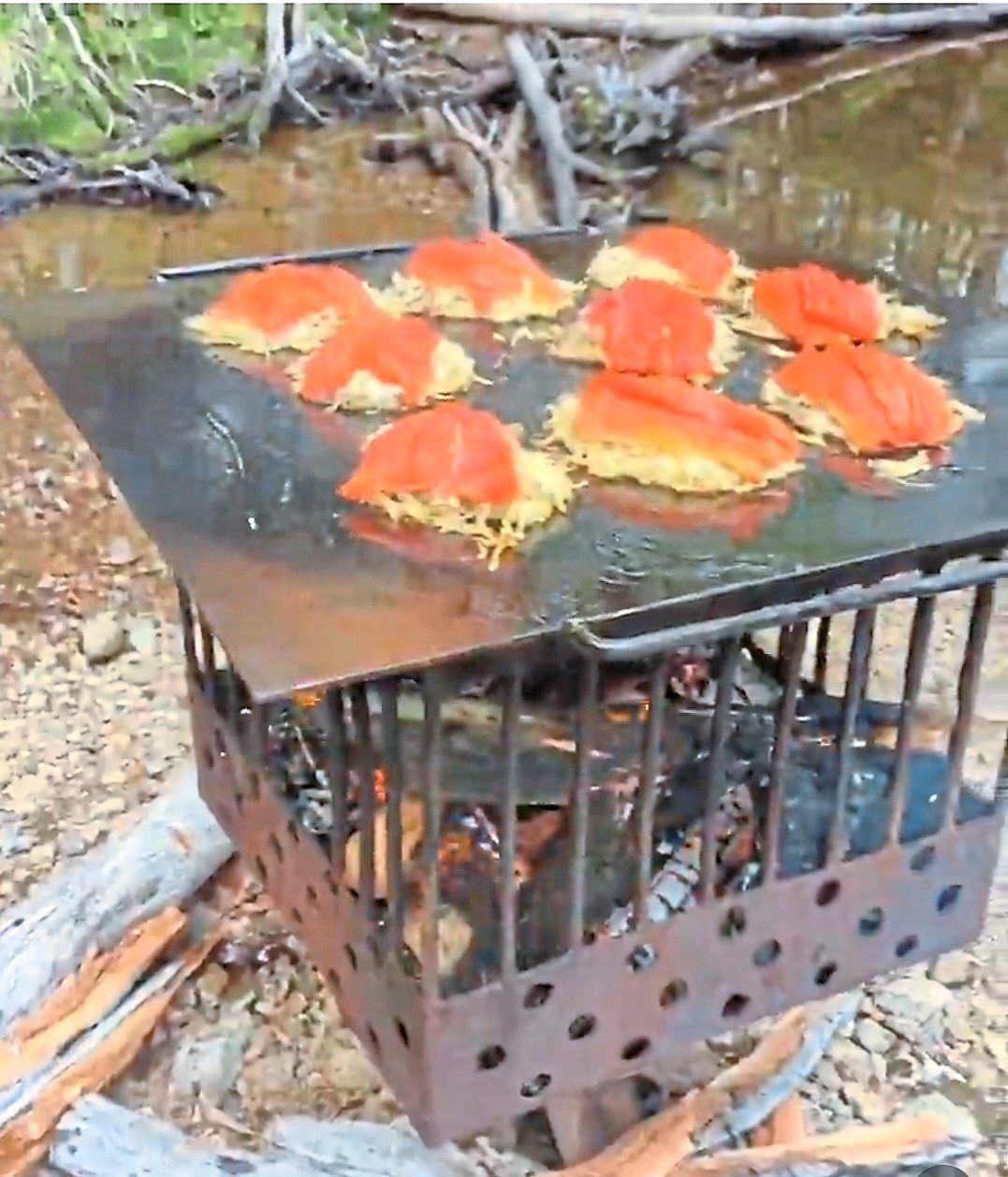
These methods involve parilla (grill), chapa (cast iron grill), horno (wood oven), caldero (cauldron), rescoldo (ingredients buried beneath embers and ashes), infiernillo (twin flames) and asador (iron cross).
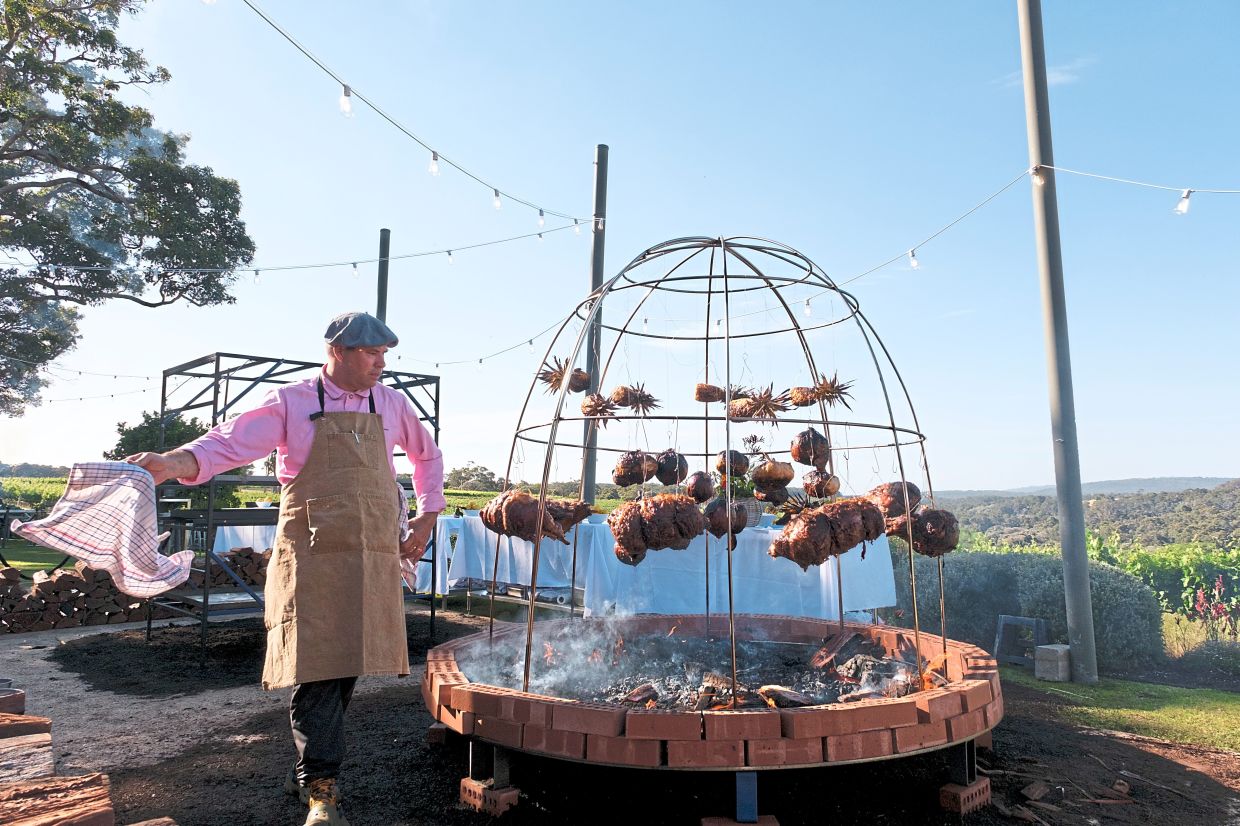
In the past few years, he has also waxed lyrical about dome cooking, which sees a dome constructed out of wires, a fire built around the dome and food strung over a fire in the middle of this contraption. In an interview with Splendid Table, Mallmann says this method of slow-cooking is time-consuming (he even cooks a whole fish for up to six hours!) but yields flavourful meals.
But most notably, Mallmann has been consistent in espousing the virtues of patience and employing a sixth sense when it comes to cooking with fire.
“Fire is about patience. So that’s the first thing young people don’t have very much of – patience. So I would start there.
“Then in order to cook well with fire, you first need a great product. Second, you have to know and be able to read your fires – the language of fire. Because the language of fire is something that is unexplainable.
“You can write a recipe. You can try to give every detail you can. But at the end, what you learn by cooking with fire is something silent.
“It’s a silent language because it goes into you through all the senses – smell, taste, touch, sounds. And that invades you very slowly. Just by standing in front of a fire and cooking with it and looking at it and seeing what happens, that’s how you learn how to cook. And it probably takes ten years to learn it well,” says Mallmann.
Mallmann also says that despite cooking over fire being viewed as a man’s domain, he thinks he has been successful in this skill simply because he has always had feminine intuition.
“In South America, there’s an idea that it’s a very manly thing – cooking with fires. But it’s not, because you need to be a bit of a lady like me. I have seven children, though, right?” he says, chuckling.
“But, yes, I think I was very lucky to be born with a woman’s intuition. And that’s something I admire a lot about women, you know, how they walk into the room and know exactly what’s happening. And to cook with fire, you need a lot of intuition,” he says.
The learning never stops
In recent years, there has been a strong shift in the F&B industry towards cooking that’s centred on flames and open fires – whether that’s in the form of restaurants led by charcoal grilling or cooking over embers.
Across the world, these restaurants are represented globally, from Singapore’s Burnt Ends to Spain’s famed Asador Etxebarri and London’s Lita. In Malaysia, restaurants like Bar.Kar, Charr Dining and Ignis in Kuala Lumpur are part of this growing movement.
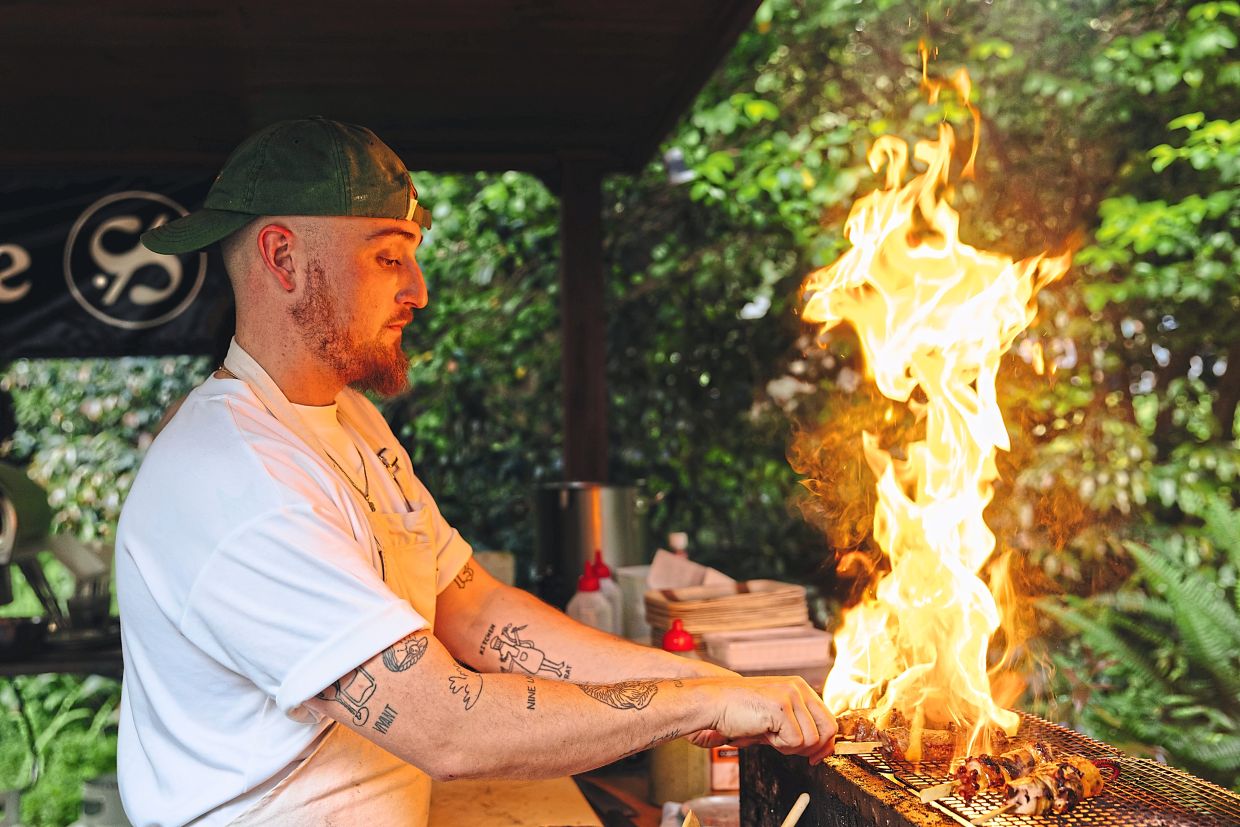
Having been instrumental in inspiring many of the young chefs in these restaurants (he calls Burnt Ends’ Pynt his “fire friend”), Mallmann says he himself still often feels inspired, especially when he watches other chefs at work, like he did the night of the Pair’d event in Margaret River.
“If you have a meeting of dancers from all around the world, they all can talk the same language. But if you put them to dance together, they’re all different.
“That’s what I felt at Pair’d. I just walked around looking at the things everybody was doing and how they were using the fire, how they were cooking with it. And I definitely felt so inspired, you know, to see that even though we haven’t trained in the same school, we all have our own gestures and our little ways of cooking with fire,” he says.
In this way, despite being in his sixties and having accomplished more than most chefs could ever dream of, Mallmann says he always feels like he is learning.
“Growing older means that the older you get, the smaller the things you learn. And that’s very good. Because when you’re young, you take a load and you learn many things at one time.
“Now that I am older, I sit in the chair always looking at the fires as we’re cooking with my chefs, and I’m looking at everything that happens. How are the rib-eyes cooking? What’s happening with the chicken? And I still learn and learn and learn,” says Mallmann, grinning.