
Last year, London Black, a nitro porter from south London’s independent craft brewer Anspach & Hobday, was named Britain's No. 1 beer in the Top 50 UK Beer Awards.
Unseating 2024’s winner – DEYA’s Steady Rolling Man pale ale – the judges were explicit about the context of its win, stating: "The resurgence of stout and the popularity of Guinness have no doubt helped to drive its success.”
The legendary Irish brand boasts one of the most seductive marketing histories in modern drinks. From 1920s doctor-approved illustrated advertisements with the slogan "Guinness is good for you” to the 1999 AMV BBDO black-and-white film Surfer (often cited as one of the greatest advertisements of all time), Guinness has long pursued broad cultural resonance rather than narrow audiences.
Its allure most recently has been amplified by the Netflix series House Of Guinness and TikTok trends drawing in younger drinkers. Now other nitro-served dark beers (or nitros, in beer-speak) are growing in popularity. Call it the "Guinness Effect".
Britain's biggest-selling beer, Guinness, continues to grow; it’s ascended so quickly that it’s even triggered periodic shortages, forcing some pubs to ration supplies. And now in the middle of Dry January, Guinness’ reach looks elastic, with sales of its no-alcohol Guinness 0.0 surpassing regular deliveries from Britain's largest online grocer, Ocado, back in September.
Young trends
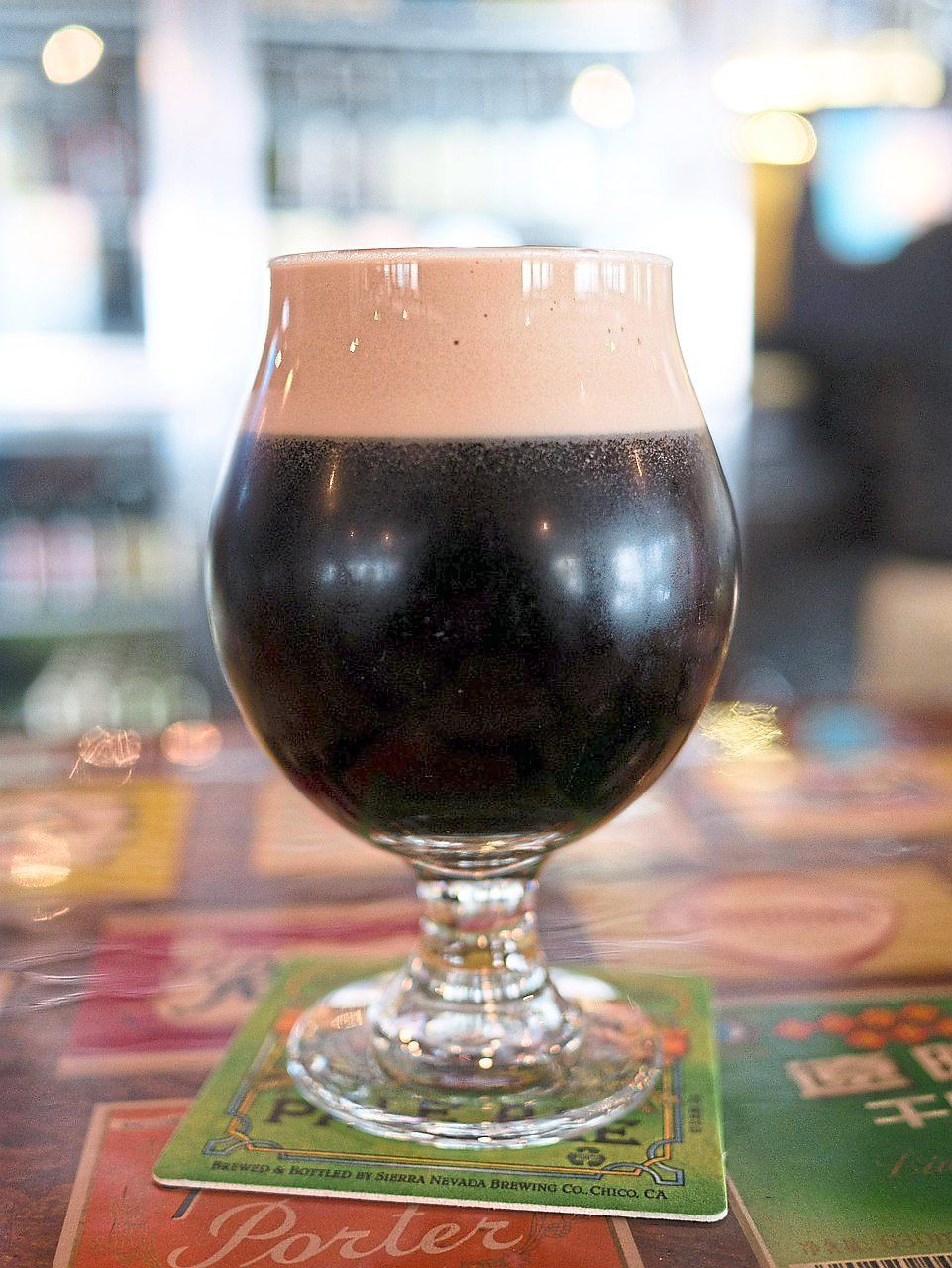
Lee Hammerton, director of Hammerton Brewery in London, points to two reasons beer drinkers are turning to stout. The first is its "Instagram worthiness". Darker beers and a thick creamy head, he says, "look great on a table in a pub, which can entice others to buy one”.
The second is value. Stout’s weight and richness signal substance for the price.
"For a generation that is mindful of spending, a pint of stout can feel more premium than a standard lager,” he says. What’s more, as people cut back on drinking, the relative luxuriousness of an order of stout makes it more compelling than an anonymous light lager or low-alcohol beer, if you’re ordering just one.
(Guinness’ brooding appearance and meal-in-a-glass reputation also belies a surprisingly "sessionable" 4.2% alcohol by volume.)
The changing calculus among drinkers is reshaping brewmaster decisions. Nitro stout and porter production has surged among small independent breweries, bringing with it renewed confidence and ambition for darker beers long overshadowed by pale ale. Greg Wells, co-founder of the London Craft Beer Festival, says the success of London Black is proof of that shift.
"Not an old recipe,” O’Riordain explains. "Nitro stout is quite an obvious evolution of the way we look at dark beers.”
Hammerton says that though his brewery has always focused on stouts, the category has experienced clear growth in the last four to five years. A London nitro stout called TINT (4.3% ABV) has seen the largest bump, but stout growth has happened across the board, with "experimental, flavour-forward stouts” such as the flagship beer Crunch – a 5.3% peanut butter milk stout loved by stout fanatics – performing well at off-licenses and beer shops.
Murphy’s, now owned by Heineken, recently recorded a 666% surge in Britain in the past year, and last March, Beamish reported that sales had doubled.
Even as Guinness has made room for Irish alternatives to thrive, its greatest competition isn’t coming from its closest neighbours. Since its launch in March 2023, Black Heart stout (4.1% ABV) from Scotland-based BrewDog has established itself as Britain's second-most popular stout.
In its first year, Black Heart took in the equivalent of 12.6% of Guinness’ pub sales and 35% of its supermarket sales in Morrisons. As the retail sales of Guinness moderate, BrewDog has publicly said its aim is to become the No.1 stout in supermarkets in Britain by 2027.
Encouraging, but be wary
Matthew Curtis, editor-in-chief of the drinks publication Pellicle Magazine, sees stout’s renewed popularity as contingent rather than conclusive, with beer trends often moving in cycles. "I think stout’s current resurgence in Britain is encouraging,” he says.
"But it’s very much that – a resurgence, rather than something entirely new.”
Curtis points to the 1990s as a cautionary parallel, when Mitchells & Butlers invested heavily in its O’Neill’s Irish Pub chain – which peaked at around 250 sites in 1997, before contracting sharply to just 49 today – underscoring how quickly enthusiasm-driven expansions can reverse.
"I don’t think it’s a short-term spike and will continue for years not months,” he says, but it’s cyclical. "I think Guinness as a brand will continue to dominate, others like Murphy’s and Beamish less so.”
Hammerton suggests there’s already evidence to prove Guinness’ staying power. Although the rise of young, social-media-influenced stout drinkers has paved the way for publicans to consider stocking independent producers, he notes, "Guinness do have an extremely large stronghold of taps in Britain, so it is extremely difficult to secure tap space.”
"I’m a great believer in pub pioneering, but if I know I’m going to sell 13 kegs of Guinness, I’m going to put it on.”
At the Compton Arms, Guinness now accounts for 70% of all draught sales, a scale reflected at places like the Devonshire, which sells 20,000 pints of Guinness a week.
Guinness’ commercial advantage remains underwritten by vast marketing budgets, unrivalled distribution and deep cultural staying power. That scale was on display in December, when the brand opened the £73mil (RM399mil) Open Gate Brewery on the historic site of Old Brewer’s Yard in London, inaugurated by King Charles himself.
How far these other stouts go, though, remains to be seen. As seasoned Guinness drinkers know from the 1994 advertisement, Chain, pure genius is a tough act to follow. – Bloomberg