
About 14,400 years ago, a weeks-old wolf puppy ate its last meal – meat from a woolly rhinoceros – shortly before dying on the harsh Ice Age landscape of northeastern Siberia.
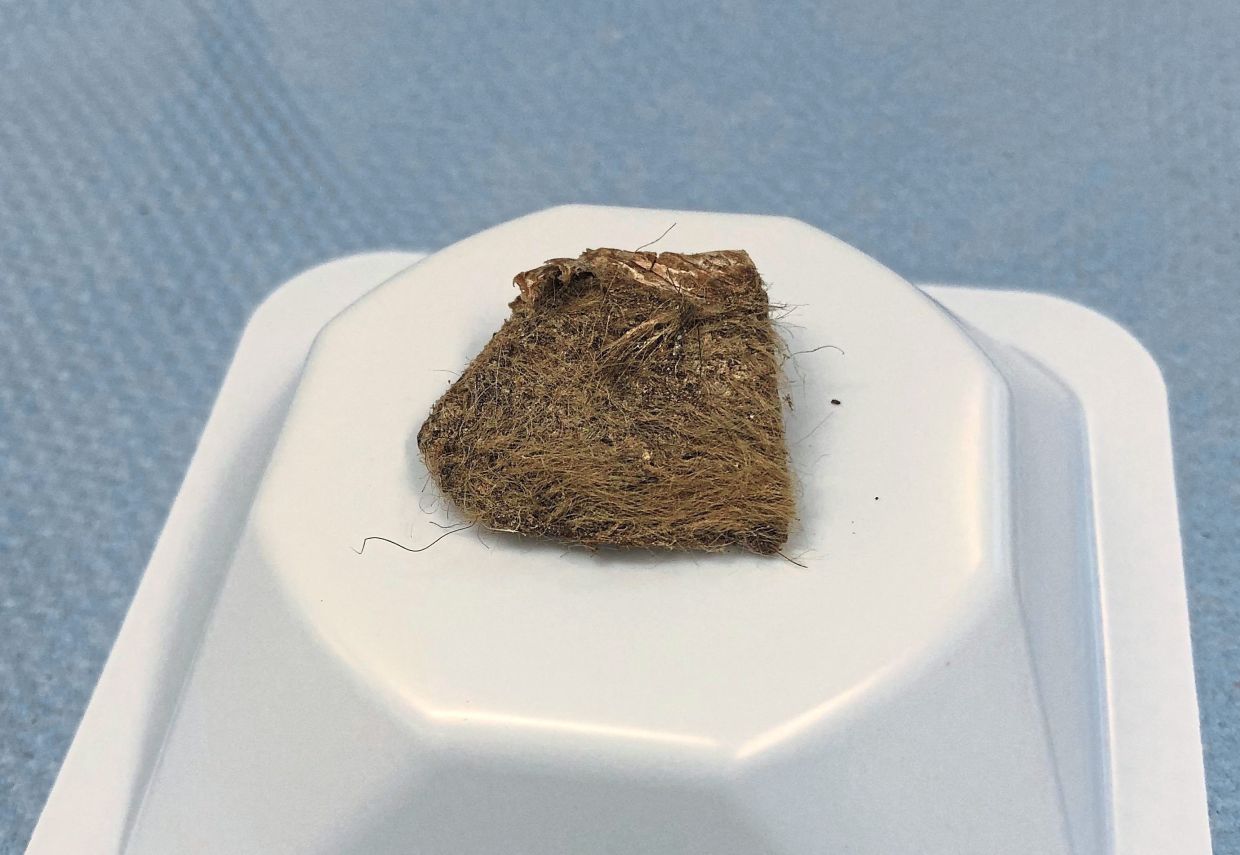
In a first, researchers have extracted DNA and recovered the rhino's genome from a chunk of undigested meat from the stomach contents found in the puppy's remains, discovered in permafrost near the village of Tumat. These genome findings provided insight into the fate of this impressive cold-adapted horned herbivore species once common in northern Europe and Asia.
The researchers compared this rhino's genome to those of two other individuals from the same species that lived thousands of years earlier – about 18,000 and 49,000 years ago – to examine genetic changes over time. In doing so, they learned that the woolly rhinoceros as a species remained genetically healthy until the end of the Ice Age before apparently suffering a rapid population collapse. This was probably due to the warming climate that erased their preferred steppe-tundra environment.
For instance, the newly recovered genome showed no evidence of inbreeding suggestive of population decline. Other research has indicated that the woolly rhinoceros disappeared about 14,000 years ago, just a few hundred years after this individual lived.
"With this research we demonstrate that it is possible to recover a high-quality genome from poorly preserved material dating to a crucial time in the life history of a species," said evolutionary geneticist Solveig Gudjonsdottir, lead author of the study published recently in the journal Genome Biology And Evolution.
"It is a very cool achievement," said evolutionary geneticist and study co-senior author Love Dalén of the Centre for Palaeogenetics, a collaboration between Stockholm University and the Swedish Museum of Natural History, both in Sweden.
The woolly rhinoceros, whose species name is Coelodonta antiquitatis, first appears in the fossil record about 600,000 years ago. It became one of the many large mammals to go extinct around the end of the last Ice Age, along with such species as woolly mammoths, sabre-toothed cats, mastodons and giant ground sloths. All of these species faced ominous environmental changes as the climate warmed, as well as pressure from human hunting.
"The woolly rhinoceros was a large animal, reaching up to around 2m tall, and was covered in thick, long fur," said Gudjonsdottir, who worked on the study while a master's student at Stockholm University.
"It had two horns, a large hump on its back, a stocky build and relatively short legs. The species was primarily a grazer, feeding on grass and low vegetation adapted to cold, dry environments," Gudjonsdottir added.
It was much bigger than its closest living relative, the Sumatran rhino.
The rhino lacked the kind of genomic signature that would be caused by the inbreeding likely to occur with a slow population decline, as was observed in the last-known woolly mammoths that lived thousands of years later.
"The main finding is that we see no change in genetic diversity and inbreeding levels through the last several tens of thousands of years leading up to the woolly rhino's extinction," Dalén said.
This, Dalén added, suggests that "whatever caused the extinction, was rapid",
"Since humans had already been present in the region for about 15,000 years prior to the extinction, without causing a decline in the population, we think that the well-known climate warming at about 14,000 years ago is a more likely explanation for the extinction," Dalén said.
"We can't rule out that humans contributed to the final extinction of the woolly rhinoceros, particularly towards the very end. However, there is limited archaeological evidence for widespread or intensified hunting," Gudjonsdottir said.
The naturally mummified remains of two female grey wolf puppies, each around seven to nine weeks old, were found during the 2010s near Tumat in an excellent state of preservation.
The one with the rhino meat in its stomach must have died shortly after eating that meal, considering that the meat had not been digested, the researchers said.
"Analyses of the stomach contents indicate that the puppies were still ingesting milk, which suggests the meat was likely provided by their mother or other members of their pack," Gudjonsdottir said. "The adult wolf may have obtained the meat either by scavenging a carcass or through hunting." – Reuters