For years, an empty plot of land sat unused behind an apartment complex in Kuala Lumpur.
Its soil remains waterlogged after heavy rain and its barrenness noticeable, save for a few shady trees dotting the edges and brown patches where grass refuses to grow.
The land was neither useful nor a lost cause. It was just there, doing nothing.
In a city where life moves quickly and space is constantly filled with infrastructure, empty land often fades out of people’s mind. Yet at 1Razak Mansion, the land was visible, but overlooked and untouched.
When Dr Billy Tang Chee Seng, 60, laid eyes on the idle plot, he saw the perfect opportunity to help the community.
The founder of social enterprise PWD Smart FarmAbility is used to looking at spaces and transforming them, regardless of their initial condition.
An agriculturalist and social entrepreneur, Tang has spent years designing food systems that work within constraints.
This piece of land is neither a charity project nor a beautification effort, he says. It is an initiative to rethink how people live together in cities.
“At its core, the project is about bringing food systems back into urban housing,” he explains. “We are embedding a regenerative food garden into a high-density public housing area. It’s not just urban farming – it’s about food security, climate resilience and community dignity, all working together where people live.”
Once completed, the mini food forest will transform a space that once served no purpose, into one of the most active areas within the community.
Seeing beyond the limits
Tang’s way of working is shaped by personal experience – a car accident that left him paralysed from the waist down.
It might be easy for this fate to discourage someone from life, but not Tang.
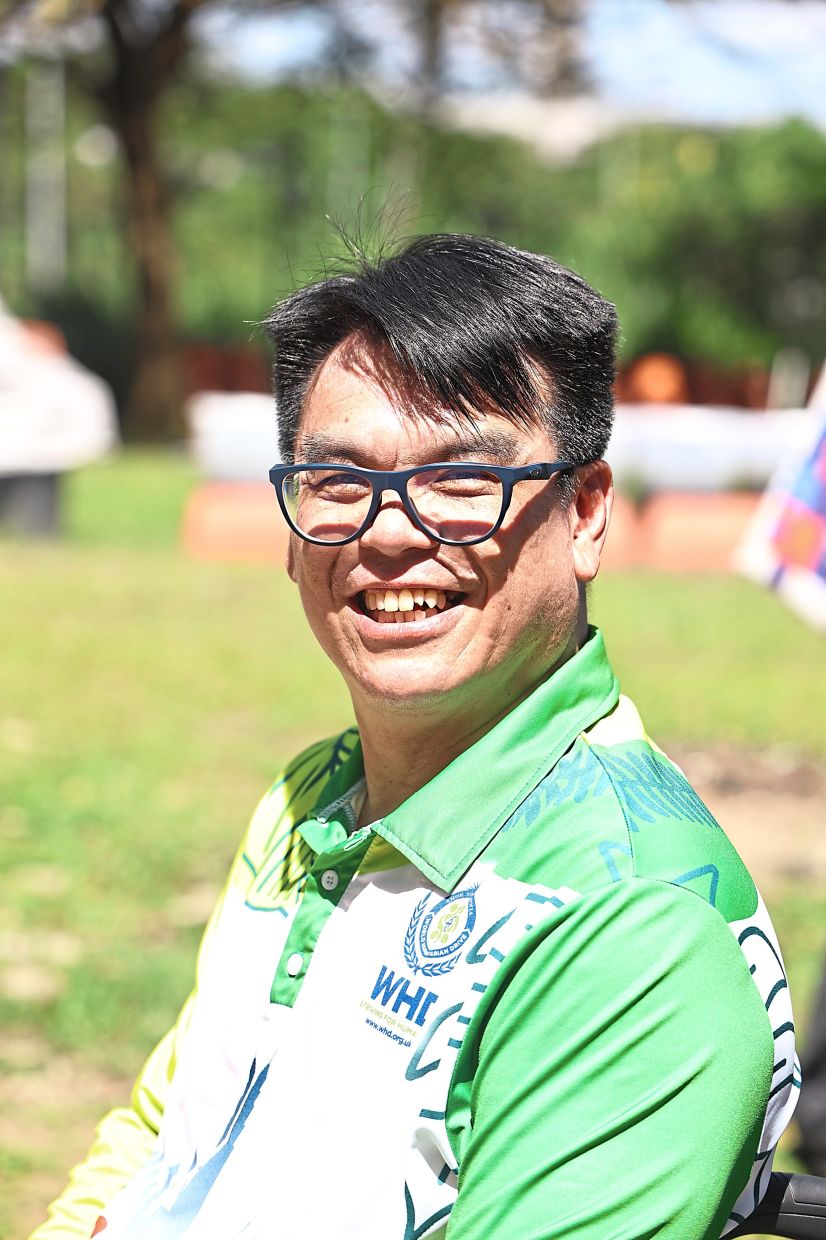
His work only ramped up from there, focusing on access and building resilient systems that allow people to become active contributors to their communities.
PWD Smart FarmAbility was founded on that very principle. Its projects and innovations are designed so that everyone can play a role in addressing climate change and food security.
Over the years, Tang has replicated these models – through the Soil-U-tion aquaponics satellite farms and Hope boxes – across 62 communities, including in old folks’ homes, schools and orphanages.
This project, however, is a little different. Partnering with Morning Star group, this marks the first project done for a housing community.
Instead of focusing only on one-time output, the food forest is designed as a regenerative urban system. Soil health, water efficiency, biodiversity, skills transfer and community ownership are treated as interconnected parts of the same structure.
“Food affects everything – health, household expenses, climate resilience and well-being,” Tang says.
“Traditionally, food security is treated as a welfare issue, separate from housing policy. But as cities face climate shocks and rising cost of living, that separation no longer works. Housing that cannot feed its people is not resilient housing.”
The project, explains Tang, is about bringing food systems back into urban housing – in this case, embedding it directly into a high-density housing environment.
Of course, translating that vision into something that works on the ground is no easy feat, which is why he is joined by permaculturist Judy Chua.
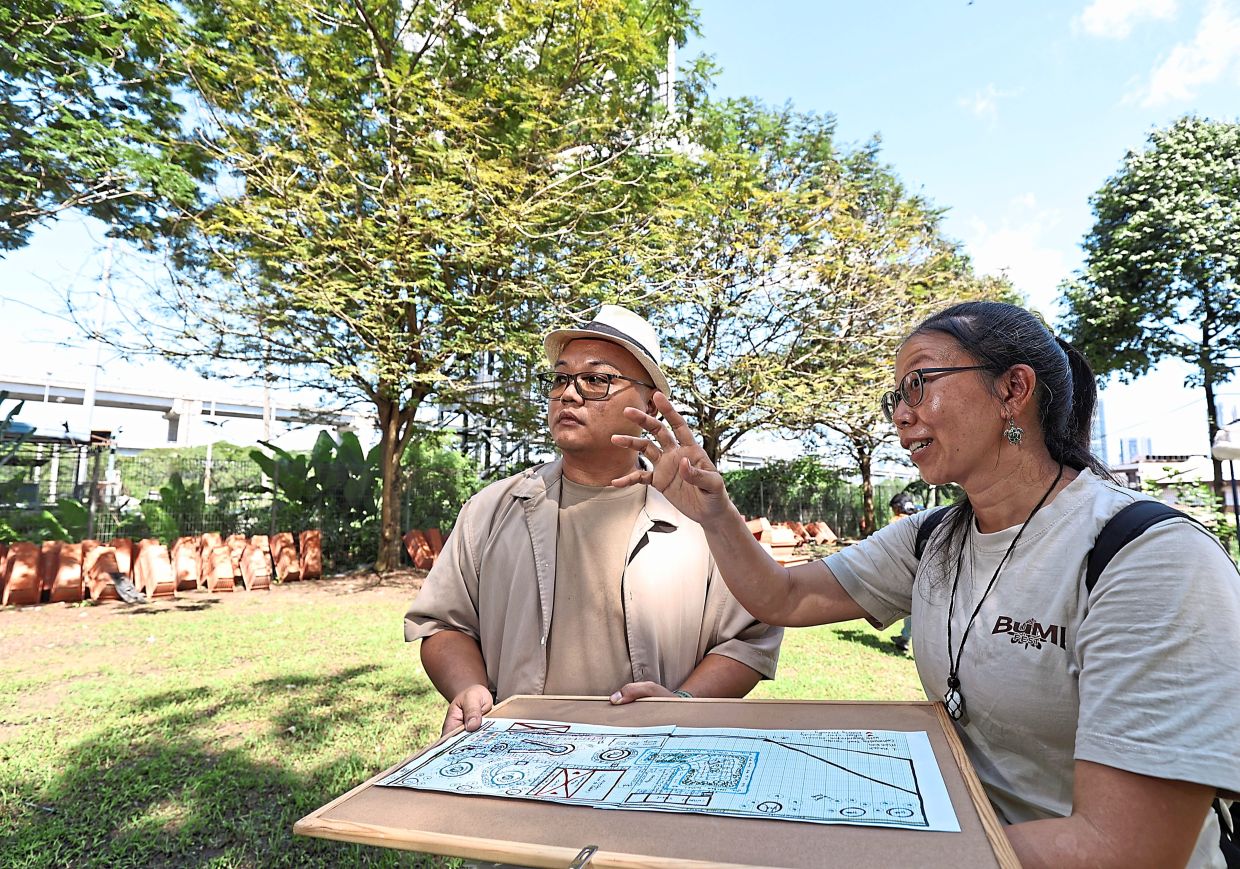
With years of experience rehabilitating urban gardens and farmland, Chua is tasked with shaping how the food forest will look, function and grow.
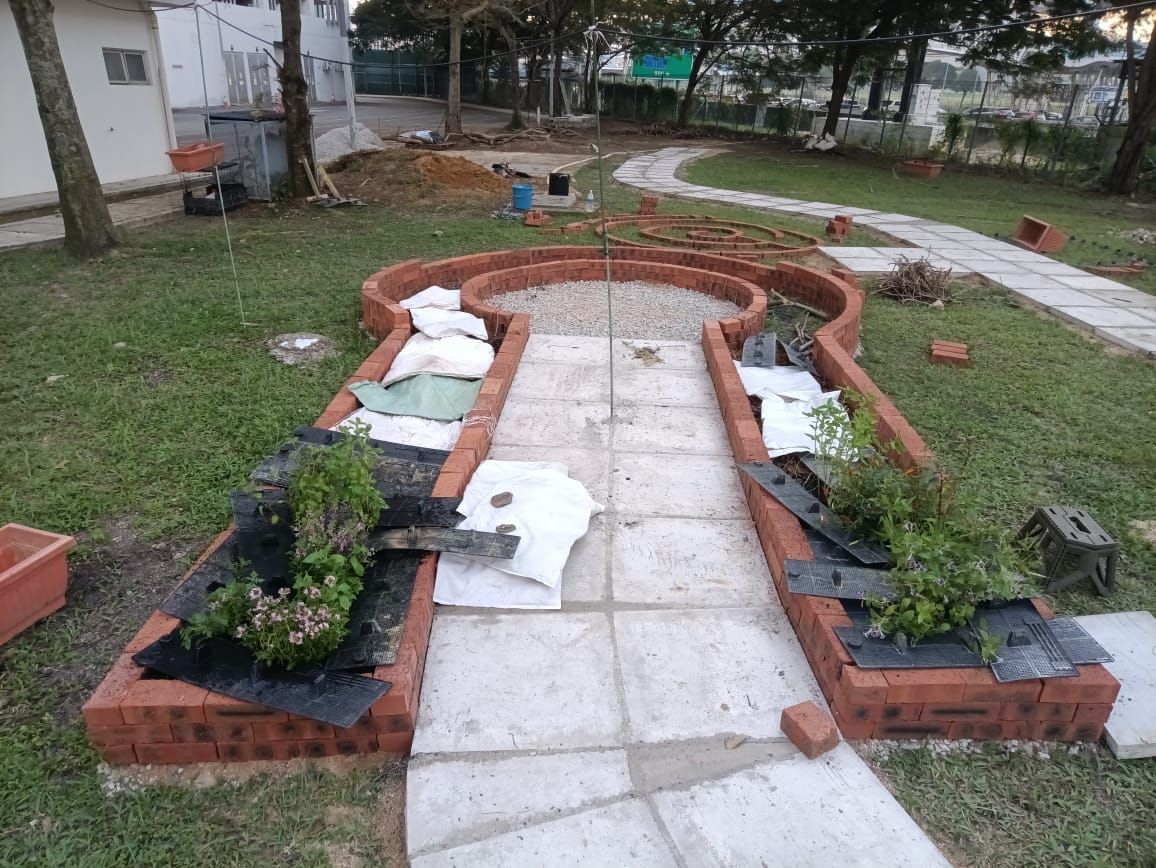
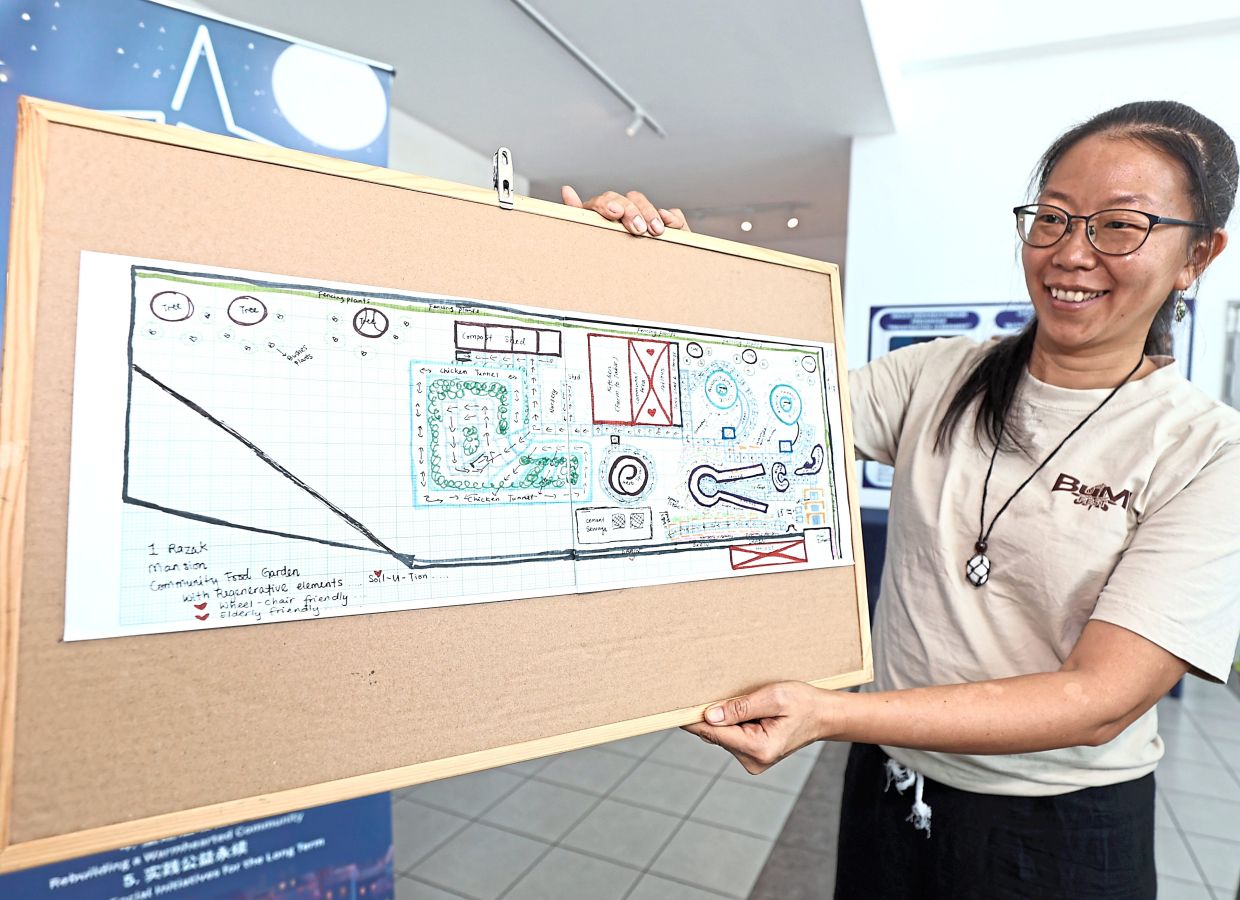
Standing over the site, she holds a sketched plan of the food forest – a map of planting zones, a common space and accessible pathways.
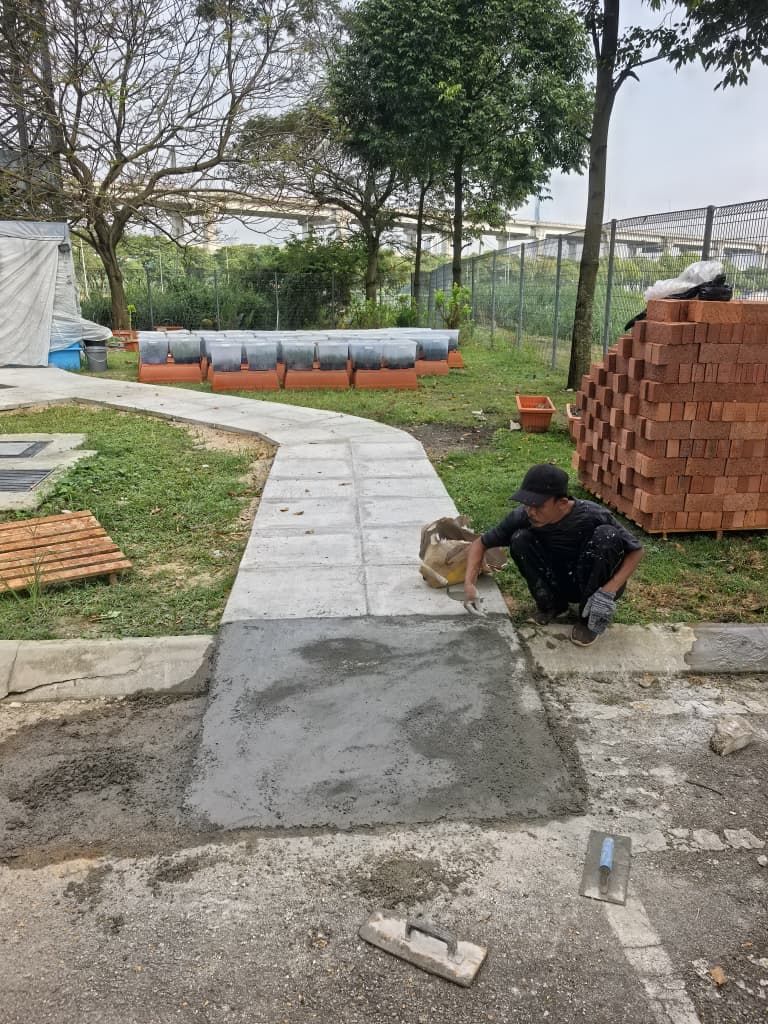
“We’re going to bring back the ecosystem and biodiversity to this empty piece of land,” she says.
“We all play a role in caring for the environment. When we care for the Earth, it will care for us in return.”
Once established, Chua estimates there will be more than 200 species existing within the garden, from plants to insects.
Everything will be chemical-free and designed to work with sunlight, rainfall and the surrounding environment.
Accessibility is crucial, so pathways, planting heights and shared areas are planned so the elderly, children and the disabled can participate safely.
At the centre of the garden, a common space will double as a learning hub.
“The space acts as an incubator,” Chua notes. “This is where they will learn everything. We want to tell people they need to get their knowledge from being outdoors, in nature.”
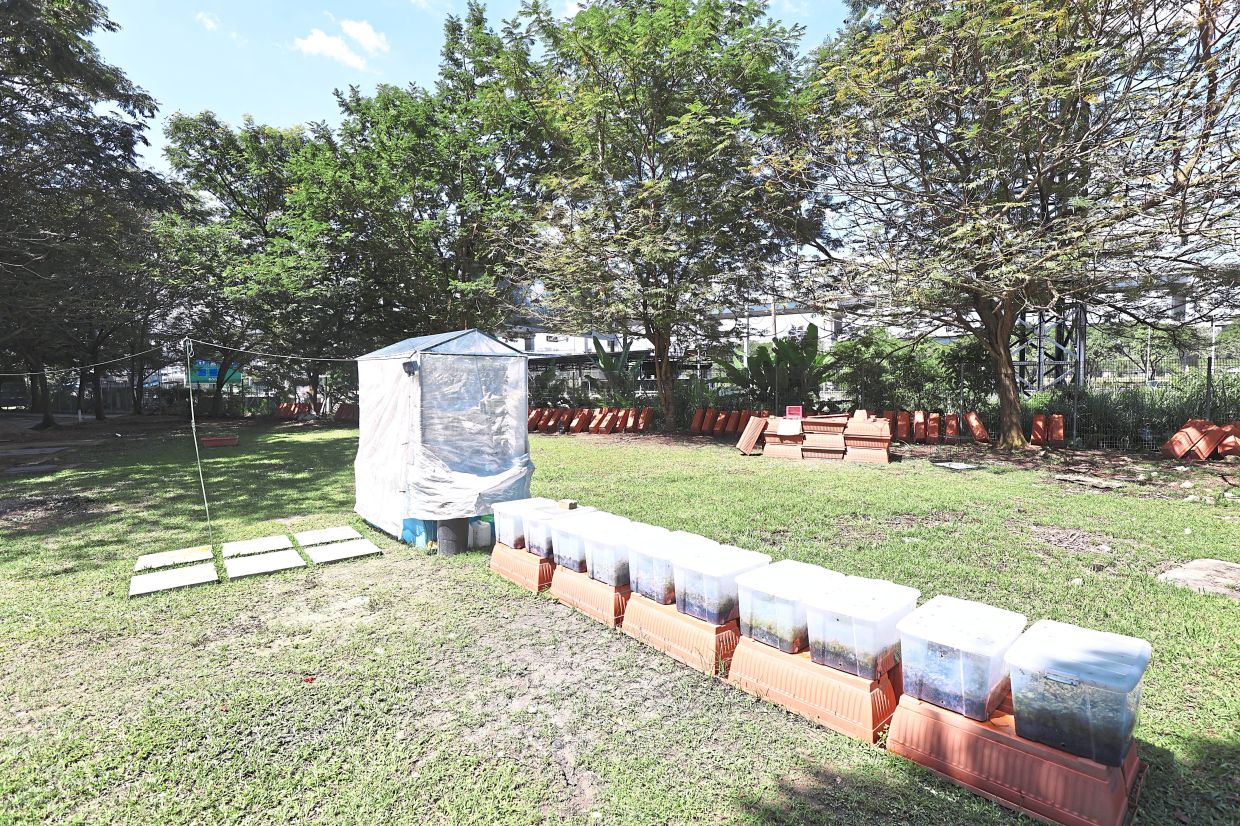
Construction and planting are currently taking place, with the food forest aimed for completion by the first quarter of the year.
Part of the solution
For residents, the project provides something to look forward to whenever they step outside.
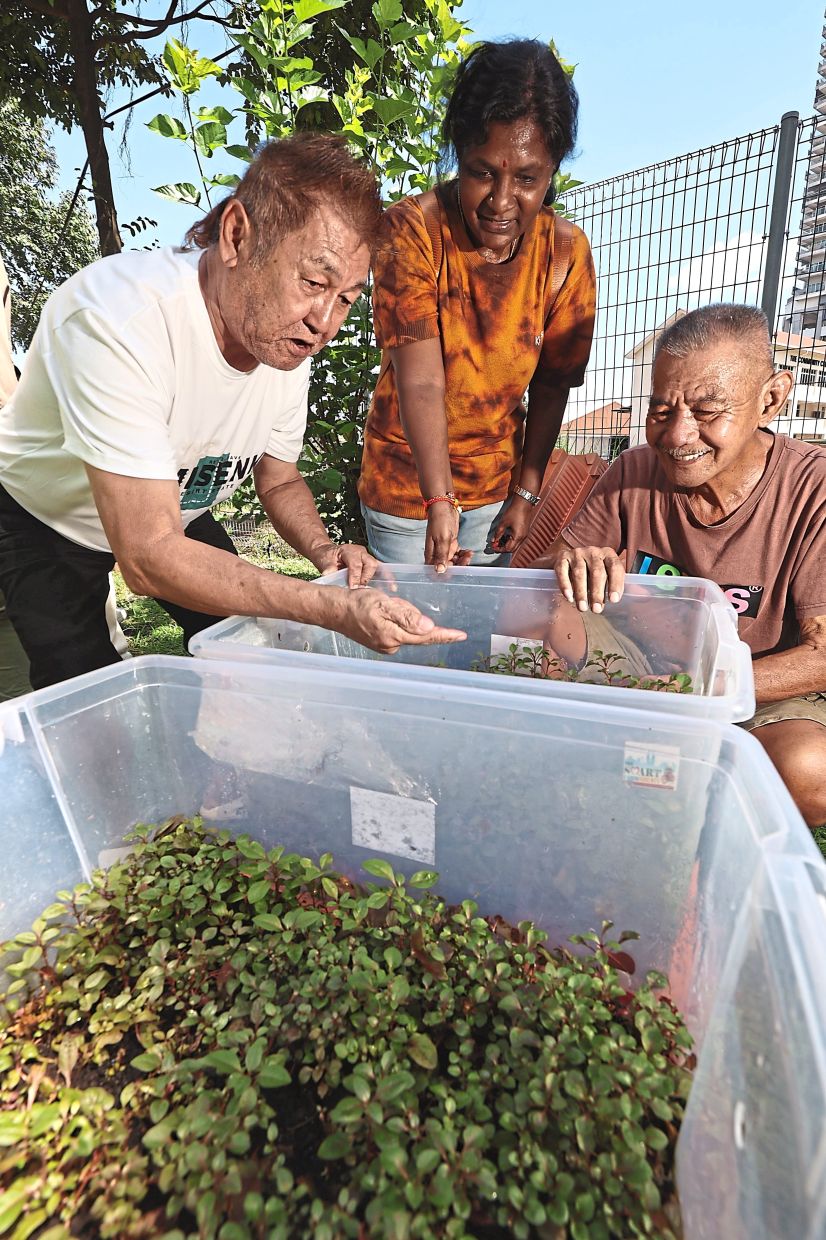
S. Parameswari, 58 – known widely in the residence as Leela – grew up in an environment where gardening was a part of daily life.
Living in the city, she says, has made it harder to maintain that lifestyle.
“I used to keep plants on my balcony but my family members don’t really like it, mostly because of the insects,” she says.
“After hearing about this space being converted into a food garden, it’s really nice to have a place where I can be involved.”
Leela had always thought the land felt like a missed opportunity.
“I keep asking my family, ‘What is this empty land? Why aren’t they doing anything with it?’” she says.
“I’ve always seen this land as something precious, so it’s good to see they’re doing this project.”
Meanwhile, 70-year-old Wong Choong Yin decided to be a helping hand out of personal interest.
Known within the community for tending to the flowers within the compound, he describes himself as having green fingers.
“I’ve been looking after the flowers here for a while. That’s why I’m willing to be part of this. It’s something I enjoy, and I get to learn at the same time,” he says.
About 60% of residents at 1Razak Mansion are aged 60 and above. For many of them, daily life is mostly spent indoors, and Tang would like to change that.
“The elderly residents here have nothing to do, they just stay at home,” he says.
“So why don’t we give them something good to do that uses their hands and minds? It’s good therapy for them, too.”
Beyond that, the project also seeks to address the pressing issue of food security.
“Our people are very dependent on highly processed foods. That’s why we are a nation with various health issues,” Tang explains.
Rising prices of food, supply chain disruption and climate instability have made fresh food inaccessible, particularly for urban communities living on low incomes.
Tang wants to respond to this by localising food systems and bringing them closer to where people live.
“Climate change shows up in cities through food. When prices rise or supply is disrupted, we feel it immediately,” says Tang.
“By decentralising food production into housing communities, we reduce dependence on long supply chains and improve local resilience. This is a climate adaptation that people can see, touch and benefit from daily.”
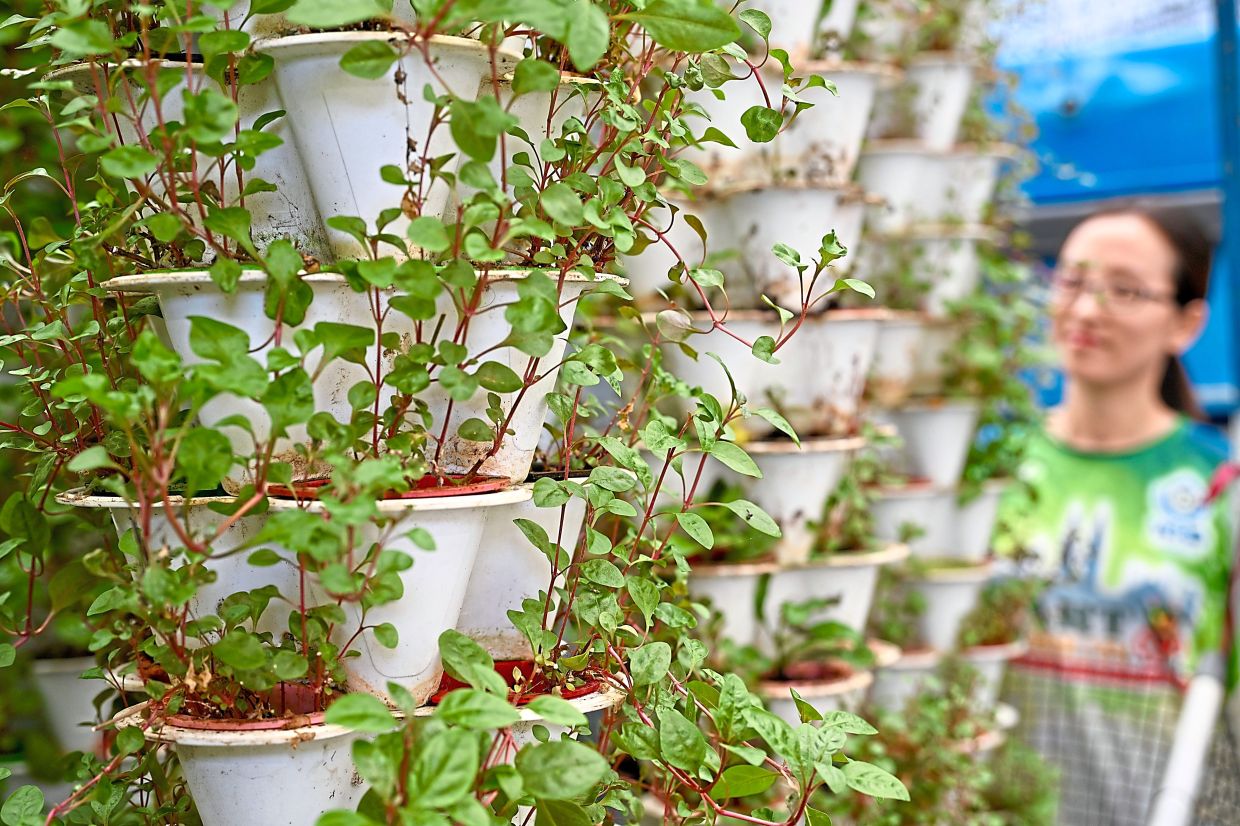
Compact growing systems developed by Tang allow residents to grow their own food at home.
“We’re teaching them how to bring food from home to table. Whatever they learn and practise down at the garden can be brought back up to their houses and it acts as a talking piece for families to make dietary and lifestyle changes.
“In a way, they are becoming climate heroes. No matter if it’s on a smaller scale, they’re still making a big difference.”
For a better future
The transformation is still taking shape, but it is clear that the residents are the heart of the project.
“When we stop feeding people with handouts and start feeding communities with systems they can use and benefit from, that’s when dignity returns, resilience grows and cities become truly liveable,” Tang explains.
The approach aligns closely with global conversations around inclusive, safe and resilient cities – and there’s a reason for that.
Tang plans to submit the project as a policy case study for the upcoming World Urban Forum 13 (WUF13). He also hopes the model can be replicated across housing communities nationwide.
“For me, success is when cities move beyond pilot projects towards scalable, people-centred systems. What we’re doing at 1Razak Mansion will show that it’s possible,” Tang says.
“If replicated, this will completely change how cities feed, employ and care for their communities.”
This food forest will stand as evidence that urban regeneration does not require grand, sweeping developments.
It can begin with a simple willingness to see possibilities where others just see a useless piece of land.
As for Tang himself, years of work have done little to slow his spirit.
After spending time touring the site and explaining his vision, he gets into his car with minimal help and drives off with a smile – one of the ways Tang is defying expectations placed on him, apart from changing the future of sustainability in Malaysia, one community at a time.
Humble but mighty
Before the 1Razak Mansion project, there is a modest farmhouse in Subang Jaya, Selangor where ideas behind the project began and Dr Billy Tang’s mission with PWD Smart FarmAbility started.
Tang has managed to repurpose the double-storey house into a functional farmhouse teeming with greens.
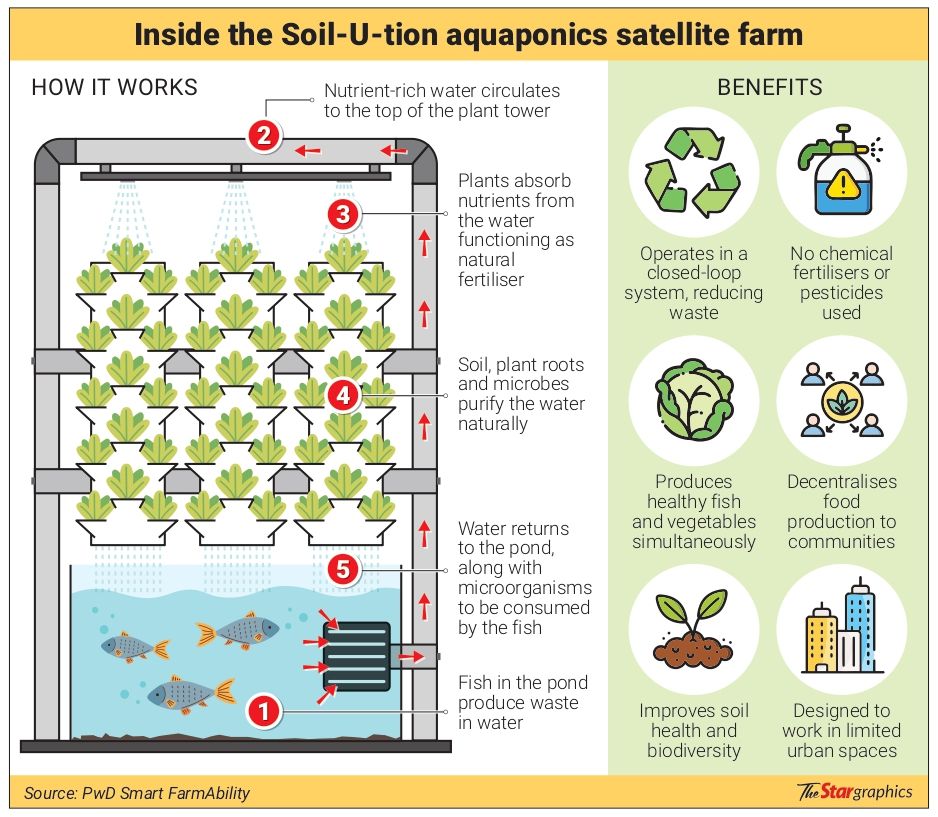
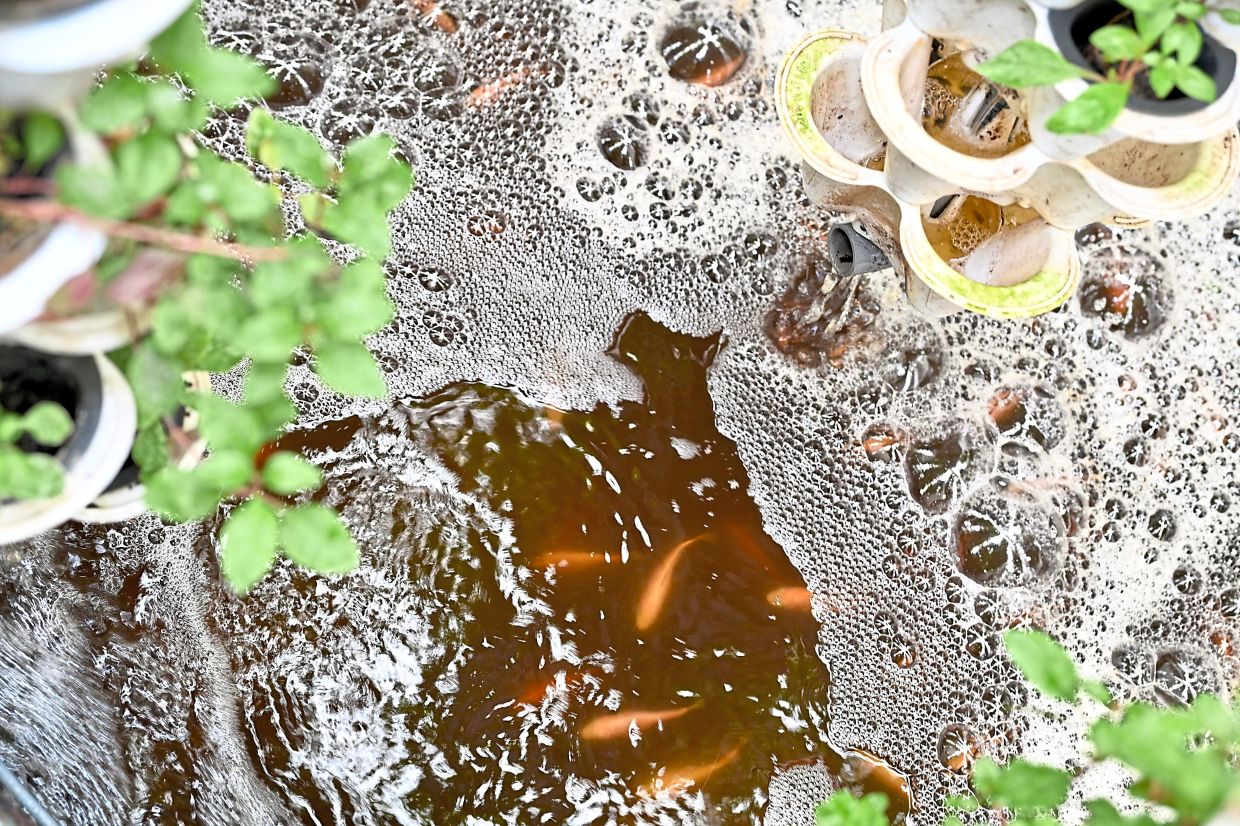
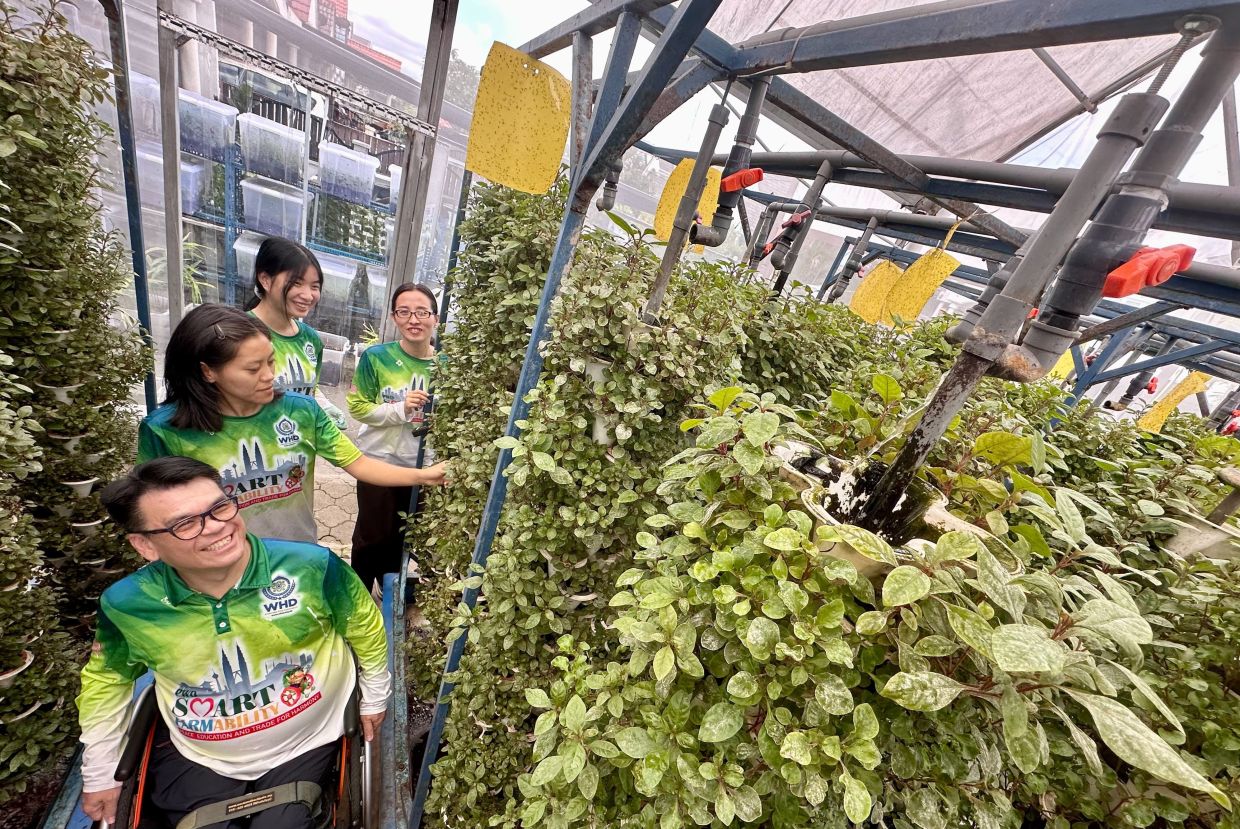
A makeshift greenhouse taking up most of the space in the front porch houses several of his Soil-U-tion aquaponic satellite farms.
Fish ponds sit at the base, stocked with fish like red tilapia while above them, vertical towers grow greens such as red watercress and Brazilian spinach in soil.
What sets the system apart is more than just technology.
“It all begins with the soil. If the soil is healthy and you’re not depending on fertilisers, everything will grow well,” Tang explains.
During a visit to the farmhouse, Tang lifts up one of the small planting beds from the tower. In the soil, an earthworm wriggles into view.
Tang clarifies the soil was not seeded with worms before they were planted. Their presence indicates it has reached a level of health where life can return on its own.
By the house’s main gate, a garden bed not more than 3m x 2m has been transformed into a whole ecosystem with crops like papaya, okra, ulam raja, moringa and corn. Small bees flit around the plants.
“We have all of these crops and bees. We’ve also had butterflies and ladybugs appear here – which shows how possible it is to bring back life to an urban street!” Tang says enthusiastically.
This farmhouse is also where the Hope box was born. These small plastic tubs function as a terrarium, allowing people to grow their own vegetables in limited spaces. Once set up and following proper caring procedure, the box can last for years without fertiliser.
Since the pandemic in 2020, Tang has managed to feed various communities across Malaysia with these Hope boxes.
“These boxes are incubators for learning. What they learn here, they can then bring it home,” Tang says.
From the farmhouse, that knowledge has only flowed outward to communities like old folks’ homes, orphanages, welfare centres and schools.
Tang aims to decentralise food knowledge and production, moving it away from a single site and into the hands of communities nationwide.
“We are actually arming the poorest. Nobody is addressing the concerning fact about their health with all the ultra-processed food they’re consuming,” Tang explains.
“With our initiatives, we are fostering the spirit in them to be their own heroes.”
That belief is rooted in Tang’s own journey. After a spinal cord injury in 2015 that requires him to use a wheelchair, he rebuilt his work centred on accessibility and dignity.
Through PWD Smart FarmAbility, individuals get to be involved in farming systems and earn work-based learning credentials and recognised qualifications.
Since the start of the decade, Tang has received numerous awards for his efforts. Apart from receiving the Star Golden Hearts Award in 2020, he was also a recipient of the World Humanitarian Drive’s Regal British Award in 2022 and the Malaysia GPM Sustainability Awards in 2024.
Recently, he achieved the Malaysia Scroll of Honour Award in 2025 for Outstanding Leadership in Urban Crisis Response.
Yet, all these achievements are secondary to seeing proof of his passion and the future it holds for communities.
“We want to show Malaysia you can rely on disabled people,” he notes. “We are producing real food for you to regain your health.”