
If you have ever paid attention to the glass you are drinking sake from, you would have noticed that it is served in several different types of vessels, from wooden box-like cups to wine glasses.
One of the most common one is the ochoko, a traditional drinking cup that looks like a shot glass, but has a more rounded and curvy shape.
While ochokos can come in many different materials and colours, the most iconic one is the janome (or “snake eye”), which is a white porcelain cup with a blue bullseye-like pattern at the bottom, which resembles a snake’s eye, hence the name.
The pattern is not merely decorative though – during tastings, the white parts of the cup and the contrast of the blue rings allow one to properly examine the colour of the sake.
Now, sake is also being served in fine-dining restaurants these days, and are usually served in wine glasses rather than the more traditional vessels.
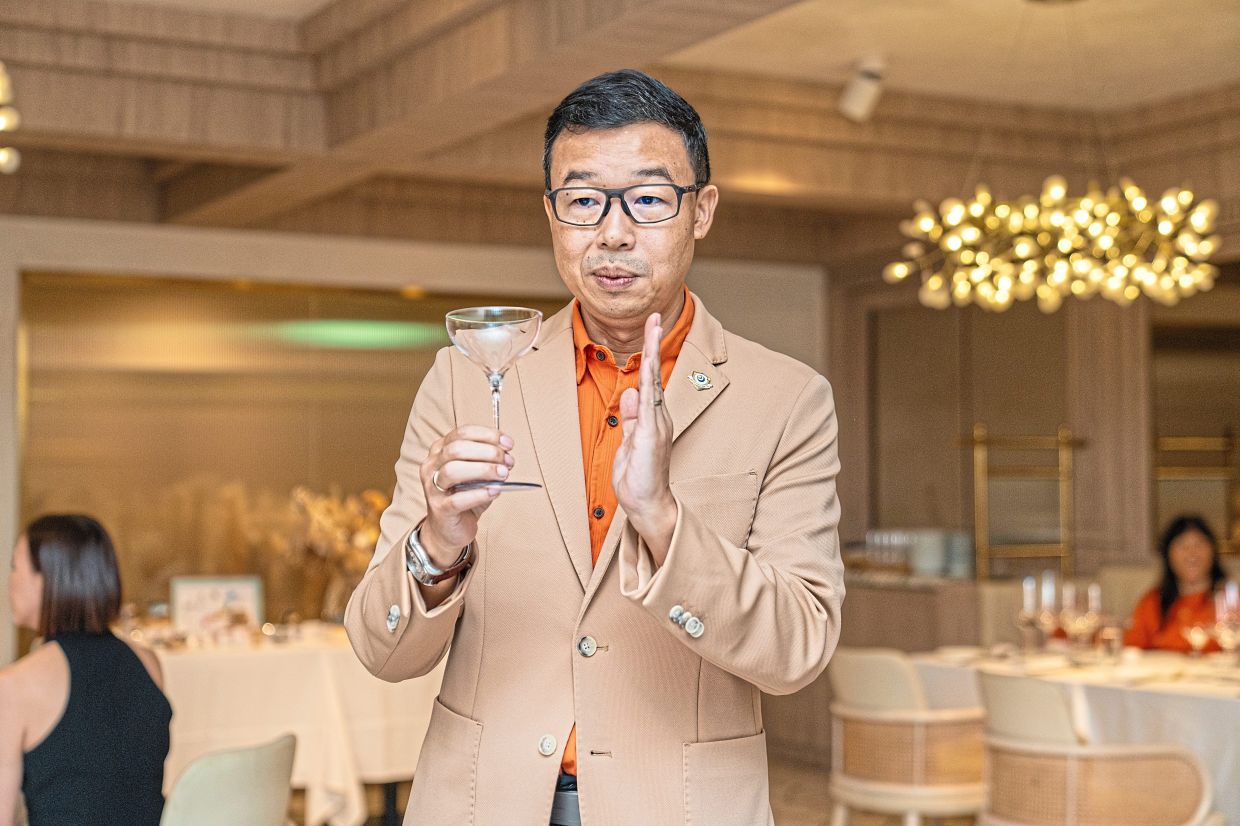
However, Malaysian master sake sommelier Danny Leong, who regularly conducts sake tastings in these settings, found that wine glasses did not adequately showcase the quality of the sake that were being served.
“I’ve been always looking for the right kind of vessel for sake that can be used in a more fine dining setting,” Leong said.
“The cultural and traditional cups and glasses are fine in a typical Japanese restaurant or izakaya, but if I was serving sake in a fine dining restaurant, I needed something that would showcase the sake better than a wine glass.”
His quest eventually led to him collaborating with German crystal glass makers Stolzle Lausitz to create the “Kyoto Sake Glass”, a specialised glass aimed at providing a more authentic and balanced appreciation of sake.
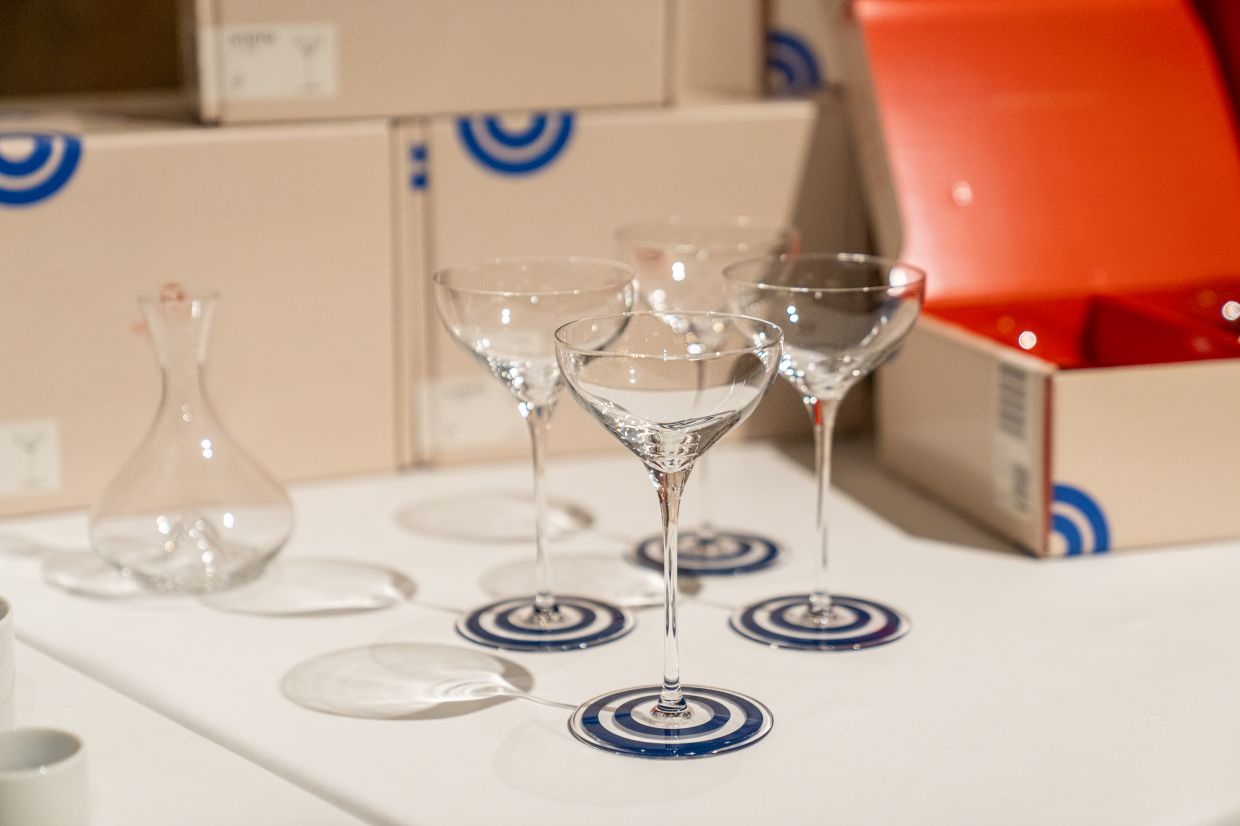
The glass was launched at a recent media event at Cassis restaurant in Kuala Lumpur, where we got to experience first hand how different it is from the typical sake and wine glasses.
At first glance, its shallow, curved bowl reminded me of a Nick and Nora cocktail glass, but with a wider mouth and thinner rim. What stood out the most, however, is the base of the glass, which sports that iconic janome bullseye pattern that instantly sets it apart as a glass for sake rather than wine or cocktails.
During the event, we were led through a comparative tasting of three sakes in the Kyoto glass versus more conventional vessels.
We started out with a blind tasting from two vessels – an ordinary shot glass, and the Kyoto sake glass, and unsurprisingly, the latter gave a much more enjoyable tasting experience, and even managed the feat of making a common table sake taste like a high-grade junmai ginjo.
I personally found that drinking from Kyoto glass helped to enhance the flavour and mouthfeel of the sake over the aroma on the nose, which Leong said was one of the key points of the glass.
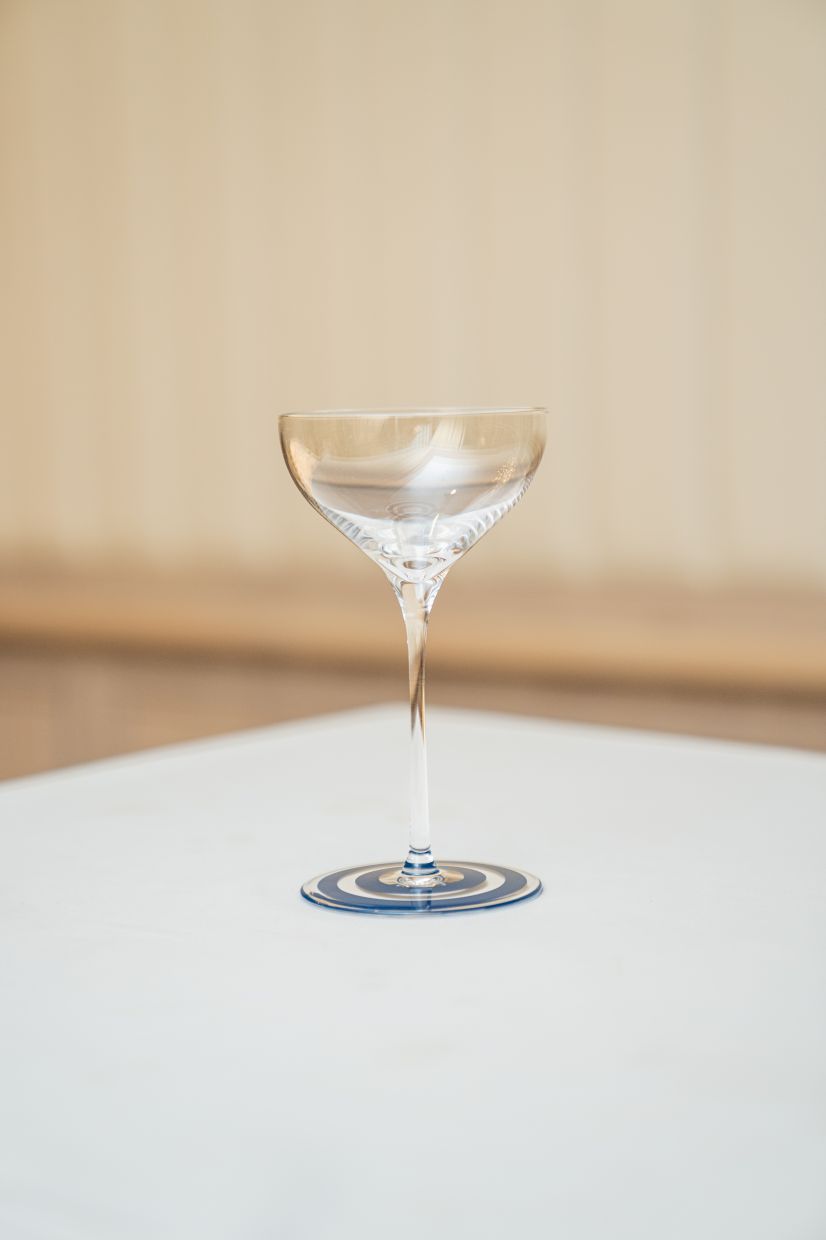
According to him, wine glasses are designed for fruit-fermented wines, where aromatic expression is more important. But sake is brewed from rice, and primarily reveals its complexity on the palate.
“I found that when you drink sake from a wine glass, you are missing the key ingredient of sake, which is umami,” Leong said.
Often described as the fifth taste, umami brings a savoury depth and gentle richness, creating a lingering sense of roundness and harmony that unfolds as the sake moves across the tongue.
“We cannot smell umami. We need to taste it. So I needed a wider mouth and thinner rim to get enough flow of the liquid onto your tongue, in order to get the real flavour of the sake,” he said.
Leong stressed that he is not trying to reinvent sake appreciation with the Kyoto glass, but to allow the “hard work of sake brewers to speak for itself”.
“With this glass, you can taste more umami, get a greater balance, and understand why the Japanese have cherished sake for centuries,” he said. “I want people to see sake not as an alternative to wine, but in a world of its own.”