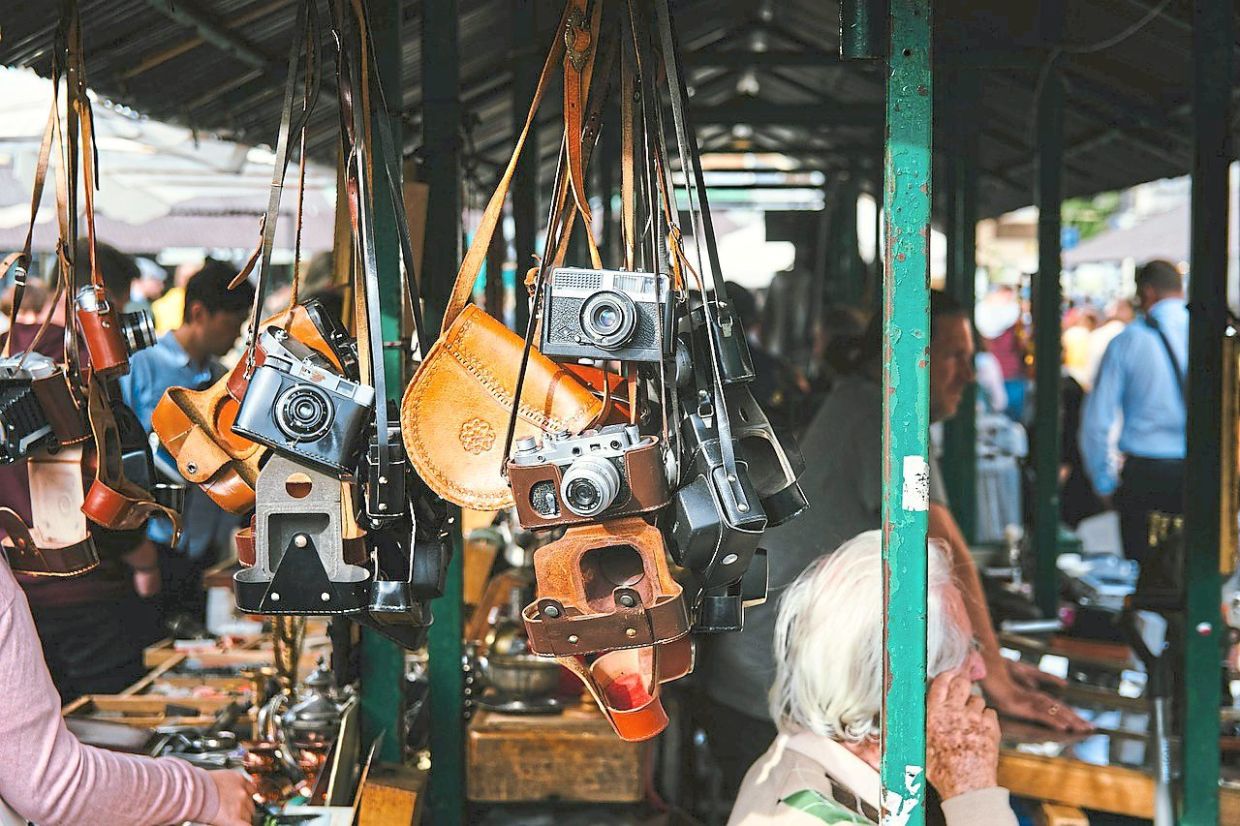
Despite the winter chill, a flea market in Chongqing, China is heating up as a favourite destination for young treasure hunters attracted by a sea of vintage jewellery and nostalgic trinkets.
"The number of young consumers is increasing every year, and lately, we've seen many more foreign visitors," said Zhang Qiuling, a shop owner running a second-hand jewellery shop in the market.
Zhang's business is part of a broader trend that has transformed the traditional market into a "social media-famous" destination, with daily foot traffic peaking at over 20,000 people.
Once associated with "thriftiness", second-hand shopping in China has undergone a massive makeover, evolving into a trendy, eco-friendly lifestyle choice for the younger generation.
In downtown Nanjing, the capital of Jiangsu Province, a three-storey circular store operated by Xianyu, China's leading second-hand trading platform, has become a weekend staple for locals.
For a Nanjing resident surnamed Wang, the store is a "second classroom" for her eight-year-old daughter. "It's a great place to cultivate concepts of green consumption and financial management in children," she said.
Since its opening earlier this year, the store has averaged 5,000 items consigned per month, with 70% sold within the same month.
The appeal lies in a unique blend of cost-effectiveness and the thrill of the "hidden find".
In Wuhan, a refurbished sweeping robot was snapped up for CNY599 (RM347) in a livestream, less than 20% of its original price.
For Liu, an aspiring entrepreneur in Chongqing, the flea market provided a lifeline. By purchasing high-quality used kitchen equipment, he slashed his startup costs for a new barbecue restaurant by over 50% compared to buying new.
"The joy is in the rarity," said Zhang Junyi, a Gen Z blogger who travels across the country to visit second-hand markets. His home is decorated with his "trophies", vintage sculptures and old wooden chairs that tell a story.
The surge in individual interest is mirrored by staggering industrial growth. In 2024, the transaction value of China's second-hand goods reached CNY1.69 trillion (RM980.634bil), up 28% year-on-year. Over the past six years, the sector has maintained a compound annual growth rate of 12%.
Wuhan, a national pilot city for second-hand goods circulation, exemplifies the scale. The city's Jinkai second-hand market recorded over 130,000 orders in the first 10 months, while a specialised market for used kitchenware is expected to see annual sales exceed CNY100mil (RM58mil).
While the industry's rapid expansion has also brought challenges, local governments are actively steering it toward a more standardised, "experience-driven" future.
"The transformation of the second-hand market is obvious, with many physical markets gaining a new lease on life," said He Yadong, an official with the Ministry of Commerce.
He noted that the next step for national pilots is to focus on new formats, such as immersive offline experience stores.
Chang Dalei, executive vice president of the China Resale Goods Trading Association, believed the integration of digital technology and the deepening of green consumption habits would be pushed to a new level.
For the young shoppers in Chongqing and Nanjing, the "circular economy" is no longer just a policy term; it's the excitement of finding a vintage 1994 watch that matches their birth year, or the satisfaction of giving an old icebox a "second life". – Xinhua