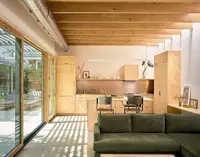
In Frederiksberg, Copenhagen, a new kind of communal housing is reshaping the way we define micro-living.
Nicknamed “Harmonikahu-sene”, or the Accordion Houses, the building bends organically with the surroundings, as if it grew from the landscape itself.
Completed this year, the project offers 700 homes for students and young professionals across its two complexes, Umeus and Noli.
Designed by Copenhagen-based architecture firm Effekt, it plans to answer a simple yet difficult question: How can tiny homes offer enough space and a good way of living simultaneously?
To answer this, Effekt co-founder and creative director Tue Hesselberg Foged says that everything comes down to one element – the bay window.
“The core idea was to explore how we can create high-quality tiny homes – how to improve quality of life even as we reduce square metres per person,” he says.
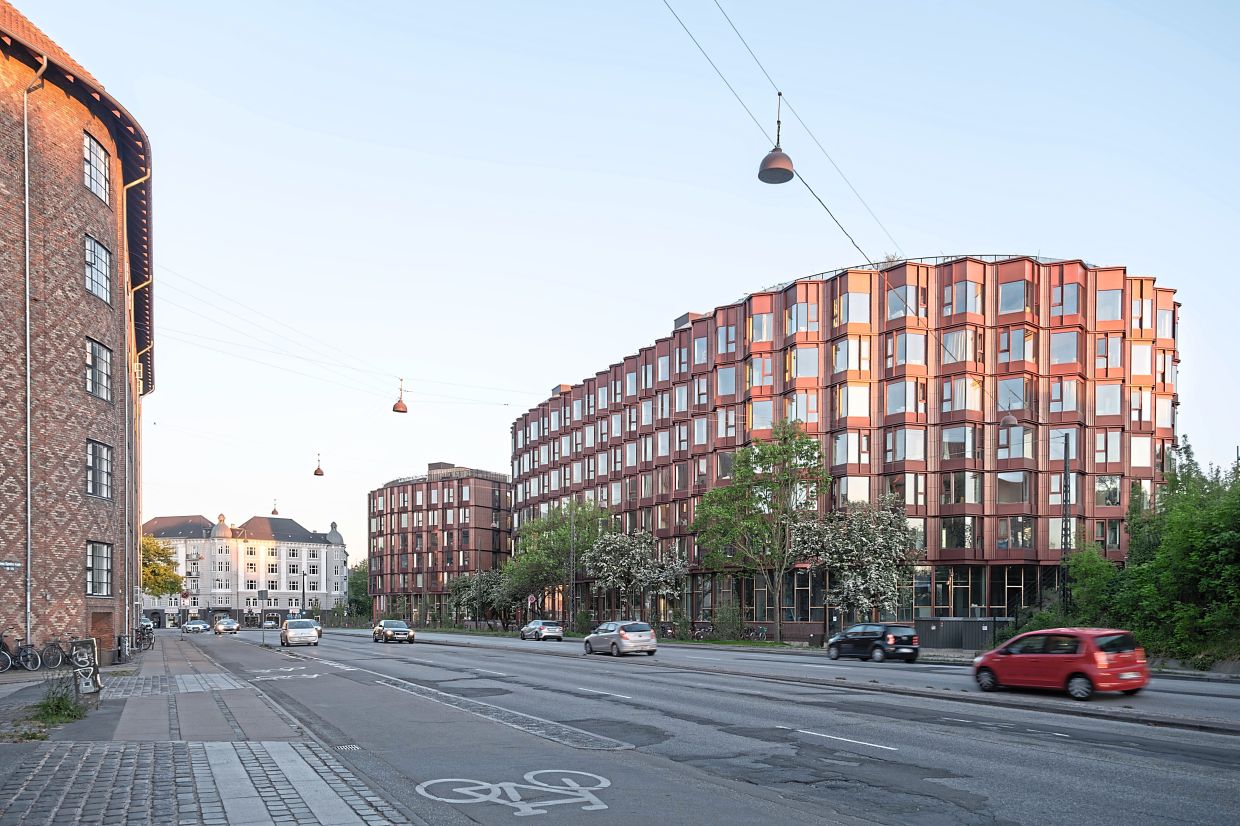
The bay window became the project’s main architectural component, and it stands out when you face the zig-zagging facade.
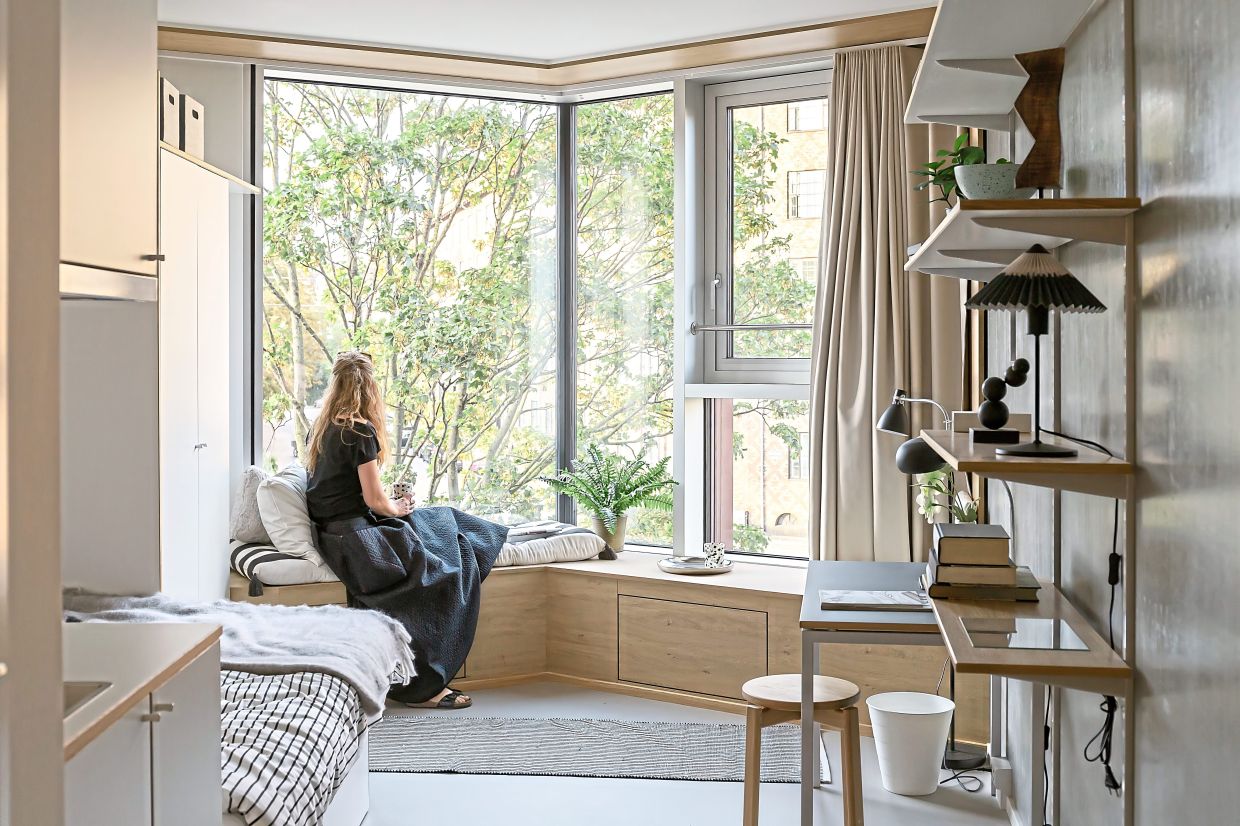
In the apartments, these bay windows do more than just let natural light in; they allow natural ventilation, function as a noise filter while serving as a nook with a built-in bench where residents can socialise.
“In one gesture, it addresses three of the site’s biggest urban micro-living challenges: generous daylight, space for social interaction and acoustic comfort,” Foged notes.
Community-focused
Though Harmonikahusene is considered an urban build, it departs from having the typical 90° corners associated with modern architecture.
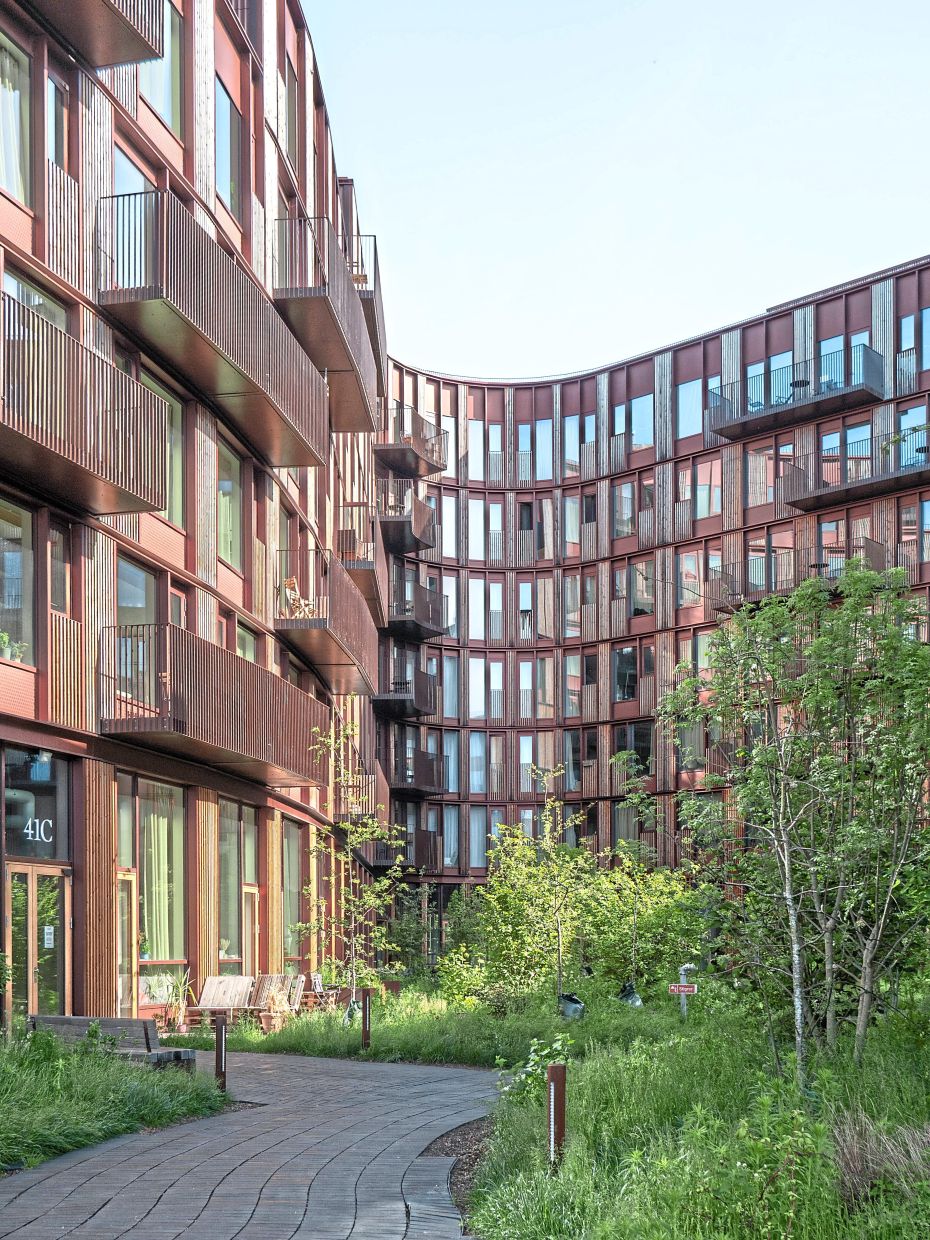
Instead, it curves gently to avoid dark, shadowed pockets and open up to the neighbourhood.
On the side facing the busy street of Aboulevard, the building steps back to make room for a planted buffer zone to shield residents from noise while giving the apartments views of the foliage.
In the middle, the building makes way for a park that’s open to the wider community.
Inside, the timber-lined ground floor is the beating heart of the building. Designed to bring everyone together, it houses study areas, cafes, a fitness centre and a library.
The apartments above are organised around shared kitchen hubs, spaces acting as daily touchpoints to spark community.
Foged points out that the building’s form and material are woven deeply into the context of the existing landscape.
“On one side, the building’s organic form follows the existing urban fabric – the surrounding buildings, streets and cycle paths. On the other, it steps down in height to form smaller point houses that open towards the courtyard and small shop,” he says.
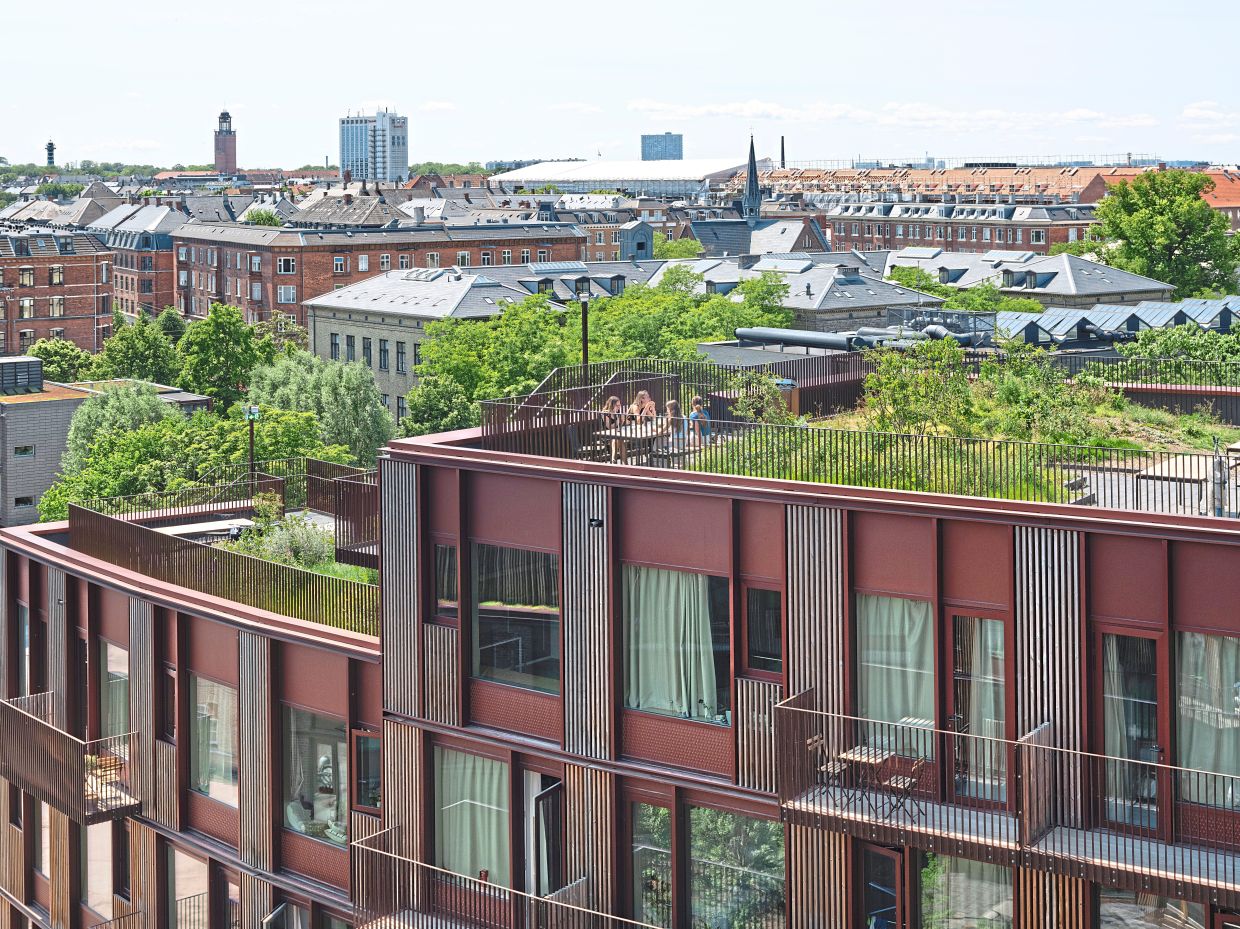
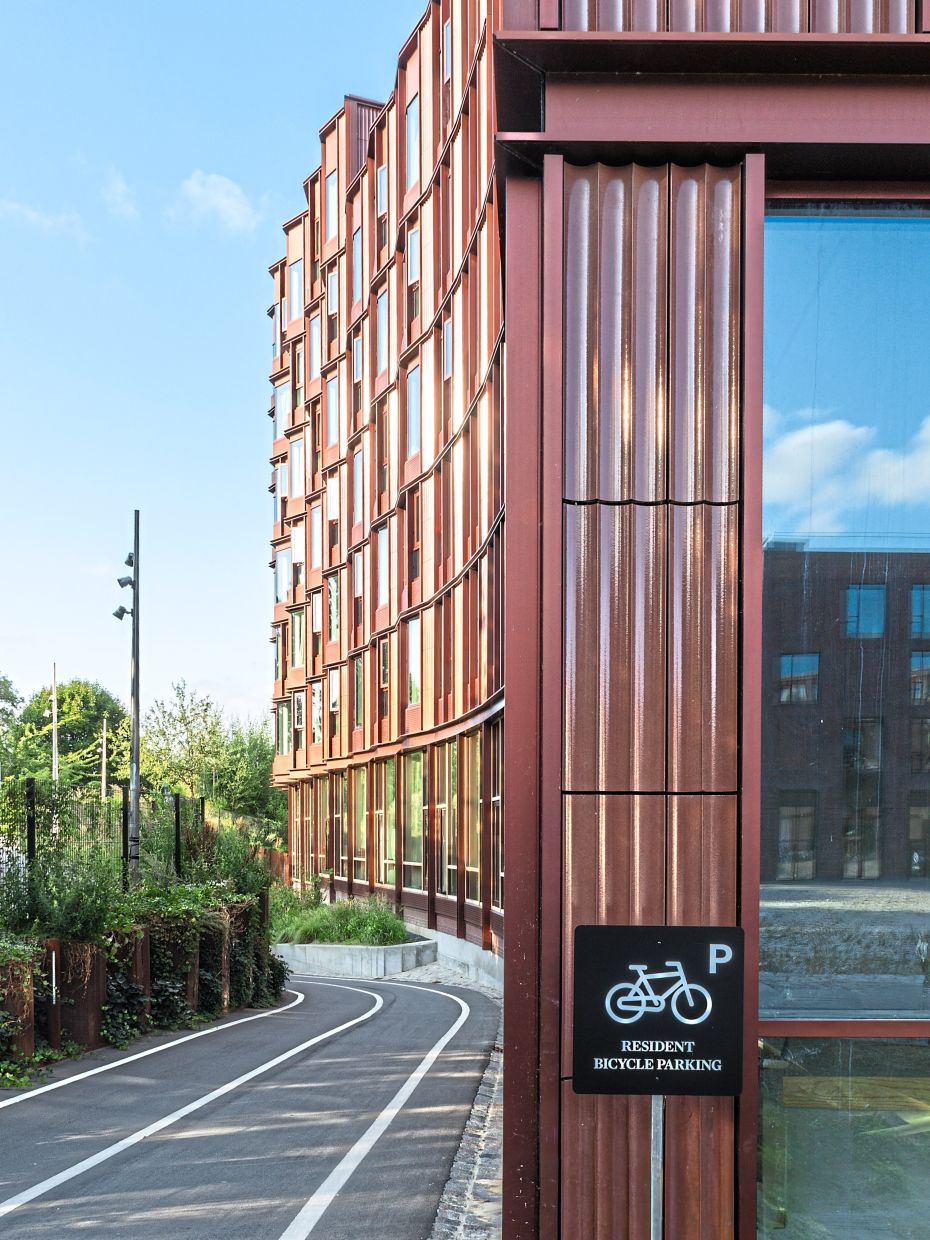
Instead of traditional red brick, Effekt reinterpreted the street’s existing architecture by using custom red glazed ceramic tiles.
Lightweight and subtly reflective, the tiles support the bay windows while echoing the warmth of the neighbourhood’s historic blocks.
Foged adds that the “... green courtyard spaces above the parking basement, rooftop gardens, a planted buffer zone and balconies overlooking lush communal areas complete the design, connecting the building to both its community and the city.”
A car-free rhythm
Because this is Copenhagen, bicycles matter greatly.
Hidden from view are over 1,100 bike parking spaces beneath the building where a “bike-in, bike-out” ramp connects directly to the city’s supercycle path, letting residents ride straight from the basement onto the streets without worrying about encountering cars.
Foged describes the area as a “small, car-free district with shops, public spaces and pedestrian streets”, an ambitious but thoughtful way to introduce calm into a dense, urban section of the city.
Representing the first phase of a larger master plan to turn the neighbourhood into a green city campus, the Harmonikahusene makes a case for a different kind of city living – one where smaller homes feel spacious through light, community and thoughtful design.
Most importantly, the building tells us that despite density, a city can still grow softer, brighter and more connected.