
From the outside, it looks like a leisurely walk in the park. But in reality, there's a lot of coordination behind the scenes.
Diane Reddmann is a dog walker. She takes up to seven dogs out into the fields, the forest, and along remote paths – away from everyday life and into the routine of the dog group.
What sounds like leisure is often a precisely organised and tightly scheduled job."I work with the dogs purely on a positive basis," said Reddmann, while her black Labrador, Leni, patiently waited beside her.
"She is basically always there," Reddmann explained, "and she does a great job."
The business of dog walking
Dog sitters are in demand. Many dog owners use the service because balancing a full-time job, children and a pet often requires external help
The groups Reddmann takes out in the Palatinate region in Germany are not randomly assembled.
"The dogs must be socially compatible, healthy and vaccinated."
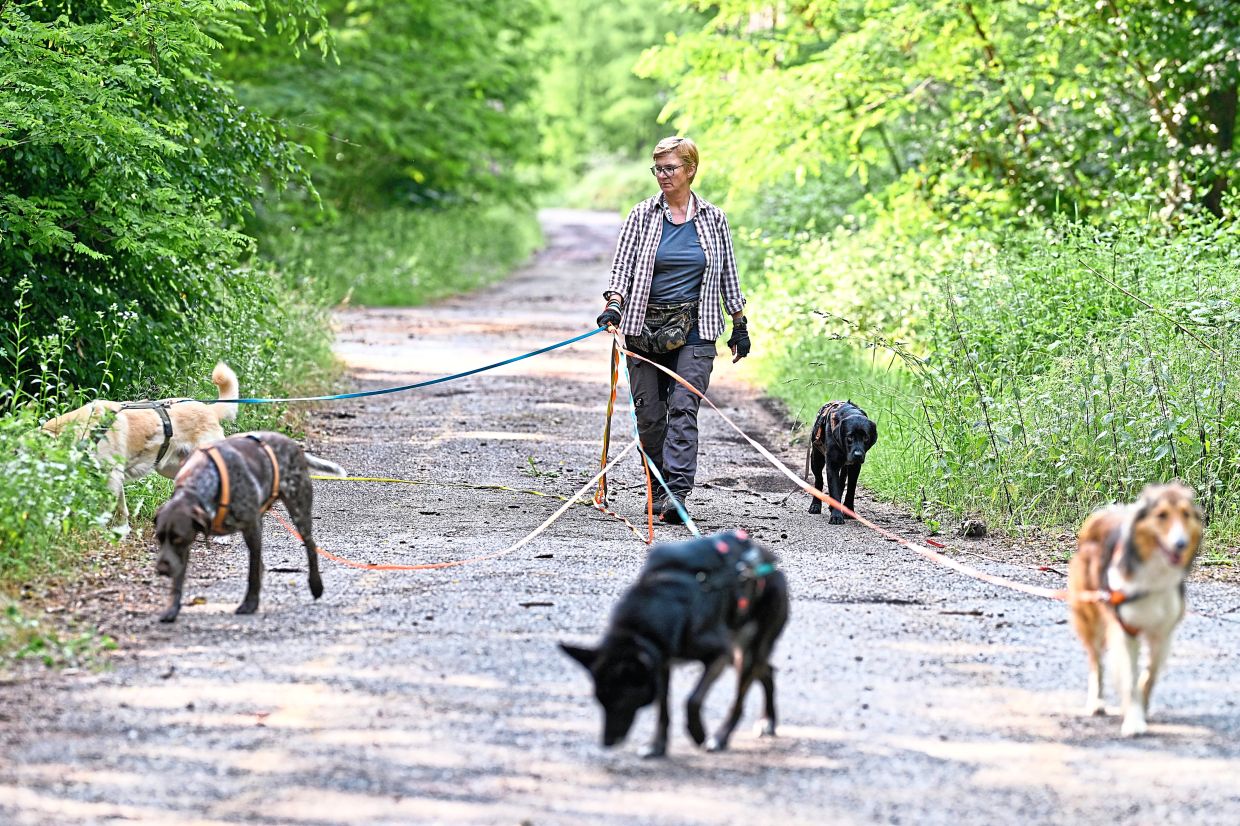
Age does not play a major role, "but male dogs should be neutered – that has simply been proven effective". The routes, usually lasting between 60 and 90 minutes, and the service includes pick-up and drop off.
The logistical challenge begins not in the forest but on the street – collecting the dogs, getting them into the car, and dealing with different personalities.
"I have special dog walker insurance for up to 10 dogs," Reddmann said. She also picks up dogs directly from her clients' homes.
The German Animal Welfare Federation considers dog walkers a meaningful addition to dog care under certain conditions.
"Trust can only develop if the walkers do not change unnecessarily often."
Training instead of dominance
On how Reddmann prevents aggression: "We play the name game," she explained. Each dog receives its treat only after its name is called – this teaches the group to wait, listen and trust.
Who joins the group is not just a matter of compatibility. There are initial consultations – preferably during a walk with Leni – followed by trial rounds without the owner. Does the dog show hunting instincts? How does it react in the group?
"If everything fits, they can join."
And if not?
"I have already turned dogs away," Reddmann said. "Or removed them from the group after a few months. You just notice when it doesn't work."
To ensure everything runs smoothly, she works with other positive reinforcements, such as the so-called marker word. Simply put, a word like "fine" helps the dog associate its action with, for example, a reward.
"It all comes from the principle of 'training instead of dominating'," Reddmann explained.
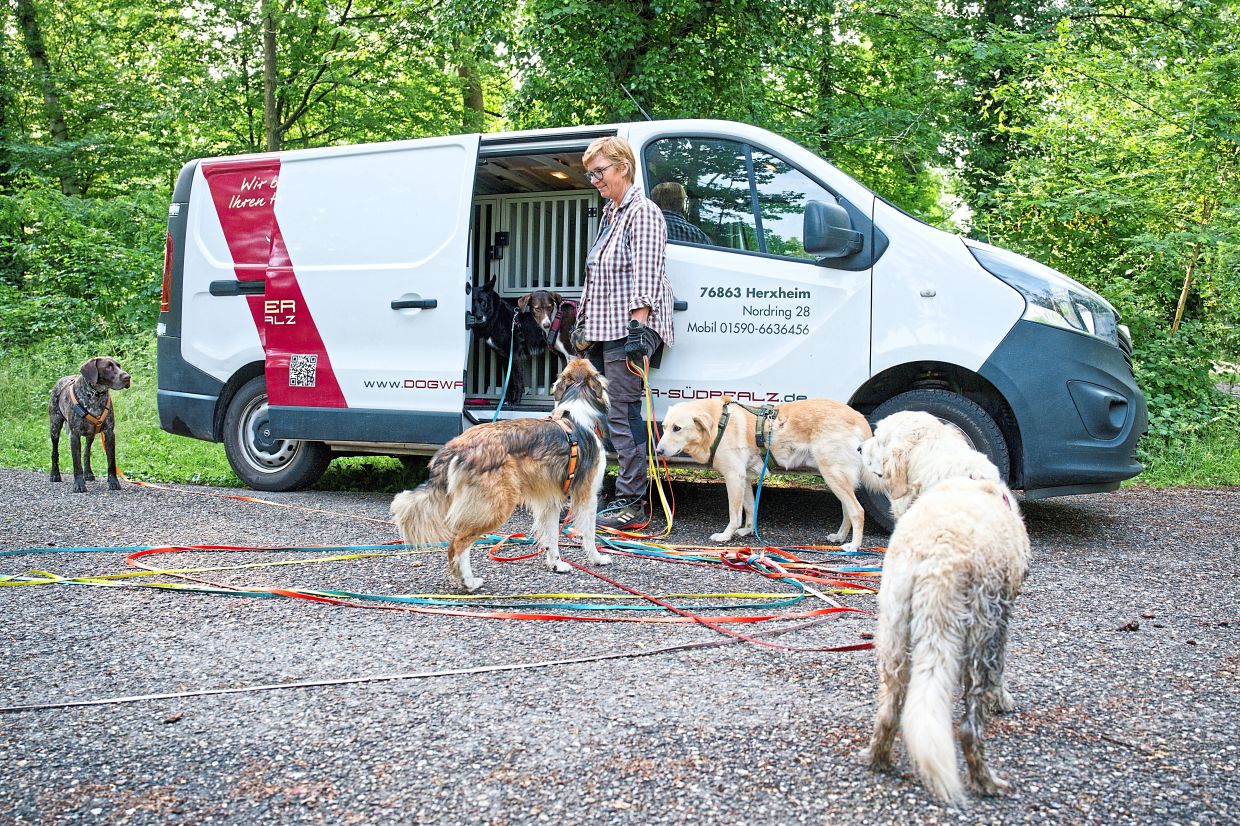
Are there ever runaway dogs?
Additionally, all dogs are equipped with GPS trackers.
Injuries? Rare.
"Sometimes a thorn in the paw."
Accidents? More likely for her: "I've tripped over a few leads."
According to dog trainer Rainer Burisch, head of the dog walking division at the ProHunde professional association, a good dog walker can also be recognised by how they integrate new dogs.
It shouldn't be the case whereby "all the dogs are let loose on the newcomer. Instead, they must first have the opportunity to get used to each other in a smaller group".
Burisch believes any well-socialised dog is suitable for the walking service. Even a dog that is somewhat anxious could benefit from walks and playtime with several other dogs.
"They can really thrive in the group because they can attach themselves to a confident companion who guides and calms them."
A second dog discount
Since 2013, Reddmann has been active in the dog world – with a trainer's licence, her own open dog meadow, and dog care services.
In 2023, she completed her training as a professional dog walker, and at the beginning of 2024, she became self-employed.
The costs: a weekly subscription costs €120 (RM575) per month, with twice-weekly walks costing correspondingly more. A second dog from the same family receives a 20% discount.
Behind the seemingly simple walk lies planning, pragmatism and mutual trust, she said. – dpa