
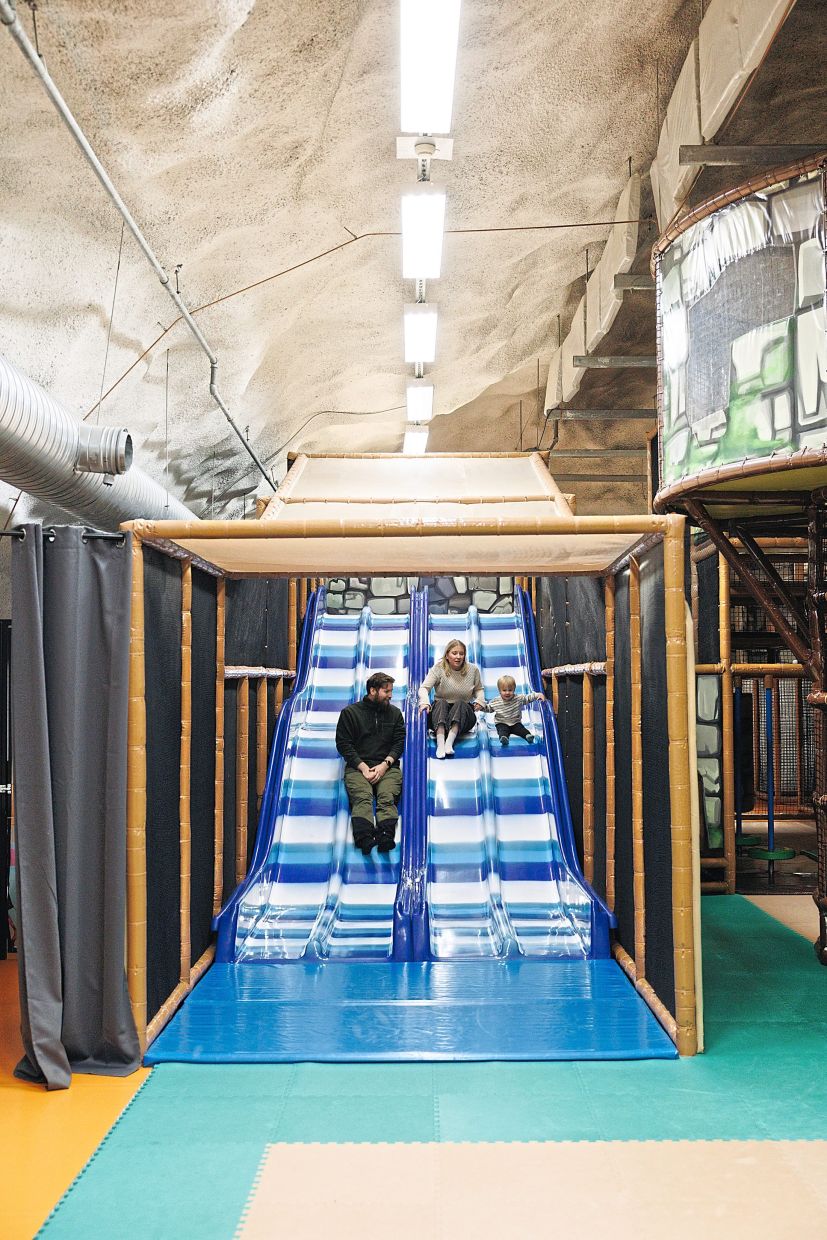
On a Saturday morning in Helsinki, Finland, Lassi Kurkijarvi and his four-year-old daughter stepped into an elevator near the Hakaniemi market square.
After a 60ft (18m) descent through the city’s granite bedrock, the girl took off down a tunnel to the cavernous “Leikkiluola” (or “Play Cave”) and disappeared into a palm tree-themed adventure maze.
Kurkijarvi, 45, a father of four, also likes the Play Cave. It’s ideal for last-minute play dates, and the activities, like rope ladders and trampolines, are challenging for his kids.
“There’s safety,” he said. “With a little risk.”
As for the rock cave’s other purpose – a fortified bunker to protect Finns in the event of a military invasion or nuclear bomb – Kurkijarvi said he never thought about it much until Russia’s 2022 invasion of Ukraine.
“OK, this is also a civil defense shelter,” he recalled thinking.
His oldest daughter got upset with him when he brought it up.
“She said, ‘Dad, you told me there’s going to be no more wars!’”
Kurkijarvi paused, scanning the brightly coloured playground maze.
“That time is over, I guess.”
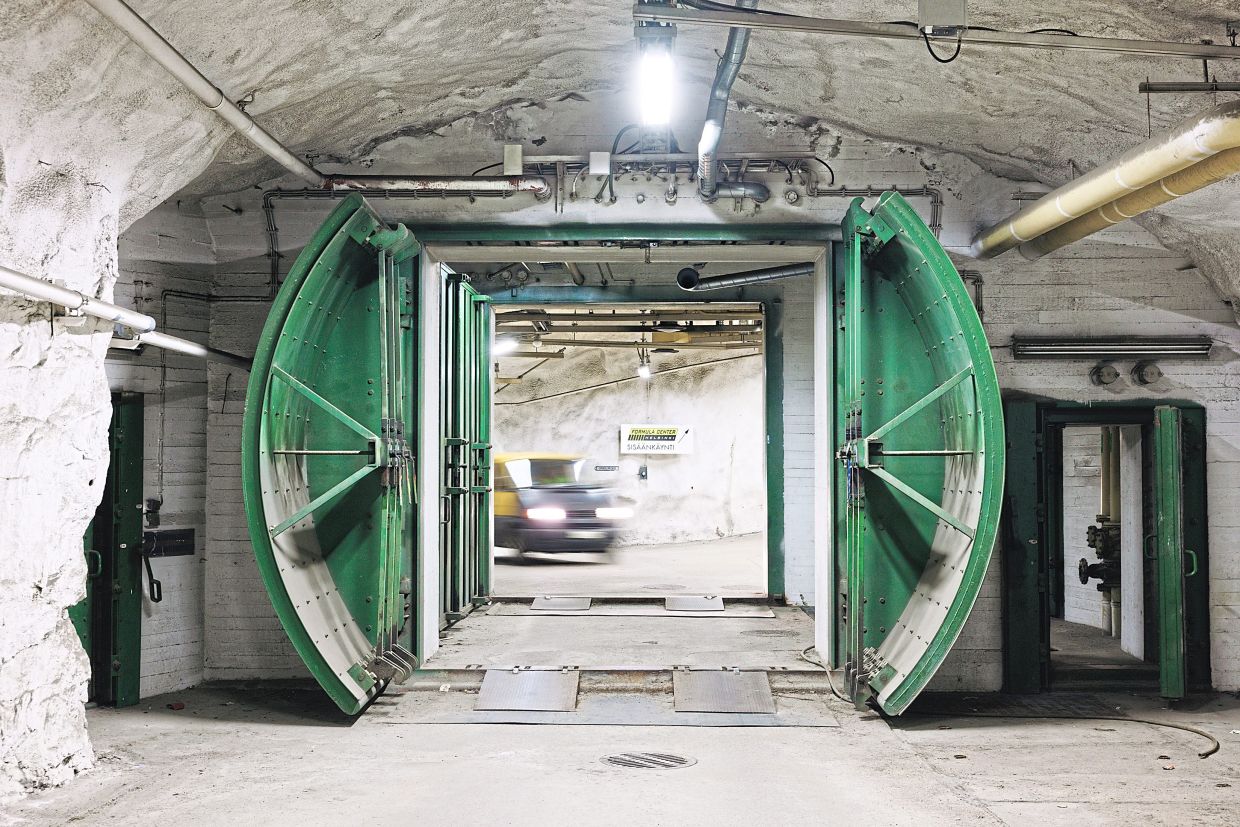
As the war in Ukraine rages on and Finland’s president, Alexander Stubb, warns of renewed Russian aggression, many Finns are getting reacquainted with the country’s remarkable network of “vaestonsuoja”, or civil defence shelters.
After the Cold War, most of the European countries that had been building civilian shelters abandoned the effort.
But Finland, which shares an 835-mile (1344km) border with Russia and ceded a tenth of its territory to the Soviet Union during World War II, never stopped.
Today, it trails only Switzerland in shelter spots per capita: In Helsinki, a city of about 700,000, approximately 5,500 civil defence shelters can house every resident, with room to spare.
About 50 of these sites are in massive subterranean spaces, which are marked by signs emblazoned with a blue triangle against an orange background.
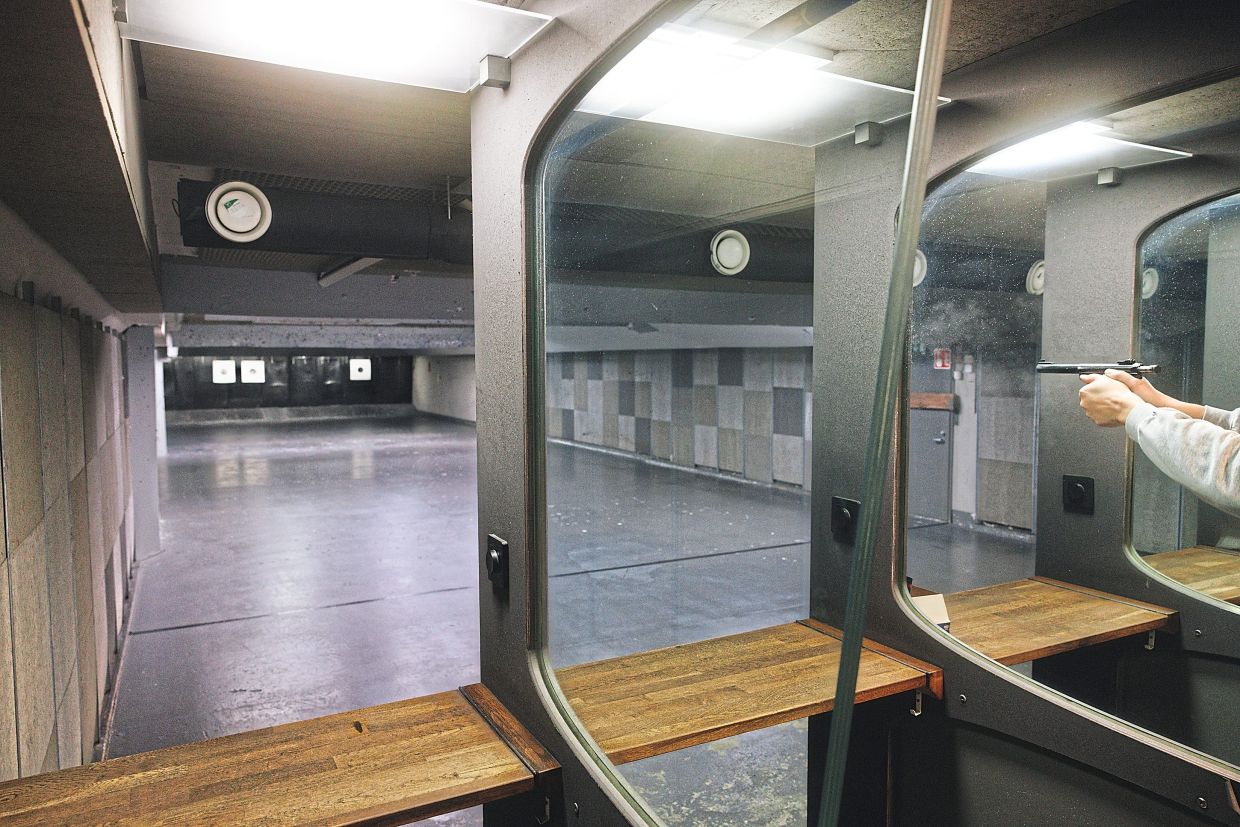
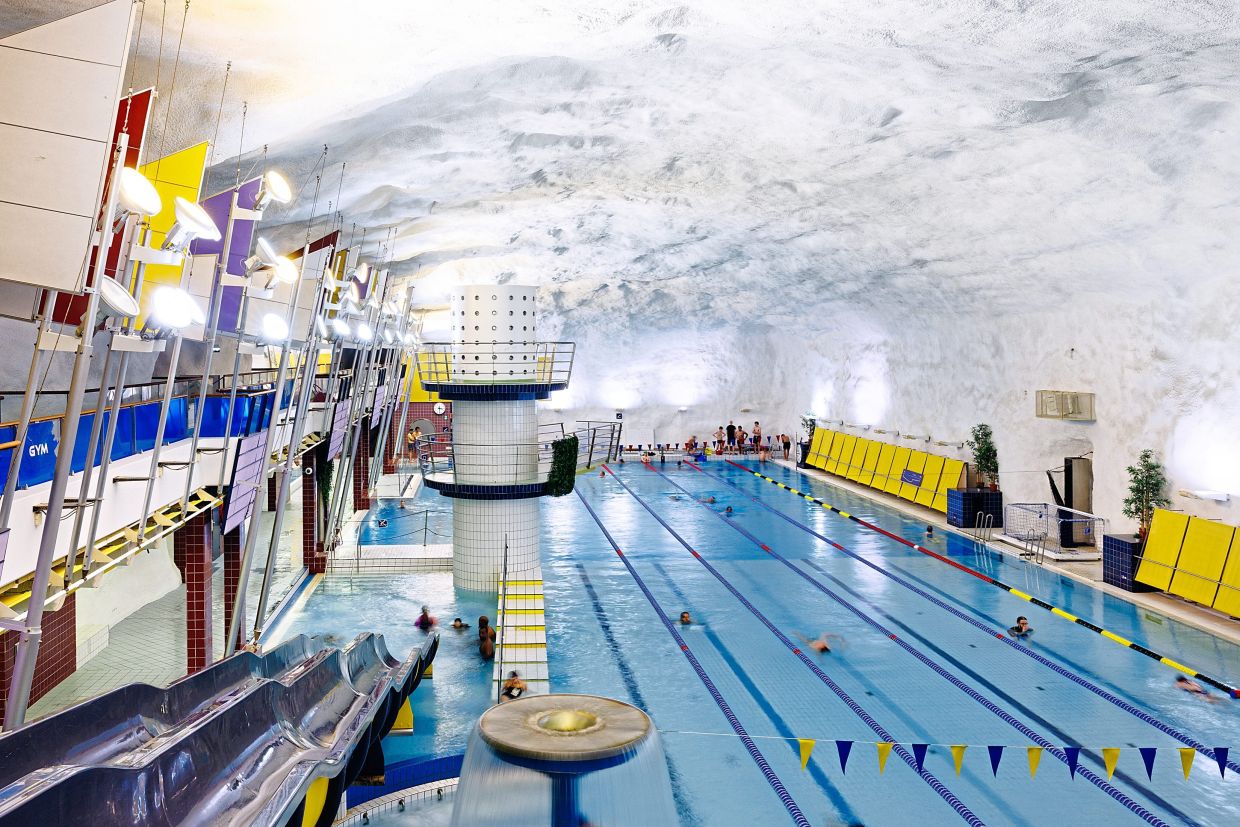
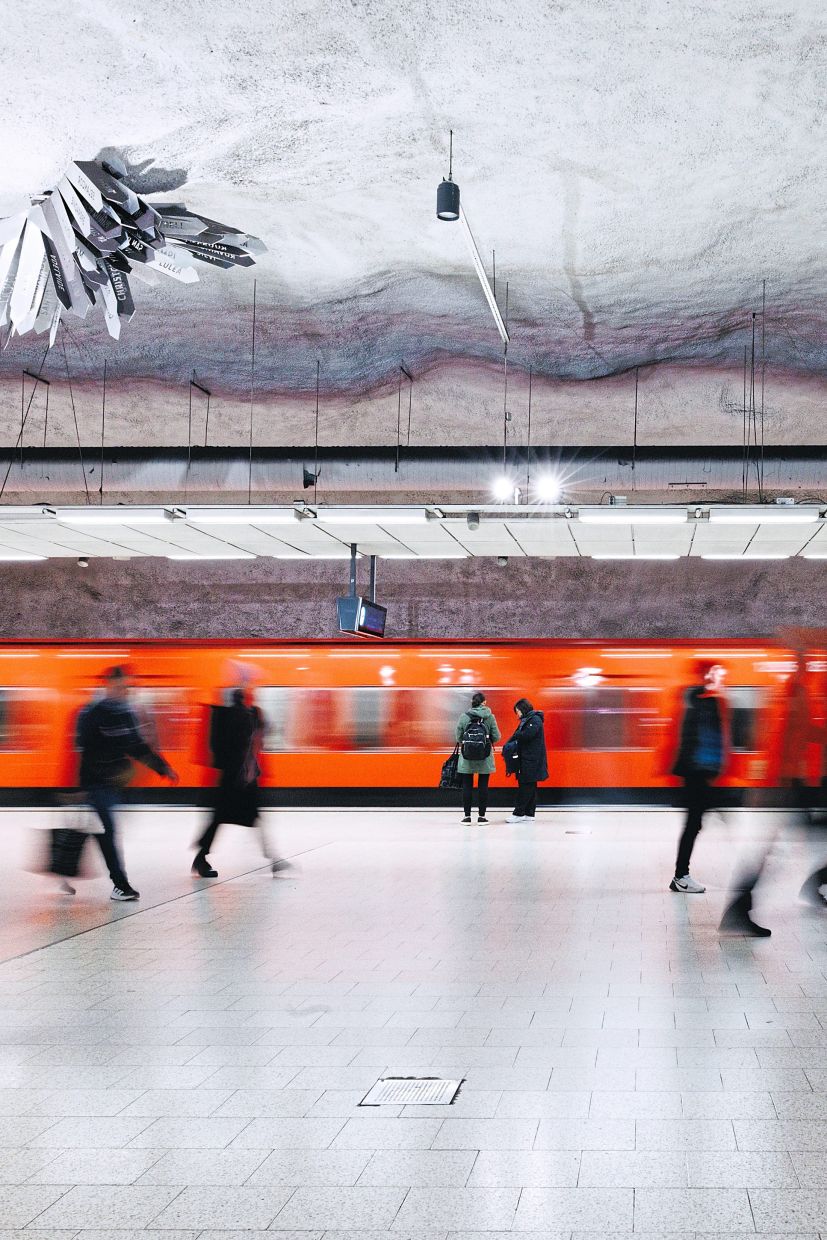
Day to day, they serve as everything from parking lots to metro stations, skateboard parks, go-kart tracks, archery ranges, and Helsinki’s beloved Itakeskus swimming hall.
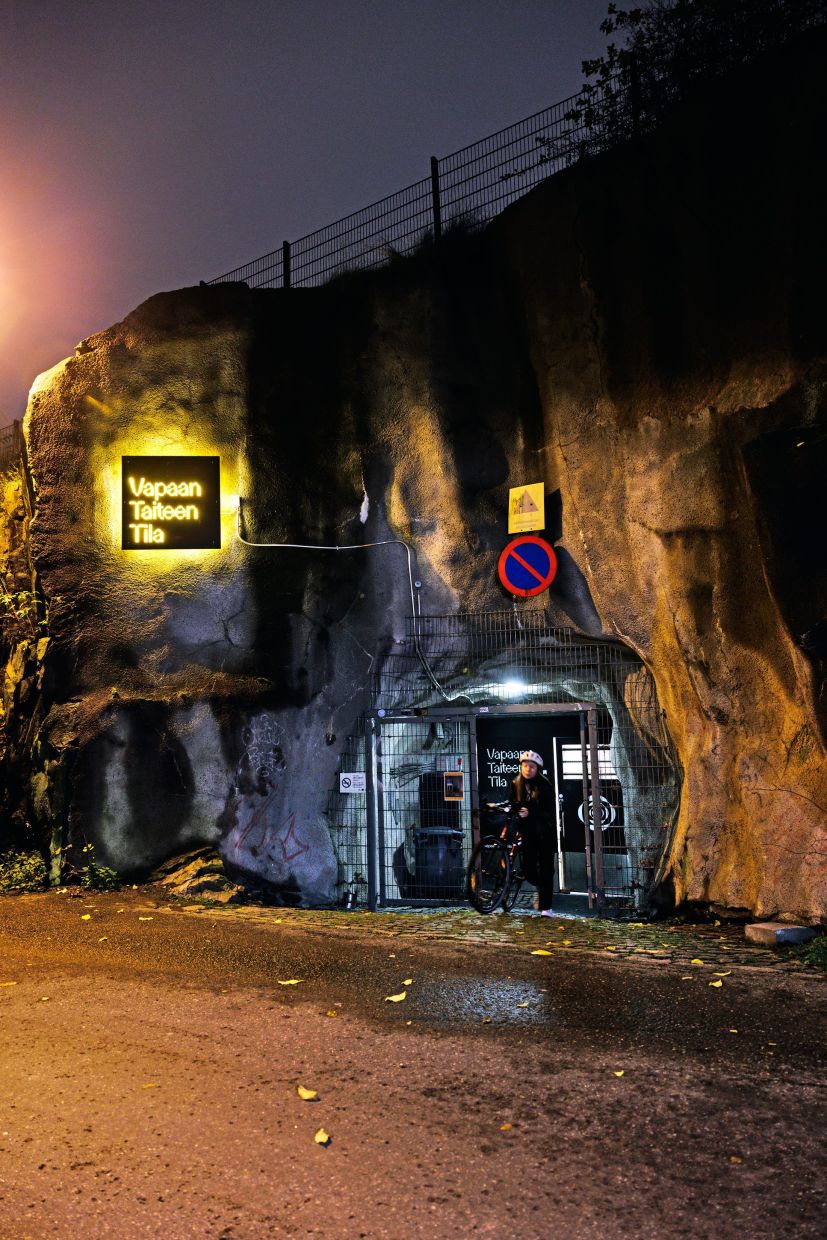
One of them, the Vapaan Taiteen Tila performance space, offers stage productions and art exhibitions in a cave near the University of the Arts Helsinki.
But, as more Finns are realising, all of them are designed to withstand building collapses, blast waves and radiation.
Russia’s full-scale attack on Ukraine “changed a lot”, said Pasi Raatikainen, a senior civil defense planner with the Helsinki City Rescue Department.
“In ’22, there was a humongous increase in calls coming in: ‘Where’s my shelter? Where’s my shelter? Where’s my shelter?’”
The cave spaces are rented out by the city on the condition that they can be emptied and converted back to shelter use within 72 hours. That same requirement applies to the shelters in many of the city’s residential and commercial buildings, including apartment blocks, larger offices, schools and museums.
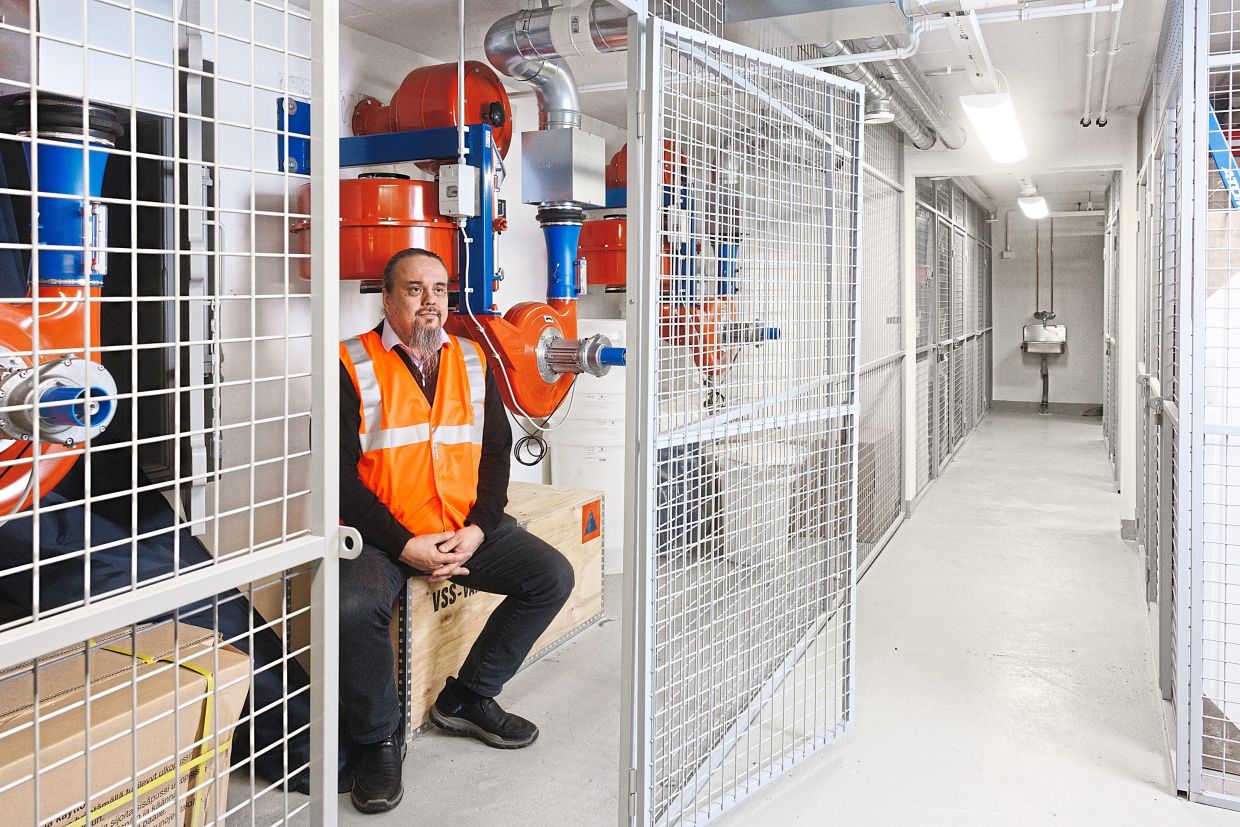
Mandated by law, they’reusually in the cellar or on the ground floor.
Finns too young to remember the Cold War may be aware that these rooms have ventilation systems to filter out nuclear fallout and chemical agents, but they still tend to think of them as storage areas for bicycles and Christmas decorations.
“I was asking people, and they didn’t even know if they had one,” said Eriz Moreno, a Spanish photographer who started documenting shelters in apartment buildings after he moved to Finland in 2020.
“Now, because of the international situation, people are rediscovering them.”
That includes Finnish architects, said Teemu Kurkela, a founder of the Helsinki-based firm JKMM Architects.
In recent decades, the sense in Finnish architecture circles had been that the shelter mandate was out of date.
“We were thinking, with modern warfare security, you don’t need to go into hiding anymore, that it’s more sophisticated,” Kurkela said.
“But Russia showed us, they don’t do modern warfare. It’s old-fashioned bombing of civilians. Even with drones, it’s useful to go to shelters.”
Some local real estate listings have begun to include “civil defence shelter” among standard home features.
But for residents who live in older or smaller buildings without a shelter, the alternative is one of the communal caverns dug deep into the bedrock.
The City Rescue Department provides a map and a telephone hotline to help people locate nearby shelters. It also gives tours to foreign journalists, diplomats, heads of state (including President Volodymyr Zelenskyy of Ukraine), and delegations from the country’s partners in the Nato alliance, which Finland joined in 2023.
“We build, and we let people know we build,” said Raatikainen, 57.
“We are also letting our opponents, possible enemy, know: We have the capability and means to protect. Your terror will not succeed.”
For Isto Okonhovi, a 37-year-old real estate developer, parking downtown in a garage that can double as a war bunker is just part of life.
He grew up playing floorball in an underground shelter and hearing war stories from his grandfather, who was injured twice by Russian bombs.
“We have this history, it’s just part of who we are,” Okonhovi said, noting that military service is compulsory for men in Finland.
“I mean, everybody here knows how to use a gun.”
The history is also tied up with Finland’s geology, which is ideal for digging underground.
“All the rock you see in Helsinki, this grey, polished rock – in the archipelago, every island looks like a whale – that’s formed by the ice ages,” said architect Tuomas Toivonen, who runs the Kulttuurisauna public bath and cultural space.
“The glaciers have produced this exposed bedrock. And this is great for excavation.”
Excavation methods vary, and can include explosions or hydraulic digging, depending on the size and location of the project. After a space is carved out, it is reinforced with sprayed concrete and steel structures.
The cavernous hideouts were built starting in World War II using hand-held drills and wheelbarrows to dig out the rock. As the machinery got more advanced, the shelters got bigger.
By the time the Itakeskus shelter was completed in 1993, it was large enough to accommodate an Olympic-size pool, water slides, high dives, a gym and saunas – or 3,800 refugees. (City officials say they don’t have figures for the total cost.)
Helsinki is now so chockablock with caves and tunnels that it created one of the world’s first underground master plans in 2011.
One cave serves as the Museum of Civil Defense, which is run by the Civil Defense Association of Helsinki.
The group also trains volunteers who can serve as shelter operators, should the need arise.
“We need to have them if war should break out, and demand is high,” said Jukka Lehtiranta, a 69-year-old retiree who serves as chair of the board of the defense association. “It feels important to be able to help.”
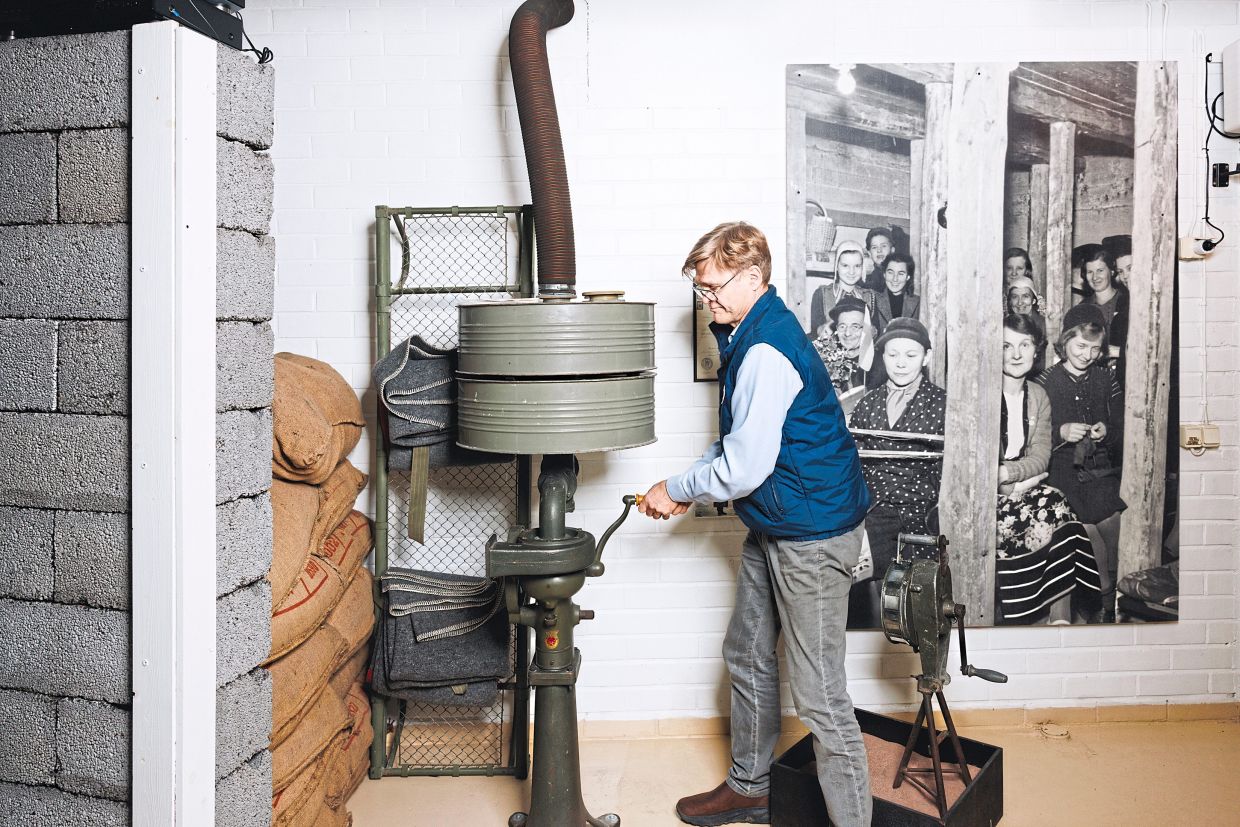
Lehtiranta is also a museum guide. On a recent tour, he led a group through a series of metal doors towards the showers meant for washing off nuclear contamination, the control room, some 1940s-era gas masks, and an early air filter adapted from a dairy farm’s milk separator.
Photos taken in the 1940s showed cellars and sewage tunnels where Finns took refuge from Russian bombers.
The need for a shelter “is a little bit current, unfortunately”, Miika Hamalainen, 35, an entrepreneur who makes recyclable paper cups, said of why he decided to take the tour.
Also on the tour was Ari Korhonen, who teaches computer science at Aalto University in the neighbouring city of Espoo.
“In my building, I’m one of the security managers,” he said.
He has taken courses in subjects like fire safety, while other residents have learned how to set up the shelters.
“The courses were full,” said Korhonen, 56. “You couldn’t get a place.”
The shelters won’t work without the volunteers. In the residential Helsinki district of Herttoniemi, Kari Hartikainen, a retired city official, serves as the manager for a massive rock shelter built for some 60 apartment buildings, housing approximately 9,000 people.
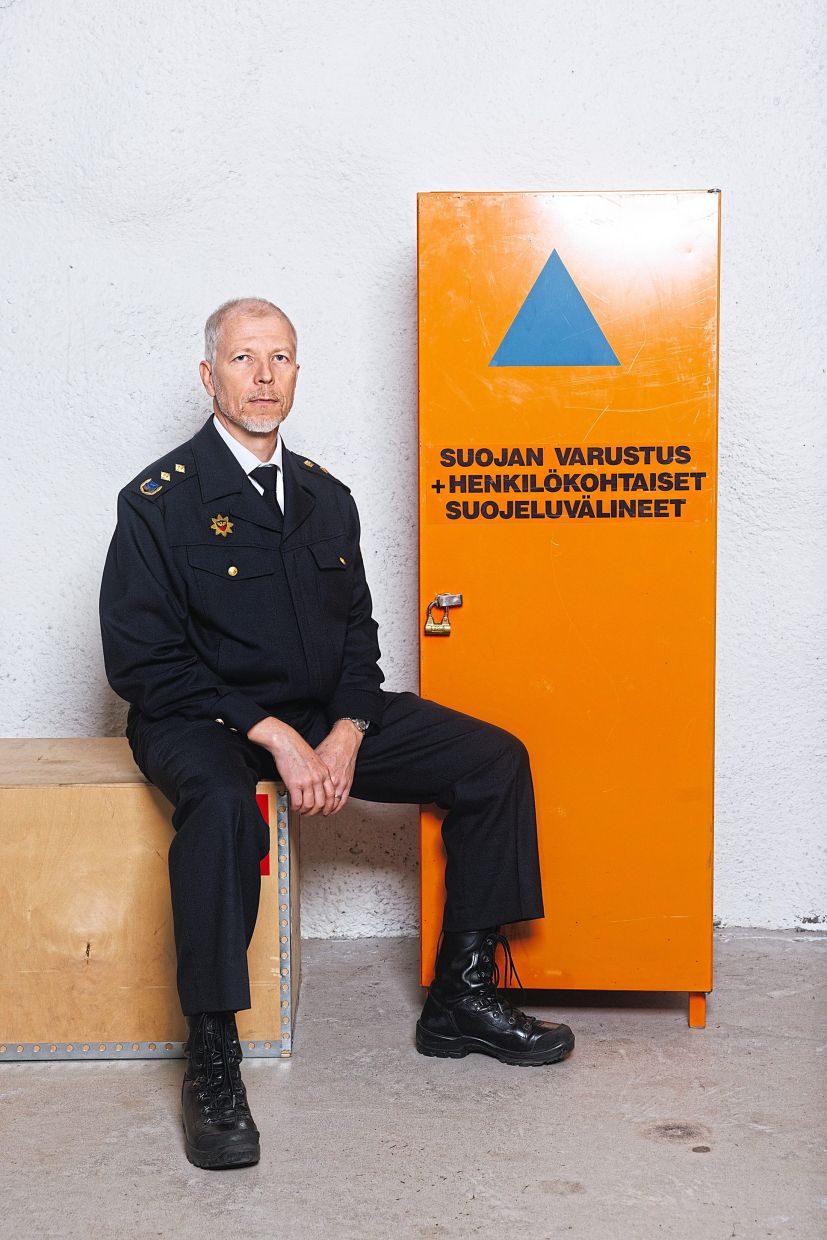
Walking through the space – a parking lot, most of the time – Hartikainen, 74, pointed to hooks on the wall where sheets would be hung to partition the space into areas for 200 to 250 people.
In a storage room, he showed the pallets for bunk beds that would be set up for children and the elderly. Another room held a central public-address system.
Hartikainen is happy to spend his free time organising test runs with the residents in charge of each of the shelter’s six doors.
“If there was a war, all the men between 18 and 60 would be gone,” he said. “Why shouldn’t I help, if I’m still on my legs?” – ©2025 The New York Times Company