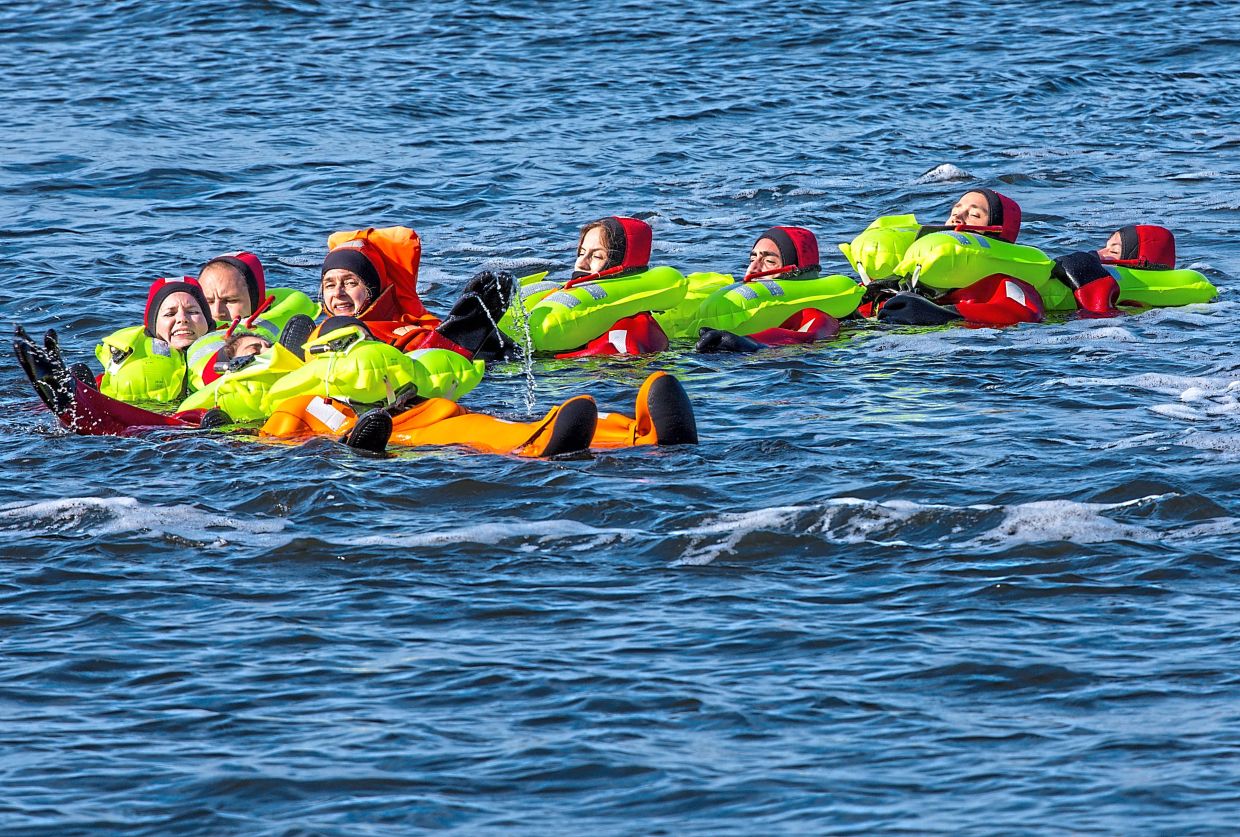
“One, two, three,” counts Sara Garcia Alonso, looking at her fellow astronaut Amelie Schonenwald before both fall backwards from the life raft into the water.
With a hiss their life jackets inflate, keeping the Spaniard and the German afloat in their survival suits.
What the two are practising here in the harbour basin off Germany’s Baltic Sea coast could be vital for survival in the Pacific if a space capsule veers off course before landing.
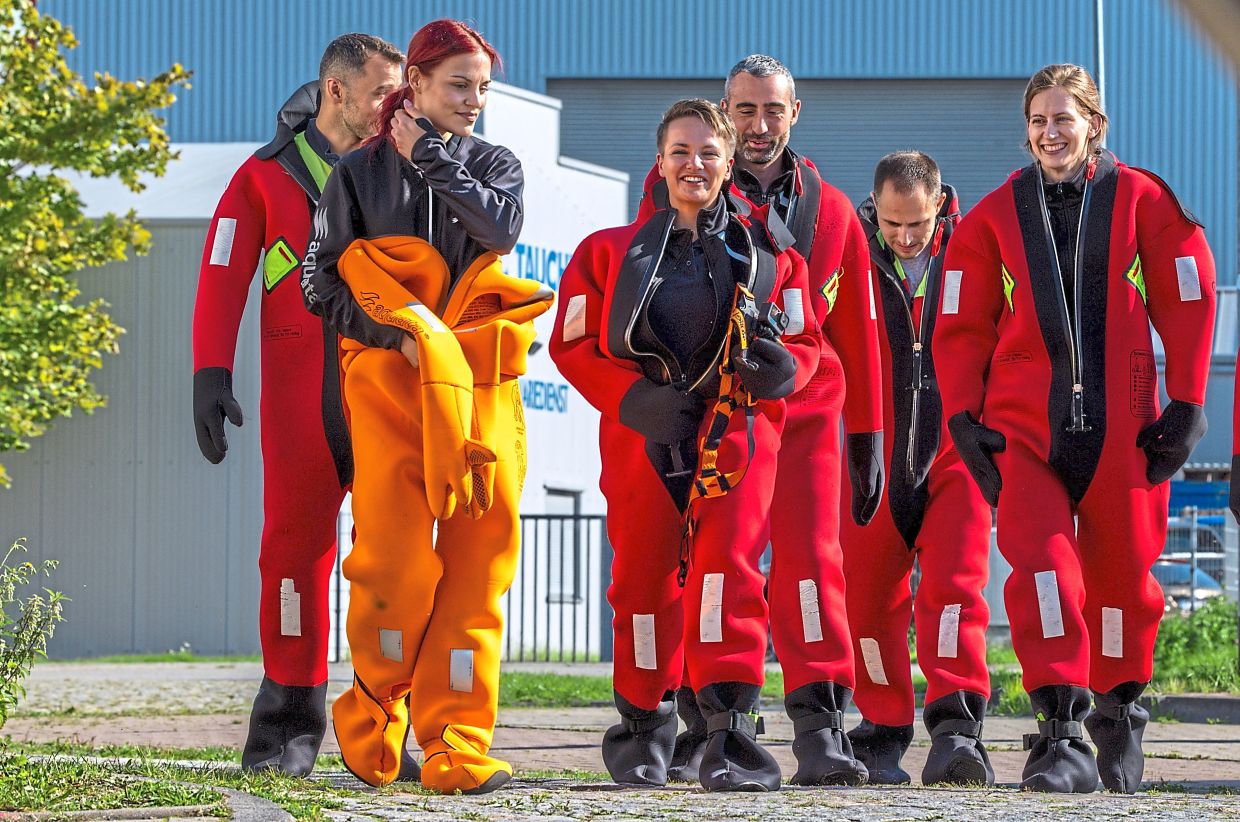
Alonso and Schonenwald are two of the five women and three men from seven European countries in the European Space Agency’s (ESA) astronaut reserve who took part in sea survival training in Rostock.
Fifty years after ESA’s founding, the agency is playing catch-up to its far more advanced competitors in the United States and China, with India fast on the move.
Although there is a European spaceport in Kourou, French Guiana, and the continent has its own launch vehicles with Vega C and Ariane 6, Europe cannot send people into space with its own means and currently relies on the US agency Nasa.
The astronaut training path
Anyone hoping to climb the ranks at ESA first has to get into the water for sea survival training.
Other skills the group needs to command include abseiling into a boat, swimming in a survival suit, paddling a life raft or firing signal flares.
“In spaceflight you have to be prepared for all eventualities,” Schonenwald said.
She already has a winter survival course under her belt, designed to prepare astronauts in case they land in a cold region.
“And the other option besides ice, snow and cold is that you land on water.”
Which landing site would the 35-year-old personally prefer?
“Both,” she says, making it clear that she would like to fly into space at least twice.
No guaranteed spot
Despite the training, space missions are by no means guaranteed for the astronaut reserve.
For the first time, under a new cohort selected in 2022, ESA chose 12 candidates as a reserve in addition to five full-time astronauts.
Reserve members like Schonenwald keep their regular jobs but undergo a kind of astronaut basic training in several multi-week blocks.
That allows them to go on shorter missions if the opportunity arises or to move up as full-time astronauts one day.
As part of the current training block, Schonenwald recently took part in so-called parabolic flights in France, in which a plane first climbs steeply and then descends to create periods of weightlessness for passengers.
“It was great and of course incredibly good fun,” she says.
Teamwork is key
This is the third time that would-be astronauts have trained water survival in Rostock.
Heiko Seefeldt, managing director of the ISC Training & Assembly company, is training the group. The firm, which normally trains employees from the offshore industry, is honoured to be training potential future astronauts.
Seefeldt says teamwork is crucial.
“One person alone cannot hold out for long.”
Two astronauts the company trained two years ago have since been selected for space missions.
Seefeldt said the company is following their careers closely.
After all, they had contributed a small part to them flying into space, he said, and they were proud of that.
Where would Schonenwald most like to fly first?
“My great wish would be to go to the ISS,” she says. “And perhaps one day to the Moon.” – dpa