Marigold? Check. Candles? Check. And of course, sugar skulls - the final touch on altars honouring deceased loved ones during Mexico’s Day of the Dead.
Just like the traditional "pan de muerto”, these colourful treats known as calaveritas (or little skulls) capture how Mexicans remember their dearly departed with celebration rather than sorrow each November.
"Very few customers buy them to eat,” said Adrian Chavarria, whose family has crafted and sold calaveritas since the 1940s in a Mexico City market. "Most people get them to decorate their altars.”
Following a tradition rooted in pre-Hispanic beliefs related to agriculture, many think their loved ones return home to spend the night on Nov 2.
To welcome them, families set up homemade altars. Candles are lit in the hope of illuminating their paths and the departed’s favourite dishes are cooked for the occasion.
"I set out a beer, a Coke, a cigarette – a little of everything just in case,” said Margarita Sanchez, who spent a recent October evening shopping for calaveritas and other items for her altar. "That way, whoever comes can help themselves.”
Her whole family takes part in setting up the offerings, but her daughters lead the way, finding creative ways to surprise their deceased relatives with a fresh display each year.
"This is how we honour our loved ones who left earlier than we would have hoped,” Sanchez said. "We do this to remember them.”
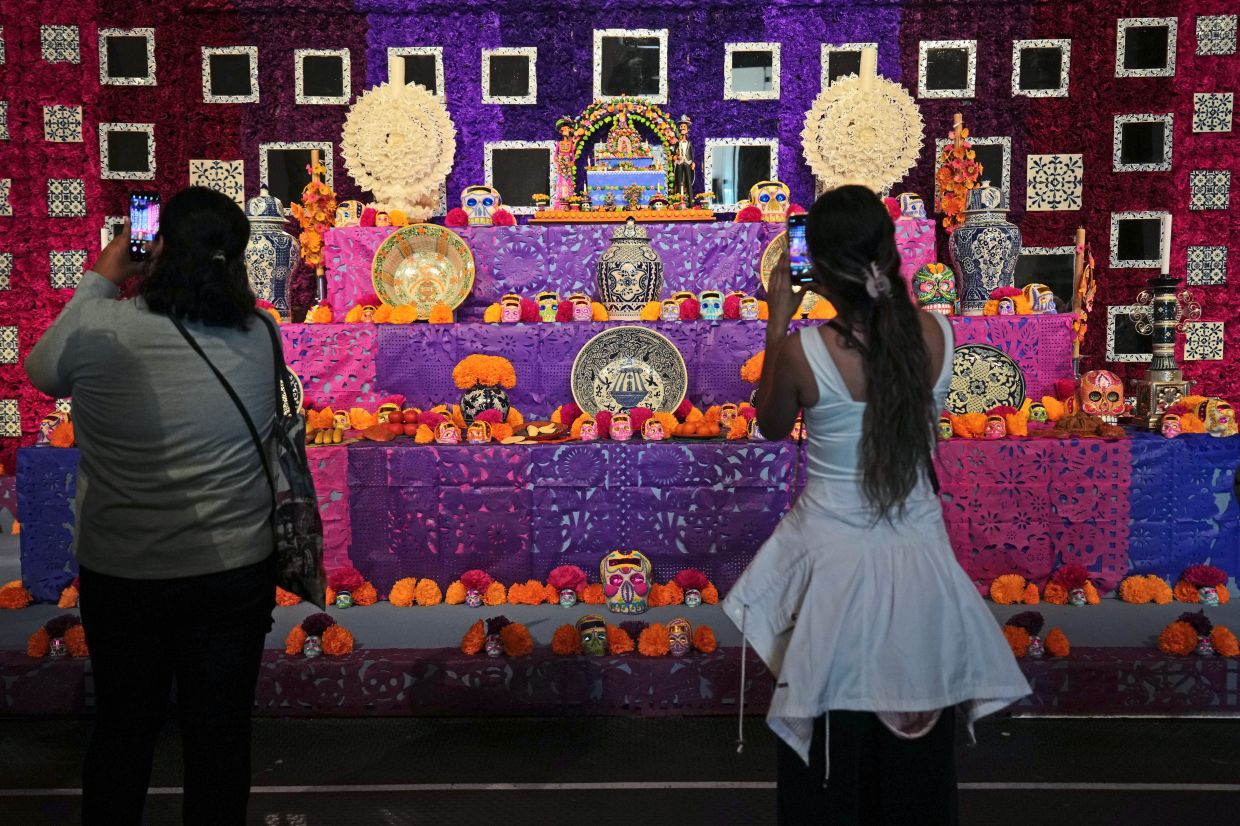
Calaveritas are mostly made of sugar, chocolate or amaranth. Nonetheless, each Mexican state has its variations. Ingredients such as almonds, peanuts, pumpkin seeds and honey can be added as well.
According to Mexico’s Agriculture and Rural Development Department, the calaveritas’ origins date back to ancient Mesoamerican traditions.
The Aztecs used to make amaranth figures mixed with honey as offerings to their gods. Sugar was introduced in the 16th century with the arrival of the Spaniards, who brought a new technique to mould figures – a practice that eventually led to the colourful sugar skulls made today.
The pre-Hispanic offerings, however, bear no resemblance to the altars used nowadays during Day of the Dead.
"Those offerings were not structures set up at home,” said historian Jesus Lopez del Rio, who recently led a tour on human sacrifices to deities in Mesoamerica. "They were given to entities beyond the human realm and consisted of food, blood, animals, songs, prayers and other things.”Chavarria sells a wide variety of sweets at his shop, but most come from external providers. His sugar skulls are the only products crafted at home.
"I feel very proud and happy to carry on this legacy,” he said. "When we encounter an altar bearing our calaveritas, it fills us with pride.”
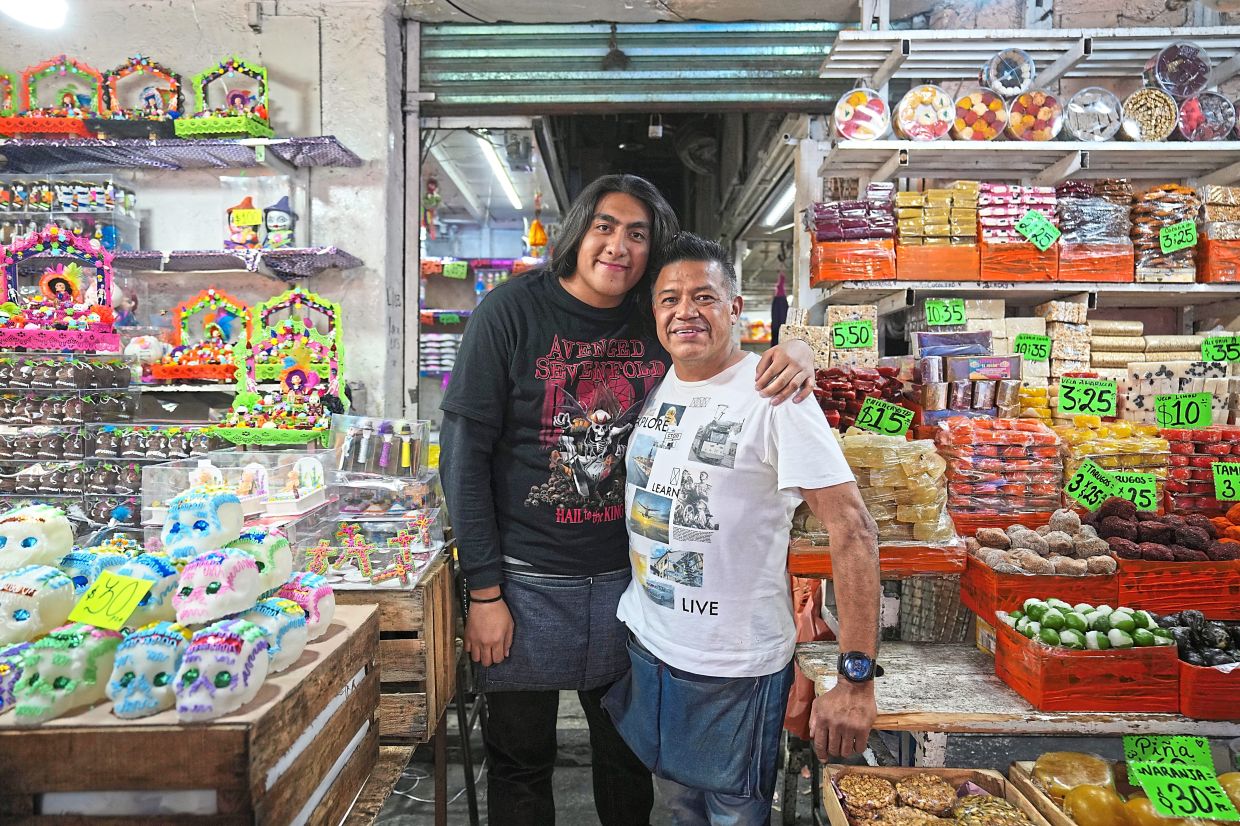
The design of his products was his mother’s. Yet his grandfather launched the business around 1941. "Besides being part of our folklore, calaveritas are artisanal sweets,” he said.
All are made by hand. The process is so meticulous that production starts in April, sales kick off by mid-September and by late October his products are sold out.
He can’t specify how many calaveritas are crafted per year, but his shop offers 12 different sizes and produces around 40 boxes per size. Packages containing the tiniest sugar skulls can accommodate up to 600 pieces, while those holding the largest can store around 300.
Prices are affordable – ranging from three to 400 pesos (70 sen to RM90) – but days are required to finish each piece. According to his son Emmanuel, who will inherit the business, the process is equally hard and fascinating.
"When your hands burn from handling the sugar skull moulds, you feel so satisfied,” he said. "It’s fulfilling because, besides being your creation, it’s part of your family’s legacy.”
The process begins by adding sugar to hot water and lemon juice is incorporated to prevent the mixture from sticking. Once it boils, the blend is poured into ceramic moulds, where it sits for a few minutes before the skulls are removed to cool. Around five days later, each calaverita is painted by hand.
Beyond the Day of the Dead, Emmanuel feels close to his departed relatives every day he crafts calaveritas and puts them up for sale at his family’s shop.
"This is how we remember them,” he said. "In each calaverita, their memory prevails.” – AP