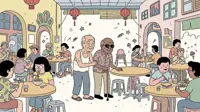
Malaysia – land of nasi lemak, daredevil drivers, and public holidays nobody questions – is not just a country; it’s a buffet of cultures where everyone argues about food, weather, and the right way to pronounce “meh or mah”.
And nestled snugly in this cultural rojak is the Malaysian Chinese community – loud, proud, and forever split between two camps: the English-educated and the Chinese-educated.
Now, this linguistic chasm isn’t about whether you say, “Good morning, sir” in English or “Good morning, teacher” in Chinese. Oh no. It’s practically a lifestyle choice. Like picking between Milo peng and chrysanthemum tea – but with lifelong consequences and a possible existential crisis by age 25.
On one side, you’ve got the English streamers –products of a colonial hangover so stubborn it refuses to leave the party. These are the folks who quote Shakespeare, binge The Famous Five, and think sarcasm is a personality trait. They grew up reading Enid Blyton and thinking “Ringgit” was a weird way to spell “rigid”. To them, English isn’t a second language – it’s the default operating system. Their Chineseness? Mostly summoned during Chinese New Year and often featured in Instagram posts with Chinese cartoons and the caption “Feeling festive.”
Occasionally, during such times, they even attempt to speak proper Chinese.
Then, there’s the Chinese-educated bunch. These brave warriors survived long-winded Tang poetry, calligraphy-induced wrist cramps, and moral tales that all end with “and that’s why you must respect your elders.” They write essays with four idioms per paragraph and can recite Confucius in their sleep. Their mathematical skills rival those of Newton. English? Sure, they speak it – sometimes even better than the English-educated kids – but it’s more like Microsoft Excel: useful, but no one feels particularly emotional about it.
This educational fork in the road leads to two very different worldviews.
The English-ed kids? Please. They’re basically the “yellow bananas” of suburban Malaysia – swimming club ready at 16, armed with “butter toast” and “chicken chop” like they’re exotic imports. Their CVs read like an English boarding schoolteacher wrote them during recess: “Prefect. Debate captain. Saved three puppies. Future CEO.” Their dreams are global, their
accents... suspiciously caught somewhere between BBC World Service and Netflix teen drama.
They start every sentence with “I” and end every group project convinced they’ve just completed an MBA in leadership.
Meanwhile, the Chinese-ed crew? They value roots. Community. The sacred art of group meals, where everyone fights to pay the bill. They don’t “network” – they form brotherhoods over hotpot. Their business plans involve cousins, in-laws, and three uncles who don’t technically work there but are always around. It’s a clan approach to business, where everybody knows your surname!
Even their sense of humour differs. English-ed folks love sarcasm and quoting “Harry Potter.” Chinese-ed friends prefer layered puns, dad jokes that involve at least one homophone, and jokes that require a full explanation and a family tree to truly understand.
But beneath this linguistic tug-of-war lies one undeniable truth: both sides absolutely adore
chilli crab. On a rainy day, there is no language barrier when the steaming plate of curry-soaked crabs arrives. And don’t you dare suggest that “chilli crab” is not a Malaysian invention.
At reunion dinners, nobody cares if you say “cheers” or “yam seng” as long as you refill the elders’ tea and know how to survive a three-hour meal without offending aunty Lim, who scrutinises you closely.
In modern Malaysia, these worlds are blurring. Kids today listen to Taylor Swift while doing Chinese calligraphy homework. They quote Confucius in WhatsApp group chats – ironically. They code-switch like Olympic athletes: “Ma, I’m going yum cha with my squad, got time or not?”
This new generation? Fluent in memes, Mandarin, Manglish, and mild rebellion. They don’t choose between East or West – they remix both into something gloriously Malaysian.
It’s no longer just about English or Chinese. It’s about knowing when to speak which, when to stay quiet, and how to navigate three (maybe more?) different WhatsApp groups with three different languages at Chinese New Year.
In the end, whether you’re quoting Confucius or complaining in King’s English, if you know where to find the best char kuey teow at midnight, you are family. And that, my friends, is the proper Malaysian Chinese education: bilingual, bicultural, and always slightly hungry.